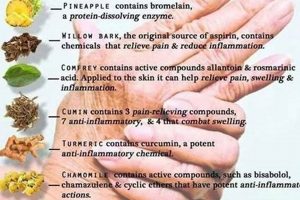
Botanical treatments employed to alleviate discomfort associated with the menstrual cycle encompass a range of plant-derived substances. These natural interventions are utilized to address symptoms such as cramping, bloating, mood fluctuations, and irregular blood flow that often accompany menstruation. An example includes the use of chamomile tea to promote relaxation and reduce muscle spasms during this phase of the reproductive cycle.
The historical utilization of plant-based therapies for menstrual complaints highlights a long-standing reliance on readily available natural resources. These remedies offer a potentially gentler approach to managing periodic discomfort, appealing to individuals seeking alternatives to conventional pharmaceuticals. Furthermore, some botanical agents possess properties that address multiple symptoms simultaneously, contributing to a more holistic approach to menstrual well-being.
The following sections will explore specific botanical agents, their mechanisms of action, and the available evidence supporting their efficacy in managing symptoms commonly experienced during the menstrual cycle. Furthermore, attention will be given to potential contraindications and interactions to ensure safe and informed usage.
Guidance on Botanical Approaches to Menstrual Discomfort
The following guidance offers insights into the appropriate and informed use of botanical agents for managing the challenges associated with the menstrual cycle. Adherence to these principles can optimize potential benefits while minimizing potential risks.
Tip 1: Prioritize Consultation with a Healthcare Professional: Before initiating any botanical treatment regimen, consultation with a physician or qualified herbalist is essential. This step ensures the suitability of the chosen agents based on individual health history, existing medical conditions, and potential interactions with prescribed medications.
Tip 2: Research the Specific Properties of Individual Herbs: Comprehensive understanding of an herb’s actions, potential side effects, and contraindications is paramount. Reliable sources, such as peer-reviewed scientific literature and reputable herbal medicine resources, should be consulted to gather accurate information.
Tip 3: Adhere to Recommended Dosages: Strict adherence to recommended dosages is crucial to maximizing therapeutic benefits and minimizing the risk of adverse effects. Dosages may vary depending on the specific herb, the individual’s weight, and the severity of symptoms.
Tip 4: Source Herbs from Reputable Suppliers: Ensuring the quality and purity of botanical products is vital. Purchase herbs from reputable suppliers who adhere to Good Manufacturing Practices (GMP) and provide certificates of analysis to verify the absence of contaminants.
Tip 5: Monitor for Allergic Reactions and Side Effects: Careful monitoring for any signs of allergic reactions or adverse effects is essential upon initiating a botanical treatment. Discontinue use immediately and seek medical attention if any concerning symptoms arise.
Tip 6: Be Aware of Potential Interactions: Many botanical agents can interact with prescription medications. Informing the healthcare provider of all herbal supplements being used is critical to preventing potentially harmful interactions.
Tip 7: Consider a Holistic Approach: Integrating botanical treatments with other lifestyle modifications, such as diet, exercise, and stress management techniques, can enhance overall well-being during the menstrual cycle.
Following these guidelines can contribute to a safer and more effective experience when exploring the potential benefits of botanical interventions for menstrual health. It is important to recognize that individual responses may vary, and consistent communication with a healthcare professional is essential.
The subsequent sections of this article will delve into specific botanical agents and provide further insights into their application for managing menstrual-related symptoms.
1. Efficacy for Symptom Relief
The efficacy of botanical agents in alleviating menstrual symptoms is a central consideration when evaluating the potential benefits of interventions derived from plant sources. The perceived effectiveness of these interventions often dictates their continued use and recommendation within both traditional and modern healthcare practices. Determining efficacy requires rigorous examination, ideally through controlled clinical trials, to differentiate true therapeutic effects from placebo responses or coincidental symptom resolution. For example, the purported benefits of ginger for reducing menstrual pain necessitate scrutiny to determine if the observed pain reduction is statistically significant compared to a control group receiving an inert substance.
Real-life examples, such as the widespread use of certain herbal teas for relaxation and mood stabilization during menstruation, highlight the practical significance of efficacy. If an agent consistently demonstrates an ability to diminish anxiety or irritability associated with the menstrual cycle, it provides a tangible benefit for affected individuals. However, it remains crucial to understand the underlying mechanisms through which these agents exert their effects. A deeper understanding of these mechanisms allows for a more informed and targeted approach to symptom management. This can include factors of dosage, form, and treatment to optimize effect for the unique needs of each woman.
The challenge lies in the heterogeneity of menstrual symptoms and the variability in individual responses to botanical treatments. What proves effective for one individual may be ineffective for another. Therefore, a multifaceted approach that integrates rigorous scientific evaluation with personalized assessment is essential. Ultimately, understanding the demonstrated efficacy of particular botanical agents empowers informed decision-making, enabling individuals to choose those that provide the most reliable and beneficial relief from the symptoms associated with menstruation. Further research remains vital to build a comprehensive understanding of these agents, as well as their overall effect and long-term safety when used to treat menstrual symptoms.
2. Safety Profile Evaluation

The systematic assessment of potential hazards associated with botanical interventions constitutes the Safety Profile Evaluation, a critical component of responsible integration of natural remedies into menstrual healthcare. This evaluation process aims to identify and characterize potential adverse effects, contraindications, and interactions with conventional medications. The importance of Safety Profile Evaluation stems from the recognition that, despite their natural origin, botanicals are not inherently benign and can pose risks if used inappropriately. For instance, certain herbal preparations may exhibit anticoagulant properties, potentially leading to complications if used concurrently with blood-thinning medications. Therefore, a thorough understanding of a botanical agent’s safety profile is paramount to mitigating potential harm.
Real-world instances of adverse events associated with herbal use underscore the practical significance of Safety Profile Evaluation. Case reports of liver toxicity, allergic reactions, and gastrointestinal disturbances linked to specific botanical products highlight the need for vigilance. Detailed safety assessments involve a review of existing scientific literature, including preclinical and clinical studies, as well as traditional use data. This process seeks to identify potential risks based on factors such as dosage, duration of use, individual health status, and concurrent medication use. The absence of comprehensive safety data for some botanical agents presents a challenge, necessitating a precautionary approach and emphasizing the importance of expert consultation.
In conclusion, Safety Profile Evaluation forms an indispensable element of responsible botanical integration into menstrual healthcare. By rigorously assessing potential risks and contraindications, healthcare providers and individuals alike can make informed decisions, minimizing the likelihood of adverse events. Ongoing research aimed at elucidating the safety profiles of various botanical agents is essential to expanding the evidence base and promoting the safe and effective use of natural remedies for menstrual-related concerns.
3. Dosage Standardization

Dosage standardization, in the context of employing botanical interventions for menstrual health, refers to the process of establishing consistent and reliable quantities of active compounds within a given herbal preparation. This standardization is crucial because the concentration of active constituents can vary significantly based on factors such as plant species, growing conditions, harvesting methods, and processing techniques. Without standardization, the therapeutic effects of the herbal remedy may be inconsistent and unpredictable. For example, two different preparations of the same herb may contain vastly different amounts of the compounds responsible for pain relief or hormone regulation, leading to either ineffectiveness or potentially adverse reactions.
The importance of dosage standardization is magnified when considering the delicate hormonal balance that governs the menstrual cycle. Accurate and consistent dosing of herbal remedies designed to modulate this balance is essential for achieving the desired therapeutic outcomes without disrupting other physiological processes. Real-life examples of inconsistent dosing resulting in negative consequences are prevalent in historical and anecdotal records. A lack of standardization can lead to unintended hormonal shifts, exacerbating existing symptoms or inducing new ones. Furthermore, variations in dosage can complicate the interpretation of clinical trials evaluating the efficacy of herbal interventions, making it difficult to draw definitive conclusions about their benefits and risks. The practical significance of understanding this connection lies in empowering both healthcare providers and patients to select and use herbal remedies with greater confidence and predictability.
Achieving dosage standardization requires rigorous quality control measures throughout the production process, including chemical analysis to quantify the levels of key active compounds. Methods such as high-performance liquid chromatography (HPLC) and mass spectrometry are employed to ensure that each batch of the herbal preparation meets predefined specifications for potency. The information regarding standardized dosages should be clearly displayed on product labels to guide appropriate use. While standardization does not eliminate the possibility of individual variations in response, it significantly reduces the uncertainty associated with dosing and enhances the safety and effectiveness of botanical approaches to menstrual health. The challenge lies in developing and implementing standardized protocols for a wide range of herbal remedies and ensuring that these protocols are accessible to both manufacturers and consumers, ultimately fostering a greater sense of trust and reliability in the use of plant-based interventions.
4. Quality Control Measures

The integrity of period herbal remedies hinges directly on the implementation of rigorous quality control measures throughout the entire production process. These measures serve to ensure the identity, purity, potency, and consistency of the final product, thereby safeguarding consumer health and promoting therapeutic efficacy. A lapse in quality control can introduce adulterants, contaminants, or variations in active compound concentrations, rendering the remedy ineffective or, worse, harmful. Real-life examples of adulterated herbal products causing adverse health effects underscore the critical importance of robust quality assurance protocols. The practical significance of this understanding lies in establishing a baseline of trust and reliability in the herbal medicine industry, fostering informed decision-making among consumers and healthcare professionals.
Effective quality control encompasses several key aspects, including proper plant identification, sourcing from reputable suppliers, meticulous harvesting and processing techniques, and comprehensive analytical testing. Techniques such as high-performance thin-layer chromatography (HPTLC), gas chromatography-mass spectrometry (GC-MS), and inductively coupled plasma mass spectrometry (ICP-MS) are employed to identify and quantify active constituents, detect adulterants, and screen for contaminants such as heavy metals, pesticides, and microbial pathogens. The application of Good Manufacturing Practices (GMP) provides a framework for ensuring consistent quality throughout the manufacturing process, from raw material procurement to finished product packaging. Third-party certification programs can further enhance consumer confidence by providing independent verification of product quality and adherence to established standards.
Ultimately, the effectiveness and safety of period herbal remedies are inextricably linked to the rigor of quality control measures employed by manufacturers. Challenges remain in establishing universally accepted standards and ensuring consistent enforcement across different regions. However, ongoing efforts to improve quality control practices, promote transparency, and enhance consumer awareness are essential to fostering the responsible and sustainable use of herbal medicines for menstrual health. The integration of quality control measures throughout the production process remains essential to establishing consumer trust in herbal options.
5. Individualized Application

Individualized application, when considering botanical remedies for menstrual health, acknowledges the unique physiological and experiential landscape of each woman. This personalized approach recognizes that menstrual symptoms and responses to herbal interventions are influenced by a complex interplay of factors, demanding a tailored strategy rather than a one-size-fits-all prescription.
- Assessment of Individual Physiology and Health History
A comprehensive evaluation of each individual’s medical history, current health status, and specific menstrual cycle characteristics forms the foundation of individualized application. This assessment accounts for factors such as age, weight, hormonal imbalances, underlying medical conditions, and concurrent medication use. For example, an individual with a history of liver disease would require careful consideration and potentially modified dosages when using herbs metabolized by the liver.
- Symptom Pattern Differentiation
Menstrual symptoms manifest in diverse patterns, ranging from severe cramping and heavy bleeding to mood fluctuations and bloating. Individualized application involves a detailed characterization of the specific symptom profile experienced by each woman. This differentiation guides the selection of targeted herbal remedies to address the predominant symptoms. For instance, an individual primarily experiencing anxiety may benefit from calming herbs such as chamomile or lavender, while someone suffering from severe pain may require analgesic herbs like ginger or crampbark.
- Consideration of Lifestyle Factors
Lifestyle factors, including diet, exercise, stress levels, and sleep patterns, significantly influence menstrual health and the effectiveness of herbal interventions. Individualized application incorporates these factors into the treatment plan. For example, an individual with a diet high in processed foods and refined sugars may require dietary modifications alongside herbal remedies to optimize symptom management.
- Monitoring and Adjustment of Treatment
Individualized application necessitates ongoing monitoring of the individual’s response to the herbal treatment plan. Regular communication between the individual and the healthcare provider allows for adjustments to dosages, herbal combinations, or treatment strategies as needed. This dynamic approach ensures that the treatment remains tailored to the individual’s evolving needs and maximizes the potential for positive outcomes.
In conclusion, individualized application represents a paradigm shift towards patient-centered care in the context of period herbal remedies. By recognizing the unique physiological and experiential characteristics of each woman, this approach optimizes the selection, dosage, and monitoring of herbal interventions, ultimately enhancing their safety and effectiveness in managing menstrual-related symptoms. While some herbal combinations may seem helpful, a professional consult ensures that the individual is receiving the optimal and safest level of care with the appropriate herbal remedies.
Frequently Asked Questions About Period Herbal Remedies
The following section addresses common inquiries concerning the utilization of botanical treatments for managing menstrual-related symptoms. The information presented is intended for educational purposes and should not be considered a substitute for professional medical advice.
Question 1: Are period herbal remedies regulated for safety and efficacy?
The regulatory status of botanical treatments varies significantly across different jurisdictions. In some countries, these remedies are subject to rigorous evaluation and oversight, while in others, they may be classified as dietary supplements with less stringent requirements. Consumers should be aware of the regulatory framework in their region and seek products from reputable manufacturers who adhere to quality control standards.
Question 2: Can period herbal remedies interact with prescription medications?
Botanical agents possess pharmacological properties that can potentially interact with conventional pharmaceuticals. Some herbs may potentiate or inhibit the effects of certain medications, leading to adverse consequences. Individuals taking prescription drugs should consult with a healthcare professional before initiating any herbal treatment regimen to assess the risk of potential interactions.
Question 3: What are the potential side effects of period herbal remedies?
Although generally considered safe, botanical remedies can cause side effects in some individuals. Common side effects include gastrointestinal disturbances, allergic reactions, and skin irritation. More serious adverse events, such as liver toxicity or cardiovascular complications, are rare but possible. It is essential to monitor for any unusual symptoms and discontinue use if adverse effects occur.
Question 4: How long does it take for period herbal remedies to take effect?
The onset of therapeutic effects varies depending on the specific herb, the individual’s physiology, and the severity of the symptoms. Some individuals may experience relief within a few days, while others may require several weeks of consistent use to notice a significant improvement. Patience and adherence to recommended dosages are essential.
Question 5: Are period herbal remedies safe for long-term use?
The safety of long-term use of botanical treatments is not always well-established. While some herbs have a long history of safe use, others may pose risks with prolonged exposure. It is advisable to consult with a healthcare professional regarding the suitability of long-term herbal therapy and to monitor for any adverse effects.
Question 6: Can period herbal remedies cure menstrual disorders?
Botanical treatments are generally intended to alleviate symptoms associated with menstrual disorders rather than to cure the underlying conditions. While some herbs may help to regulate menstrual cycles or reduce pain, they should not be considered a substitute for conventional medical treatment for serious menstrual disorders.
The information provided in this FAQ section highlights the importance of informed decision-making when considering period herbal remedies. Consultation with a qualified healthcare professional is strongly recommended to ensure safe and effective use.
The subsequent sections will provide an analysis of specific period herbal remedies.
Conclusion
This article has explored the multifaceted landscape of period herbal remedies, emphasizing considerations of efficacy, safety, dosage standardization, quality control, and individualized application. The importance of consulting healthcare professionals, understanding potential interactions, and sourcing products from reputable suppliers has been consistently underscored. The aim has been to provide a comprehensive overview to facilitate informed decision-making.
As research into botanical interventions for menstrual health continues to evolve, a critical approach to evaluating evidence and prioritizing patient safety remains paramount. Further investigation into the long-term effects and optimal utilization of these remedies is warranted to ensure their responsible and effective integration into holistic healthcare practices. It is important to consult medical professionals for tailored suggestions of period herbal remedies as these are not one-size-fits-all.