The use of botanical preparations to alleviate discomfort and inflammation within the knee joint constitutes a traditional approach to pain management. This method employs various plant-derived substances, often formulated as teas, topical creams, or dietary supplements, aiming to modulate the body’s inflammatory response and provide symptomatic relief.
Historically, numerous cultures have relied on plants for medicinal purposes, including the management of musculoskeletal ailments. Certain herbs possess inherent anti-inflammatory, analgesic, and antioxidant properties that may contribute to reducing pain and promoting joint mobility. The integration of these natural substances into a holistic treatment plan can potentially offer a gentler alternative or complement to conventional therapies. However, it is crucial to acknowledge that the effectiveness and safety of these remedies can vary considerably, and robust scientific evidence supporting their use is often limited.
The subsequent sections will explore specific examples of plants traditionally used in the context of easing knee discomfort, including details on their purported mechanisms of action, available research findings, potential side effects, and guidelines for their responsible implementation within a comprehensive healthcare strategy. This exploration aims to provide a balanced overview of the potential benefits and risks associated with utilizing botanical alternatives for knee pain management.
Considerations for Botanical Approaches to Knee Pain
The following guidelines are intended to provide informational insights regarding the potential use of plants for addressing knee discomfort. It is imperative to consult with a qualified healthcare professional before initiating any new treatment regimen, including botanical preparations.
Tip 1: Identify the Source of Discomfort: Differentiate between acute injuries and chronic conditions. Herbal interventions may be more suitable for managing chronic pain associated with osteoarthritis or mild strains, rather than acute traumatic injuries.
Tip 2: Research Specific Plant Properties: Thoroughly investigate the purported mechanisms of action for each herb being considered. Understand its potential benefits and limitations based on available scientific evidence.
Tip 3: Prioritize Quality and Sourcing: Select botanical supplements from reputable manufacturers that adhere to quality control standards. Verify the purity and potency of the product to minimize the risk of contamination or adulteration.
Tip 4: Initiate with Low Dosages: Begin with a conservative dose to assess individual tolerance and minimize potential adverse reactions. Gradually increase the dosage as needed, while closely monitoring for any side effects.
Tip 5: Observe for Interactions: Be mindful of potential interactions between botanical preparations and prescribed medications. Consult with a pharmacist or healthcare provider to identify any contraindications.
Tip 6: Document Progress and Symptoms: Maintain a detailed record of symptom changes, dosages, and any observed side effects. This documentation will aid in evaluating the effectiveness of the chosen herbs and facilitate communication with healthcare providers.
Tip 7: Adopt a Holistic Approach: Integrate plants within a comprehensive management plan that includes physical therapy, exercise, weight management, and dietary modifications. This multi-faceted approach may yield more substantial and lasting relief.
Adherence to these considerations promotes a safer and more informed approach to incorporating plants into a pain management strategy. Prioritizing evidence-based practices and professional guidance is crucial for optimizing outcomes and minimizing potential risks.
The subsequent section will offer a concluding perspective on the role of these botanical strategies in the broader context of knee pain management and highlight the importance of ongoing research and individualized care.
1. Anti-inflammatory Properties

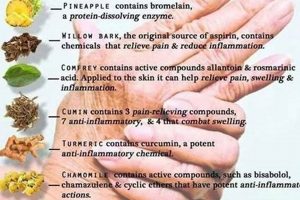
Knee pain often originates from inflammation within the joint, whether stemming from injury, overuse, or chronic conditions such as osteoarthritis. Addressing this inflammation is a primary therapeutic goal. Certain botanical preparations possess compounds that interfere with inflammatory pathways. These compounds can inhibit the production of pro-inflammatory molecules, reduce swelling, and alleviate associated pain. The therapeutic value of a given herb in this context is directly related to its ability to modulate these inflammatory processes. For instance, curcumin, the active component of turmeric, has demonstrated in vitro and in vivo anti-inflammatory effects by targeting multiple steps in the inflammatory cascade.
The practical significance of understanding the anti-inflammatory properties of botanical agents lies in the potential to provide a non-pharmacological approach to pain management. While conventional anti-inflammatory medications like NSAIDs carry a risk of gastrointestinal side effects, some botanical alternatives may offer a gentler profile, although their efficacy can vary. However, it is imperative to acknowledge that not all plants marketed for knee pain possess scientifically validated anti-inflammatory actions. Furthermore, the bioavailability and absorption of active compounds from plant extracts can significantly impact their therapeutic effectiveness. Standardization of herbal products and appropriate delivery methods are crucial for ensuring consistent and predictable outcomes.
In summary, the link between anti-inflammatory properties and plants is pivotal to their potential use in managing knee discomfort. Recognizing the specific mechanisms by which plants exert anti-inflammatory effects, coupled with rigorous quality control and appropriate clinical evaluation, is essential for determining their role in a comprehensive pain management strategy. The inherent variability in plant composition and the lack of extensive clinical trials pose ongoing challenges to definitively establishing the efficacy and safety of all botanical anti-inflammatories. Further research is needed to fully elucidate the potential benefits and risks associated with their use.
2. Pain Relief Mechanisms

The mechanisms by which botanical preparations achieve pain relief in the context of knee discomfort are multifaceted and often involve a combination of pharmacological actions. Understanding these mechanisms is crucial for discerning the potential efficacy and appropriate application of plant-based therapies.
- Opioid Receptor Modulation
Certain plant compounds may interact with opioid receptors in the central nervous system, mimicking the effects of opioid analgesics. While few herbs possess a strong affinity for these receptors, some may indirectly influence the opioid system, contributing to pain reduction. However, the potential for dependence or adverse effects associated with opioid receptor activation should be considered.
- COX Enzyme Inhibition
Cyclooxygenase (COX) enzymes are responsible for the production of prostaglandins, which mediate pain and inflammation. Some botanicals contain compounds that inhibit COX enzymes, similar to nonsteroidal anti-inflammatory drugs (NSAIDs). This inhibition can reduce the synthesis of prostaglandins, thereby alleviating pain and inflammation within the knee joint. However, the specificity and potency of COX inhibition can vary significantly among different herbs.
- Transient Receptor Potential (TRP) Channel Modulation
TRP channels are a family of ion channels involved in pain sensation. Some herbs contain compounds that activate or desensitize TRP channels, leading to pain relief. For example, capsaicin, found in chili peppers, activates TRPV1 channels, initially causing a burning sensation followed by a period of analgesia. The modulation of TRP channels offers a novel approach to pain management but requires careful consideration of potential side effects.
- Nerve Signal Modulation
Certain botanicals may interfere with the transmission of pain signals along nerve pathways. This can involve blocking sodium channels, inhibiting the release of neurotransmitters, or modulating the activity of other receptors involved in pain signaling. By disrupting the transmission of pain signals, these herbs can reduce the perception of pain in the knee joint.
The convergence of these distinct mechanisms contributes to the overall analgesic effects observed with certain plants. However, it is imperative to recognize that the precise mechanism of action for many botanical pain relievers remains incompletely understood, and further research is warranted to elucidate the complex interplay between plant compounds and the human nervous system. Moreover, the variability in plant composition, dosage, and individual responses underscores the need for a personalized approach to botanical pain management.
3. Traditional Use Evidence

The historical record of plant usage in addressing knee discomfort constitutes a significant body of knowledge often referred to as Traditional Use Evidence. This evidence base, accumulated over centuries across diverse cultures, provides initial insights into the potential efficacy of specific botanicals. Observations from traditional medical systems, such as Traditional Chinese Medicine and Ayurveda, detail the application of various plants for managing pain, inflammation, and impaired mobility associated with knee ailments. The longevity of these practices suggests a perceived benefit within those communities, warranting further scientific investigation. The repeated use of willow bark, containing salicin (a precursor to aspirin), for musculoskeletal pain across multiple cultures exemplifies the potential value of such traditional knowledge. Similarly, the application of ginger and turmeric in Asian culinary and medicinal practices highlights their recognized anti-inflammatory properties.
However, Traditional Use Evidence is not, in itself, conclusive proof of efficacy. It often lacks the rigorous controls and standardized methodologies characteristic of modern clinical trials. Factors such as variations in plant preparation, dosage, patient selection, and concomitant therapies can confound interpretations of historical observations. Furthermore, potential biases inherent in anecdotal reports and cultural beliefs must be acknowledged. Therefore, the primary value of Traditional Use Evidence lies in its capacity to guide modern research efforts, identifying candidate plants for further investigation using contemporary scientific methods. It provides a foundation for formulating hypotheses regarding the potential mechanisms of action and therapeutic benefits of specific botanicals, which can then be tested in controlled clinical trials.
In conclusion, Traditional Use Evidence serves as a valuable starting point for exploring plant-based approaches to knee pain management. While not a substitute for scientific validation, it offers a rich source of information regarding the historical application of plants and can inform the development of evidence-based therapies. The responsible evaluation of this historical data, combined with contemporary research methodologies, is essential for discerning the true potential and limitations of botanical preparations in alleviating knee discomfort. Integrating traditional knowledge with modern scientific rigor represents a promising avenue for advancing the field of pain management.
4. Quality Control Imperatives

The inherent variability in plant composition and the potential for contamination necessitates stringent quality control measures in the production of botanical preparations intended for knee pain management. Adherence to these imperatives is paramount to ensuring product safety, efficacy, and consistency.
- Authentication of Plant Species
Accurate identification of the plant species used is fundamental. Misidentification or adulteration with related species can lead to variations in chemical composition and therapeutic effects, or even introduce harmful compounds. Employing methods such as macroscopic and microscopic examination, chemical fingerprinting, and DNA barcoding can verify the authenticity of the botanical raw material. For example, distinguishing true Boswellia serrata from other Boswellia species is crucial, as their resin compositions differ significantly.
- Standardization of Active Compounds
Herbal preparations should be standardized to contain a consistent concentration of key active compounds. This ensures predictable therapeutic effects and reduces variability between batches. Standardization typically involves quantifying the levels of specific compounds, such as curcuminoids in turmeric or gingerols in ginger. Lack of standardization can result in inconsistent pain relief and difficulty in determining appropriate dosages.
- Contaminant Testing
Raw botanical materials and finished products must be tested for the presence of contaminants, including heavy metals (lead, mercury, arsenic, cadmium), pesticides, microbial pathogens (bacteria, fungi), and adulterants. Contamination can pose significant health risks and undermine the safety of botanical preparations. Rigorous testing protocols, such as those outlined by pharmacopoeias, are essential to ensure product purity. For example, the presence of aflatoxins (produced by fungi) in improperly stored herbs can be highly detrimental.
- Good Manufacturing Practices (GMP) Compliance
Manufacturing facilities must adhere to Good Manufacturing Practices (GMP) to ensure that botanical preparations are produced under controlled conditions and meet stringent quality standards. GMP guidelines cover aspects such as facility design, equipment maintenance, personnel training, process validation, and documentation. Compliance with GMP reduces the risk of errors, contamination, and inconsistencies in product quality. Certification by reputable organizations provides assurance that manufacturers have implemented adequate quality control systems.
In conclusion, adherence to quality control imperatives is not merely an option but a fundamental requirement for ensuring the safe and effective use of botanical preparations in the management of knee pain. These measures safeguard consumers from potential harm and contribute to the development of reliable and consistent botanical therapies.
5. Dosage & Safety Parameters

The determination of appropriate dosages and the evaluation of safety profiles are critical components in the responsible application of plants for managing knee pain. The therapeutic window, defined as the range between an effective dose and a toxic dose, varies substantially among different herbs and individual patients. Careful consideration of these parameters is essential to maximizing benefits while minimizing potential risks.
- Individual Variability
Patient-specific factors, including age, weight, medical history, and concurrent medications, can significantly influence the response to botanical preparations. Hepatic and renal function, in particular, affect the metabolism and excretion of plant compounds. Therefore, dosage adjustments may be necessary based on individual patient characteristics. For example, elderly individuals with impaired kidney function may require lower doses of certain herbs to avoid accumulation and potential toxicity. The one-size-fits-all approach is unsuitable in the context of botanical medicine.
- Herb-Drug Interactions
The potential for interactions between plants and prescribed medications is a significant concern. Plants can affect drug absorption, metabolism, and excretion, potentially altering drug efficacy or increasing the risk of adverse effects. For instance, St. John’s Wort, an herb sometimes used for mood disorders, can induce hepatic enzymes, leading to decreased blood levels of various medications, including some analgesics. Thorough evaluation of a patient’s medication list and consultation with a pharmacist are essential to identify and manage potential interactions.
- Potential Side Effects
While often perceived as “natural” and therefore inherently safe, herbs can cause a range of side effects. These can vary from mild gastrointestinal discomfort to more serious adverse events such as allergic reactions, liver toxicity, or cardiovascular complications. The risk of side effects depends on the specific herb, dosage, duration of use, and individual susceptibility. For example, high doses of ginger can cause heartburn and stomach upset, while prolonged use of certain herbal combinations can lead to liver damage. Close monitoring for any adverse reactions is crucial during botanical therapy.
- Dosage Forms and Standardization
The dosage form and standardization of herbal preparations significantly influence their bioavailability and therapeutic effects. Different dosage forms, such as capsules, tablets, tinctures, and topical creams, can affect the rate and extent of absorption of active compounds. Furthermore, standardization ensures a consistent concentration of key constituents, reducing variability between batches. Choosing products from reputable manufacturers that adhere to quality control standards and provide clear dosage instructions is essential. The absence of standardization can lead to inconsistent pain relief and an increased risk of adverse effects.
Ultimately, the safe and effective use of plants for knee pain management requires a comprehensive understanding of dosage and safety parameters. A collaborative approach involving healthcare professionals, including physicians, pharmacists, and qualified herbalists, is essential to optimize therapeutic outcomes and minimize potential risks. The implementation of evidence-based guidelines and ongoing monitoring is crucial to ensure the responsible integration of botanical therapies into a comprehensive pain management plan.
Frequently Asked Questions
This section addresses common queries concerning the application of botanical preparations for the alleviation of knee discomfort, presenting factual information to promote informed decision-making.
Question 1: Are plants a scientifically proven method for reducing knee pain?
The scientific evidence supporting the use of plants for knee pain varies. Some plants, such as turmeric and ginger, possess anti-inflammatory properties demonstrated in clinical studies, but the strength of evidence and magnitude of effect can differ significantly. Other plants rely primarily on traditional use without extensive clinical validation.
Question 2: Is the term “herbal remedy” synonymous with “safe remedy”?
No. The “natural” origin of botanical preparations does not guarantee safety. Plants can cause adverse reactions, interact with medications, and may be contraindicated for certain medical conditions. Proper dosage and sourcing are crucial.
Question 3: How does the dosage for botanical preparations differ from conventional medications?
Dosages for botanical preparations are not determined by a standardized process equivalent to pharmaceutical drugs. Dosages are often based on traditional use, limited clinical studies, and variations in plant potency. Individual response can also vary considerably.
Question 4: What are the key concerns to address before beginning use of a botanical for knee pain?
Prior consultation with a qualified healthcare professional is essential. Factors to consider include potential herb-drug interactions, underlying medical conditions, allergies, and the quality and standardization of the plant preparation.
Question 5: How important is the source and preparation method of a botanical remedy?
The source and preparation method significantly impact the quality and efficacy of botanical remedies. Reputable suppliers adhere to quality control standards and ensure accurate plant identification. Proper preparation methods, such as extraction techniques, can influence the concentration of active compounds.
Question 6: Is there an expectation that plants can completely replace conventional medical treatments for knee pain?
Plants should not be considered a replacement for conventional medical treatments without consulting a healthcare provider. These preparations may complement conventional therapies but are not always appropriate as standalone treatments, especially for acute injuries or severe chronic conditions. A comprehensive management plan, incorporating conventional medicine and lifestyle modifications, is often the most effective approach.
The use of botanical remedies for knee pain requires careful consideration and informed decision-making. Consulting a healthcare professional, prioritizing quality control, and understanding the limitations of available evidence are crucial steps.
The subsequent section will delve into practical strategies for integrating plant-based approaches into a holistic pain management plan, emphasizing the importance of individualized care and ongoing monitoring.
Conclusion
The preceding discussion has explored various facets of employing botanical agents to manage knee discomfort. Key aspects include understanding anti-inflammatory properties, pain relief mechanisms, traditional use evidence, quality control imperatives, and safety considerations. While some plants demonstrate potential benefits, the available scientific evidence varies. A crucial takeaway is that these treatments are not without risk, and responsible implementation necessitates informed decision-making alongside qualified healthcare professionals.
Ultimately, addressing knee pain demands a comprehensive and individualized approach. This may include integrating botanical preparations as complementary therapies within a broader framework of conventional medical care, lifestyle modifications, and rehabilitative strategies. Further research into the efficacy and safety of plants is essential to clarify their role in managing knee pain effectively. Individuals experiencing persistent or severe knee discomfort are urged to seek professional medical evaluation to establish an accurate diagnosis and formulate an appropriate treatment plan.