The use of botanical remedies to address lung inflammation and infection constitutes a specific approach to managing respiratory illness. This method involves employing plant-derived substances, either alone or in conjunction with conventional therapies, with the intention of alleviating symptoms and supporting the body’s natural healing processes in cases of pulmonary disease.
Historically, various cultures have relied on plants for their therapeutic properties in combating respiratory ailments. The potential advantages of such interventions may include enhanced immune function, reduced inflammation, and the provision of symptomatic relief. However, the efficacy and safety can vary widely, and their use should be approached with caution and appropriate expert guidance.
This article will explore the historical context, potential benefits, limitations, and specific considerations related to employing plant-based remedies in the context of lung infections, with an emphasis on scientific evidence and safe practices. Discussion will encompass the types of herbs traditionally used, potential mechanisms of action, and the importance of consulting healthcare professionals before initiating such regimens.
Guidance on Botanical Approaches to Pneumonia Management
The subsequent guidelines provide insights into the appropriate and cautious consideration of plant-based remedies in the context of lung infections. Adherence to these recommendations is paramount to ensuring patient safety and optimizing potential therapeutic outcomes.
Tip 1: Consult a Qualified Healthcare Professional: Prior to initiating any form of botanical intervention for lung infections, a thorough consultation with a physician, pulmonologist, or qualified herbalist is essential. This consultation facilitates accurate diagnosis, evaluation of potential drug interactions, and personalized treatment planning.
Tip 2: Prioritize Evidence-Based Options: Focus on plant-based substances with established traditional use or preliminary scientific validation for respiratory support. Rigorous clinical trials demonstrating efficacy and safety are often lacking, but prioritize choices with some supporting evidence.
Tip 3: Understand Potential Interactions: Plant-derived remedies can interact with conventional medications, potentially altering their efficacy or increasing the risk of adverse effects. Comprehensive disclosure of all supplements to the healthcare provider is crucial.
Tip 4: Adhere to Dosage Recommendations: Precise dosage guidelines are critical. Overconsumption can lead to toxicity, while insufficient dosages may render the treatment ineffective. Obtain specific dosage recommendations from a knowledgeable practitioner.
Tip 5: Monitor for Adverse Reactions: Vigilant monitoring for any adverse reactions, such as allergic responses, gastrointestinal upset, or respiratory distress, is paramount. Discontinue use immediately if any concerning symptoms arise and seek prompt medical attention.
Tip 6: Ensure Product Quality: Source botanical remedies from reputable suppliers that adhere to stringent quality control standards. Third-party testing for purity and potency can help mitigate the risk of contamination or adulteration.
Tip 7: Recognize the Limits of Plant-Based Intervention: Plant-derived remedies should not be viewed as a substitute for conventional medical care in severe cases. They may serve as adjuncts to conventional treatment, but should not replace antibiotics or other essential medical interventions when medically necessary.
The informed and responsible integration of botanical remedies into a comprehensive lung infection management plan necessitates adherence to these guidelines. The judicious use of plant-based interventions may offer adjunctive support, but should not compromise access to essential medical treatments.
The subsequent section will delve into the various types of plant-based remedies that are often considered within this therapeutic context.
1. Antimicrobial Properties

The antimicrobial properties of certain plant-derived compounds represent a significant area of investigation in the context of lung infections. While not a replacement for conventional antibiotics in severe cases, these properties offer a potential avenue for adjunctive support and may contribute to combating causative pathogens.
- Direct Pathogen Inhibition
Certain herbs contain compounds demonstrated to inhibit the growth or viability of common respiratory pathogens, including bacteria, viruses, and fungi. For example, garlic (Allium sativum) contains allicin, a compound exhibiting broad-spectrum antimicrobial activity. The efficacy of such compounds in vivo for treating lung infections requires careful consideration and robust clinical evidence. It can inhibit growth or viability of common respiratory pathogens, including bacteria, viruses, and fungi, but clinical evidence in effectiveness varies.
- Disruption of Biofilm Formation
Respiratory infections are often characterized by biofilm formation, where microorganisms aggregate within a protective matrix, enhancing their resistance to antibiotics and host immune defenses. Some herbal extracts have been shown to disrupt biofilm formation, rendering pathogens more susceptible to conventional therapies. For example, components of cranberry (Vaccinium macrocarpon) have been investigated for their ability to interfere with bacterial adhesion and biofilm development, though specific application to lung infections is less researched. They help to render pathogens more susceptible to conventional therapies, improving overall response to treatment.
- Synergistic Effects with Antibiotics
Certain herbal extracts may exhibit synergistic effects when used in conjunction with conventional antibiotics. This synergy can enhance the efficacy of antibiotics, potentially reducing the required dosage and mitigating the risk of antibiotic resistance. For example, research suggests that certain flavonoids may potentiate the activity of beta-lactam antibiotics against resistant bacteria. However, careful consideration of potential drug interactions is paramount. Synergistic activity with antibiotics can enhance the efficacy of antibiotics, potentially reducing the required dosage and mitigating the risk of antibiotic resistance. However, careful consideration of potential drug interactions is paramount.
- Modulation of the Host Immune Response
Beyond direct antimicrobial action, some herbs may exert indirect antimicrobial effects by modulating the host immune response. Compounds with immunomodulatory properties can enhance the body’s ability to clear pathogens and resolve infection. For example, Echinacea species have been investigated for their potential to stimulate immune cell activity and cytokine production, though evidence of benefit in bacterial lung infections is limited. This enhances the body’s ability to clear pathogens and resolve infection, but evidence in lung infections is limited.
The investigation of antimicrobial properties within plant-derived substances remains an active area of research with potential implications for managing respiratory infections. While in vitro activity is promising, rigorous clinical trials are essential to determine the true efficacy and safety of such approaches in the context of infections. The careful consideration of interactions with conventional therapies is paramount when considering adjunctive uses of such substances.
2. Anti-inflammatory actions

Inflammation constitutes a key component of pneumonia pathogenesis, contributing to lung tissue damage, impaired gas exchange, and respiratory distress. Consequently, interventions aimed at mitigating inflammation represent a crucial therapeutic strategy. Certain botanical remedies are believed to exert anti-inflammatory effects, potentially offering adjunctive support in managing pneumonia. For example, compounds like curcumin, derived from turmeric (Curcuma longa), and gingerol, found in ginger (Zingiber officinale), have demonstrated anti-inflammatory properties in laboratory studies. In the context of pneumonia, these agents are theorized to reduce inflammatory cytokine production, thereby alleviating lung tissue injury and improving respiratory function. However, rigorous clinical trials specifically evaluating their efficacy in human pneumonia cases are limited.
The practical significance of understanding the anti-inflammatory actions of botanical remedies lies in their potential to complement conventional pneumonia treatment. While antibiotics target the causative pathogens, anti-inflammatory agents address the host’s inflammatory response. By reducing inflammation, such remedies may help alleviate symptoms like cough, chest pain, and shortness of breath, and potentially accelerate recovery. For instance, certain herbal teas, such as chamomile or licorice root, are traditionally used for their soothing properties, which may contribute to symptom management through mild anti-inflammatory effects. However, these should not be considered replacements for prescribed medication and require caution in patients with underlying health conditions.
In summary, the anti-inflammatory actions of botanical remedies offer a promising avenue for adjunctive pneumonia management. While preclinical studies suggest potential benefits, robust clinical trials are essential to determine their efficacy, safety, and optimal usage in human patients. Challenges remain in standardizing herbal preparations and establishing appropriate dosages. It’s crucial to emphasize that such interventions should be integrated within a comprehensive treatment plan under the guidance of qualified healthcare professionals and are not to be considered a substitute for evidence-based medical care.
3. Expectorant Effects

Expectorant action is a significant aspect of addressing lung inflammation through plant-derived substances, as the ability to facilitate mucus clearance from the respiratory tract can alleviate symptoms and support recovery.
- Increased Mucus Production
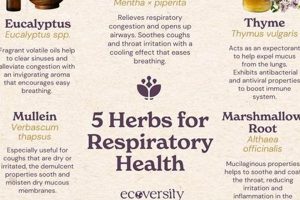
Certain herbs stimulate the production of thinner, less viscous mucus. This increased volume of more easily mobilized secretions helps to loosen accumulated phlegm within the bronchial passages. Guaifenesin, a common over-the-counter medication, mimics this action, while herbs such as marshmallow root (Althaea officinalis) are traditionally employed for their demulcent and expectorant properties. The mechanism may involve stimulation of mucociliary transport.
- Stimulation of Ciliary Action
Cilia, the small hair-like structures lining the respiratory tract, play a crucial role in propelling mucus and trapped particles upwards towards the throat. Some botanical agents may enhance ciliary beat frequency, thereby improving the efficiency of mucus clearance. For example, preliminary research suggests that components of thyme (Thymus vulgaris) may stimulate ciliary activity, although further validation is needed.
- Bronchodilation
Bronchodilation, the widening of the airways, can indirectly improve expectoration by reducing airflow obstruction. Some herbs possess bronchodilatory properties, potentially facilitating the movement of mucus. Eucalyptus oil, containing cineole, is a known bronchodilator and is often used in steam inhalations to ease congestion. The improved airflow allows for easier expulsion of mucus.
- Reduction of Mucus Viscosity
Reducing the viscosity, or stickiness, of mucus makes it easier to cough up. Some herbs contain compounds that can break down the bonds within mucus, making it less dense and easier to clear. For example, ivy leaf extract (Hedera helix) is thought to contain saponins that help to reduce mucus viscosity. This facilitates expectoration and improves respiratory function.
The expectorant effects of botanical remedies are thus multifaceted, encompassing increased mucus production, stimulated ciliary action, bronchodilation, and reduced mucus viscosity. While these effects may provide symptomatic relief and support the body’s natural clearance mechanisms, it is crucial to recognize that they do not address the underlying cause of the lung infection. The use of botanical expectorants should therefore be integrated within a comprehensive treatment plan under the guidance of a qualified healthcare professional, with attention to potential interactions and contraindications.
4. Immune Modulation

Immune modulation constitutes a critical aspect of addressing pneumonia through botanical interventions. A balanced immune response is essential for pathogen clearance and tissue repair, and certain herbal remedies are purported to influence immune function, potentially supporting recovery from lung infections.
- Enhancement of Innate Immunity
Innate immunity represents the first line of defense against pathogens. Certain herbs may enhance the activity of natural killer cells, macrophages, and other components of the innate immune system, improving the body’s ability to rapidly respond to infection. For example, Astragalus membranaceus has been investigated for its potential to stimulate macrophage activity and enhance phagocytosis. This stimulation can aid in the early stages of infection control.
- Regulation of Cytokine Production
Cytokines are signaling molecules that mediate inflammation and immune responses. Dysregulated cytokine production can contribute to lung injury in pneumonia. Certain herbs may modulate cytokine production, promoting a balanced inflammatory response. For example, preliminary research suggests that compounds in ginger (Zingiber officinale) may help to suppress the production of pro-inflammatory cytokines such as TNF-alpha and IL-6, but further study is warranted. The regulation of cytokines can prevent excessive inflammation.
- Support for Adaptive Immunity
Adaptive immunity involves the development of specific antibodies and T cells that target pathogens. Certain herbs may support the adaptive immune response, enhancing the body’s ability to mount a targeted defense against infection. Echinacea purpurea has been investigated for its potential to stimulate T cell activity and antibody production. Support is for targeted defense against infection.
- Mitigation of Excessive Inflammation
While inflammation is necessary for clearing infection, excessive inflammation can cause tissue damage. Certain herbs possess anti-inflammatory properties that may help to mitigate excessive inflammation, preventing further lung injury. For example, compounds in licorice root (Glycyrrhiza glabra) have demonstrated anti-inflammatory activity in laboratory studies. It helps to prevent further lung injury.
The modulation of immune responses through botanical interventions represents a complex and nuanced area of investigation in pneumonia management. While certain herbs show promise in supporting various aspects of immune function, it is crucial to recognize that immune modulation should not be viewed as a substitute for conventional medical care. The use of such interventions should be carefully considered within a comprehensive treatment plan under the guidance of qualified healthcare professionals, with attention to potential interactions and contraindications.
5. Symptom Relief

Symptom relief constitutes a significant objective in the application of plant-derived remedies for pneumonia. While the primary focus in managing pneumonia involves addressing the underlying infection, alleviating associated symptoms improves patient comfort and can support the body’s natural healing processes. Symptom relief is not the cure for pneumonia but a bridge to facilitate the recovery journey. For instance, a patient experiencing a persistent cough may find relief through the use of expectorant herbs, thereby aiding in the expulsion of mucus and potentially improving respiratory function. Similarly, individuals suffering from fever or chest pain might benefit from herbs possessing anti-inflammatory or analgesic properties.
The importance of symptom relief as a component of plant-based approaches lies in its capacity to enhance patient adherence to treatment regimens and improve overall quality of life during illness. A patient experiencing reduced discomfort is more likely to engage in self-care activities such as rest, hydration, and proper nutrition, all of which contribute to recovery. Consider the example of steam inhalation with eucalyptus oil, a practice often employed to alleviate nasal congestion and ease breathing. Although not directly targeting the infection, this method can provide temporary relief, allowing for more restful sleep and improved airflow. However, it is imperative to remember that these actions work to improve well-being, not resolve the pneumonia itself.
In conclusion, symptom relief represents an integral, albeit supplementary, component of plant-based strategies for managing pneumonia. While not a substitute for conventional medical interventions such as antibiotics, the judicious use of herbal remedies to alleviate symptoms can enhance patient comfort and support the healing process. Challenges exist in standardizing herbal preparations and ensuring appropriate dosage. Therefore, a collaborative approach involving healthcare professionals is essential to ensure that plant-based interventions are used safely and effectively within a comprehensive pneumonia treatment plan.
6. Adjunctive Role
The employment of plant-derived substances in managing pneumonia is most appropriately considered an adjunctive strategy. This signifies that botanical interventions are not intended as a replacement for conventional medical treatments, such as antibiotics or antiviral medications, but rather as a complementary approach designed to support the body’s natural healing processes and alleviate associated symptoms. The adjunctive role hinges on the understanding that pneumonia, a potentially severe respiratory infection, necessitates prompt and targeted antimicrobial therapy. Failure to address the underlying infection with appropriate pharmaceuticals can lead to serious complications, including respiratory failure and sepsis.
The practical significance of the adjunctive role is demonstrated by the potential of certain herbal remedies to reduce inflammation, ease cough, or promote expectoration, thereby improving patient comfort and facilitating bronchial hygiene alongside conventional antimicrobial treatment. For example, a patient undergoing antibiotic therapy for bacterial pneumonia might utilize steam inhalation with eucalyptus oil to loosen mucus and ease breathing. However, it remains crucial to acknowledge that eucalyptus oil does not eradicate the bacterial infection, but rather serves to alleviate symptoms and potentially enhance the effectiveness of the prescribed antibiotics by promoting airway clearance. This integration requires careful consideration of potential interactions and contraindications, emphasizing the need for guidance from qualified healthcare professionals.
In summation, the use of plant-derived substances in pneumonia management is most effectively viewed as an adjunctive strategy, serving to complement rather than replace conventional medical interventions. Challenges remain in standardizing herbal preparations, establishing appropriate dosages, and ensuring product quality. A collaborative approach involving physicians, pharmacists, and qualified herbalists is essential to ensure the safe and effective integration of botanical remedies within a comprehensive pneumonia treatment plan, always prioritizing evidence-based antimicrobial therapy as the primary intervention.
Frequently Asked Questions Regarding Plant-Based Approaches for Lung Inflammation
This section addresses common inquiries concerning the use of botanical remedies in the context of pulmonary infections. The information provided aims to clarify prevalent misconceptions and provide evidence-based insights.
Question 1: Are plant-derived substances a suitable replacement for antibiotics in the treatment of lung inflammation?
Plant-derived substances are not considered a suitable replacement for antibiotics in the treatment of pulmonary infections. Conventional antibiotics target the underlying causative pathogens and are essential for resolving the infection and preventing serious complications. Botanical interventions may serve as adjuncts to conventional treatment but should not be relied upon as the sole therapeutic approach.
Question 2: What scientific evidence supports the use of botanical remedies in the context of pulmonary infections?
Scientific evidence supporting the use of botanical remedies varies widely. Some herbs have demonstrated antimicrobial or anti-inflammatory properties in in vitro or in vivo studies. However, rigorous clinical trials evaluating the efficacy and safety of such interventions in human pulmonary infections are often limited. Claims should be critically evaluated and approached with caution.
Question 3: Are there potential risks associated with using botanical remedies for pulmonary infections?
Potential risks associated with using botanical remedies include allergic reactions, drug interactions, and adverse effects. Some herbs may interact with conventional medications, altering their efficacy or increasing the risk of side effects. Dosage guidelines are crucial to prevent toxicity, and product quality should be assured to avoid contamination or adulteration. Consultation with a qualified healthcare professional is essential.
Question 4: How should individuals select and source botanical remedies for pulmonary infections?
Individuals should select and source botanical remedies from reputable suppliers that adhere to stringent quality control standards. Third-party testing for purity and potency can help mitigate the risk of contamination or adulteration. Dosage should be carefully followed according to recommendations from a knowledgeable practitioner.
Question 5: What role do healthcare professionals play in the use of plant-derived remedies for pulmonary infections?
Healthcare professionals play a critical role in the use of plant-derived remedies. Consultation with a physician or qualified herbalist is essential to ensure accurate diagnosis, evaluation of potential drug interactions, and personalized treatment planning. They can also help monitor for adverse reactions and provide guidance on safe and effective usage.
Question 6: Can the use of plant-derived substances prevent pulmonary infections?
The use of plant-derived substances is not a proven method for preventing pulmonary infections. While some herbs may possess immune-boosting properties, maintaining good hygiene practices, receiving appropriate vaccinations, and addressing underlying health conditions are more effective strategies for preventing respiratory infections.
The informed and responsible use of plant-derived remedies in the context of pulmonary infections necessitates a thorough understanding of their potential benefits and limitations. Prior consultation with a healthcare professional is essential.
The subsequent section will discuss the importance of consulting a healthcare professional when considering botanical interventions.
Conclusion
The exploration of “herbal treatment for pneumonia” reveals a landscape of potential benefits and inherent limitations. Botanical interventions may offer adjunctive support through antimicrobial properties, anti-inflammatory actions, expectorant effects, immune modulation, and symptom relief. However, these remedies must not be considered replacements for conventional medical treatments, particularly antibiotics, which remain essential for addressing the underlying infectious etiology. A thorough understanding of potential drug interactions, appropriate dosages, and product quality is paramount to ensuring patient safety. The body of scientific evidence supporting the efficacy of plant-derived substances in managing pneumonia varies widely, and rigorous clinical trials are often lacking.
The responsible integration of botanical remedies into a comprehensive pneumonia management plan necessitates a collaborative approach involving healthcare professionals, including physicians, pharmacists, and qualified herbalists. The judicious use of plant-based interventions, guided by evidence-based insights and expert advice, may offer adjunctive support, but should never compromise access to essential medical treatments. Future research should focus on elucidating the mechanisms of action, conducting robust clinical trials, and establishing standardized protocols to ensure the safe and effective use of botanical interventions in the context of pulmonary infections.