Preparations derived from plants, intended to mitigate the appearance of puffiness and discoloration beneath the eyes, constitute a segment of natural skincare. These preparations often incorporate botanical extracts known for their anti-inflammatory, antioxidant, or diuretic properties. An example includes the application of chamomile tea bags to the affected area, leveraging chamomile’s purported soothing characteristics.
The appeal of these plant-based solutions lies in their perceived gentleness and avoidance of synthetic chemicals. Historically, various cultures have employed plants for cosmetic and therapeutic purposes. The potential advantages encompass reduced skin irritation, affordability, and accessibility. However, the efficacy of these remedies can vary substantially depending on individual skin types, the specific formulation, and consistency of use.
The following sections will delve into specific botanicals frequently cited for addressing infraorbital puffiness, examine the scientific basis for their purported effects, and discuss potential considerations before incorporating them into a skincare regimen. Included will be information on preparation methods and safe application practices.
Application Strategies for Plant-Based Solutions Addressing Infraorbital Edema
Effective utilization of plant-derived treatments requires careful selection, preparation, and application. The following guidelines aim to optimize results while minimizing potential adverse reactions.
Tip 1: Botanical Identification and Sourcing: Precise identification of the plant material is paramount. Obtain herbs from reputable suppliers who guarantee quality and purity, mitigating the risk of adulteration or misidentification.
Tip 2: Patch Testing Protocol: Prior to widespread application, conduct a patch test on a small, inconspicuous area of skin (e.g., inner arm). Monitor for 24-48 hours for any signs of irritation, redness, or allergic reaction.
Tip 3: Concentration and Dilution: Adhere to recommended concentrations for topical applications. Essential oils, in particular, necessitate dilution with a carrier oil (e.g., jojoba, almond oil) to prevent skin sensitization.
Tip 4: Preparation Methods: Infusions, decoctions, and poultices are common preparation methods. Ensure proper sanitation of equipment and use distilled or purified water to avoid contamination.
Tip 5: Application Frequency and Duration: Start with infrequent applications (e.g., once daily) and gradually increase frequency as tolerated. Limit application duration to 10-15 minutes to minimize potential irritation.
Tip 6: Storage Considerations: Properly store herbal preparations in airtight, dark-colored containers, away from direct sunlight and heat. Discard preparations after a designated period (e.g., one week for infusions) to maintain potency and prevent microbial growth.
Tip 7: Concurrent Skincare Regimen: Integrate the plant-based treatment cautiously into an existing skincare routine. Avoid combining with harsh actives (e.g., retinoids, strong acids) to reduce the risk of irritation.
Consistent application, coupled with careful observation of skin response, is crucial for evaluating the efficacy of plant-based interventions. Discontinue use immediately if adverse reactions occur.
The succeeding sections will offer an overview of scientific research concerning the selected plant-based solutions and the importance of consulting with a qualified healthcare professional.
1. Botanical Anti-Inflammatory Properties

Inflammation is a significant contributing factor to the formation and persistence of infraorbital edema. The periorbital area possesses delicate skin and a complex network of blood vessels and lymphatic channels. Inflammatory processes, triggered by factors such as allergies, sleep deprivation, or environmental irritants, can lead to vasodilation and fluid accumulation in this region, manifesting as visible puffiness.
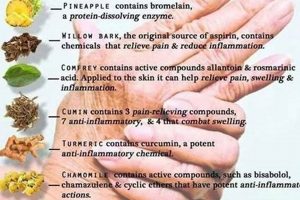
Botanical anti-inflammatory agents offer a potential strategy to address this underlying cause. Certain plant extracts, such as chamomile, calendula, and green tea, contain bioactive compounds (e.g., flavonoids, terpenoids) that exhibit documented anti-inflammatory effects. These compounds can inhibit the production of pro-inflammatory mediators, reduce capillary permeability, and promote vasoconstriction. For example, the topical application of chamomile extract may help to reduce redness and swelling associated with allergic reactions, thereby diminishing the appearance of infraorbital bags. Similarly, green tea’s catechins can scavenge free radicals and mitigate inflammation induced by oxidative stress.
However, the effectiveness of botanical anti-inflammatories varies based on the specific plant species, extraction method, concentration, and individual skin sensitivity. While promising, relying solely on these properties may not fully resolve infraorbital edema caused by structural factors such as age-related fat prolapse. Thus, proper diagnosis of the underlying cause of under-eye bags and combined treatment strategies may be warranted. Continued research is needed to validate the clinical efficacy and safety of specific botanical extracts for this cosmetic concern.
2. Lymphatic Drainage Stimulation

Effective lymphatic drainage is crucial for managing fluid accumulation, a primary contributor to the appearance of infraorbital bags. Certain plant compounds are posited to stimulate lymphatic circulation, thereby reducing edema in the periorbital region.
- Mechanism of Action
Lymphatic drainage stimulation by herbal remedies typically involves promoting the movement of lymphatic fluid away from the under-eye area. This is achieved by influencing the contraction of lymphatic vessels or reducing the viscosity of lymphatic fluid. For instance, compounds with diuretic properties may indirectly aid lymphatic drainage by decreasing overall fluid volume in the body.
- Botanicals and Application
Specific herbs traditionally used to support lymphatic function include parsley, dandelion, and cleavers. Application methods range from topical compresses and gentle massage with herbal infusions to oral consumption of herbal teas or tinctures. The choice of application depends on the specific herb and the desired effect, with topical applications providing more localized action.
- Efficacy and Considerations
The efficacy of lymphatic drainage stimulation through herbal remedies is subject to variability. Factors such as the severity of edema, individual physiology, and the potency of the herbal preparation can influence outcomes. While some individuals may experience a visible reduction in puffiness, others may observe minimal changes. Caution is advised for individuals with underlying lymphatic disorders, as excessive stimulation could exacerbate symptoms.
- Integrative Approach
Lymphatic drainage stimulation should be viewed as one component of a comprehensive approach to managing infraorbital bags. Combining herbal remedies with lifestyle modifications, such as adequate sleep, proper hydration, and avoidance of dietary triggers (e.g., high-sodium foods), may yield more favorable results. Consultation with a qualified healthcare professional is recommended to ensure appropriate treatment and rule out underlying medical conditions.
In summary, while select plant compounds may possess the capacity to support lymphatic circulation and alleviate under-eye puffiness, the effectiveness of such interventions is not universally guaranteed. Integrating these strategies with a holistic approach to skincare and overall well-being is prudent.
3. Vascular Support Enhancement

Vascular support enhancement plays a crucial role in mitigating the appearance of infraorbital bags. The delicate network of blood vessels surrounding the eyes is susceptible to weakening, dilation, and increased permeability, all of which contribute to fluid leakage and subsequent puffiness. Certain botanical compounds may strengthen vessel walls, improve circulation, and reduce leakage, thus ameliorating the cosmetic concern.
- Capillary Wall Strengthening
Specific plant extracts contain constituents that are believed to reinforce capillary walls. For example, compounds such as flavonoids and proanthocyanidins, found in horse chestnut and bilberry, may enhance collagen production and inhibit the breakdown of elastin, both essential structural proteins in blood vessels. This strengthening effect reduces the propensity for fluid to escape into surrounding tissues.
- Improved Microcirculation
Enhanced microcirculation facilitates efficient fluid drainage from the periorbital area. Botanicals like gotu kola are thought to promote vasodilation and improve blood flow to the capillaries. This improved circulation helps to remove accumulated fluids and reduces the visibility of under-eye bags.
- Reduction of Vascular Permeability
Certain herbal constituents may decrease the permeability of blood vessel walls. Inflammation and oxidative stress can increase vascular permeability, leading to fluid leakage. Plant-derived antioxidants, such as those found in green tea and grape seed extract, combat oxidative stress and may stabilize vascular walls, reducing fluid extravasation.
- Vasoconstriction Promotion
Vasoconstrictive agents can narrow blood vessels, reducing blood flow to the area and minimizing fluid accumulation. Caffeine, derived from coffee or tea, is a well-known vasoconstrictor. Topical application of caffeine-containing botanical extracts may constrict blood vessels under the eyes, temporarily reducing the appearance of puffiness.
The utilization of botanicals to enhance vascular support offers a potential strategy for addressing infraorbital bags. However, the efficacy of such interventions may vary depending on individual factors, the specific botanical formulation, and the underlying cause of the puffiness. While plant-derived compounds may provide vascular support, they may not fully resolve under-eye bags resulting from structural changes or age-related fat prolapse.
4. Antioxidant Protection Application

Oxidative stress, induced by free radicals, significantly contributes to the visible signs of aging, including the formation of infraorbital bags. These free radicals, generated by environmental factors such as UV radiation and pollution, damage collagen and elastin fibers, weakening the skin’s structural support. This weakening, coupled with increased capillary permeability, facilitates fluid accumulation in the periorbital region, resulting in puffiness and discoloration. Antioxidant protection, therefore, constitutes a crucial component of plant-based approaches targeting under-eye bags. Herbal remedies, rich in antioxidant compounds, aim to neutralize these free radicals, preserving skin integrity and mitigating the effects of oxidative stress. For instance, topical application of green tea extract, abundant in catechins, helps scavenge free radicals, reducing inflammation and supporting collagen production. Similarly, grapeseed extract, containing proanthocyanidins, exhibits potent antioxidant properties, protecting against UV-induced damage and strengthening capillary walls.
The selection and application of antioxidant-rich plant extracts require careful consideration. The bioavailability and stability of antioxidants vary depending on the source and formulation. Effective delivery systems, such as liposomes or nanoemulsions, may enhance the penetration of antioxidants into the deeper layers of the skin. Furthermore, the concentration of antioxidants in herbal preparations must be sufficient to exert a measurable effect. Real-world examples include the use of eye creams containing vitamin C derived from citrus fruits or resveratrol extracted from grapes. These formulations, when applied consistently, may visibly reduce the appearance of under-eye bags by protecting against collagen degradation and minimizing fluid leakage.
In summary, antioxidant protection represents a fundamental strategy within the domain of plant-based solutions for infraorbital puffiness. By neutralizing free radicals and preserving skin structure, herbal remedies contribute to a reduction in inflammation, improved microcirculation, and enhanced collagen support. However, the effectiveness of antioxidant protection is influenced by factors such as product formulation, application technique, and individual skin characteristics. A comprehensive approach, combining antioxidant-rich herbal extracts with lifestyle modifications and professional skincare guidance, offers the most promising path to address under-eye bags and maintain periorbital skin health.
5. Preparation Method Optimization

The efficacy of plant-derived interventions for infraorbital bags is intrinsically linked to the preparation methods employed. Optimal extraction and formulation techniques are paramount to ensuring the delivery of active compounds in a bioavailable and stable form. Suboptimal preparation can result in reduced potency, compromised stability, and potential skin irritation, negating the desired therapeutic effects.
- Solvent Selection and Extraction Efficiency
The choice of solvent significantly impacts the extraction of desired constituents from plant material. Water, alcohol, glycerin, and oil are commonly utilized solvents, each exhibiting varying degrees of polarity and selectivity. For example, lipophilic compounds, such as certain terpenoids and essential oils, are more effectively extracted using non-polar solvents like oils. Conversely, water-soluble compounds, such as flavonoids and polysaccharides, are better extracted with water or hydroalcoholic solutions. The extraction method, including maceration, infusion, decoction, or Soxhlet extraction, also influences extraction efficiency. Proper optimization of solvent selection and extraction method is essential to maximize the yield of bioactive compounds.
- Concentration and Standardization of Extracts
The concentration of active compounds in herbal preparations directly affects their therapeutic potential. Standardization involves quantifying the concentration of specific marker compounds in the extract, ensuring consistency and reproducibility of results. Standardized extracts provide a defined level of potency, allowing for more precise dosing and predictable outcomes. For instance, a standardized chamomile extract guarantees a specific concentration of apigenin, a key anti-inflammatory compound. Without standardization, the potency of herbal remedies can vary widely, leading to inconsistent results.
- Formulation and Delivery Systems
The formulation of herbal preparations significantly impacts their stability, bioavailability, and skin penetration. Factors such as pH, viscosity, and particle size influence the absorption of active compounds. Delivery systems, such as liposomes, nanoemulsions, and microencapsulation, can enhance the penetration of antioxidants and other beneficial compounds into the deeper layers of the skin. The inclusion of penetration enhancers, such as urea or lactic acid, can further improve absorption. Proper formulation is critical to ensuring that the active compounds reach their target sites in the skin and exert their therapeutic effects.
- Preservation and Stability Considerations
Herbal preparations are susceptible to degradation due to oxidation, hydrolysis, and microbial contamination. Proper preservation techniques are essential to maintain their stability and prevent spoilage. Antioxidants, such as vitamin E or rosemary extract, can be added to prevent oxidation. Preservatives, such as parabens or phenoxyethanol, inhibit microbial growth. Storage conditions, including temperature, light exposure, and humidity, also impact stability. Storing herbal remedies in airtight, dark-colored containers, away from direct sunlight and heat, helps to prolong their shelf life and maintain their potency.
In conclusion, optimization of preparation methods is paramount for realizing the full potential of plant-derived treatments for infraorbital bags. Proper solvent selection, standardization of extracts, optimized formulation, and effective preservation techniques are crucial for ensuring the delivery of potent, stable, and safe herbal remedies. A thorough understanding of these factors is essential for healthcare professionals and consumers seeking to utilize plant-based interventions for cosmetic applications.
Frequently Asked Questions Regarding Herbal Remedies for Under Eye Bags
The following questions address common inquiries and misconceptions surrounding the use of plant-based interventions for addressing infraorbital edema. The information provided is intended for informational purposes and does not constitute medical advice.
Question 1: Are herbal remedies a definitive cure for under eye bags?
Herbal remedies offer a potential approach for mitigating the appearance of under eye bags; however, they are not considered a definitive cure, particularly in cases involving structural factors such as fat prolapse or significant skin laxity. Their efficacy is primarily focused on addressing underlying causes such as inflammation, fluid retention, and compromised vascular support.
Question 2: How quickly can results be expected from using herbal remedies?
The timeframe for observing noticeable results from herbal interventions can vary significantly depending on individual physiology, the severity of the condition, and the specific botanical preparations employed. Some individuals may experience a reduction in puffiness within a few weeks, while others may require several months of consistent application to observe tangible changes.
Question 3: Are there potential side effects associated with topical herbal applications?
Topical herbal applications carry a risk of adverse reactions, including skin irritation, allergic contact dermatitis, and photosensitivity. Individuals with sensitive skin or known allergies to specific plants should exercise caution and perform a patch test prior to widespread application. Certain herbal constituents may interact with other skincare products or medications, necessitating careful consideration and professional consultation.
Question 4: Can herbal remedies address dark circles as well as puffiness?
While some herbal remedies may possess properties that can alleviate dark circles, their effectiveness is contingent on the underlying cause of the discoloration. Dark circles resulting from hyperpigmentation or thin skin may respond to botanicals with skin-brightening or collagen-stimulating effects. However, dark circles caused by structural shadowing may not be significantly improved by herbal interventions alone.
Question 5: Is it safe to ingest herbal supplements for treating under eye bags?
The ingestion of herbal supplements carries potential risks, including interactions with medications, adverse side effects, and toxicity. The safety and efficacy of oral herbal supplements for treating under eye bags have not been rigorously established. Consultation with a qualified healthcare professional is strongly recommended prior to initiating any oral herbal regimen.
Question 6: How should herbal remedies be integrated into an existing skincare routine?
Herbal remedies should be introduced gradually into an existing skincare routine to assess tolerance and minimize the risk of irritation. Avoid combining herbal preparations with harsh actives, such as retinoids or strong acids. Maintain a consistent skincare regimen that includes sun protection, hydration, and gentle cleansing. Monitor the skin closely for any signs of adverse reactions.
The use of herbal remedies for addressing under eye bags represents a multifaceted approach that requires careful consideration of individual factors and potential risks. While plant-based interventions may offer benefits, they are not a substitute for professional medical advice.
The following sections will explore preventative measures and lifestyle modifications to minimize the occurrence of infraorbital edema.
Conclusion
The preceding exploration of “herbal remedies for under eye bags” has elucidated the potential benefits and limitations associated with plant-derived interventions. Botanical anti-inflammatories, lymphatic drainage stimulants, vascular support enhancers, and antioxidant protectants offer mechanisms to address contributing factors such as inflammation, fluid retention, and oxidative stress. However, the effectiveness of these remedies is influenced by factors including preparation methods, individual physiology, and the underlying cause of infraorbital edema. Therefore, outcomes may vary considerably.
Given the complexity of periorbital aesthetics and the potential for adverse reactions, a measured approach is warranted. Consultation with qualified healthcare professionals remains crucial for accurate diagnosis, personalized treatment strategies, and the safe integration of plant-based interventions into a comprehensive skincare regimen. Further research is necessary to validate the clinical efficacy and safety of specific herbal formulations, thereby ensuring informed decision-making and promoting responsible utilization of natural resources in pursuit of cosmetic enhancements.