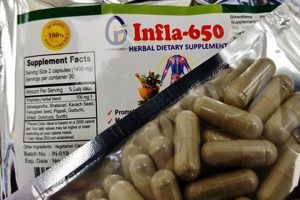
Natural remedies derived from plants, often available in capsule, tablet, or liquid extract form, are employed by individuals seeking to mitigate feelings of worry, apprehension, or unease. These products, utilizing botanical ingredients, aim to promote a sense of calm and well-being. For example, one might consider a chamomile tea, derived from the chamomile flower, as a mild, traditional option.
The appeal of these natural options stems from a desire for alternative or complementary approaches to mental wellness. Throughout history, various cultures have utilized plants for their perceived soothing properties. Their potential benefits include promoting relaxation, improving sleep quality, and reducing the physiological symptoms associated with heightened stress levels. However, it is essential to acknowledge that the efficacy and safety profiles of such remedies require careful consideration and evaluation.
This article will examine commonly used botanical preparations marketed for their potential to alleviate anxious states. Furthermore, the piece will address considerations regarding scientific evidence, potential interactions with medications, and best practices for informed decision-making when exploring these options.
Guidance on Herbal Approaches to Managing Anxiety
The following points offer guidance when considering the utilization of botanical supplements as part of a comprehensive approach to managing anxiety.
Tip 1: Consult a Healthcare Professional: Prior to initiating any regimen involving plant-derived supplements, a consultation with a qualified physician or other healthcare provider is essential. This allows for a thorough assessment of individual health status, potential interactions with existing medications, and determination of appropriateness.
Tip 2: Research Scientific Evidence: Investigate the available scientific literature pertaining to the specific botanical supplement being considered. Focus on studies that evaluate efficacy and safety. Recognize that the quality and quantity of evidence may vary.
Tip 3: Verify Product Quality: Select products from reputable manufacturers that adhere to stringent quality control standards. Look for third-party certifications that verify purity, potency, and absence of contaminants. USP (United States Pharmacopeia) verification is one example.
Tip 4: Adhere to Recommended Dosages: Precisely follow the dosage instructions provided by the manufacturer or as directed by a healthcare professional. Avoid exceeding the recommended dosage, as doing so may increase the risk of adverse effects.
Tip 5: Monitor for Adverse Reactions: Closely monitor for any adverse reactions or side effects following the commencement of herbal supplement use. Discontinue use and seek medical attention if any concerning symptoms arise.
Tip 6: Understand Potential Interactions: Be aware of potential interactions between botanical supplements and prescription medications, over-the-counter drugs, or other dietary supplements. Inform all healthcare providers of all substances being consumed.
Tip 7: Set Realistic Expectations: Understand that botanical supplements may not provide immediate or complete relief from anxiety symptoms. These options are best considered as part of a broader strategy that may include lifestyle modifications, therapy, or other medical interventions.
These guidelines are intended to promote informed decision-making and responsible utilization of these options. It is crucial to prioritize safety and efficacy while recognizing the potential limitations of relying solely on botanical approaches. Always prioritize professional medical advice.
1. Efficacy

The efficacy of plant-derived supplements in the context of anxious states constitutes a critical area of investigation. Efficacy, defined as the ability to produce a desired or intended result, directly impacts the potential value of these remedies for individuals experiencing worry, apprehension, or unease. A causal relationship exists: a demonstrable reduction in anxiety symptoms, attributed specifically to the botanical intervention, confirms its efficacy. The absence of such a reduction renders the remedy ineffective for that particular purpose. For example, if a clinical trial demonstrates that participants receiving a specific chamomile extract experience a statistically significant decrease in anxiety scores compared to a placebo group, the extract’s efficacy is supported. This outcome suggests that chamomile possesses anxiety-reducing properties exceeding those attributable to the placebo effect.
Establishing the efficacy of these supplements presents challenges. Many factors can influence the perception and measurement of anxiety. The placebo effect, individual variations in response, and methodological differences across studies can complicate the interpretation of research findings. Moreover, the composition and standardization of supplements may vary, potentially leading to inconsistent results. Rigorous clinical trials, employing validated anxiety assessment tools and controlling for confounding variables, are essential for generating reliable evidence of efficacy. Even with positive findings, the magnitude of the effect must be considered. A statistically significant reduction in anxiety may not translate to clinically meaningful improvement for all individuals.
Ultimately, the practical significance of understanding efficacy lies in enabling informed decision-making. Individuals contemplating these options should critically evaluate the available evidence and recognize that efficacy varies across different supplements. Consulting healthcare professionals, who can assess individual needs and interpret research findings, is paramount. While some botanical remedies may offer potential benefits, reliance on unproven or inadequately tested supplements can delay appropriate medical care and potentially exacerbate anxiety symptoms. Therefore, prioritizing evidence-based approaches and maintaining realistic expectations are essential for responsible utilization of these options.
2. Safety

The safety profile of plant-derived supplements marketed for anxious states represents a critical consideration. The potential for adverse effects, interactions with medications, and contraindications necessitates a thorough evaluation before initiating use. While often perceived as “natural” and therefore inherently safe, botanical substances can possess pharmacological activity capable of eliciting unintended consequences. The absence of rigorous regulatory oversight comparable to that applied to pharmaceuticals underscores the importance of independent assessment. For example, Kava, once widely promoted, has been linked to liver toxicity, leading to restrictions or bans in several countries. This case highlights the potential for serious adverse events even with seemingly benign preparations.
Ensuring safety requires a multi-faceted approach. Firstly, individuals must disclose all medications, supplements, and underlying health conditions to a qualified healthcare professional. This allows for the identification of potential interactions or contraindications. Secondly, selecting products from reputable manufacturers that adhere to Good Manufacturing Practices (GMP) helps mitigate the risk of contamination or adulteration. Thirdly, adhering to recommended dosages and monitoring for adverse reactions is crucial. Symptoms such as gastrointestinal upset, skin rashes, or changes in mood should prompt immediate discontinuation of use and consultation with a healthcare provider. Furthermore, certain populations, including pregnant or breastfeeding women, children, and individuals with pre-existing medical conditions, may be at heightened risk of adverse effects and require extra caution.
In conclusion, safety is an indispensable component of informed decision-making regarding these supplements. While some botanical options may offer potential benefits in managing anxiety, prioritizing safety necessitates a careful evaluation of risks, benefits, and individual circumstances. The perception of “natural” does not equate to inherent safety, and a proactive approach to risk mitigation is essential. Consulting healthcare professionals, verifying product quality, and diligently monitoring for adverse reactions are paramount to ensuring the responsible and safe utilization of these supplements. The overarching goal is to maximize potential benefits while minimizing the risk of harm.
3. Dosage

Dosage is a fundamental consideration in the context of botanical supplements intended to address anxious states. An appropriate dosage is essential for maximizing potential therapeutic effects while minimizing the risk of adverse reactions. Determination of optimal dosage is complex, influenced by factors such as individual physiology, supplement potency, and the specific botanical compound.
- Individual Variation
Individual responses to botanical supplements can vary significantly. Factors such as age, weight, metabolism, and overall health status can influence how a person processes and responds to a given dosage. A dosage effective for one individual may be sub-therapeutic or even cause adverse effects in another. This inherent variability necessitates careful consideration and, ideally, individualization of dosage regimens.
- Potency and Standardization
The potency of botanical supplements can vary considerably depending on factors such as the source of the plant material, extraction methods, and manufacturing processes. Standardization refers to the process of ensuring that each dose contains a consistent amount of the active compounds believed to be responsible for the therapeutic effect. Lack of standardization can lead to inconsistent results and increased risk of adverse effects. Consumers should seek products that specify the concentration of key active constituents.
- Dosage Forms and Administration
Botanical supplements are available in various dosage forms, including capsules, tablets, tinctures, and teas. Each form may have different bioavailability characteristics, affecting the rate and extent of absorption into the bloodstream. For example, a tincture may be absorbed more rapidly than a capsule. The timing and method of administration (e.g., with food or on an empty stomach) can also influence absorption and efficacy. Adherence to specific administration guidelines is critical for optimizing therapeutic outcomes.
- Titration and Monitoring
Titration, the process of gradually adjusting the dosage to achieve the desired effect while minimizing adverse reactions, may be necessary for some individuals. Starting with a low dosage and incrementally increasing it while closely monitoring for changes in anxiety symptoms and any potential side effects can help determine the optimal dosage for a given individual. This approach requires careful communication with a healthcare professional and diligent self-monitoring.
The relationship between dosage and these supplements highlights the importance of responsible and informed use. A standardized product, combined with careful monitoring and adaptation of the dose, can make it easier to safely reach a point where the herbal supplement provides the desired effect.
4. Interactions

The potential for interactions between plant-derived supplements and other substances is a critical consideration when evaluating their use for managing anxious states. These interactions can affect the efficacy and safety of both the supplement and any concurrently administered medications, necessitating careful assessment and management.
- Herb-Drug Interactions
Herb-drug interactions occur when a plant-derived supplement alters the absorption, distribution, metabolism, or excretion of a pharmaceutical drug, thereby affecting its concentration in the body. For example, St. John’s Wort, an option sometimes used for mood regulation, is a potent inducer of the CYP3A4 enzyme, which metabolizes many drugs. Concurrent use with medications such as certain antidepressants or oral contraceptives can lead to decreased drug levels and reduced efficacy, with significant clinical implications. Awareness of such interactions is essential to avoid unintended consequences.
- Herb-Herb Interactions
Herb-herb interactions involve the combined effects of multiple botanical supplements taken simultaneously. The interactions can be synergistic, resulting in enhanced therapeutic effects, or antagonistic, leading to diminished efficacy or increased risk of adverse reactions. For instance, combining chamomile with valerian root, both possessing sedative properties, may produce a synergistic effect, potentially causing excessive drowsiness. Conversely, combining stimulating herbs with those intended to reduce anxiety could negate the intended calming effect. Prudence is necessary when combining multiple botanical remedies.
- Herb-Food Interactions
Herb-food interactions can occur when certain foods alter the absorption or metabolism of botanical supplements. For example, grapefruit juice is known to inhibit the CYP3A4 enzyme, potentially increasing the levels of certain supplements in the bloodstream and elevating the risk of adverse effects. Similarly, consuming herbal teas with meals containing high levels of tannins can reduce the absorption of certain minerals. Individuals should be aware of potential food-supplement interactions and adjust their consumption patterns accordingly.
- Interactions with Medical Conditions
Pre-existing medical conditions can also influence the safety and efficacy of these supplements. Individuals with liver or kidney disease may be more susceptible to adverse effects due to impaired metabolism or excretion. Certain botanical supplements may exacerbate existing conditions or interfere with conventional medical treatments. For instance, individuals with bleeding disorders should exercise caution when using supplements with anticoagulant properties, such as ginger or ginkgo. A comprehensive medical history is essential for identifying potential interactions and contraindications.
These examples underscore the complexity of interactions and their potential impact on the safety and efficacy of strategies aimed at managing anxiety. A thorough understanding of potential interactions, combined with open communication with healthcare professionals, is essential for minimizing risks and optimizing therapeutic outcomes when considering botanical supplements.
5. Quality

The quality of plant-derived supplements designed to alleviate anxious states is paramount to their safety and efficacy. Quality encompasses several critical factors, including the identity and purity of the botanical ingredients, the manufacturing processes employed, and the consistency of the final product. Substandard quality can render supplements ineffective, or, more seriously, pose health risks. For example, a supplement containing undisclosed contaminants or adulterants may trigger adverse reactions or interact negatively with prescription medications. The absence of verifiable quality control measures undermines consumer trust and hinders the responsible utilization of these options.
The impact of quality extends beyond mere product composition. Manufacturing processes play a crucial role in preserving the integrity of the active compounds. Improper extraction techniques, inadequate storage conditions, or insufficient testing can degrade the active constituents, leading to diminished therapeutic effects. Furthermore, variations in raw material sourcing can contribute to inconsistencies in product potency. Reputable manufacturers adhere to Good Manufacturing Practices (GMP) to ensure consistency, purity, and accurate labeling. Third-party certifications, such as those offered by USP (United States Pharmacopeia) or NSF International, provide an independent verification of product quality, enhancing consumer confidence.
In conclusion, prioritizing quality is essential for maximizing the potential benefits and minimizing the risks associated with these supplements. Consumers should seek products from reputable manufacturers, scrutinize labels for accurate information, and verify third-party certifications. Healthcare professionals can provide guidance on selecting high-quality supplements and assessing their appropriateness for individual needs. By emphasizing quality, individuals can make informed decisions and promote the responsible use of these botanical remedies. The pursuit of quality is not merely a regulatory requirement but a fundamental ethical obligation to ensure consumer safety and well-being.
6. Regulation
The regulatory landscape governing botanical supplements intended for anxious states directly influences product quality, safety, and consumer access. Due to their classification as dietary supplements in many jurisdictions, these products often face less stringent pre-market evaluation compared to pharmaceutical drugs. This classification results in a regulatory framework primarily focused on post-market surveillance, where the onus is largely on regulatory agencies to demonstrate a product is unsafe before taking action. The absence of mandatory pre-market approval can lead to inconsistencies in product quality, inaccurate labeling, and the presence of adulterants or contaminants. This system creates a potential information asymmetry, with consumers lacking complete assurance about the contents and safety of the products they purchase.
The effect of this lighter regulatory touch can be observed in instances of adverse events linked to botanical supplements. For example, concerns regarding aristolochic acid contamination in certain herbal products, leading to kidney damage, prompted regulatory action only after numerous reports of adverse health effects. The Dietary Supplement Health and Education Act (DSHEA) in the United States, while providing a framework for regulation, places the responsibility for ensuring safety on the manufacturer, but without requiring pre-market clinical trials. This contrasts sharply with the rigorous pre-approval process for prescription medications, where safety and efficacy are extensively evaluated before market entry. The practical significance of understanding these regulatory differences lies in recognizing the inherent limitations of the system and the need for consumers to exercise caution and seek reliable information from healthcare professionals.
The call for enhanced regulation of these supplements is rooted in concerns regarding consumer safety and product efficacy. While overly restrictive regulations could stifle innovation and limit access to potentially beneficial remedies, a more robust framework could ensure greater product consistency, accuracy in labeling, and a higher standard of quality control. This would involve not only stricter manufacturing guidelines but also enhanced post-market surveillance and enforcement mechanisms. Ultimately, the goal is to strike a balance between fostering innovation and protecting public health. Navigating this complex landscape requires consumers to be informed, healthcare professionals to be knowledgeable, and regulatory agencies to be vigilant, thereby promoting responsible access to and utilization of botanical supplements for anxious states.
Frequently Asked Questions Regarding Botanical Supplements for Anxiety
The following section addresses common inquiries and misconceptions surrounding plant-derived supplements intended to mitigate anxious states.
Question 1: Are plant-derived supplements a substitute for conventional medical treatment for anxiety disorders?
Botanical supplements are not a substitute for conventional medical treatments, such as psychotherapy or prescription medication, in the management of diagnosed anxiety disorders. Individuals experiencing persistent or severe anxiety symptoms should seek evaluation and treatment from a qualified healthcare professional.
Question 2: Is a “natural” label synonymous with “safe” when considering plant-derived supplements?
The term “natural” does not guarantee safety. Plant-derived supplements can possess potent pharmacological activity and may interact with medications or exacerbate existing health conditions. A careful evaluation of risks and benefits is essential.
Question 3: How can the quality of a botanical supplement product be assessed?
Product quality can be assessed by selecting supplements from reputable manufacturers that adhere to Good Manufacturing Practices (GMP) and seeking products with third-party certifications, such as those offered by USP (United States Pharmacopeia) or NSF International.
Question 4: What potential risks are associated with combining multiple plant-derived supplements?
Combining multiple plant-derived supplements can increase the risk of adverse interactions. The synergistic or antagonistic effects of different botanicals can lead to unintended consequences. Consultation with a healthcare professional is advisable before combining supplements.
Question 5: How does the regulatory oversight of botanical supplements differ from that of pharmaceutical drugs?
Botanical supplements are generally subject to less stringent pre-market evaluation compared to pharmaceutical drugs. The regulatory framework primarily focuses on post-market surveillance, with a greater burden placed on regulatory agencies to demonstrate a product’s unsafety before taking action.
Question 6: Are plant-derived supplements universally effective for all individuals experiencing anxiety?
The efficacy of botanical supplements can vary depending on individual physiology, the specific botanical compound, and the severity of anxiety symptoms. A remedy that proves effective for one person may not yield the same results for another. Individualized assessment and monitoring are essential.
This information serves to promote informed decision-making and encourage responsible utilization of botanical options.
The following section transitions to further considerations regarding the integration of plant-derived supplements into a holistic approach to mental wellness.
In Summary
This exploration of herbal supplements for anxiety has illuminated several crucial aspects. From efficacy and safety considerations to dosage guidelines, potential interactions, quality control, and the regulatory landscape, a comprehensive understanding is essential for responsible decision-making. The potential benefits of such remedies must be weighed against the risks, with careful attention paid to individual circumstances and product quality.
The ongoing investigation into the role of plant-derived interventions in mental wellness continues to evolve. Continued research, rigorous quality control, and open communication between individuals and healthcare professionals are paramount to maximizing potential benefits and minimizing harm. A cautious, informed approach remains the cornerstone of navigating this complex field, ensuring that decisions align with both individual needs and established scientific evidence.