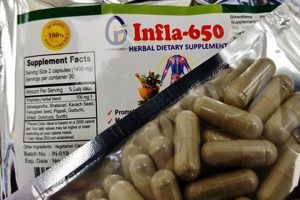
Products derived from plants, intended to promote restfulness and improve sleep quality, constitute a growing segment of the wellness market. These preparations often contain extracts from botanicals such as valerian root, chamomile, and lavender, and are available in various forms, including capsules, teas, and tinctures. The formulation may incorporate single herbs or a blend of several, each selected for its purported soporific or calming properties.
The appeal of these natural aids stems from their perceived gentler action compared to synthetic pharmaceuticals and their association with traditional medicine practices. Throughout history, various cultures have utilized plants to address sleep disturbances. Contemporary research explores the efficacy of these time-honored remedies, investigating their mechanisms of action and potential benefits for individuals experiencing mild to moderate sleep difficulties. Consumer interest is driven by a desire for non-prescription solutions that support a natural sleep cycle.
The subsequent sections will delve into the science behind common botanical ingredients used in sleep aids, examining available research on their effectiveness and safety. Considerations for selecting appropriate preparations, potential interactions with other medications, and guidelines for responsible usage will also be addressed. Furthermore, the regulatory landscape surrounding these products and the importance of consulting with healthcare professionals before incorporating them into a sleep management routine will be examined.
Guidance for Selecting Plant-Based Sleep Aids
Individuals seeking to improve sleep through natural means should approach these options with informed awareness. Careful consideration of individual needs and product characteristics is crucial for responsible utilization.
Tip 1: Research Ingredients Thoroughly: Before use, examine the specific plant extracts included in the formulation. Independent research on the purported effects, potential side effects, and any known contraindications is recommended.
Tip 2: Verify Product Quality: Look for products manufactured by reputable companies that adhere to stringent quality control standards. Third-party certifications can provide assurance regarding purity and potency.
Tip 3: Start with a Low Dosage: Initiate use with the lowest recommended dose to assess individual tolerance and minimize the risk of adverse reactions. Gradual increases may be considered based on individual response.
Tip 4: Be Mindful of Potential Interactions: These preparations may interact with certain medications, including antidepressants, anti-anxiety drugs, and blood thinners. Consultation with a healthcare professional is essential for individuals taking prescription drugs.
Tip 5: Consider Individual Health Conditions: Certain health conditions, such as liver or kidney disease, may necessitate caution when using these products. Medical advice should be sought to ensure safety.
Tip 6: Prioritize Sleep Hygiene: Plant-based sleep aids should be considered as an adjunct to, not a replacement for, good sleep hygiene practices. Maintaining a regular sleep schedule, creating a relaxing bedtime routine, and optimizing the sleep environment are paramount.
Tip 7: Avoid Prolonged Use: Extended use may lead to dependence or diminished effectiveness. Periodic breaks or cycling different products may be beneficial.
The responsible integration of plant-derived sleep support requires careful evaluation, informed decision-making, and awareness of potential risks. The benefits of improved sleep quality must be weighed against the potential for adverse effects or interactions.
The following sections will explore the legal considerations surrounding these products and emphasize the importance of professional guidance for optimizing sleep health.
1. Botanical Sources

The efficacy of herbal sleep supplements is intrinsically linked to their botanical sources. The specific plant species, the part of the plant used (e.g., root, leaf, flower), and the cultivation practices employed directly influence the concentration and composition of bioactive compounds. For example, valerian root, commonly used in sleep aids, exhibits varying levels of valerenic acids depending on the valerian species (e.g., Valeriana officinalis) and growing conditions. Similarly, chamomile’s soporific effects are attributed to apigenin, a flavonoid present in its flowers, with the concentration depending on the chamomile variety (e.g., German chamomile vs. Roman chamomile) and harvesting techniques. The selection and processing of these botanical sources serve as the foundation upon which the supplement’s potential sleep-promoting properties are built.
The quality and purity of botanical sources are also of paramount importance. Contamination with heavy metals, pesticides, or other plant species can compromise the supplement’s safety and efficacy. Reputable manufacturers implement rigorous testing protocols to ensure the botanical sources are free from adulterants and meet established quality standards. Furthermore, the extraction method used to obtain the active compounds from the plant material can significantly impact the final product’s composition. Different extraction techniques, such as solvent extraction or steam distillation, yield varying concentrations and ratios of bioactive constituents, potentially affecting the supplement’s overall effectiveness. Sourcing from certified organic farms and employing sustainable harvesting practices further contribute to the integrity and reliability of herbal sleep supplements. Consider Lavender ( Lavandula angustifolia) only works if using steam distillation process rather than solvent extraction method.
In conclusion, the botanical sources of herbal sleep supplements are not merely ingredients but rather the fundamental determinants of their potential benefits and risks. A thorough understanding of the plant species, cultivation practices, processing methods, and quality control measures is essential for both manufacturers and consumers. By prioritizing botanical source integrity, the likelihood of realizing the desired sleep-promoting effects while minimizing potential adverse outcomes is significantly enhanced. The origin and handling of the plant material form the basis for a sleep aid’s quality.
2. Formulation Diversity

The varied presentation of herbal sleep supplements significantly impacts their efficacy and suitability for individual needs. This diversity stems from variations in ingredients, dosages, and delivery methods, influencing absorption rates and overall effects.
- Single-Herb Preparations vs. Multi-Herb Blends
Single-herb preparations focus on the properties of a specific botanical, allowing users to target known sensitivities or preferences. For example, a valerian root capsule contains primarily valerian extract. Multi-herb blends combine several botanicals, theoretically leveraging synergistic effects, such as chamomile and lavender in a tea formulation. These combinations can offer a broader range of calming compounds, but may also increase the risk of interactions or sensitivities.
- Dosage Variations
Dosage recommendations for herbal sleep supplements vary considerably across products and manufacturers. This variability arises from differences in extraction methods, standardization processes, and target user populations. A low-dose chamomile tea may provide mild relaxation, while a high-concentration valerian root extract could induce more pronounced sedative effects. Accurate dosage information and adherence to recommended guidelines are crucial for safe and effective use.
- Delivery Methods: Capsules, Teas, Tinctures, and More
The delivery method significantly influences the absorption rate and onset of effects. Capsules and tablets offer convenience and precise dosing but may have slower absorption compared to liquid formulations. Teas provide a gentler, more gradual effect, often associated with a relaxing ritual. Tinctures, concentrated herbal extracts in alcohol or glycerin, allow for rapid absorption through the sublingual route. Individual preferences and absorption sensitivities should guide the choice of delivery method.
- Standardized Extracts vs. Whole Herb Powders
Standardized extracts contain a consistent, measured amount of specific active compounds, ensuring predictable potency. For instance, a standardized valerian extract may guarantee a specific concentration of valerenic acids. Whole herb powders contain all the components of the plant, including both active and inactive compounds, potentially offering a broader spectrum of benefits but with less precise dosing. The choice depends on the desired level of control and the user’s understanding of herbal constituents.
The diverse formulations of herbal sleep supplements offer a spectrum of options for individuals seeking natural sleep support. Careful evaluation of ingredients, dosages, delivery methods, and standardization processes is essential for selecting a product that aligns with individual needs and health conditions. Understanding these nuances empowers users to make informed decisions and maximize the potential benefits while minimizing the risk of adverse effects.
3. Mechanism of Action

The efficacy of herbal sleep supplements hinges on their mechanisms of action within the human body. These mechanisms, while often not as precisely defined as those of synthetic pharmaceuticals, involve interactions with various neurotransmitter systems and receptors in the brain. For instance, valerian root is believed to enhance the activity of gamma-aminobutyric acid (GABA), a neurotransmitter that promotes relaxation and reduces neuronal excitability. Chamomile, conversely, contains apigenin, which binds to benzodiazepine receptors in the brain, producing a calming effect without the addictive properties associated with benzodiazepine drugs. The specific compounds within these botanicals, therefore, trigger a cascade of physiological events that ultimately contribute to improved sleep quality.
Understanding the mechanism of action is crucial for several reasons. First, it informs the selection of appropriate herbal supplements based on individual needs and potential contraindications. An individual with pre-existing anxiety might benefit more from chamomile due to its direct interaction with benzodiazepine receptors, while another individual experiencing difficulty initiating sleep could find valerian root more effective due to its GABA-enhancing properties. Second, knowledge of the mechanism allows healthcare practitioners to anticipate potential interactions between herbal supplements and conventional medications. For example, combining valerian root with other sedatives could potentiate their effects, leading to excessive drowsiness. Third, elucidating the mechanism of action provides a scientific basis for evaluating the efficacy of herbal supplements through clinical trials and research studies.
In conclusion, the mechanism of action serves as a foundational element in understanding the effects of herbal sleep supplements. Further research is necessary to fully elucidate the complex interactions between botanical compounds and the human nervous system. Such investigations will improve the quality of herbal sleep supplements by informing dosage recommendations and usage guidelines, as well as assisting in choosing appropriate herbal combinations to promote a more restful sleep.
4. Efficacy Evidence

The demonstrable effectiveness of herbal sleep supplements is paramount to their credibility and responsible utilization. Efficacy evidence, derived from rigorous scientific investigation, provides the basis for understanding whether a given botanical preparation demonstrably promotes sleep or alleviates sleep disturbances. Without such evidence, claims regarding sleep-promoting benefits remain speculative. The connection between efficacy evidence and herbal sleep supplements is thus a causal one: substantiated efficacy forms the rationale for recommending or consuming these products.
The importance of efficacy evidence manifests in several ways. Firstly, it guides informed consumer choice. Individuals seeking sleep support can evaluate the available data on different herbal supplements to determine which options are most likely to yield desired results. For example, multiple studies have investigated the effects of valerian root on sleep latency and sleep quality. These studies, while yielding mixed results, offer a foundation for understanding valerian’s potential benefits. Secondly, efficacy evidence informs healthcare professional recommendations. Physicians and other healthcare providers can utilize scientific data to advise patients on the appropriate use of herbal sleep supplements, considering potential benefits and risks. Thirdly, efficacy evidence drives product development and refinement. Manufacturers can use research findings to optimize formulations, dosages, and delivery methods, thereby enhancing the effectiveness of their products. For instance, a study demonstrating the synergistic effects of combining specific herbs could prompt manufacturers to develop combination products with enhanced sleep-promoting properties.
In conclusion, efficacy evidence is an indispensable component of herbal sleep supplements. Its presence or absence directly influences consumer trust, healthcare professional guidance, and product development. While research on herbal sleep supplements is ongoing, the available evidence provides a starting point for understanding their potential benefits and limitations. Challenges remain in conducting high-quality clinical trials due to factors such as placebo effects and variability in botanical sources. Despite these challenges, continued investment in efficacy research is essential for establishing the credibility and maximizing the responsible use of herbal sleep supplements.
5. Safety Profiles

The safety profiles of herbal sleep supplements constitute a critical consideration for consumers and healthcare professionals. A comprehensive understanding of potential adverse effects, contraindications, and drug interactions is essential for informed decision-making and responsible use. These profiles are not uniform across all herbal products, necessitating careful evaluation of each supplement’s unique characteristics.
- Adverse Effects and Side Effects
Herbal sleep supplements, while often perceived as natural and benign, are not entirely devoid of potential adverse effects. Common side effects may include daytime drowsiness, dizziness, gastrointestinal upset, and headache. In rare cases, more severe reactions, such as allergic reactions or liver toxicity, have been reported. The incidence and severity of side effects can vary depending on the specific herb, dosage, and individual sensitivity. Valerian root, for example, has been associated with mild gastrointestinal discomfort in some individuals, while kava, though not widely available due to safety concerns, has been linked to liver damage. Understanding these potential adverse effects allows users to weigh the benefits against the risks.
- Drug Interactions
Herbal sleep supplements can interact with various prescription and over-the-counter medications, potentially altering their efficacy or increasing the risk of adverse effects. For instance, St. John’s Wort, although primarily used for mood disorders, can induce hepatic enzymes, leading to decreased blood levels of certain drugs, including antidepressants, oral contraceptives, and anticoagulants. Valerian root may potentiate the sedative effects of benzodiazepines or other central nervous system depressants. Patients taking prescription medications should consult with a healthcare professional before using herbal sleep supplements to assess the risk of potential drug interactions.
- Contraindications and Precautions
Certain medical conditions or physiological states may contraindicate the use of specific herbal sleep supplements. Pregnant or breastfeeding women should generally avoid herbal supplements due to limited safety data. Individuals with liver or kidney disease may require caution, as these organs are responsible for metabolizing and eliminating herbal constituents. Children and older adults may be more susceptible to adverse effects and require lower dosages. Patients with a history of allergic reactions to plants in the same botanical family should exercise caution when using related herbal supplements. Awareness of these contraindications and precautions is essential for preventing adverse events.
- Quality Control and Standardization
The safety profiles of herbal sleep supplements are also influenced by quality control measures and standardization processes. Variability in botanical sources, extraction methods, and manufacturing practices can lead to inconsistencies in product potency and purity. Some products may contain contaminants, such as heavy metals or pesticides, while others may be adulterated with undeclared ingredients. Third-party certifications, such as those from USP or NSF International, can provide assurance regarding product quality and safety. Consumers should select products from reputable manufacturers that adhere to stringent quality control standards.
The safety profiles of herbal sleep supplements necessitate careful consideration of potential adverse effects, drug interactions, contraindications, and quality control measures. A thorough understanding of these factors empowers consumers and healthcare professionals to make informed decisions and promote responsible use, thereby minimizing the risk of adverse events and maximizing the potential benefits of herbal sleep aids. Continuous monitoring and reporting of adverse events are crucial for further refining our understanding of the safety profiles of these products.
6. Regulatory Status

The regulatory status of herbal sleep supplements directly impacts their availability, safety, and marketing claims. In many jurisdictions, including the United States, these products are classified as dietary supplements, a category distinct from pharmaceuticals. This classification results in less stringent regulatory oversight compared to prescription medications. Manufacturers are not required to prove the safety or efficacy of their supplements to regulatory bodies prior to marketing. However, they are responsible for ensuring their products are safe and accurately labeled. The absence of pre-market approval by agencies like the Food and Drug Administration (FDA) creates a landscape where product quality and purported benefits can vary significantly. This impacts consumer confidence and necessitates diligent self-education before use.
The distinction between dietary supplements and pharmaceuticals has profound implications. For example, a pharmaceutical sleep aid undergoes rigorous clinical trials to demonstrate its effectiveness and identify potential side effects. An herbal sleep supplement, conversely, may rely on historical use or limited scientific evidence to support its claims. While the FDA can take action against adulterated or misbranded supplements, enforcement is often reactive rather than proactive. Consequently, the burden of ensuring product safety and efficacy falls largely on manufacturers and consumers. This regulatory framework fosters innovation and market access but requires careful due diligence to minimize potential risks. Reputable manufacturers may voluntarily seek third-party certifications to validate product quality and purity. Such certifications provide an added layer of assurance in a less regulated market.
In conclusion, the regulatory status of herbal sleep supplements defines the market landscape and shapes consumer responsibilities. The classification as dietary supplements allows for greater accessibility but necessitates heightened awareness regarding product quality and safety. The onus rests on manufacturers to uphold standards and on consumers to exercise informed judgment. While ongoing discussions regarding stricter regulations continue, the current framework underscores the importance of responsible self-care and informed decision-making when considering the use of herbal sleep aids. A clear understanding of the regulatory environment is thus integral to the safe and effective incorporation of these products into a sleep management routine.
Frequently Asked Questions About Herbal Sleep Supplements
The following addresses common inquiries and misconceptions surrounding the use of herbal sleep supplements.
Question 1: Are herbal sleep supplements regulated as strictly as prescription medications?
No, herbal sleep supplements are typically regulated as dietary supplements, which are subject to less stringent regulatory oversight than prescription medications. Manufacturers are responsible for ensuring product safety and accurate labeling, but pre-market approval is generally not required.
Question 2: Can herbal sleep supplements interact with prescription medications?
Yes, herbal sleep supplements can potentially interact with prescription medications. Certain herbs may alter the metabolism or effects of drugs, leading to reduced efficacy or increased side effects. Consultation with a healthcare professional is advised before combining herbal supplements with prescription medications.
Question 3: Are herbal sleep supplements safe for pregnant or breastfeeding women?
The safety of herbal sleep supplements during pregnancy and breastfeeding is often uncertain due to limited research. As a general precaution, pregnant and breastfeeding women should avoid using herbal sleep supplements unless specifically directed by a healthcare provider.
Question 4: How quickly do herbal sleep supplements take effect?
The onset of action for herbal sleep supplements can vary depending on the specific herb, dosage, and individual factors. Some individuals may experience noticeable effects within 30 minutes to an hour, while others may require several days or weeks of consistent use to observe improvements in sleep.
Question 5: Can herbal sleep supplements become addictive?
While herbal sleep supplements are generally considered less addictive than prescription sedatives, prolonged or excessive use may lead to dependence in some individuals. It is advisable to use these supplements judiciously and consider taking breaks to avoid potential dependence.
Question 6: Are all herbal sleep supplements created equal?
No, the quality and efficacy of herbal sleep supplements can vary significantly depending on factors such as botanical source, manufacturing practices, and standardization processes. It is essential to select products from reputable manufacturers and look for third-party certifications to ensure quality and purity.
In summary, herbal sleep supplements can offer potential benefits for improving sleep, but it is crucial to approach their use with caution and informed awareness. Consultation with a healthcare professional is recommended, particularly for individuals with underlying medical conditions or those taking prescription medications.
The following section will provide a conclusion and final thoughts.
Conclusion
The preceding exploration has provided a detailed overview of herbal sleep supplements, encompassing their botanical origins, diverse formulations, mechanisms of action, efficacy evidence, safety profiles, and regulatory status. A recurrent theme has been the necessity for informed consumer awareness and responsible utilization. The landscape of these products presents a complex interplay of potential benefits and inherent risks, requiring careful evaluation and discernment.
The decision to incorporate herbal sleep supplements into a sleep management regimen should be approached with due diligence and, ideally, in consultation with a qualified healthcare professional. Continued research is essential to further elucidate the long-term effects and optimize the safe and effective application of these botanical preparations. The future of herbal sleep supplements rests on a foundation of scientific rigor and ethical manufacturing practices, fostering greater trust and confidence among consumers seeking natural sleep support.