The use of botanical substances to alleviate discomfort stemming from the sciatic nerve is a practice rooted in traditional medicine. Sciatica, characterized by pain radiating along the sciatic nerve pathway from the lower back down the leg, can significantly impact an individual’s quality of life. Consequently, exploration into natural approaches for pain management is a common pursuit.
Historically, various cultures have employed plants and their extracts for analgesic and anti-inflammatory purposes. The appeal of these treatments often lies in their perceived natural origin and potential for fewer adverse side effects compared to pharmaceutical interventions. Understanding the potential of these plant-derived options offers individuals a broader spectrum of choices for managing their condition and improving well-being.
The following discussion will examine specific botanical agents that have demonstrated potential in mitigating sciatic discomfort, exploring their mechanisms of action and considering the available scientific evidence supporting their usage.
Guidance on Natural Approaches to Sciatic Discomfort
Considerations when exploring plant-based options for managing sciatic pain are multifaceted and necessitate careful attention to ensure safe and potentially effective outcomes.
Tip 1: Consultation with Healthcare Professionals: Prior to initiating any new treatment regimen, consulting a qualified healthcare provider, including physicians or licensed herbalists, is paramount. They can assess the individual’s specific condition, potential drug interactions, and overall suitability for such interventions.
Tip 2: Understanding Potential Allergenic Reactions: Botanical agents possess the potential to trigger allergic responses in susceptible individuals. Conduct a patch test on a small skin area before widespread application to monitor for adverse reactions, such as redness, itching, or swelling.
Tip 3: Ensuring Product Quality and Sourcing: The efficacy of these solutions is directly linked to the quality and purity of the herbal product. Acquire supplements from reputable manufacturers who adhere to stringent quality control standards and provide transparent information regarding sourcing and processing.
Tip 4: Paying Attention to Dosage and Administration: Adhere strictly to recommended dosages and administration guidelines provided by the manufacturer or healthcare professional. Overconsumption can lead to adverse side effects, while insufficient dosage may yield unsatisfactory results.
Tip 5: Awareness of Potential Drug Interactions: Some herbs can interact negatively with prescription medications, potentially altering their effectiveness or increasing the risk of side effects. Disclose all medications and supplements currently being taken to a healthcare provider to assess potential interactions.
Tip 6: Monitoring Treatment Effectiveness: Maintain a detailed record of symptoms and progress during treatment. This information allows for informed decision-making regarding dosage adjustments or the need for alternative interventions.
Tip 7: Combining with Conventional Therapies: These plant-based approaches are often best employed as a complementary therapy alongside conventional medical treatments, such as physical therapy or pain medication, under the guidance of a healthcare professional.
Incorporating these considerations can contribute to a safer and more effective approach to managing sciatic discomfort through natural remedies. Emphasizing professional guidance, product quality, and careful monitoring are essential components of a responsible treatment strategy.
The next section will provide a summary of research on these methods, including potential benefits and precautions.
1. Anti-inflammatory Potential
Sciatic nerve pain frequently arises from inflammation surrounding the nerve root in the lower spine. Conditions such as herniated discs or spinal stenosis can trigger an inflammatory cascade, leading to nerve compression and subsequent pain. The “anti-inflammatory potential” of botanical treatments is therefore a key mechanism by which they may alleviate sciatic discomfort. By modulating the inflammatory response, these interventions aim to reduce swelling and pressure on the sciatic nerve, thereby mitigating pain signals.
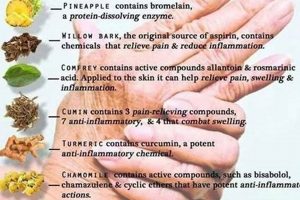
Certain plant-derived compounds, such as curcumin found in turmeric and boswellic acids present in Boswellia serrata, have demonstrated anti-inflammatory properties through various pathways. Curcumin, for example, has been shown to inhibit the activity of inflammatory mediators like cytokines and cyclooxygenase-2 (COX-2). Similarly, boswellic acids may suppress the production of leukotrienes, which are also involved in the inflammatory process. While studies are ongoing, preliminary evidence suggests that these mechanisms could contribute to a reduction in sciatic pain symptoms when caused by inflammation.
In summary, the anti-inflammatory attributes of botanical agents constitute a significant factor in their potential role in managing sciatic pain. While not a cure, addressing inflammation can offer symptomatic relief and potentially promote a more favorable environment for nerve healing. However, the specific efficacy and safety of these solutions require further investigation through rigorous clinical trials and should always be considered in conjunction with professional medical advice.
2. Pain-relieving Properties

The analgesic potential of botanical treatments is a primary reason for their consideration in managing sciatica. Sciatic pain, often severe and debilitating, necessitates effective strategies for symptomatic relief. Certain plants contain compounds that may interact with pain pathways, offering a means to reduce perceived discomfort.
- Analgesic Compounds and Mechanisms
Various herbs contain active compounds with known analgesic effects. Salicin, derived from willow bark, acts similarly to aspirin by inhibiting prostaglandin synthesis, thereby reducing pain and inflammation. Other compounds, like capsaicin from chili peppers, initially stimulate pain receptors but subsequently desensitize them, resulting in pain relief. These mechanisms, while not fully understood, contribute to the potential for botanical treatments to alleviate sciatic pain.
- Opioid Receptor Modulation
Some plant-derived substances interact with opioid receptors in the central nervous system, which are crucial in pain modulation. While not chemically similar to conventional opioids, these compounds may exert analgesic effects through similar pathways. For instance, certain constituents in kratom (Mitragyna speciosa) have been found to bind to opioid receptors, potentially offering pain relief. However, the use of such substances is controversial due to the risk of dependence and adverse side effects, necessitating cautious evaluation and professional guidance.
- Nerve Signal Interference
Certain plants contain substances that may interfere with the transmission of pain signals along nerve pathways. For example, compounds in St. John’s Wort are believed to modulate neurotransmitter activity, which could indirectly influence pain perception. By altering the way pain signals are processed and transmitted, these solutions might reduce the intensity and frequency of sciatic pain episodes. This mechanism is complex and requires further investigation to fully elucidate its effects.
- Topical Application for Localized Relief
The topical application of botanical preparations, such as creams or ointments containing arnica or peppermint oil, can provide localized pain relief. Arnica is thought to reduce inflammation and promote circulation, while peppermint oil contains menthol, which has cooling and analgesic properties. These solutions offer a non-systemic approach to pain management, potentially minimizing the risk of systemic side effects. However, their efficacy may be limited to superficial pain and inflammation.
The “pain-relieving properties” inherent in various botanical treatments offer a diverse range of mechanisms for managing sciatic discomfort. While promising, these approaches necessitate careful consideration of their potential benefits, risks, and interactions with other medications. Professional guidance is crucial to ensure safe and effective utilization within a comprehensive pain management strategy.
3. Traditional Applications

The historical use of botanical substances for sciatic pain relief provides a valuable context for contemporary investigations. Traditional applications, often rooted in centuries of empirical observation, offer insights into potentially effective remedies and inform modern research efforts to validate their efficacy and safety.
- Ayurvedic Medicine
Ayurveda, an ancient Indian system of medicine, utilizes a variety of herbs for musculoskeletal ailments, including sciatica. Specific treatments include formulations containing ashwagandha (Withania somnifera) for its anti-inflammatory and nerve-toning properties, as well as guggul (Commiphora mukul) for its purported ability to reduce inflammation and promote tissue repair. Ayurvedic practitioners often tailor herbal prescriptions to individual constitutions and imbalances, emphasizing a holistic approach to pain management.
- Traditional Chinese Medicine (TCM)
TCM incorporates herbal formulas and acupuncture to address sciatica, which is often attributed to “Qi stagnation” or “blood stasis.” Herbs such as Du Zhong (Eucommia ulmoides) and Dang Gui (Angelica sinensis) are commonly used to strengthen the lower back and improve circulation. TCM practitioners consider the specific patterns of disharmony in each patient, selecting herbs and acupuncture points to restore balance and alleviate pain along the sciatic nerve pathway.
- Native American Herbalism
Various Native American tribes have historically employed indigenous plants for pain relief, including sciatica. Willow bark (Salix spp.), containing salicin, a precursor to aspirin, was traditionally used as a pain reliever and anti-inflammatory agent. Other plants, such as devil’s claw (Harpagophytum procumbens), have been used for their potential analgesic and anti-inflammatory properties. The knowledge of these applications was often passed down through generations, reflecting a deep understanding of the local flora and their medicinal properties.
- European Herbal Traditions
European herbalism features various plants for addressing nerve-related pain. St. John’s Wort (Hypericum perforatum) has historically been used for nerve pain and mood disorders, potentially influencing pain perception. Chamomile (Matricaria chamomilla) is often used for its calming and anti-inflammatory effects, which may indirectly alleviate pain by reducing muscle tension and promoting relaxation. These traditional uses reflect a holistic approach to pain management, incorporating herbs that address both physical and emotional aspects of the condition.
These varied traditional applications highlight the widespread recognition of botanical treatments for sciatica across diverse cultures. While these historical practices offer valuable insights, it is crucial to note that contemporary scientific validation is necessary to confirm the efficacy and safety of these remedies. Modern research can build upon traditional knowledge, employing rigorous methodologies to assess the true potential of plant-derived treatments for sciatic pain.
4. Active compounds

The efficacy of botanical treatments for sciatic nerve pain is directly attributable to the “active compounds” they contain. These compounds, which are specific chemical constituents within the plant material, interact with physiological systems to produce therapeutic effects. Without these active compounds, the botanical material would lack the capacity to exert a discernible influence on pain pathways or inflammatory processes related to sciatica.
Examples abound: curcumin in turmeric, a polyphenol, exhibits anti-inflammatory action by inhibiting various inflammatory mediators. Salicin in willow bark, a precursor to salicylic acid, functions similarly to aspirin, reducing pain and inflammation. Capsaicin in chili peppers desensitizes pain receptors through prolonged activation. The concentration, bioavailability, and specific mechanisms of these compounds determine the extent and nature of the therapeutic effect. The careful selection and preparation of herbal remedies should focus on optimizing the presence and accessibility of these active constituents.
Understanding the role of active compounds is not merely an academic exercise; it has practical implications for treatment. It allows for a more rational approach to selecting and using botanical treatments, moving beyond anecdotal evidence toward a more evidence-based paradigm. Challenges remain in standardizing herbal preparations and fully elucidating the complex interactions of multiple active compounds within a single plant. Nevertheless, focusing on active compounds is crucial for developing effective and reliable botanical strategies for managing sciatic nerve pain.
5. Safety profile

The “safety profile” of botanical interventions is paramount when considering their use for managing sciatic nerve pain. A thorough evaluation of potential risks, contraindications, and interactions is essential to ensure patient well-being and avoid adverse events. Prioritizing safety is an ethical and practical imperative in the context of herbal remedies.
- Potential for Adverse Reactions
Botanical substances, while often perceived as “natural,” are not inherently safe for all individuals. Allergic reactions, ranging from mild skin irritation to severe anaphylaxis, can occur. Additionally, some herbs may cause gastrointestinal distress, headaches, or other undesirable side effects. Individuals with pre-existing medical conditions, such as liver or kidney disease, may be particularly vulnerable. Rigorous assessment of individual patient factors is crucial before initiating herbal treatment.
- Drug Interactions
Herbal remedies can interact with prescription and over-the-counter medications, potentially altering their effectiveness or increasing the risk of adverse effects. For example, St. John’s Wort can interfere with the metabolism of certain antidepressants, anticoagulants, and oral contraceptives. Garlic supplements may potentiate the effects of blood-thinning medications, increasing the risk of bleeding. Disclosure of all medications and supplements to a healthcare provider is essential to identify and manage potential interactions.
- Quality Control and Standardization
The quality and purity of herbal products can vary significantly. Lack of standardization in manufacturing processes can lead to inconsistent potency and contamination with heavy metals, pesticides, or other adulterants. Purchasing herbal remedies from reputable manufacturers who adhere to strict quality control standards is crucial to minimize these risks. Third-party testing and certification can provide additional assurance of product quality.
- Contraindications and Precautions
Certain herbal remedies are contraindicated in specific populations, such as pregnant or breastfeeding women, children, and individuals with certain medical conditions. For example, some herbs may stimulate uterine contractions, posing a risk to pregnant women. Others may be toxic to the liver or kidneys. Careful consideration of contraindications and precautions is essential to avoid harm. Healthcare providers should provide clear guidance on the appropriate use of herbal remedies in specific patient populations.
In conclusion, the “safety profile” of botanical treatments for sciatic nerve pain warrants careful consideration. Awareness of potential adverse reactions, drug interactions, quality control issues, and contraindications is crucial for ensuring patient safety. Collaboration with healthcare professionals, including physicians and licensed herbalists, is essential for informed decision-making and responsible use of herbal remedies.
6. Preparation methods
The effectiveness of botanical treatments for sciatic nerve pain is inextricably linked to the “preparation methods” employed. The manner in which an herb is processed and administered directly influences the bioavailability of its active compounds and, consequently, its therapeutic potential. Improper preparation can render a potent herb ineffective or, conversely, increase the risk of adverse effects due to concentrated dosages. The selection of an appropriate preparation method is therefore a critical determinant of the outcome when utilizing botanical solutions for sciatica.
Various preparation methods exist, each with distinct characteristics and applications. Teas, or infusions, involve steeping herbs in hot water to extract water-soluble compounds. This method is suitable for delicate plant parts like leaves and flowers, but may not efficiently extract all active constituents. Decoctions, conversely, involve boiling tougher plant materials like roots and bark, allowing for a more thorough extraction of compounds. Tinctures utilize alcohol as a solvent to extract a wider range of compounds, resulting in a more concentrated and shelf-stable preparation. Extracts, often standardized to contain specific concentrations of active compounds, offer precise dosing but require sophisticated manufacturing processes. Topical applications, such as creams and ointments, allow for localized delivery of herbal constituents to the affected area. The choice of preparation method should align with the specific herb used, the desired therapeutic effect, and the individual’s tolerance and preferences. A real-life example illustrating this point is the preparation of turmeric for its anti-inflammatory benefits. Simply consuming raw turmeric provides limited bioavailability of curcumin. However, when turmeric is prepared with black pepper, which contains piperine, the bioavailability of curcumin significantly increases, enhancing its therapeutic effect.
The understanding of preparation methods is not merely an academic consideration; it holds practical significance for individuals seeking botanical treatments for sciatic pain. A poorly prepared remedy may provide little to no relief, leading to disillusionment and abandonment of potentially beneficial therapies. Conversely, a properly prepared remedy, tailored to the individual’s needs and the specific characteristics of the herb, can offer significant symptomatic relief and improve quality of life. Challenges remain in standardizing preparation methods and ensuring consistency across different manufacturers. However, by prioritizing the selection of appropriate preparation methods, individuals can maximize the potential benefits of botanical treatments for sciatic nerve pain while minimizing the risk of adverse effects. Future research should focus on optimizing preparation methods to enhance the efficacy and safety of botanical interventions for sciatica.
Frequently Asked Questions
The following addresses common inquiries regarding the utilization of botanical agents for the management of sciatic nerve pain, providing insights into their potential benefits and limitations.
Question 1: Are plant-based options a substitute for conventional medical treatment of sciatica?
Plant-derived treatments are generally not considered a replacement for conventional medical care for sciatica. Individuals experiencing sciatic pain should seek a diagnosis and treatment plan from a qualified healthcare professional, which may include physical therapy, medication, or other interventions.
Question 2: How long does it typically take to experience relief from sciatic pain using natural remedies?
The time frame for experiencing relief varies considerably depending on the individual, the severity of the condition, and the specific botanical agents used. Some individuals may experience noticeable improvements within a few weeks, while others may require several months of consistent use before observing significant changes. It is essential to maintain realistic expectations and adhere to a comprehensive treatment plan.
Question 3: Are these treatments safe for long-term use?
The safety of long-term use depends on the specific plant utilized and the individual’s overall health status. Some herbs may be safe for extended periods, while others may pose risks with prolonged use. Consultation with a healthcare professional or licensed herbalist is essential to assess the suitability for long-term application and monitor for potential adverse effects.
Question 4: Can plant-based options interact with prescription medications?
Yes, these solutions possess the potential to interact with prescription medications, altering their effectiveness or increasing the risk of side effects. It is imperative to disclose all medications and supplements being taken to a healthcare provider to identify and manage any potential interactions.
Question 5: How can one ensure the quality and purity of products?
Ensuring the quality and purity requires purchasing supplements from reputable manufacturers who adhere to stringent quality control standards. Look for products that have been third-party tested and certified to verify their content and purity. Avoid products from unknown or unreliable sources.
Question 6: Are there any specific cases where such approaches should be avoided?
These options should be avoided in certain situations, such as during pregnancy or breastfeeding, in individuals with specific medical conditions (e.g., liver or kidney disease), and in individuals who are allergic to the plant being considered. Consulting a healthcare professional is crucial to determine whether this approach is appropriate for an individual’s specific circumstances.
In summary, botanical agents may offer potential benefits for managing sciatic nerve pain, but they are not a panacea. A comprehensive approach, incorporating professional medical guidance, responsible product selection, and careful monitoring, is essential for safe and effective utilization.
The subsequent section will summarize the key aspects of utilizing these techniques.
Herbal Remedies for Sciatic Nerve Pain
This exploration has examined the multifaceted domain of herbal remedies for sciatic nerve pain, encompassing historical context, mechanisms of action, safety considerations, and preparation methods. While diverse botanical agents demonstrate potential for mitigating sciatic discomfort, their utilization necessitates a judicious and informed approach.
Ultimately, the responsible integration of herbal remedies for sciatic nerve pain demands adherence to evidence-based principles and collaborative engagement with qualified healthcare professionals. Further rigorous research is essential to elucidate the optimal application of these botanical solutions, thereby ensuring both efficacy and patient safety. The pursuit of comprehensive, integrated strategies holds the key to effectively addressing the challenges posed by sciatic nerve pain.