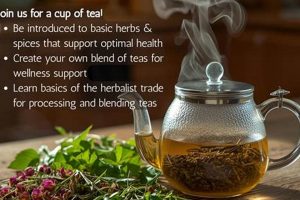
The practice of using plants and naturally occurring substances for therapeutic purposes represents a long-standing tradition in human health management. This approach emphasizes the body’s inherent ability to heal and maintain equilibrium, often focusing on addressing the root causes of ailments rather than merely alleviating symptoms. An example includes using ginger to ease nausea or chamomile tea to promote relaxation.
Throughout history, many cultures have relied on these methods for preventing and treating illnesses. The potential advantages stem from the synergistic effects of multiple compounds within the plant material, often working together to produce a more balanced and comprehensive effect. This approach frequently aligns with a holistic view of health, considering the interconnectedness of physical, mental, and emotional well-being.
Subsequent sections will delve into the various categories of these therapeutic plants, exploring their traditional applications, potential mechanisms of action, and considerations for safe and effective usage. Further discussion will also encompass aspects like sourcing, preparation methods, and the importance of consulting with qualified healthcare professionals.
Guidance on the Use of Botanical and Mineral-Based Therapeutic Approaches
The following points offer essential guidance for those considering incorporating plant-derived and naturally-occurring substances into their health regimen. Adherence to these principles can promote safety and maximize potential benefits.
Tip 1: Accurate Identification is Paramount. Before using any plant, ensure its precise identification. Many species have look-alikes, some of which may be toxic. Consult with a qualified herbalist or botanist if unsure.
Tip 2: Prioritize Sourcing from Reputable Suppliers. The quality and purity of the plant material are critical. Choose suppliers with established quality control measures and certifications, when available, to minimize contamination risks from pesticides or heavy metals.
Tip 3: Begin with Low Doses and Observe Reactions. Individuals may react differently to various substances. Start with a minimal dose to assess tolerance and potential sensitivities or allergic reactions. Gradually increase the dosage as needed, while closely monitoring for any adverse effects.
Tip 4: Preparation Methods Influence Potency. Different methods of preparation, such as teas, tinctures, or poultices, can extract varying concentrations of active compounds. Understand the proper preparation techniques for the specific substance being used to achieve the desired therapeutic outcome.
Tip 5: Be Aware of Potential Interactions. Botanical and mineral-based substances can interact with pharmaceutical medications or other supplements. Consult with a healthcare professional before combining these approaches, especially when taking prescription drugs.
Tip 6: Recognize Limitations and Seek Professional Guidance. Self-treating serious conditions can delay appropriate medical care. For acute or chronic health issues, consult with a qualified healthcare practitioner experienced in integrative medicine approaches.
Tip 7: Storage Considerations are Essential. Proper storage can preserve the potency and prevent degradation of the material. Store in a cool, dry, and dark place, away from direct sunlight and moisture, to maintain efficacy over time.
Adhering to these guidelines is essential for responsible integration. Always prioritize safety, accurate information, and professional consultation when utilizing these resources.
The subsequent section will address common misconceptions surrounding these therapeutic methods and provide clarification based on scientific evidence and established practices.
1. Safety

Safety considerations are paramount when utilizing botanical or naturally-derived treatments. Unlike pharmaceutical medications, these substances are not always subject to rigorous pre-market testing and regulation. This lack of oversight can lead to inconsistencies in product quality, inaccurate labeling, and potential contamination with harmful substances, all of which directly impact consumer safety. For example, cases of liver damage have been linked to certain unregulated botanical supplements containing undisclosed or misidentified plant species. The cause is often attributed to either inherent toxicity of the plant itself or adulteration with synthetic compounds intended to enhance the perceived efficacy.
Furthermore, safety encompasses a thorough understanding of potential interactions with prescription medications and pre-existing health conditions. Certain botanicals can amplify or diminish the effects of pharmaceuticals, leading to adverse outcomes. For instance, St. John’s Wort, a commonly used botanical for mood support, is known to interact with numerous medications, including antidepressants and blood thinners, potentially compromising their effectiveness or increasing the risk of side effects. The correct dose and preparation are crucial for safe usage as well.
In summary, ensuring safety necessitates a multi-faceted approach. Prioritizing products from reputable suppliers with rigorous quality control measures is essential. Comprehensive research into potential interactions and contraindications is paramount. Consulting with a qualified healthcare professional knowledgeable in integrative medicine is strongly recommended, especially for individuals with pre-existing health conditions or those taking prescription medications. The absence of such precautions can undermine the therapeutic potential and introduce unnecessary risks.
2. Efficacy

Efficacy, referring to the ability to produce a desired or intended result, is a central consideration in the realm of botanical and naturally-derived interventions. Establishing the efficacy of these treatments often presents challenges due to the complex nature of plant-derived compounds and the variability in individual responses. Unlike single-molecule pharmaceutical drugs, botanicals contain numerous active constituents that may act synergistically or antagonistically, complicating the identification of specific mechanisms of action and the determination of optimal dosages. Furthermore, factors such as plant variety, growing conditions, and processing methods can influence the composition and potency of the final product, leading to inconsistencies in therapeutic outcomes.
Rigorous scientific research, including randomized controlled trials, is essential to ascertain the true efficacy of these treatments for specific health conditions. For instance, studies examining the efficacy of ginger for reducing nausea have demonstrated positive results, providing evidence-based support for its traditional use. However, other botanical remedies may lack sufficient scientific validation, relying primarily on anecdotal evidence or traditional use without robust clinical data. In such cases, the potential benefits must be weighed against the lack of conclusive evidence, and caution should be exercised when considering these treatments as a primary or sole intervention.
In conclusion, while many botanical and naturally-derived substances hold promise for promoting health and well-being, establishing their efficacy requires rigorous scientific investigation. Consumers and healthcare professionals should critically evaluate the available evidence, considering both the potential benefits and limitations before incorporating these treatments into healthcare practices. Further research is needed to elucidate the mechanisms of action, optimize dosages, and ensure consistent and reliable therapeutic outcomes. This ultimately ensures the responsible integration of these therapies.
3. Sourcing

The origin and procurement of plant-based therapeutic agents are intrinsically linked to their quality, safety, and ultimately, their efficacy. The term “sourcing,” in this context, extends beyond simple acquisition; it encompasses the entire supply chain, from cultivation or wildcrafting to processing and distribution. Impurities or adulterants introduced at any point during this chain can compromise the final product, rendering it ineffective or even harmful. Consider, for example, the potential for heavy metal contamination in plants grown in polluted soils, or the risk of misidentification of species during wild harvesting, leading to the inclusion of toxic substitutes.
The geographical location and environmental conditions under which plants are grown exert a significant influence on their chemical composition and concentration of active constituents. For instance, a medicinal plant cultivated in nutrient-poor soil may exhibit lower levels of therapeutic compounds compared to the same species grown in optimal conditions. Furthermore, the method of cultivation, whether organic or conventional, can impact the presence of pesticides and other agricultural chemicals in the final product. Selecting reputable suppliers who adhere to Good Agricultural and Collection Practices (GACP) and employ rigorous quality control measures is paramount to ensuring the authenticity and purity of the raw materials. A case in point is the adulteration of some products with cheaper, less effective substitutes.
In summary, responsible sourcing is a non-negotiable aspect of utilizing plant-based therapeutic agents. It directly impacts product safety, efficacy, and ultimately, the potential benefits derived from these interventions. Consumers and practitioners alike must prioritize transparency, traceability, and adherence to established quality standards when selecting botanical products to mitigate risks and ensure that they are receiving authentic and effective treatments. Future regulations would further help this cause.
4. Preparation

The methods employed to prepare plant-derived and naturally-occurring therapeutic substances significantly influence their potency, bioavailability, and overall safety. Appropriate preparation techniques are critical for extracting and preserving the active constituents responsible for the desired therapeutic effects. Improper or inadequate preparation can render the remedy ineffective or even introduce harmful contaminants.
- Water-Based Extractions: Infusions and Decoctions
Infusions, typically used for delicate plant parts like leaves and flowers, involve steeping the material in hot water to extract soluble compounds. Decoctions, on the other hand, are suitable for tougher materials such as roots and bark, requiring simmering in water for extended periods. The duration and temperature of the extraction process impact the concentration and type of compounds released. Overheating can degrade heat-sensitive constituents, while insufficient extraction may result in a weak and ineffective preparation.
- Alcohol-Based Extractions: Tinctures
Tinctures involve macerating plant material in a solution of alcohol and water. Alcohol serves as an effective solvent for extracting a wide range of compounds, including resins and alkaloids that may not be soluble in water. The alcohol percentage and maceration time influence the extraction efficiency. Tinctures offer a concentrated form of the remedy and typically have a longer shelf life compared to water-based preparations. Proper filtration is essential to remove plant debris and ensure a clear and stable product.
- Oil-Based Extractions: Infused Oils
Infused oils involve steeping plant material in a carrier oil, such as olive oil or coconut oil, to extract lipophilic (fat-soluble) compounds. This method is commonly used for topical applications, allowing for direct absorption of the therapeutic constituents through the skin. The choice of carrier oil can influence the properties of the infused oil, with some oils offering additional benefits such as moisturizing or anti-inflammatory effects. Gentle heating during the infusion process can enhance extraction, but excessive heat should be avoided to prevent degradation of the oil and plant compounds.
- Other Preparation Methods: Poultices and Compresses
Poultices involve applying fresh or dried plant material directly to the skin, often crushed or mashed to release their active constituents. Compresses are similar to poultices but involve soaking a cloth in a herbal infusion or decoction and applying it to the affected area. These topical preparations allow for localized delivery of therapeutic compounds, making them suitable for treating skin conditions, inflammation, and minor injuries. The specific plant material and preparation method depend on the desired therapeutic effect.
The selection of an appropriate preparation method is dictated by the plant material being used, the intended therapeutic application, and the desired concentration of active constituents. Standardization of preparation protocols and adherence to established guidelines are essential to ensure consistency and reproducibility in the production of plant-derived and naturally-occurring therapeutic substances. Accurate preparation methods can improve safety, effectiveness, and the overall outcomes of botanical therapeutic applications.
5. Interactions

The potential for interactions between plant-derived remedies and conventional pharmaceutical medications represents a significant concern in integrative healthcare. Such interactions can alter the pharmacokinetic or pharmacodynamic properties of either the botanical substance or the drug, leading to diminished therapeutic efficacy, increased adverse effects, or both. These interactions arise from various mechanisms, including alterations in drug absorption, distribution, metabolism, or excretion, as well as synergistic or antagonistic effects on target receptors or signaling pathways. For example, concurrent use of warfarin, an anticoagulant medication, and certain botanicals known to possess antiplatelet activity, such as garlic or ginger, can increase the risk of bleeding complications. Conversely, St. John’s Wort, an herb commonly used for mood support, can induce the activity of certain drug-metabolizing enzymes, potentially reducing the plasma concentrations and therapeutic effects of various medications, including oral contraceptives and immunosuppressants.
Understanding the potential for these interactions requires careful consideration of the pharmacological properties of both the botanical substance and the pharmaceutical medication, as well as an awareness of the individual patient’s physiological characteristics and medical history. Factors such as age, liver and kidney function, and genetic polymorphisms can influence the likelihood and severity of interactions. Furthermore, the lack of standardized quality control measures for many botanical products can contribute to the variability and unpredictability of interactions, as the concentration of active constituents may differ significantly between different brands or batches. Consulting healthcare providers with training in both conventional medicine and botanical therapeutics is crucial for identifying and mitigating potential risks associated with concurrent use.
In conclusion, the possibility of interactions between herbal treatments and pharmaceuticals necessitates a cautious and informed approach. Comprehensive patient assessment, thorough knowledge of the pharmacological properties of both substances, and close monitoring for adverse effects are essential to ensure patient safety and optimize therapeutic outcomes. Further research is needed to fully elucidate the mechanisms of interactions and develop evidence-based guidelines for the safe and effective integration of botanical medicine into conventional healthcare practices. Prioritizing patient safety in the treatment plan.
6. Regulation

The regulatory landscape surrounding plant-derived therapeutic agents varies significantly across different countries and regions. This lack of uniformity presents challenges for both consumers and manufacturers, impacting product quality, safety, and access. In some jurisdictions, these products are classified as dietary supplements and are subject to less stringent regulations compared to pharmaceutical medications. This often means that manufacturers are not required to demonstrate efficacy or undergo rigorous pre-market testing before marketing their products. The consequence is a wide range of product quality, with some containing inaccurate labeling, contaminants, or inconsistent levels of active constituents.
In contrast, other countries may regulate botanical substances as medicines, requiring manufacturers to meet specific standards for quality control, manufacturing processes, and evidence of efficacy. This more rigorous approach can help ensure product consistency and safety but may also limit the availability of certain remedies and increase their cost. An example is Germany, where many plant-derived medicines are regulated similarly to pharmaceuticals, requiring clinical trials and physician oversight. This approach, while more expensive, potentially reduces the risk of adverse events and ensures that patients receive products that have been demonstrated to be effective for their intended use.
The absence of consistent and comprehensive regulation across the globe has several implications. Consumers may struggle to differentiate between high-quality products and those that are substandard or potentially harmful. Healthcare professionals may face challenges in recommending botanical remedies due to the lack of standardized information and quality control. Furthermore, the uneven regulatory playing field can create opportunities for unscrupulous manufacturers to market products that are mislabeled or adulterated. Harmonization of regulatory standards and increased international cooperation are needed to ensure the safety, efficacy, and responsible use of botanical therapeutic agents worldwide. Ultimately, protecting public health and ensuring access to safe and effective products depends on implementing robust regulatory frameworks that address the unique challenges posed by plant-derived medicines.
Frequently Asked Questions
The following questions address common inquiries and concerns regarding the use of botanical and naturally-derived therapeutic substances, providing evidence-based information to promote informed decision-making.
Question 1: Are botanical remedies inherently safer than pharmaceutical medications?
The assumption that botanical remedies are inherently safer than pharmaceutical medications is inaccurate. While many plants possess beneficial properties, they also contain potent compounds that can cause adverse effects or interact with other medications. Safety depends on factors such as accurate identification, proper dosage, individual sensitivity, and potential contraindications. Responsible use requires careful consideration and professional guidance.
Question 2: How can the authenticity and quality of products containing botanical ingredients be verified?
Verifying the authenticity and quality of botanical products involves scrutinizing the source, manufacturing processes, and certifications. Reputable suppliers adhere to Good Manufacturing Practices (GMP) and provide certificates of analysis (COAs) that confirm the identity and purity of the ingredients. Independent third-party testing can further validate the product’s quality and absence of contaminants.
Question 3: Are there situations in which botanical or naturally-derived remedies should be avoided?
Certain situations warrant avoiding or exercising caution when using botanical or naturally-derived substances. These include pregnancy, breastfeeding, planned surgery, pre-existing medical conditions (especially liver or kidney disease), and concurrent use of prescription medications. Individuals with allergies or sensitivities to specific plants should also avoid products containing those ingredients.
Question 4: How do botanical remedies interact with conventional medical treatments?
Botanical and pharmaceutical remedies can interact through various mechanisms, affecting drug absorption, metabolism, or excretion. Some botanicals can enhance or diminish the effects of medications, leading to adverse outcomes. Consulting a healthcare professional knowledgeable in both conventional and integrative medicine is crucial to identify and manage potential interactions.
Question 5: What role does scientific research play in validating the effectiveness of botanical remedies?
Scientific research, including randomized controlled trials, provides valuable evidence for assessing the effectiveness of botanical remedies for specific health conditions. Rigorous studies can help determine whether a remedy is truly beneficial and identify the appropriate dosage and duration of treatment. Evidence-based information is essential for making informed decisions about the use of botanical substances.
Question 6: Is self-treating with botanical remedies advisable for serious or chronic health conditions?
Self-treating serious or chronic health conditions with botanical remedies without professional guidance is strongly discouraged. Botanical substances can mask symptoms, delay appropriate medical care, or interact negatively with conventional treatments. Consulting a qualified healthcare practitioner is essential for accurate diagnosis, comprehensive treatment planning, and safe integration of botanical therapies.
The safe and effective use of botanical and naturally-derived therapeutic substances requires careful consideration of potential risks and benefits, adherence to quality standards, and consultation with qualified healthcare professionals.
The next section will address the role of healthcare professionals in guiding the use of these therapeutic options.
Conclusion
This exploration has illuminated the multifaceted aspects of herbal natural remedies, underscoring the importance of safety, efficacy, sourcing, preparation, interactions, and regulation. A responsible approach necessitates a critical evaluation of available evidence, adherence to quality standards, and an understanding of potential risks and benefits. The historical context, coupled with contemporary scientific inquiry, offers a framework for informed decision-making.
The future of herbal natural remedies hinges on continued research, standardized quality control, and collaborative efforts between healthcare professionals, researchers, and regulatory bodies. A commitment to evidence-based practices and rigorous evaluation is essential to maximize the therapeutic potential while safeguarding public health. Only through this dedication can this practice be effectively and safely integrated into holistic healthcare paradigms.