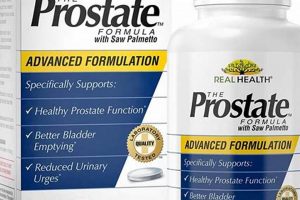
Products marketed to support the male reproductive system, specifically the prostate gland, often contain botanical ingredients. These preparations aim to provide nutritional support using plant-derived components. For instance, saw palmetto extract is a common element in formulations intended for prostate health.
The maintenance of a healthy prostate is vital for men’s well-being, influencing urinary function and reproductive health. Historically, various cultures have employed plant-based remedies to address prostate-related concerns. The appeal of these natural approaches stems from the perception of fewer side effects compared to pharmaceutical interventions and the promotion of overall wellness.
The following sections will delve into the specific ingredients commonly found in these supportive products, the purported mechanisms of action, available scientific evidence regarding their efficacy, and important considerations regarding safety and potential interactions.
Considerations for Prostate Health Products
The following provides important considerations when exploring products designed to support prostate well-being through botanical ingredients.
Tip 1: Research Individual Ingredients. Understand the specific properties of each plant extract included in the product. Saw palmetto, for example, has been studied for its potential effects on urinary symptoms associated with benign prostatic hyperplasia (BPH).
Tip 2: Evaluate Scientific Evidence. Scrutinize available research regarding the efficacy of the ingredients. Look for studies published in reputable scientific journals and be wary of claims unsupported by clinical trials.
Tip 3: Consult a Healthcare Professional. Seek guidance from a doctor or qualified healthcare provider before initiating the use of any new health product, especially if you have pre-existing medical conditions or are taking other medications.
Tip 4: Consider Product Standardization. Opt for products that specify standardized extracts. This ensures a consistent level of active compounds in each dose, leading to more predictable results.
Tip 5: Check for Third-Party Testing. Look for products that have undergone independent testing for purity and potency. This can help to verify the product’s quality and reduce the risk of contamination.
Tip 6: Be Aware of Potential Interactions: Understand that some herbal ingredients can interact with medications or other supplements. Disclose all products you are taking to your healthcare provider to avoid adverse effects.
Tip 7: Monitor for Side Effects: Pay close attention to how your body responds after starting the product. If you experience any unusual or concerning symptoms, discontinue use and consult with a medical professional.
These points highlight the importance of informed decision-making when using products for prostate health. Thorough research and professional guidance are essential for achieving the desired results and maintaining overall well-being.
The subsequent sections will further elaborate on specific ingredients and their potential applications in supporting prostate health.
1. Ingredient Efficacy

Ingredient efficacy, within the context of formulations targeting prostate health, represents the degree to which individual components of these products demonstrate a measurable and beneficial impact on prostate function or related symptoms. The effectiveness of these ingredients is a critical determinant of the overall value and appropriateness of the product.
- Clinical Validation of Saw Palmetto
Saw palmetto extracts are frequently incorporated due to reported benefits concerning lower urinary tract symptoms (LUTS) related to benign prostatic hyperplasia (BPH). However, the clinical evidence supporting these claims is mixed, with some studies showing statistically significant improvements in urinary flow and nocturia, while others report no significant differences compared to placebo. The variability in study outcomes necessitates a cautious evaluation of the evidence.
- Role of Beta-Sitosterol
Beta-sitosterol, a phytosterol found in some herbal formulations, has been investigated for its potential to alleviate BPH symptoms. Some clinical trials suggest beta-sitosterol can improve urinary symptoms, possibly by reducing inflammation or affecting hormone metabolism within the prostate gland. Meta-analyses of available studies have indicated a potential benefit, but further research is warranted to confirm these findings and elucidate the mechanisms of action.
- The Influence of Pygeum Africanum
Extracts from the bark of Pygeum africanum have a history of use in managing BPH symptoms, particularly in Europe. The purported benefits include reducing nocturia, improving urinary flow, and decreasing residual urine volume. However, the availability and sourcing of authentic Pygeum bark have become a concern due to overharvesting and sustainability issues. Furthermore, the clinical evidence is not uniformly positive, with some studies showing only modest or inconsistent effects.
- Considerations for Combination Formulas
Many formulations combine multiple ingredients, such as saw palmetto, beta-sitosterol, and various vitamins or minerals. While the rationale is to achieve synergistic effects, the interactions between these components are not always well-understood. Rigorous clinical trials are often lacking to demonstrate the superiority of combination formulas over individual ingredients, and the potential for additive or antagonistic effects must be considered.
In summary, the efficacy of individual ingredients in products intended for prostate health varies considerably, and a thorough evaluation of the scientific evidence is crucial. Claims regarding the effectiveness of these products should be critically assessed, considering the limitations of available research, potential biases, and the heterogeneity of study populations. Patients should consult with healthcare professionals to determine the most appropriate and evidence-based approach to managing prostate health.
2. Product Safety
The safety profile of products marketed for prostate health that contain plant-derived ingredients warrants careful consideration. Adverse effects, while often mild, can occur and must be weighed against the potential benefits. Liver damage, gastrointestinal distress, and allergic reactions are possibilities associated with certain botanical extracts. The variable regulation of these products compared to pharmaceuticals necessitates diligent evaluation of potential risks.
Examples of safety concerns include contaminants in raw materials, variability in ingredient concentrations, and potential interactions with prescription medications. Some supplements may contain heavy metals or pesticides if not properly sourced and tested. Saw palmetto, a common ingredient, can sometimes cause mild digestive upset. Furthermore, certain herbal ingredients may interfere with blood thinners or other medications, increasing the risk of bleeding or other complications. Rigorous manufacturing processes and independent testing are crucial for mitigating these risks.
Ultimately, ensuring product safety requires manufacturers to adhere to stringent quality control standards and provide transparent labeling. Healthcare professionals should be consulted prior to initiating the use of these products, particularly in individuals with pre-existing medical conditions or those taking other medications. Monitoring for adverse effects and reporting any unusual symptoms are essential for responsible use and minimizing potential harm.
3. Dosage Standardization

Dosage standardization is a critical aspect when considering plant-derived products intended to support prostate health. The variability in active constituents within raw botanical materials necessitates careful attention to dosage to ensure consistent and predictable therapeutic effects.
- Ensuring Consistent Bioactivity
Standardization aims to provide a uniform level of active compounds in each dose, reducing variability in product potency. For instance, saw palmetto extracts are often standardized to a specific percentage of fatty acids and sterols, believed to be the primary bioactive components. This standardization helps to ensure that each capsule or tablet delivers a consistent quantity of the relevant compounds, regardless of variations in the source material.
- Mitigating Risk of Under- or Over-Dosing
Without standardization, the concentration of active constituents can vary significantly from batch to batch. This variability can lead to situations where a product contains too little of the active compounds to be effective, or conversely, too much, increasing the risk of adverse effects. Consistent dosage reduces these risks and allows for more predictable therapeutic outcomes.
- Facilitating Clinical Research
Standardized dosages are essential for conducting reliable clinical trials. When researchers can accurately quantify the amount of active compounds being administered, they can better assess the efficacy and safety of the product. The lack of standardization can confound study results and make it difficult to draw meaningful conclusions.
- Meeting Regulatory Requirements
Some regulatory bodies require or recommend standardization of botanical products to ensure quality and safety. These regulations aim to protect consumers from products that are adulterated, mislabeled, or contain inconsistent levels of active ingredients. Adherence to these standards is essential for manufacturers to maintain regulatory compliance and build consumer trust.
In conclusion, dosage standardization plays a vital role in ensuring the efficacy and safety of preparations marketed for prostate health. By providing a consistent and quantifiable amount of active ingredients, standardization enhances the reliability of these products and supports their responsible use. It’s a critical factor to consider when evaluating the quality and potential benefits of any health product.
4. Potential Interactions

The potential for interactions between botanical components in prostate health products and other medications or supplements is a significant consideration. These interactions can alter the pharmacokinetics or pharmacodynamics of concurrently administered substances, leading to either reduced efficacy of conventional treatments or increased risk of adverse effects. For example, saw palmetto, a common ingredient, possesses antiplatelet properties, theoretically increasing the risk of bleeding when used in conjunction with anticoagulants such as warfarin or antiplatelet agents like aspirin. This underscores the importance of comprehensive medication reconciliation.
Furthermore, some plant-derived compounds may affect hepatic enzyme activity, particularly cytochrome P450 enzymes, which are responsible for metabolizing a substantial proportion of pharmaceutical drugs. Alterations in enzyme activity can affect drug clearance and serum concentrations, potentially leading to subtherapeutic levels or toxicity. For instance, certain herbal ingredients might inhibit CYP3A4, leading to increased levels of drugs metabolized by this enzyme. Another example could involve an herbal compound inducing CYP enzymes, which accelerates drug metabolism, potentially lowering their efficacy. This is further compounded by the lack of standardized testing procedures for evaluating interactions with plant-derived compounds, leading to uncertainty and potential risks for patients.
The complexity of botanical mixtures and the variability in individual responses further complicate the assessment of potential interactions. Given these complexities, it is crucial for healthcare providers to meticulously assess patients’ medication and supplement history before recommending or prescribing any product for prostate health. Open communication between patients and their healthcare team is essential for identifying and mitigating potential risks associated with interactions, thereby ensuring patient safety and optimizing therapeutic outcomes. Caution and awareness are paramount when considering the use of plant-derived products in conjunction with conventional medications.
5. Quality Control

Quality control is paramount in the manufacturing and distribution of formulations intended for prostate health. The absence of rigorous quality control measures can compromise product safety and efficacy, potentially leading to adverse health outcomes or a lack of therapeutic benefit.
- Raw Material Sourcing and Identification
The origin and authenticity of botanical raw materials significantly influence product quality. Improper sourcing may result in adulteration with substandard or counterfeit ingredients. Precise identification of plant species and plant parts is essential to ensure that the correct botanical is used. Microscopic examination, chemical fingerprinting, and DNA barcoding are techniques employed to verify the identity and purity of raw materials.
- Manufacturing Processes and Standardization
The manufacturing process itself must adhere to stringent standards to prevent contamination and ensure consistent ingredient concentrations. Good Manufacturing Practices (GMP) dictate procedures for equipment sanitation, process validation, and personnel training. Standardization of extracts involves quantifying specific bioactive compounds to ensure uniformity in product potency across different batches. For instance, saw palmetto extracts should be standardized to contain a defined percentage of fatty acids.
- Third-Party Testing and Certification
Independent laboratory testing provides an unbiased assessment of product quality. Third-party testing can verify the identity and quantity of ingredients, detect the presence of contaminants (e.g., heavy metals, pesticides, microbial pathogens), and confirm adherence to label claims. Organizations such as the U.S. Pharmacopeia (USP) and NSF International offer certification programs that signify compliance with rigorous quality standards. Products bearing these certifications offer an added assurance of quality and safety.
- Labeling Accuracy and Transparency
Accurate and transparent labeling is crucial for informing consumers about product contents and potential risks. Labels should clearly list all ingredients, including excipients, and specify the quantity of each ingredient per serving. Manufacturers should avoid making unsubstantiated claims or exaggerating the potential benefits. Contact information for the manufacturer or distributor should be readily available for consumers to address any questions or concerns.
The interplay of these facets underscores the multifaceted nature of quality control. Comprehensive quality control practices are not merely procedural requirements but are fundamental to upholding consumer trust and ensuring the responsible use of formulations intended to promote prostate health. When quality control measures are compromised, product integrity is jeopardized, undermining the potential benefits and creating unnecessary risks for consumers.
Frequently Asked Questions Regarding Prostate Herbal Supplement Formulations
The following addresses commonly encountered inquiries concerning products employing botanical ingredients to support prostate well-being.
Question 1: Are “prostate herbal supplement” products regulated by the Food and Drug Administration (FDA)?
The FDA regulates supplements differently than pharmaceutical drugs. While supplement manufacturers must adhere to certain manufacturing standards, the FDA does not pre-approve these products for safety or efficacy. The responsibility for ensuring product safety and accurate labeling resides primarily with the manufacturer. The FDA can take action against products found to be unsafe or misbranded.
Question 2: What are the purported benefits of “prostate herbal supplement” usage?
Proponents suggest potential benefits such as alleviating urinary symptoms associated with benign prostatic hyperplasia (BPH), including frequent urination, weak urine stream, and nocturia. Some formulations also aim to reduce inflammation within the prostate gland and promote overall prostate health. However, the scientific evidence supporting these claims varies widely.
Question 3: What are the commonly cited ingredients in a “prostate herbal supplement”?
Common ingredients include saw palmetto extract, beta-sitosterol, pygeum africanum bark extract, pumpkin seed extract, and various vitamins and minerals. Each ingredient has distinct purported mechanisms of action and varying levels of scientific support for its effectiveness.
Question 4: What potential side effects are associated with “prostate herbal supplement” products?
Potential side effects can vary depending on the specific ingredients. Common side effects may include gastrointestinal upset, nausea, diarrhea, and allergic reactions. Certain ingredients, such as saw palmetto, may also have antiplatelet effects, increasing the risk of bleeding in individuals taking anticoagulant medications.
Question 5: How does one determine the appropriate dosage of a “prostate herbal supplement”?
Dosage recommendations typically vary depending on the specific product and its ingredients. It is essential to follow the dosage instructions provided on the product label or as directed by a healthcare professional. Exceeding the recommended dosage does not necessarily increase the benefits and may elevate the risk of adverse effects.
Question 6: Should one consult a healthcare professional before using a “prostate herbal supplement”?
Consultation with a qualified healthcare provider is strongly recommended before initiating the use of any health product, including formulations marketed for prostate health. A healthcare professional can assess individual health status, evaluate potential interactions with other medications, and provide personalized recommendations based on the best available evidence.
Key takeaways emphasize the importance of informed decision-making, rigorous evaluation of scientific evidence, and professional guidance when considering products for prostate health.
The subsequent section will focus on regulatory aspects pertinent to these formulations.
Conclusion
The exploration of botanical formulations marketed for prostate health reveals a landscape marked by both potential benefits and considerable uncertainties. While some ingredients, like saw palmetto, exhibit evidence suggesting an ameliorative effect on lower urinary tract symptoms, the totality of research remains inconclusive, and outcomes vary considerably. Dosage standardization, quality control, and the potential for interactions with conventional medications pose ongoing challenges. Furthermore, the regulatory framework governing these products differs significantly from that of pharmaceuticals, placing a greater onus on manufacturers to ensure safety and accuracy.
The responsible use of such formulations requires a discerning approach. Individuals considering botanical interventions for prostate health should prioritize evidence-based decision-making, engage in open communication with healthcare providers, and exercise caution when evaluating product claims. A proactive and informed stance is crucial for navigating the complexities associated with botanical approaches to prostate well-being. Future research focusing on rigorous clinical trials, standardized manufacturing processes, and comprehensive safety assessments will be essential for clarifying the role and optimizing the use of botanical ingredients in supporting prostate health.