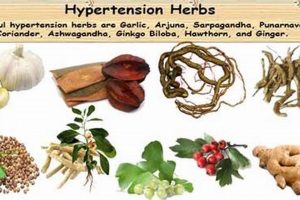
Approaches employing botanical substances to manage elevated systemic arterial pressure constitute a significant area of investigation within complementary and alternative medicine. These strategies often involve consuming specific plants or their extracts believed to possess hypotensive properties. Historically, many cultures have relied on plant-derived remedies for various health conditions, including cardiovascular ailments.
The appeal of these methodologies stems from several factors, including a perception of being ‘natural’ and potentially having fewer side effects compared to conventional pharmaceutical interventions. Furthermore, such practices can be more accessible or culturally relevant for certain populations. Exploring the effectiveness and safety of these approaches is vital, considering the global burden of hypertension and the potential for integrated healthcare strategies.
Subsequent discussion will focus on the scientific evidence supporting the use of particular botanicals in managing hypertension, including mechanisms of action, potential risks, and considerations for responsible utilization within a comprehensive healthcare plan. This necessitates a careful examination of clinical trials, traditional usage, and potential interactions with conventional medications.
Guidance on Botanical Approaches for Managing Hypertension
The following guidelines address critical considerations for individuals exploring the potential of botanical interventions for hypertension management. Diligent research and consultation with qualified healthcare professionals are paramount.
Tip 1: Prioritize Consultation with a Healthcare Provider: Before initiating any botanical regimen, a thorough discussion with a physician or qualified healthcare provider is mandatory. This ensures appropriate diagnosis, risk assessment, and integration with existing medical treatments.
Tip 2: Research the Specific Botanical Agent: In-depth understanding of the plant’s purported mechanism of action, active constituents, potential side effects, and contraindications is essential. Reputable scientific literature should be the primary source of information.
Tip 3: Verify Product Quality and Source: Selecting high-quality botanical products from reputable manufacturers is crucial. Third-party certification and testing for purity and standardization can mitigate the risk of contaminants and inconsistent potency.
Tip 4: Monitor Blood Pressure Regularly: Consistent self-monitoring of blood pressure is necessary to evaluate the efficacy of the botanical intervention. Accurate records should be maintained and shared with the healthcare provider.
Tip 5: Be Aware of Potential Drug Interactions: Botanical agents can interact with conventional medications, potentially altering their efficacy or increasing the risk of adverse effects. A pharmacist or physician should evaluate potential interactions.
Tip 6: Understand Limitations: Botanical approaches may not be suitable as a sole treatment for severe hypertension. They are often most effective as part of a comprehensive lifestyle modification program, including diet, exercise, and stress management.
Tip 7: Consider the Dosage and Duration: Follow recommended dosages and durations of botanical agents. Long-term use should be monitored by a healthcare professional.
These recommendations underscore the importance of evidence-based decision-making and professional guidance when considering botanical strategies for hypertension management. Responsible application of these approaches contributes to patient safety and optimized health outcomes.
The subsequent sections will delve deeper into the specific botanical agents commonly used for hypertension, examining their evidence base and potential benefits within a holistic treatment plan.
1. Botanical Mechanisms

The efficacy of botanical substances in managing hypertension hinges on their underlying mechanisms of action. These mechanisms describe the ways in which specific plant compounds interact with physiological systems to influence blood pressure regulation. A thorough understanding of these mechanisms is essential for evaluating the potential and limitations of botanical treatments.
- Vasodilation Enhancement
Many botanicals promote vasodilation, the relaxation and widening of blood vessels. This effect reduces peripheral resistance, thereby lowering blood pressure. Examples include substances that stimulate nitric oxide production (e.g., certain flavonoids) or block calcium channels in vascular smooth muscle cells (e.g., compounds found in hawthorn). The magnitude and duration of vasodilation are critical determinants of a botanical’s antihypertensive effect.
- Angiotensin-Converting Enzyme (ACE) Inhibition
The renin-angiotensin-aldosterone system (RAAS) plays a key role in blood pressure regulation. ACE inhibitors block the conversion of angiotensin I to angiotensin II, a potent vasoconstrictor. Certain botanical extracts exhibit ACE inhibitory activity, potentially contributing to blood pressure reduction. However, the ACE inhibitory potency of botanicals is generally lower than that of pharmaceutical ACE inhibitors.
- Diuretic Effects
Diuretics increase urinary excretion of sodium and water, reducing blood volume and subsequently lowering blood pressure. Some botanicals possess diuretic properties due to the presence of compounds such as flavonoids or triterpenes. However, the diuretic effect of botanicals is often mild and may not be sufficient for managing moderate to severe hypertension.
- Regulation of the Sympathetic Nervous System
The sympathetic nervous system (SNS) activates the “fight-or-flight” response, leading to increased heart rate and blood pressure. Certain botanical compounds, such as those found in Rauwolfia serpentina, can interfere with sympathetic neurotransmission, reducing SNS activity and lowering blood pressure. However, agents affecting the SNS may have significant side effects and require careful monitoring.
These mechanisms collectively illustrate the diverse ways in which botanical substances can potentially influence blood pressure regulation. However, it is critical to recognize that the clinical relevance of these mechanisms depends on factors such as the potency of the botanical agent, its bioavailability, and individual patient characteristics. Furthermore, many botanicals may exert their antihypertensive effects through a combination of mechanisms, necessitating a holistic approach to evaluating their efficacy and safety.
2. Clinical Evidence

The utilization of botanical remedies for hypertension management necessitates rigorous examination of available clinical evidence. This body of evidence, derived from controlled trials and observational studies, serves as the foundation for assessing the efficacy and safety of specific plant-based interventions.
- Randomized Controlled Trials (RCTs)
RCTs represent the gold standard for evaluating treatment efficacy. In the context of botanical interventions for hypertension, RCTs involve comparing blood pressure changes in individuals receiving a specific botanical extract to those receiving a placebo or a conventional antihypertensive medication. Well-designed RCTs provide the most reliable evidence regarding the true effect of a botanical on blood pressure.
- Meta-Analyses and Systematic Reviews
Meta-analyses and systematic reviews aggregate data from multiple clinical trials to provide a comprehensive overview of the evidence base. These analyses can increase statistical power and resolve conflicting findings across individual studies. Meta-analyses of botanical interventions for hypertension can help determine whether there is consistent evidence supporting a specific botanical’s effectiveness.
- Observational Studies
Observational studies, such as cohort studies and case-control studies, can provide valuable insights into the long-term effects and safety of botanical treatments. While observational studies are susceptible to bias, they can identify potential associations between botanical use and blood pressure outcomes, generating hypotheses for further investigation in RCTs.
- Dose-Response Relationships
Establishing dose-response relationships is critical for optimizing the therapeutic potential of botanical agents. Clinical trials should evaluate the effects of different dosages of a botanical extract on blood pressure to determine the optimal dose range. Furthermore, the dose-response relationship can inform the safety profile of the botanical, identifying potential risks associated with excessive dosages.
A comprehensive evaluation of clinical evidence, encompassing RCTs, meta-analyses, observational studies, and dose-response assessments, is essential for informed decision-making regarding botanical approaches to hypertension management. While some botanical agents may demonstrate promising effects in preliminary studies, robust clinical evidence is required to establish their efficacy and safety definitively. The quality and rigor of clinical evidence should be carefully considered when recommending or utilizing botanical interventions for hypertension.
3. Safety Profiles

The determination of safety profiles constitutes a critical aspect of evaluating botanical interventions for hypertension. These profiles encompass the potential adverse effects, contraindications, and interactions associated with specific botanical agents. Rigorous assessment of safety is essential to minimize risks and ensure patient well-being.
- Adverse Effects
Botanical substances, like any therapeutic agent, can elicit adverse effects. These effects may range from mild gastrointestinal disturbances to more severe reactions, such as allergic responses or organ damage. Comprehensive safety profiles meticulously document known adverse effects, their frequency, and the populations most susceptible. For example, some botanicals may cause hypotension, which could be detrimental to individuals with pre-existing low blood pressure. Specific botanical agents, such as those containing pyrrolizidine alkaloids, may exhibit hepatotoxicity, necessitating careful monitoring of liver function.
- Contraindications
Contraindications identify specific conditions or circumstances in which a botanical agent should not be used. These contraindications may be based on factors such as pregnancy, lactation, pre-existing medical conditions, or concurrent medication use. For instance, certain botanicals with anticoagulant properties may be contraindicated in individuals taking warfarin or other blood-thinning medications, due to the increased risk of bleeding. Similarly, botanicals affecting kidney function may be contraindicated in individuals with renal insufficiency.
- Drug Interactions
Botanical substances can interact with conventional medications, altering their efficacy or increasing the risk of adverse effects. These interactions can occur through various mechanisms, such as affecting drug metabolism, absorption, or excretion. Safety profiles meticulously catalog known and potential drug interactions, enabling healthcare providers to make informed decisions about concurrent use of botanical and pharmaceutical agents. For example, St. John’s Wort, a botanical antidepressant, is known to interact with numerous medications, including some antihypertensive drugs, potentially reducing their effectiveness.
- Dosage Considerations and Toxicity
The safety of a botanical substance is often dose-dependent. Higher doses may increase the risk of adverse effects. Safety profiles provide guidance on appropriate dosages and identify signs and symptoms of toxicity. Furthermore, long-term use of certain botanicals may be associated with cumulative toxicity. For example, prolonged use of licorice root, even at moderate doses, can lead to hypertension and hypokalemia (low potassium levels).
In summary, a thorough understanding of safety profiles is paramount for the responsible utilization of botanical substances in hypertension management. These profiles provide essential information regarding adverse effects, contraindications, drug interactions, and dosage considerations. Careful consideration of safety profiles, in conjunction with consultation with a qualified healthcare provider, can help minimize risks and ensure patient safety when using botanical interventions for hypertension.
4. Dosage Considerations

The determination of appropriate dosages constitutes a critical element in the safe and effective utilization of botanical interventions for hypertension. The potency of plant-derived compounds can vary significantly depending on factors such as plant species, cultivation conditions, and extraction methods. Consequently, individualized dosage adjustments are often necessary to optimize therapeutic outcomes while minimizing the risk of adverse effects.
- Standardization and Bioavailability
The active constituents within botanical extracts are often present in varying concentrations. Standardization ensures that a product contains a consistent amount of specific active compounds, enabling more predictable dosing. However, even with standardization, bioavailability, the extent to which a compound is absorbed into the bloodstream, can vary significantly. Factors such as individual metabolism, gastrointestinal health, and concurrent food intake can influence bioavailability, requiring careful consideration when determining an appropriate dosage. Failure to account for bioavailability may lead to sub-therapeutic effects or, conversely, to excessive exposure and potential toxicity.
- Individual Variability
Responses to botanical agents exhibit considerable inter-individual variability. Factors such as age, weight, genetics, and pre-existing medical conditions can influence how an individual metabolizes and responds to a specific botanical. For instance, individuals with impaired liver or kidney function may exhibit altered drug metabolism, necessitating dosage adjustments to prevent drug accumulation and toxicity. Furthermore, genetic polymorphisms in drug-metabolizing enzymes can impact an individual’s response to botanical agents. Consequently, a ‘one-size-fits-all’ approach to dosage determination is inappropriate. Careful monitoring and titration, guided by clinical response and adverse effect monitoring, are essential.
- Potential for Cumulative Effects
Long-term use of botanical agents may lead to cumulative effects, particularly with substances that have a long half-life or are slowly eliminated from the body. Cumulative effects can increase the risk of adverse effects, even at dosages that were initially well-tolerated. Regular monitoring of blood pressure, kidney function, and liver function is crucial to detect early signs of cumulative toxicity. Dosage adjustments may be necessary over time to maintain therapeutic efficacy while minimizing the risk of adverse events. Furthermore, periodic ‘drug holidays’ may be considered to reduce the risk of cumulative effects with certain botanical agents.
- Interactions with Conventional Medications
Botanical substances can interact with conventional antihypertensive medications, potentially altering their efficacy or increasing the risk of adverse effects. Dosage adjustments of either the botanical or the conventional medication may be necessary to mitigate these interactions. For example, certain botanicals may enhance the hypotensive effects of conventional antihypertensive drugs, leading to excessive blood pressure reduction. Conversely, other botanicals may interfere with the absorption or metabolism of conventional medications, reducing their effectiveness. Close collaboration between healthcare providers is essential to identify and manage potential drug interactions and to adjust dosages accordingly.
In conclusion, dosage considerations are paramount in the responsible application of botanical therapies for hypertension. Factors such as standardization, bioavailability, individual variability, potential for cumulative effects, and interactions with conventional medications must be carefully considered to optimize therapeutic outcomes and minimize risks. Individualized dosage adjustments, guided by clinical response and adverse effect monitoring, are essential for ensuring the safe and effective use of botanical interventions for hypertension.
5. Interactions
The potential for interactions represents a significant consideration within the realm of botanical approaches to hypertension management. These interactions encompass both herb-drug interactions, where a botanical substance affects the pharmacokinetics or pharmacodynamics of a conventional medication, and herb-herb interactions, where one botanical influences the effects of another. Such interactions can either enhance or diminish the therapeutic efficacy of hypertension treatments or, more concerningly, increase the risk of adverse events. For instance, a patient using a diuretic pharmaceutical alongside a botanical with inherent diuretic properties may experience excessive fluid loss and electrolyte imbalances. Conversely, a botanical that induces hepatic enzymes could accelerate the metabolism of certain antihypertensive drugs, reducing their effectiveness.
The complexity of these interactions stems from several factors. Botanical products often contain a multitude of bioactive compounds, each potentially interacting with different targets within the body. Furthermore, the concentration of these compounds can vary significantly between different products, affecting the magnitude of any potential interaction. Patient-specific factors, such as age, genetics, and co-existing medical conditions, also contribute to the variability of interaction outcomes. The practical significance of understanding these interactions lies in mitigating potential harm and optimizing treatment strategies. Close monitoring of blood pressure, kidney function, and liver function is essential in patients using both botanical and conventional therapies.
A lack of comprehensive research and standardized reporting mechanisms poses a substantial challenge in fully characterizing the interaction potential of many herbal treatments for high blood pressure. Therefore, a cautious approach, coupled with thorough communication between patients and healthcare providers, is paramount. Disclosure of all supplements and herbal remedies being used is essential to allow healthcare professionals to assess potential risks and adjust treatment plans accordingly. While botanical approaches may offer potential benefits in hypertension management, a comprehensive understanding of potential interactions is crucial for ensuring patient safety and optimizing treatment outcomes.
6. Quality Control

Quality control is paramount in the herbal treatment of high blood pressure, directly impacting the safety and efficacy of these remedies. Variability in plant source, growing conditions, harvesting methods, and processing techniques introduces significant heterogeneity in the chemical composition of herbal products. Without stringent quality control measures, consumers face inconsistent dosages of active compounds, potentially leading to therapeutic failure or adverse effects. For example, an herbal extract labeled to contain a specific concentration of hypotensive compounds may, in reality, contain significantly less, rendering it ineffective for blood pressure management. Conversely, contamination with heavy metals, pesticides, or adulterants can pose serious health risks, negating any potential benefits.
Effective quality control programs employ multiple strategies. Authentication of the plant species used is the initial step, often involving macroscopic and microscopic examination, as well as DNA fingerprinting. Raw material testing ensures the absence of contaminants and verifies the concentration of key bioactive compounds. Good Manufacturing Practices (GMP) dictate standardized procedures for extraction, processing, and packaging, minimizing batch-to-batch variability. Finished product testing confirms the final concentration of active ingredients and the absence of adulterants. These practices, when rigorously implemented, provide a level of assurance that the herbal product meets established quality standards and delivers the intended therapeutic benefit.
Ultimately, robust quality control in herbal treatments for high blood pressure is not merely a regulatory requirement but an ethical imperative. The integrity of these remedies hinges on the reliability of their composition and purity. By prioritizing quality control, manufacturers safeguard consumers, reinforce the credibility of herbal medicine, and contribute to the responsible integration of botanical therapies into comprehensive hypertension management strategies. Failure to invest in quality control undermines these goals and exposes individuals seeking alternative treatments to unnecessary risks.
7. Professional guidance

The effective and safe implementation of herbal approaches for managing hypertension necessitates professional guidance. The inherent complexity of botanical remedies, encompassing variations in potency, potential interactions, and individual patient factors, demands the expertise of qualified healthcare providers. Independent experimentation with herbal treatments for high blood pressure, without professional oversight, poses significant risks. Adverse events, such as hypotension, electrolyte imbalances, or interactions with conventional medications, may occur if proper assessment and monitoring are absent. For example, an individual self-treating with an herbal diuretic may inadvertently experience dehydration and potassium depletion, especially if also taking a conventional diuretic medication. Professional guidance mitigates these risks by ensuring appropriate diagnosis, evaluation of individual patient characteristics, and integration of herbal remedies within a comprehensive hypertension management plan.
The role of healthcare professionals extends beyond initial assessment and treatment planning. Ongoing monitoring of blood pressure, kidney function, and liver function is crucial to detect potential adverse effects or interactions. Dosage adjustments may be necessary based on individual response and tolerance. Furthermore, professional guidance facilitates informed decision-making, enabling patients to understand the potential benefits and limitations of herbal treatments, as well as the importance of lifestyle modifications, such as dietary changes and exercise. Consider a patient with mild hypertension who seeks to incorporate hawthorn berry into their treatment regimen. A healthcare professional can assess the patient’s overall health status, review their current medications, and recommend a safe and effective hawthorn dosage. They can also provide guidance on potential side effects and the importance of regular blood pressure monitoring.
In conclusion, professional guidance is an indispensable component of the herbal treatment of high blood pressure. It ensures the safe and effective utilization of botanical remedies by minimizing risks, optimizing dosages, and facilitating informed decision-making. While herbal approaches may offer potential benefits in hypertension management, they should be implemented only under the supervision of qualified healthcare professionals. The absence of professional guidance can lead to adverse events and undermine the overall effectiveness of hypertension management strategies. The complexity, the benefits, and the possible risks of the herbal treatment of high blood pressure, should not be overseen.
Frequently Asked Questions
The following addresses common inquiries regarding the utilization of botanical agents for managing elevated blood pressure. The information provided is intended for educational purposes and does not constitute medical advice. Consultation with a qualified healthcare professional is essential before initiating any treatment regimen.
Question 1: Are botanical interventions a suitable replacement for conventional antihypertensive medications?
Botanical agents are generally not considered a suitable replacement for conventional antihypertensive medications, particularly in cases of moderate to severe hypertension. Pharmaceutical interventions often provide more potent and predictable blood pressure reduction. Botanical approaches may be considered as adjuncts to conventional therapy, under the guidance of a healthcare provider, to potentially enhance blood pressure control or mitigate side effects of pharmaceutical medications.
Question 2: What are the potential risks associated with botanical treatments for hypertension?
Potential risks include adverse effects, such as hypotension, electrolyte imbalances, and allergic reactions. Furthermore, botanical agents can interact with conventional medications, altering their efficacy or increasing the risk of adverse events. Quality control concerns, such as contamination or adulteration, also pose risks. Selecting high-quality products from reputable manufacturers and consulting with a healthcare professional are essential to minimize these risks.
Question 3: How can the quality of herbal products be assured?
Assurance of herbal product quality involves several factors. Select products from reputable manufacturers that adhere to Good Manufacturing Practices (GMP). Look for third-party certifications that verify the product’s purity and standardization. Research the manufacturer’s quality control procedures and request Certificates of Analysis (COAs) to confirm the product’s composition and absence of contaminants.
Question 4: Are there specific botanical agents that are consistently recommended for hypertension?
While some botanical agents, such as hawthorn, garlic, and hibiscus, have demonstrated potential benefits in clinical studies, there is no single botanical that is universally recommended for hypertension. The suitability of a specific botanical agent depends on individual patient characteristics, the severity of hypertension, and potential drug interactions. A healthcare provider can assess these factors and recommend an appropriate treatment plan.
Question 5: How long does it typically take to observe blood pressure reductions with botanical interventions?
The time required to observe blood pressure reductions with botanical interventions can vary significantly depending on the specific botanical agent, the dosage used, and individual patient factors. Some individuals may experience noticeable reductions within a few weeks, while others may require several months of consistent use. Regular blood pressure monitoring is essential to assess the efficacy of the treatment and to guide dosage adjustments.
Question 6: What lifestyle modifications are recommended in conjunction with botanical treatments for hypertension?
Lifestyle modifications are an integral component of hypertension management, regardless of whether botanical interventions are used. Recommended lifestyle modifications include adopting a healthy dietary pattern, such as the DASH diet, reducing sodium intake, engaging in regular physical activity, maintaining a healthy weight, limiting alcohol consumption, and managing stress. These lifestyle modifications can enhance the effectiveness of both botanical and conventional antihypertensive treatments.
In summary, botanical approaches may offer potential benefits in hypertension management; however, they should be utilized cautiously and under the supervision of a qualified healthcare professional. Prioritizing safety, quality, and individualized treatment plans is essential for optimizing outcomes and minimizing risks.
The subsequent article section will explore alternative strategies for supporting healthy blood pressure levels.
Conclusion
This article has explored the multifaceted aspects of herbal treatment of high blood pressure, emphasizing the importance of understanding mechanisms of action, clinical evidence, safety profiles, dosage considerations, potential interactions, and the critical role of quality control. The information presented underscores that the use of botanical interventions for hypertension is not without risk and requires careful consideration. These treatment modalities cannot be used as stand-alone treatments, nor as a direct replacement to conventional medical treatment, especially in a condition of high blood pressure.
The responsible and informed application of botanical therapies necessitates close collaboration with qualified healthcare providers. Further research is crucial to elucidate the efficacy and safety of various herbal remedies and to establish evidence-based guidelines for their use. Individuals considering herbal treatment of high blood pressure should approach this decision with prudence, prioritizing safety and consulting with medical professionals to ensure optimal health outcomes. The best course of action is always decided upon by a medical professional.