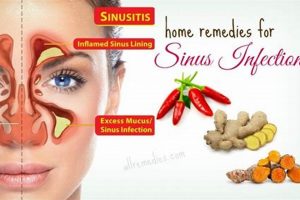
Natural plant-derived treatments aimed at alleviating the discomfort and blockage associated with inflamed nasal passages are widely sought. These approaches leverage the inherent properties of various botanicals to address the underlying causes or symptoms of restricted airflow within the nasal cavity. For instance, preparations using eucalyptus or peppermint are often employed for their decongestant effects.
The appeal of using plant-based solutions to manage nasal congestion lies in their perceived gentleness and the long history of traditional use. Many cultures have relied on these methods for generations, often finding them to be effective complements to conventional medical treatments. Moreover, the potential for fewer side effects compared to some pharmaceutical options makes them an attractive choice for individuals seeking relief.
The subsequent sections will explore specific botanical options, delving into their mechanisms of action, methods of preparation, and evidence supporting their efficacy in relieving restricted nasal airflow. Further, important considerations regarding safety, potential interactions, and appropriate usage will be discussed.
Guidance on Employing Plant-Based Congestion Relief
The following outlines practical recommendations for individuals considering plant-derived approaches to alleviate nasal congestion. These suggestions aim to promote safe and effective utilization.
Tip 1: Prioritize Identification of Underlying Cause: Congestion may arise from infections, allergies, or environmental irritants. Accurate diagnosis is crucial for selecting the appropriate intervention, including botanical options. Consult a healthcare professional to determine the origin of the nasal blockage.
Tip 2: Opt for Standardized Preparations: Botanical products can vary in potency. Standardized extracts, which guarantee a specific concentration of active compounds, offer a more predictable and reliable therapeutic effect.
Tip 3: Employ Steam Inhalation with Caution: Inhaling steam infused with eucalyptus or tea tree oil can provide temporary relief. Exercise caution to avoid burns from hot water or excessive essential oil concentration.
Tip 4: Consider Nasal Irrigation with Saline: Nasal irrigation, often enhanced with a small amount of specific herbal infusions like chamomile, helps clear mucus and irritants, facilitating the drainage of blocked nasal passages. Ensure the saline solution is properly prepared with distilled or sterilized water.
Tip 5: Monitor for Allergic Reactions: Individuals can be allergic to certain plants. Introduce new botanical remedies gradually and observe for signs of allergic reactions, such as skin rashes, itching, or breathing difficulties. Discontinue use immediately if adverse reactions occur.
Tip 6: Be Mindful of Potential Interactions: Botanical compounds can interact with prescription medications. Inform healthcare providers of all plant-derived remedies being used to minimize the risk of adverse interactions.
Tip 7: Adhere to Recommended Dosages: Excessive consumption of some botanicals can lead to adverse effects. Always adhere to the manufacturer’s or a qualified practitioner’s recommended dosages.
Consistent, informed application of these guidelines can enhance the safe and effective use of plant-based options for easing nasal congestion.
This guidance sets the stage for a more detailed exploration of individual botanicals and their specific applications in managing nasal congestion.
1. Botanical Decongestants

Botanical decongestants represent a significant category within plant-derived treatments for nasal congestion. Their primary function is to alleviate blocked nasal passages by reducing inflammation and promoting drainage. Nasal congestion often arises from inflamed blood vessels in the nasal lining, triggered by allergies, infections, or irritants. Specific plant compounds exert vasoconstrictive and anti-inflammatory effects, thereby shrinking swollen tissues and facilitating easier airflow. The incorporation of botanical decongestants is therefore a fundamental component in comprehensive plant-based congestion management strategies.
Eucalyptus oil serves as a representative instance. Its main constituent, eucalyptol (1,8-cineole), exhibits proven decongestant and anti-inflammatory properties. When inhaled via steam, eucalyptol stimulates the nasal mucosa, reducing congestion and easing breathing. Peppermint, containing menthol, operates through a similar mechanism, providing a cooling sensation and easing perceived nasal obstruction. Furthermore, many traditional preparations combine multiple botanical decongestants to achieve synergistic effects, maximizing efficacy and addressing various aspects of nasal congestion.
Understanding the relationship between botanical decongestants and overall nasal congestion relief is vital for those seeking alternative approaches. This knowledge allows informed selection of appropriate plant remedies, correct preparation methods, and responsible usage. While botanical decongestants offer potential advantages, they may not suit all individuals, and professional consultation remains advisable, particularly for chronic congestion or individuals with underlying health conditions. They do not address the root cause of infection, and should be used in concert with treatments that address those root causes.
2. Anti-inflammatory Properties

Nasal congestion frequently stems from inflammation of the nasal passages, a response triggered by allergens, irritants, or infections. This inflammatory process leads to swelling of the nasal tissues, increased mucus production, and consequent blockage of airflow. Therefore, anti-inflammatory properties are a critical component of many plant-derived treatments aimed at alleviating nasal congestion. These properties directly address the underlying cause of the congestion, rather than simply masking the symptoms. The practical significance of understanding this connection lies in the ability to select botanical options that target the inflammatory cascade, offering more effective and potentially longer-lasting relief. For instance, compounds within chamomile and ginger have demonstrated the ability to inhibit the production of pro-inflammatory molecules, thereby reducing nasal tissue swelling.
Specific examples further illustrate this connection. Turmeric, containing the active compound curcumin, exhibits potent anti-inflammatory effects. Studies suggest curcumin can suppress inflammatory pathways involved in allergic rhinitis, a common cause of nasal congestion. Similarly, Boswellia serrata, known for its anti-inflammatory resin, has been employed traditionally to manage respiratory inflammation. The practical application involves utilizing these herbs in teas, steam inhalations, or nasal sprays, depending on the specific preparation and targeted delivery method. However, it is imperative to recognize that the efficacy of these remedies can vary based on individual factors and the specific inflammatory triggers involved. A thorough understanding of the underlying cause of inflammation is essential for selecting the most appropriate botanical intervention.
In conclusion, the anti-inflammatory properties inherent in various herbal remedies directly address a core mechanism of nasal congestion. By targeting the inflammatory cascade, these remedies can reduce swelling, promote drainage, and improve airflow. While these treatments offer potential benefits, it is crucial to acknowledge the complexity of inflammation and the potential for individual variability in response. Integrating these botanicals into a holistic approach that addresses the root causes of inflammation and involves professional guidance can optimize the effectiveness and safety of plant-based congestion relief.
3. Mucolytic actions

Mucolytic actions, or the ability to break down and thin mucus, are a critical component of many plant-derived remedies employed to alleviate nasal congestion. Congestion frequently involves the overproduction of thick, viscous mucus that obstructs nasal passages and sinuses, hindering normal breathing and contributing to discomfort. By promoting the breakdown and clearance of this mucus, herbal remedies with mucolytic properties can significantly ease nasal congestion. This mechanism of action addresses the physical blockage directly, facilitating drainage and reducing pressure within the nasal cavity. Real-life examples include the use of guaifenesin-containing herbs in traditional cough syrups or the employment of specific essential oils known to promote mucus breakdown. Understanding this action is practically significant because it allows for informed selection of herbal remedies that target the specific characteristic of excessive mucus production, leading to more effective congestion relief.
Several herbal remedies demonstrate tangible mucolytic effects. For instance, extracts from ivy leaves ( Hedera helix) have demonstrated the ability to stimulate the production of less viscous mucus and improve mucociliary clearance, which is the process by which mucus is transported out of the respiratory tract. Similarly, glycyrrhizin, a compound found in licorice root ( Glycyrrhiza glabra), exhibits expectorant properties that contribute to mucus thinning and removal. Application methods vary, including oral consumption of teas or extracts, steam inhalation, or use in nasal sprays. Dosage and formulation must be carefully considered to avoid adverse effects and ensure optimal efficacy. Individuals with specific medical conditions, or those taking other medications, should consult with a healthcare provider before using herbal remedies for mucolytic action.
In summary, the mucolytic actions of certain herbal remedies represent a valuable tool in managing nasal congestion characterized by thick, excessive mucus. By understanding this mechanism and selecting appropriate botanicals, individuals can effectively address the physical blockage and promote easier breathing. However, it is essential to approach these remedies with caution, considering potential interactions and individual sensitivities, and seeking professional guidance where necessary. The broader theme of herbal remedies for nasal congestion highlights the potential for plant-derived compounds to provide targeted relief, but also underscores the importance of informed usage and a holistic approach to respiratory health.
4. Antimicrobial benefits

The presence of a nasal infection often underlies instances of nasal congestion, whether bacterial, viral, or fungal in origin. Consequently, the antimicrobial benefits offered by certain herbal remedies represent a crucial element in a comprehensive approach to alleviating such congestion. Direct antimicrobial action targets the causative pathogens, aiming to reduce their proliferation within the nasal passages and sinuses. This reduction in microbial load can, in turn, lessen inflammation and mucus production, thus relieving the congestion. The efficacy of these remedies hinges on the specific pathogen involved and the potency of the antimicrobial compounds within the selected herb. Examples include the traditional use of garlic or thyme extracts, believed to possess antibacterial properties that can combat certain nasal infections, thereby mitigating congestion.
The practical application of antimicrobial herbal remedies involves various methods, including nasal irrigation with diluted herbal solutions, steam inhalation with essential oils, or oral consumption of herbal teas or tinctures. For example, tea tree oil, diluted appropriately, can be used in steam inhalation to potentially combat bacterial or fungal nasal infections. Similarly, extracts of goldenseal have demonstrated antimicrobial activity in vitro, leading to their traditional use in managing upper respiratory infections. However, it remains crucial to acknowledge that the in vivo efficacy of these remedies may vary, and further research is needed to fully elucidate their effectiveness against specific nasal pathogens. Moreover, the potential for allergic reactions or interactions with other medications necessitates cautious use and consultation with a healthcare professional.
In summary, antimicrobial benefits represent a valuable, though not universally applicable, component of herbal remedies for nasal congestion. By targeting underlying infections, these remedies can contribute to reducing inflammation and mucus production. Nevertheless, informed selection, appropriate application, and awareness of potential risks remain paramount. This understanding underscores the need for a holistic approach to managing nasal congestion, integrating antimicrobial strategies with other supportive measures, such as anti-inflammatories and mucolytics, while prioritizing professional medical advice.
5. Traditional uses

The historical context of plant-derived treatments for nasal congestion is critical to understanding their current application. Traditional medicine systems worldwide, including Ayurveda, Traditional Chinese Medicine, and indigenous practices, have long employed specific botanicals to address respiratory ailments, including nasal blockage. These time-tested applications provide a valuable foundation for modern research and offer insight into the potential efficacy and safety of particular herbs. The persistence of these practices across diverse cultures underscores the perceived benefits and highlights the importance of considering traditional knowledge in the development and use of plant-based remedies. For instance, the use of eucalyptus in steam inhalations for decongestion, now widely accepted, originated from Aboriginal Australian practices.
Examining traditional uses reveals not only the specific plants employed but also the methods of preparation and administration. These methods often involve decoctions, infusions, poultices, and inhalations, tailored to maximize the extraction and delivery of active compounds. Furthermore, traditional systems frequently incorporate a holistic approach, addressing the underlying imbalances believed to contribute to the congestion. For example, in Ayurveda, nasal congestion might be attributed to an imbalance of Kapha dosha, leading to the use of warming and drying herbs to restore equilibrium. This perspective emphasizes the interconnectedness of various bodily systems and the importance of individualized treatment strategies. The documented uses throughout various time can be seen in multiple ethnobotanical documentations, with written and unwritten anecdotes.
In conclusion, traditional uses provide a rich source of information regarding the potential of plant-derived remedies for nasal congestion. While modern scientific validation is necessary, the historical context offers valuable guidance in selecting appropriate herbs, understanding their mechanisms of action, and developing safe and effective treatment strategies. The incorporation of traditional knowledge into contemporary practice can enhance the overall approach to managing nasal congestion, acknowledging both the physical and systemic aspects of this common ailment. A challenge is standardizing extraction and dosing across herbal interventions.
6. Preparation methods

The effectiveness of plant-derived remedies for nasal congestion is intrinsically linked to their preparation methods. Improper preparation can diminish or negate the therapeutic potential of the chosen herb, while appropriate techniques optimize the extraction and availability of bioactive compounds. Preparation methods determine the concentration, bioavailability, and ultimately, the efficacy of the final product. For instance, a poorly prepared infusion of chamomile might lack sufficient anti-inflammatory compounds to relieve nasal passage swelling, rendering the remedy ineffective. Understanding the impact of preparation is therefore paramount to realizing the intended benefits of herbal remedies.
Diverse preparation methods cater to different plant parts and desired outcomes. Infusions, involving steeping herbs in hot water, are suitable for delicate plant tissues like leaves and flowers, extracting water-soluble compounds. Decoctions, which involve simmering tougher plant parts like roots and bark, are necessary to release their constituents. Tinctures, created by soaking herbs in alcohol, offer a concentrated extract with a longer shelf life. Steam inhalations deliver volatile oils directly to the nasal passages. Each method demands specific temperatures, durations, and solvent ratios to ensure optimal extraction and preservation of active ingredients. For example, improper temperature control during decoction can destroy heat-sensitive compounds, negating their therapeutic value. The selection of the appropriate method depends on the specific herb and intended application.
In summary, preparation methods are not merely procedural steps but critical determinants of efficacy for plant-derived remedies targeting nasal congestion. Meticulous adherence to appropriate techniques ensures optimal extraction and bioavailability of bioactive compounds, maximizing therapeutic benefits. Challenges include variations in herb quality and standardization of preparation protocols. Recognizing the central role of preparation methods is essential for responsible and effective utilization of herbal remedies in managing nasal congestion, emphasizing the need for reliable information and quality control.
7. Safety considerations
The use of plant-derived remedies for nasal congestion, while often perceived as natural and benign, necessitates careful consideration of safety implications. The inherent complexity of botanical compounds and the potential for interactions with individual physiology and concurrent medications introduce a level of risk that must be acknowledged and mitigated. A failure to prioritize safety can lead to adverse reactions, reduced efficacy of conventional treatments, or even serious health complications. Therefore, integrating safety considerations is not merely an ancillary aspect of herbal remedy usage, but a foundational requirement for responsible and beneficial application. The significance of this perspective is underscored by documented instances of adverse events associated with herbal remedies, including allergic reactions, organ toxicity, and interactions with prescription drugs. For instance, some individuals may experience severe allergic reactions to essential oils used in steam inhalations, while others may encounter bleeding complications when combining certain herbs with anticoagulant medications. Due to lack of standardization in dosages and ingredient quality, unexpected and adverse effects are possible.
Practical applications of safety considerations involve a multi-faceted approach. Firstly, thorough research of the specific herb and its potential side effects is essential. Secondly, individuals with pre-existing medical conditions, pregnant or breastfeeding women, and those taking prescription medications must seek professional guidance from a qualified healthcare provider or herbalist before using any plant-derived remedy. Thirdly, adherence to recommended dosages is crucial to minimize the risk of adverse reactions. Fourthly, sourcing herbal products from reputable suppliers who adhere to quality control standards is paramount. Fifthly, awareness of potential interactions between herbal remedies and conventional medications is vital to prevent adverse events. For example, St. John’s Wort, an herbal antidepressant, can interact with numerous medications, including blood thinners and birth control pills, potentially compromising their efficacy or increasing the risk of side effects. As a general principle, when in doubt, proceed with caution. Herbal remedies should be treated with the same level of scrutiny as any other therapeutic intervention.
In conclusion, safety considerations are an inseparable and indispensable component of employing herbal remedies for nasal congestion. A proactive and informed approach to safety, encompassing thorough research, professional consultation, adherence to recommended dosages, and awareness of potential interactions, is critical for mitigating risks and maximizing benefits. The lack of rigorous regulation in the herbal remedy industry presents a challenge, emphasizing the need for individual responsibility and informed decision-making. By prioritizing safety, individuals can harness the potential of plant-derived remedies for nasal congestion relief while minimizing the risk of adverse outcomes and contributing to a more responsible and evidence-based approach to herbal medicine.
Frequently Asked Questions
The following addresses common inquiries regarding the use of plant-derived remedies for nasal congestion, providing concise and evidence-based responses.
Question 1: Are “herbal remedies for nasal congestion” universally safe for all individuals?
The safety of “herbal remedies for nasal congestion” is not universal. Certain populations, including pregnant women, breastfeeding mothers, individuals with pre-existing medical conditions, and those taking prescription medications, must exercise caution and seek professional guidance prior to use. Allergic reactions and interactions with conventional medications remain a possibility.
Question 2: Is scientific evidence supporting the efficacy of “herbal remedies for nasal congestion” robust and conclusive?
The scientific evidence supporting the efficacy of many “herbal remedies for nasal congestion” varies. While some botanicals have demonstrated promising results in clinical trials, further rigorous research is often needed to confirm their effectiveness and establish optimal dosages. Reliance solely on anecdotal evidence is not advisable.
Question 3: How does one ascertain the quality and purity of commercial “herbal remedies for nasal congestion?”
Ascertaining the quality and purity of commercial “herbal remedies for nasal congestion” requires careful evaluation. Look for products from reputable manufacturers that adhere to Good Manufacturing Practices (GMP) and provide third-party testing results. Standardization of active compounds is desirable to ensure consistency in potency.
Question 4: Can “herbal remedies for nasal congestion” completely replace conventional medical treatments?
“Herbal remedies for nasal congestion” should not be considered a complete replacement for conventional medical treatments, particularly in cases of severe or chronic conditions. They may serve as a complementary approach, but professional medical advice should always be sought for diagnosis and management of underlying causes.
Question 5: What are the potential risks of self-treating nasal congestion with “herbal remedies?”
Potential risks of self-treating nasal congestion with “herbal remedies” include misdiagnosis of the underlying cause, delayed access to appropriate medical care, adverse reactions to herbal products, and interactions with existing medications. Seeking professional guidance is crucial for accurate diagnosis and safe treatment strategies.
Question 6: How can one minimize the risk of adverse effects associated with “herbal remedies for nasal congestion?”
To minimize the risk of adverse effects associated with “herbal remedies for nasal congestion”, thorough research, professional consultation, adherence to recommended dosages, selection of high-quality products, and awareness of potential interactions are essential. Starting with low doses and monitoring for any adverse reactions is also advisable.
In summary, the use of plant-derived remedies for nasal congestion requires a balanced and informed approach. While these remedies may offer potential benefits, their safety and efficacy are not universally guaranteed, and professional guidance is often warranted.
The subsequent section will provide a compilation of resources for further exploration of “herbal remedies for nasal congestion”.
Conclusion
The exploration of “herbal remedies for nasal congestion” reveals a complex landscape of potential benefits and inherent limitations. Plant-derived options may offer relief from nasal blockage, but their efficacy varies depending on the underlying cause of the congestion, the specific botanical employed, and the method of preparation. A prudent approach necessitates careful consideration of individual health status, potential interactions with existing medications, and the quality of the herbal product itself.
The judicious application of “herbal remedies for nasal congestion” hinges on informed decision-making and, in many instances, professional guidance. Future research should focus on rigorous clinical trials to validate the efficacy of specific botanicals and standardize preparation protocols. Until such data are available, responsible use requires a critical evaluation of the available evidence and a commitment to prioritizing patient safety above all else. The intersection of traditional knowledge and scientific inquiry holds promise for optimizing the use of plant-derived resources in managing nasal congestion, but a cautious and evidence-based approach remains paramount.