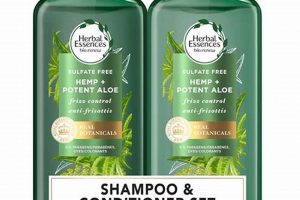
Products formulated with botanical extracts as primary active ingredients and intended for cleansing the hair and scalp represent a segment of the hair care industry focused on natural components. These preparations often incorporate plant-derived substances known for their potential cleansing, conditioning, and therapeutic properties. An example includes a cleanser containing aloe vera, chamomile, and tea tree oil, designed to soothe the scalp and promote healthy hair growth.
The appeal of these formulations stems from a perception of reduced harsh chemicals compared to synthetic alternatives. Consumers often seek them out for their potential to offer gentle cleansing, minimize scalp irritation, and impart beneficial nutrients. Historically, plant-derived substances have played a significant role in personal care rituals across various cultures, reflecting a long-standing appreciation for their properties. This appreciation contributes to the ongoing demand for hair care solutions that leverage the power of nature.
Further discussions will delve into the specific botanical ingredients commonly employed in these preparations, their purported mechanisms of action, potential benefits and limitations, and considerations for formulation and regulatory compliance.
Guidance on Selecting and Utilizing Botanical Hair Cleansers
The following guidelines offer practical advice for consumers seeking to integrate plant-derived hair cleansers into their personal care regimens. Consideration of these points may aid in making informed decisions and maximizing the potential benefits of these products.
Tip 1: Ingredient List Scrutiny: Prioritize analysis of the ingredient list. Ascertain the prominence of botanical extracts and identify specific plant-derived components known for their desired properties (e.g., chamomile for soothing, tea tree oil for antiseptic qualities). Verify the absence of undesirable additives such as parabens, sulfates, and artificial fragrances, particularly if sensitivity is a concern.
Tip 2: Hair and Scalp Type Alignment: Recognize that different botanical extracts exhibit varying effects. Select a formulation specifically designed for the individual’s hair and scalp type. For example, individuals with oily scalps might benefit from formulations containing citrus extracts, while those with dry hair may find preparations containing shea butter or argan oil more suitable.
Tip 3: Patch Test Implementation: Before commencing regular use, conduct a patch test on a small area of skin (e.g., behind the ear). Monitor for any adverse reactions, such as redness, itching, or irritation. Discontinue use immediately if such reactions occur.
Tip 4: Application Technique Refinement: Employ proper application techniques to optimize cleansing and minimize potential irritation. Dilute the cleanser with water if necessary, gently massage it into the scalp, and allow it to sit for a brief period before rinsing thoroughly. Avoid vigorous scrubbing, which can damage the hair shaft.
Tip 5: Complementary Product Integration: Enhance the benefits by incorporating complementary products with similar botanical compositions. Conditioners, hair masks, and styling aids containing corresponding plant extracts can synergistically contribute to overall hair health.
Tip 6: Expectations Management: Understand that results may vary depending on individual factors such as hair type, scalp condition, and overall health. Consistent use over an extended period is typically required to observe noticeable improvements.
By adhering to these recommendations, individuals can make informed choices regarding these cleansers and potentially experience enhanced hair health and manageability. Careful selection and responsible application are key to achieving optimal results.
The subsequent sections will explore common misconceptions and address frequently asked questions concerning these botanical hair care products.
1. Botanical Ingredients

The efficacy and character of hair cleansers marketed as “herbal based shampoo” are intrinsically linked to the specific botanical ingredients incorporated into their formulation. These plant-derived substances serve as the active components, intended to deliver cleansing, conditioning, and therapeutic effects. A direct cause-and-effect relationship exists: the choice and concentration of these ingredients determine the product’s overall performance. For instance, the inclusion of saponins from soapwort (Saponaria officinalis) contributes to the cleansing action, while the addition of oils like jojoba or argan provides emollient properties. Without these botanical ingredients, the product lacks the defining characteristics that qualify it as an alternative to conventional, synthetic-based cleansers.
Understanding the role of botanical components allows for informed product selection. For example, an individual seeking to alleviate scalp irritation might look for preparations containing chamomile (Matricaria chamomilla) or aloe vera (Aloe barbadensis), known for their anti-inflammatory qualities. Conversely, someone with oily hair may seek cleansers containing tea tree oil (Melaleuca alternifolia) or citrus extracts, which possess astringent properties. Practical applications extend to identifying potential allergens or irritants; a sensitivity to lavender (Lavandula angustifolia), for example, would necessitate avoiding products containing this ingredient, regardless of other purported benefits. Furthermore, an increasing focus on sustainable and ethical sourcing highlights the importance of knowing the origin and cultivation practices associated with the botanical components within a formulation.
In summary, the connection between botanical ingredients and so-called “herbal based shampoo” is fundamental. The presence, type, concentration, and quality of these ingredients dictate the product’s functionality and potential benefits. While the term suggests a natural alternative, consumers must scrutinize the ingredient list to ascertain the actual composition and assess whether the product aligns with individual needs and preferences. The challenge lies in discerning genuine formulations from those that merely employ token amounts of botanical extracts for marketing purposes, necessitating careful evaluation and a critical understanding of plant-based components in hair care products.
2. Scalp Health
The state of the scalp directly influences hair health, and the composition of hair cleansers can significantly impact this relationship. So-called “herbal based shampoo” formulations frequently emphasize scalp health as a key benefit, promoting the use of botanical extracts known for their soothing, anti-inflammatory, or antimicrobial properties. The selection of these extracts is not arbitrary; a cause-and-effect dynamic exists wherein specific plant-derived compounds can mitigate scalp irritation, reduce dandruff, and promote a balanced microbiome. A disrupted scalp environment, characterized by inflammation or microbial imbalance, can lead to conditions such as seborrheic dermatitis or folliculitis, which in turn can impair hair growth and quality. Therefore, maintaining scalp health is an essential consideration when choosing hair care products, and botanical ingredients offer a potential avenue for achieving this.
Examples of this connection abound in the realm of botanical hair care. Tea tree oil, derived from Melaleuca alternifolia, is often incorporated for its antifungal and antibacterial activity, addressing conditions like dandruff caused by Malassezia species. Similarly, aloe vera, known for its moisturizing and anti-inflammatory properties, can soothe irritated scalps and promote healing. The practical application of this understanding extends to consumers with specific scalp conditions. Individuals with psoriasis or eczema may benefit from “herbal based shampoo” formulations containing ingredients like chamomile or calendula, chosen for their calming effects. However, it’s crucial to acknowledge that not all botanical extracts are universally beneficial; some individuals may experience allergic reactions or sensitivities to certain plant-derived compounds. Therefore, patch testing and careful ingredient list scrutiny are paramount.
In conclusion, the link between scalp health and formulations marketed as “herbal based shampoo” is significant. Botanical ingredients, when appropriately selected and formulated, can contribute to a healthier scalp environment and indirectly promote improved hair quality. However, the term “herbal based shampoo” does not guarantee efficacy or safety; consumers must critically evaluate the ingredient list, consider their individual scalp conditions, and be aware of potential sensitivities. The challenge lies in navigating the marketing claims and discerning products that genuinely prioritize scalp health through the judicious use of botanical extracts.
3. Gentle Cleansing
The concept of “gentle cleansing” is frequently associated with products marketed as “herbal based shampoo,” signifying a formulation philosophy that prioritizes the removal of dirt and excess oils without stripping the hair and scalp of their natural moisture and protective lipids. This approach stands in contrast to conventional shampoos that often employ harsh surfactants, potentially leading to dryness, irritation, and damage to the hair cuticle. The purported cause-and-effect relationship suggests that the use of milder, plant-derived cleansing agents in a product marketed as “herbal based shampoo” can reduce the risk of these adverse effects, promoting a healthier scalp environment and more manageable hair. The importance of “gentle cleansing” as a component of “herbal based shampoo” lies in its potential to cater to individuals with sensitive scalps, color-treated hair, or those seeking to minimize the use of synthetic chemicals in their hair care routine. A real-life example includes individuals with eczema or psoriasis, who often find that using a mild, sulfate-free shampoo labeled as “herbal based shampoo” helps to alleviate scalp irritation and reduce flare-ups. The practical significance of this understanding resides in empowering consumers to make informed choices, recognizing that not all “herbal based shampoo” formulations are created equal and that a careful review of ingredients is necessary to ensure the absence of harsh cleansing agents.
Further analysis reveals that the term “gentle cleansing” can be subjective and dependent on the specific ingredients used. Some plant-derived surfactants, such as saponins from soap nuts, can provide effective cleansing without the harshness associated with sulfates. Other formulations may rely on milder synthetic surfactants in conjunction with botanical extracts, aiming to strike a balance between cleansing efficacy and gentleness. In these cases, the concentration of the surfactant and the presence of moisturizing or soothing additives play a critical role in determining the overall impact on the hair and scalp. Practical applications of this knowledge involve understanding the chemical properties of different cleansing agents and recognizing that the term “herbal based shampoo” does not automatically guarantee a gentle formulation. Consumers should scrutinize ingredient lists, looking for specific surfactants and additives known for their mildness and moisturizing properties. Additionally, the overall formulation pH is crucial, as a slightly acidic pH can help to maintain the integrity of the hair cuticle and minimize irritation. Therefore, while the marketing of “herbal based shampoo” often emphasizes gentle cleansing, a deeper understanding of the underlying chemistry is essential for making informed choices.
In conclusion, the connection between “gentle cleansing” and “herbal based shampoo” is predicated on the premise that botanical formulations offer a milder alternative to conventional shampoos. However, this association is not always a guarantee, and consumers must exercise discernment in evaluating product claims and ingredient lists. The primary challenge lies in distinguishing between products that genuinely prioritize gentle cleansing through the use of mild surfactants and those that merely leverage the “herbal based shampoo” label for marketing purposes. By understanding the chemical properties of different cleansing agents, assessing the overall formulation pH, and considering individual scalp sensitivities, consumers can navigate the marketplace effectively and select products that align with their specific needs and preferences. The overarching theme emphasizes the importance of informed decision-making in the realm of hair care, recognizing that the term “herbal based shampoo” is not a substitute for careful evaluation and a thorough understanding of the product’s composition.
4. Sustainability Sourcing

The concept of responsible resource management is increasingly relevant to the production and marketing of preparations labeled “herbal based shampoo.” Ethical considerations surrounding ingredient origin, cultivation practices, and environmental impact are gaining prominence as consumers demand greater transparency and accountability from manufacturers.
- Ethical Harvesting Practices
The method of collecting botanical ingredients can have significant environmental consequences. Unsustainable harvesting practices, such as clear-cutting forests for specific plant species, can lead to habitat destruction and biodiversity loss. Sustainable sourcing necessitates employing methods that minimize environmental damage, such as selective harvesting, cultivation on established farms, or the use of plant byproducts. For example, utilizing fruit peels remaining after juice extraction, rather than cultivating plants solely for their fruit, can reduce waste and land use.
- Fair Trade and Labor Standards
Many botanical ingredients originate in developing countries, where labor conditions and trade practices may be exploitative. “Sustainability Sourcing” mandates adherence to fair trade principles, ensuring that workers receive fair wages, safe working conditions, and opportunities for community development. Certification programs, such as Fairtrade International, provide verification of compliance with these standards. The use of certified ingredients in “herbal based shampoo” supports ethical labor practices and promotes sustainable economic development in producing regions.
- Organic Farming and Certification
Conventional agricultural practices often rely on synthetic pesticides and fertilizers, which can contaminate soil, water, and air. Organic farming methods, which prohibit the use of these chemicals, promote soil health, biodiversity, and water conservation. Organic certification, such as USDA Organic, provides assurance that botanical ingredients are grown without synthetic inputs. Incorporating organically grown botanicals in “herbal based shampoo” minimizes environmental impact and reduces exposure to potentially harmful chemicals.
- Water Usage and Conservation
The cultivation and processing of botanical ingredients can be water-intensive, particularly in arid or water-scarce regions. “Sustainability Sourcing” emphasizes the implementation of water-efficient irrigation techniques, such as drip irrigation or rainwater harvesting, to minimize water consumption. Additionally, the use of water-efficient extraction methods and responsible wastewater treatment practices can further reduce the environmental footprint of “herbal based shampoo” production.
These considerations demonstrate that “Sustainability Sourcing” extends beyond simply using botanical ingredients. It encompasses a holistic approach to production, encompassing ethical labor practices, environmental stewardship, and responsible resource management. Transparent communication regarding sourcing practices and certification status allows consumers to make informed choices and support brands committed to sustainability.
5. Formulation Considerations

The efficacy and stability of preparations marketed as “herbal based shampoo” are fundamentally dependent on formulation considerations. The selection, combination, and processing of ingredients influence the product’s cleansing ability, sensory attributes, and long-term preservation. The successful development of these products requires a thorough understanding of the chemical interactions between botanical extracts, surfactants, and other additives.
- Surfactant Selection and Compatibility
The choice of surfactant system dictates the cleansing power and foaming characteristics. While “herbal based shampoo” often aims for gentle cleansing, achieving effective dirt and oil removal requires careful consideration. Compatibility with botanical extracts is paramount, as some plant-derived compounds can interact with surfactants, altering their performance or stability. An example is the potential precipitation of tannins in the presence of certain cationic surfactants, leading to a cloudy appearance and reduced efficacy. The selection of non-ionic or amphoteric surfactants, often derived from natural sources like coconut oil, can mitigate these risks.
- Preservation and Antimicrobial Activity
Botanical extracts, rich in nutrients and water, are susceptible to microbial growth. Therefore, adequate preservation is crucial to prevent spoilage and ensure product safety. The selection of preservatives must balance efficacy against potential irritancy and regulatory restrictions. Natural preservatives, such as essential oils with antimicrobial properties, may be incorporated, but their effectiveness must be validated through challenge testing. An example is the use of rosemary extract as an antioxidant and mild preservative, although its efficacy may be limited in high-moisture environments. Proper pH control and water activity management are also essential for inhibiting microbial growth.
- Viscosity and Rheology Modification
The texture and flow properties of a product, collectively known as rheology, influence consumer perception and ease of application. Formulators often employ thickening agents to achieve the desired viscosity. Natural gums, such as xanthan gum or guar gum, can impart thickening properties, but their compatibility with other ingredients and their susceptibility to enzymatic degradation must be considered. The addition of electrolytes, such as sodium chloride, can also alter viscosity, but must be carefully controlled to avoid destabilizing the emulsion or reducing foaming. The resulting product needs to pour easily from the container, spread smoothly on the hair, and rinse cleanly without leaving a residue.
- pH Adjustment and Buffering
The pH of “herbal based shampoo” significantly impacts its performance and potential to irritate the scalp. Maintaining a slightly acidic pH, typically between 4.5 and 5.5, helps to maintain the integrity of the hair cuticle and minimize irritation. Many botanical extracts are pH-sensitive, and their efficacy or stability may be compromised at extreme pH values. Buffering agents, such as citric acid or lactic acid, are often added to maintain the desired pH range and prevent significant fluctuations. These additives help the formulation retain its desirable properties throughout its shelf life.
These formulation considerations illustrate the complexity involved in creating effective and stable “herbal based shampoo.” A superficial understanding of botanical extracts is insufficient; a thorough knowledge of chemistry, microbiology, and rheology is essential for successful product development. The selection and combination of ingredients must be carefully optimized to achieve the desired cleansing, sensory, and preservation characteristics while minimizing the risk of irritation or instability. The formulation process requires rigorous testing and validation to ensure that the product meets safety and efficacy standards throughout its shelf life.
Frequently Asked Questions
The following addresses common inquiries and clarifies misconceptions regarding the use of cleansing preparations containing botanical extracts.
Question 1: Does “herbal based shampoo” guarantee a gentler cleansing experience compared to conventional shampoos?
The term “herbal based shampoo” indicates the presence of botanical ingredients, but does not inherently guarantee a gentler cleansing action. The overall formulation, including the specific type and concentration of surfactants used, determines the product’s harshness. A thorough review of the ingredient list is necessary to assess the presence of potentially irritating cleansing agents.
Question 2: Are all botanical ingredients in “herbal based shampoo” equally beneficial for all hair types?
Different botanical extracts exhibit varying properties. Certain extracts may be better suited for oily hair, while others are more appropriate for dry or damaged hair. The selection of a product containing botanical ingredients should be tailored to individual hair type and scalp conditions.
Question 3: How can one verify the authenticity and quality of botanical ingredients in “herbal based shampoo”?
Authenticity and quality can be difficult to ascertain solely from product labeling. Look for certifications from reputable organizations that verify organic farming practices or sustainable sourcing. Researching the manufacturer’s sourcing practices and reputation can also provide valuable insights.
Question 4: Can “herbal based shampoo” effectively address severe scalp conditions such as seborrheic dermatitis or psoriasis?
While some botanical extracts possess anti-inflammatory or antimicrobial properties, “herbal based shampoo” may not be sufficient to manage severe scalp conditions. Consultation with a dermatologist is recommended for appropriate diagnosis and treatment.
Question 5: Do “herbal based shampoo” formulations require preservatives, and if so, are these preservatives necessarily harmful?
Formulations containing water and botanical extracts are susceptible to microbial growth and necessitate the inclusion of preservatives. While some preservatives have been linked to potential health concerns, others are considered safe and effective at preventing spoilage. Researching the specific preservatives used in a product is crucial for making informed choices.
Question 6: Are “herbal based shampoo” products inherently more environmentally friendly than conventional shampoos?
The environmental impact of “herbal based shampoo” depends on various factors, including the sourcing of ingredients, manufacturing processes, and packaging materials. While the use of botanical ingredients may reduce reliance on synthetic chemicals, a comprehensive assessment of the product’s lifecycle is necessary to determine its overall environmental footprint.
In summary, the use of cleansing preparations containing botanical extracts warrants careful consideration of individual needs, product formulations, and potential benefits and limitations.
The subsequent section will explore the regulatory landscape surrounding these preparations.
Conclusion
This exploration has illuminated the complex landscape surrounding the term “herbal based shampoo.” It has demonstrated that the mere presence of botanical ingredients does not guarantee gentler cleansing, superior efficacy, or environmental responsibility. Careful scrutiny of formulations, understanding of individual needs, and critical assessment of marketing claims are essential for informed consumer choices. The potential benefits of products with botanical extracts for hair and scalp health are undeniable; however, those benefits are contingent upon responsible sourcing, thoughtful formulation, and realistic expectations.
As the demand for natural and sustainable personal care products continues to grow, it is incumbent upon both manufacturers and consumers to prioritize transparency and accountability. A future where truly efficacious and environmentally sound “herbal based shampoo” options are readily available hinges on a commitment to rigorous scientific validation, ethical sourcing practices, and informed decision-making.