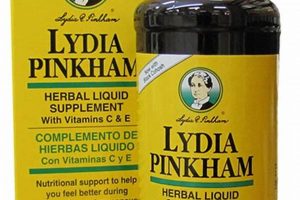
Preparations derived from plants, intended to support health and well-being, constitute a significant category within complementary and alternative medicine. These products are typically composed of botanicals, including herbs, spices, and other plant materials. For instance, preparations containing ginger may be used to alleviate nausea, while those containing St. John’s Wort are sometimes employed to manage symptoms of depression.
The use of these plant-based remedies has a long and varied history, spanning numerous cultures and traditions. Historically, they were the primary source of therapeutic interventions. Today, they are often sought for perceived benefits such as promoting relaxation, boosting immunity, or managing chronic conditions. However, it’s crucial to acknowledge that the efficacy and safety of many such products require further rigorous scientific investigation.
Understanding the legal framework, quality control measures, and potential interactions with conventional medications is essential for informed decision-making regarding the incorporation of these items into one’s healthcare regimen. Subsequent sections will delve into these crucial aspects, providing a comprehensive overview of their use and regulation.
Guidance on Plant-Based Health Products
The following provides essential guidance when considering the incorporation of plant-based health products into a wellness routine. It is crucial to approach their use with caution and informed awareness.
Tip 1: Prioritize Consultation with Healthcare Professionals: Before initiating the use of any plant-based health product, consult with a physician, pharmacist, or qualified healthcare provider. This is crucial to identify potential interactions with existing medications or pre-existing health conditions.
Tip 2: Scrutinize Product Labeling: Carefully examine product labels for detailed information, including the ingredient list, dosage instructions, potential side effects, and any warnings. Absence of clear labeling should be a cause for concern.
Tip 3: Research Product Reputability: Investigate the manufacturer’s reputation and track record. Seek out brands that adhere to Good Manufacturing Practices (GMP) and engage in third-party testing to verify product purity and potency.
Tip 4: Understand Potential Interactions: Be aware that plant-based health products can interact with prescription and over-the-counter medications. Some, for example, can affect blood clotting or blood pressure, posing risks when combined with certain pharmaceuticals.
Tip 5: Monitor for Adverse Reactions: Closely monitor your body for any adverse reactions after beginning use. Discontinue use and seek medical attention if you experience unexpected or concerning symptoms.
Tip 6: Adhere to Recommended Dosage: Always adhere strictly to the recommended dosage instructions provided on the product label or by a healthcare professional. Exceeding the recommended dose does not necessarily increase efficacy and may elevate the risk of adverse effects.
Tip 7: Be Mindful of Quality Variation: Recognize that the quality of plant-based health products can vary significantly. Factors such as plant source, harvesting methods, and manufacturing processes can influence the product’s composition and effectiveness.
Understanding these guidelines facilitates a more informed and responsible approach to incorporating plant-based wellness items into a comprehensive health strategy. Proactive engagement with healthcare professionals remains paramount for ensuring safety and optimizing health outcomes.
The following sections will explore related topics like regulations and scientific research.
1. Plant Source

The botanical origin of any herbal preparation is fundamental to its composition, therapeutic potential, and overall safety profile. Variations in plant species, geographical location, cultivation methods, and harvesting techniques directly influence the chemical constituents present and, consequently, the effects produced.
- Species Identification and Authentication
Accurate identification of the plant species is paramount. Substitution or adulteration with related or entirely different species can compromise efficacy and introduce unintended toxicities. Reputable manufacturers employ methods such as macroscopic and microscopic analysis, as well as DNA barcoding, to authenticate plant material.
- Geographical Location and Environmental Factors
The environment in which a plant grows significantly impacts its chemical makeup. Soil composition, climate, and exposure to pollutants influence the concentration of active compounds and the presence of contaminants like heavy metals or pesticides. Plants grown in contaminated environments may accumulate harmful substances.
- Cultivation and Harvesting Practices
Whether a plant is wild-harvested or cultivated under controlled conditions affects its quality and sustainability. Sustainable harvesting practices ensure the long-term availability of plant resources and minimize environmental impact. Cultivation practices, such as the use of fertilizers or pesticides, directly affect the purity of the final product.
- Plant Part Used
Different parts of a plant (roots, stems, leaves, flowers, seeds) contain varying concentrations and types of active compounds. For example, the roots of valerian are typically used for sleep support, while the leaves of peppermint are used for digestive health. Specifying the correct plant part in a preparation is crucial for achieving the desired therapeutic effect.
In summation, the plant source serves as the bedrock upon which the characteristics and properties of any plant-derived health product are built. Careful consideration of species authentication, environmental factors, cultivation practices, and the specific plant part employed is indispensable for ensuring product quality, safety, and therapeutic relevance.
2. Active Constituents

The efficacy and safety of plant-derived health products are directly attributable to their active constituents: specific chemical compounds responsible for producing physiological effects within the body. These compounds, often secondary metabolites synthesized by plants, interact with biological systems, triggering various responses depending on their chemical structure and concentration. The presence, absence, or concentration variance of these active constituents directly defines the therapeutic potential and the potential adverse effects of these plant-based items. For example, the anti-inflammatory properties of turmeric are primarily attributed to curcuminoids, while the sedative effects of valerian root are linked to valerenic acid. Without these defined chemical entities, a preparation lacks a predictable, quantifiable effect.
Further elaborating, consider the significance of standardization in manufacturing. Due to inherent variability in plant material, standardization aims to ensure that each batch contains a consistent level of key active constituents. This process is vital for delivering predictable therapeutic outcomes and mitigating risks associated with inconsistent dosing. For instance, a standardized extract of St. John’s Wort will contain a specified percentage of hypericin and hyperforin, two compounds believed to contribute to its mood-enhancing effects. Conversely, a non-standardized product may exhibit widely varying concentrations of these compounds, leading to inconsistent or absent effects, and potentially increasing the risk of adverse reactions.
In summary, understanding the relationship between plant products and their active constituents is paramount for informed decision-making. The identification, quantification, and standardization of these compounds are critical steps in ensuring the quality, safety, and therapeutic efficacy of plant-based health products. The clinical relevance relies on the presence and stability of the constituent or constituents of interest, as defined by proper scientific methods to determine potential effects and safety parameters of any plant-derived item.
3. Traditional Uses

Historical applications of botanicals constitute a crucial aspect in understanding contemporary applications of plant-derived health products. Examination of ethnobotanical knowledge provides insights into potential therapeutic uses, dosage strategies, and safety considerations that have evolved over centuries of empirical observation.
- Cultural Specificity and Regional Variations
Traditional herbal practices vary significantly across cultures and geographical regions. These variations reflect the availability of local plant resources, unique environmental factors, and distinct belief systems. For instance, Traditional Chinese Medicine (TCM) employs a complex system of diagnosis and herbal formulations that differs substantially from Ayurvedic medicine practices prevalent in India. Understanding these cultural nuances is crucial for assessing the appropriateness and potential relevance of traditional uses in a modern context.
- Empirical Evidence and Historical Documentation
Traditional uses are often based on generations of empirical observation passed down through oral traditions or documented in historical texts. While not equivalent to modern clinical trials, this accumulated experience can provide valuable clues regarding potential therapeutic effects and safety profiles. However, it is essential to critically evaluate historical information, considering factors such as potential biases, inaccurate plant identification, and variations in preparation methods.
- Influence on Modern Pharmacological Research
Traditional uses have frequently served as a starting point for modern pharmacological research. Many conventional drugs, such as aspirin (derived from willow bark) and digoxin (derived from foxglove), have their origins in traditional herbal remedies. Ethnobotanical surveys and investigations of traditional practices can identify plants with promising therapeutic potential, guiding the development of new pharmaceuticals or dietary supplements.
- Safety Considerations and Contraindications
Traditional use does not guarantee safety. Some plants with a long history of traditional use may still pose risks of toxicity or adverse interactions with other medications. It is crucial to consider traditional knowledge regarding contraindications, potential side effects, and appropriate dosage ranges. Modern scientific investigation is often necessary to validate the safety and efficacy of traditional remedies and to identify potential risks that may not have been recognized in traditional practice.
In conclusion, acknowledging the role of historical precedent in plant-based health products offers a valuable context for modern applications. While providing potential starting points for therapeutic investigation and product development, one must reconcile time-honored practice with contemporary scientific validation to ensure consumer safety and product efficacy.
4. Dosage Forms

The presentation of plant-derived health products significantly influences their bioavailability, patient adherence, and ultimately, therapeutic effectiveness. The specific method of delivery, encompassing considerations like physical form and route of administration, is critical in optimizing the delivery and utilization of active constituents present within the supplement.
- Solid Oral Dosage Forms
Capsules, tablets, and powders represent common formats for plant-based items. Capsules typically contain powdered plant material or extracts within a gelatin or vegetable-based shell, facilitating ease of swallowing and masking unpleasant tastes. Tablets involve compressing powdered ingredients with excipients to form a solid mass, offering convenience and precise dosing. Powders can be mixed with liquids or food, providing flexibility in administration. However, factors like disintegration rate, dissolution profile, and particle size affect the absorption of active compounds from solid oral dosage forms.
- Liquid Oral Dosage Forms
Tinctures, extracts, and syrups provide alternative means of delivering plant-derived constituents. Tinctures involve extracting active compounds using alcohol or a hydroalcoholic solution, preserving them in liquid form. Extracts concentrate plant material through various extraction processes, resulting in a more potent liquid preparation. Syrups combine plant extracts with sweeteners, improving palatability, particularly for pediatric use. Liquid dosage forms generally offer faster absorption compared to solid forms, but may present challenges in terms of taste and stability.
- Topical Dosage Forms
Creams, ointments, and lotions allow for localized application of plant-derived ingredients to the skin. These formulations typically contain plant extracts or oils combined with a base that facilitates absorption and provides a protective barrier. Topical preparations are commonly used to address skin conditions, such as inflammation, irritation, or infection. The efficacy of topical dosage forms depends on factors such as the concentration of active constituents, the permeability of the skin, and the presence of enhancers that promote absorption.
- Other Dosage Forms
Beyond oral and topical routes, plant-derived products can be administered through various other means, including suppositories, inhalations, and infusions. Suppositories, inserted into the rectum or vagina, allow for direct absorption of active compounds into the bloodstream, bypassing the gastrointestinal tract. Inhalations deliver plant-derived vapors or aerosols directly to the respiratory system, providing rapid relief from respiratory symptoms. Infusions involve steeping plant material in hot water to extract water-soluble compounds, producing a beverage with therapeutic properties. These alternative dosage forms offer unique advantages for specific applications and patient populations.
In summary, the selection of an appropriate dosage form for plant-derived supplements necessitates careful consideration of factors such as the specific active constituents, desired therapeutic effect, patient preferences, and potential for interactions with other medications. Understanding the nuances of each dosage form is essential for optimizing the delivery and utilization of plant-derived compounds, maximizing therapeutic benefits while minimizing risks.
5. Regulatory Status

The legal classification and oversight governing these plant-derived products significantly influence their market availability, manufacturing standards, and consumer information. The stringency and nature of regulations, or lack thereof, directly impact the quality control measures, safety assessments, and labeling requirements applicable to these products. For instance, in the United States, preparations are typically regulated as dietary supplements, a category distinct from pharmaceuticals, resulting in less rigorous pre-market approval processes. Conversely, in some European countries, certain preparations with established medicinal uses may be classified and regulated as medicinal products, subject to stricter efficacy and safety evaluations.
This difference in regulatory approaches translates to tangible consequences for consumers. In regions with less stringent oversight, the onus falls primarily on the manufacturer to ensure product safety and efficacy. This can lead to variability in product quality, inaccurate labeling claims, and potential risks associated with adulteration or contamination. Conversely, in regions with more robust regulations, pre-market evaluations and post-market surveillance systems are in place to monitor product safety and efficacy, providing consumers with greater assurance regarding product quality and potential benefits. Real-world examples include instances where preparations sold as dietary supplements in the U.S. have been found to contain undisclosed pharmaceutical ingredients or contaminants, highlighting the potential risks associated with limited regulatory oversight.
Understanding the regulatory landscape is critical for both consumers and manufacturers. Consumers should be aware of the specific regulations in their region and exercise caution when purchasing products from unregulated sources. Manufacturers must comply with all applicable regulations, including Good Manufacturing Practices (GMPs) and labeling requirements, to ensure product quality and safety. Ultimately, a robust and transparent regulatory framework is essential for fostering consumer confidence and promoting the responsible use of plant-derived health products. The absence of said framework can have severe, and even life-threatening, consequences.
6. Safety Concerns

The consumption of preparations derived from plants is not inherently devoid of risk. Safety considerations constitute a critical component in the responsible use of these supplements. These concerns encompass a spectrum of potential adverse effects, ranging from mild gastrointestinal upset to severe allergic reactions or interactions with conventional medications. Understanding the specific risks associated with individual botanical products is paramount for minimizing potential harm.
Several factors contribute to safety concerns. Among these are inaccurate plant identification, adulteration with undeclared ingredients, variations in potency, and a lack of standardized manufacturing processes. For example, instances of liver toxicity have been linked to supplements containing pyrrolizidine alkaloids, compounds found in certain plant species. Furthermore, some such products can interact with prescription drugs, either increasing or decreasing their effectiveness. St. John’s Wort, for instance, is known to interfere with the metabolism of numerous medications, potentially leading to serious health consequences. The absence of rigorous quality control measures and comprehensive safety evaluations further exacerbates these concerns.
Therefore, a thorough risk assessment is essential before incorporating any plant-derived supplement into a healthcare regimen. Consulting with a qualified healthcare professional, scrutinizing product labels, and seeking out reputable manufacturers are crucial steps in mitigating potential safety risks. Ongoing research and stricter regulatory oversight are also needed to ensure the safety and quality of these products and to provide consumers with accurate and reliable information. In conclusion, a responsible approach to the use of plant-derived health products requires a heightened awareness of potential safety concerns and a commitment to evidence-based decision-making.
7. Efficacy Evidence

The demonstrable effectiveness of preparations derived from plants is a cornerstone of their responsible use and integration into healthcare practices. A critical examination of efficacy evidence, or the lack thereof, directly informs decisions regarding the appropriateness of utilizing such supplements for specific health conditions. Substantiation of therapeutic claims necessitates rigorous scientific investigation, including preclinical studies, randomized controlled trials, and meta-analyses. The absence of compelling efficacy evidence renders claims of benefit unsubstantiated, potentially misleading consumers and hindering informed healthcare choices.
Furthermore, the quality of available evidence varies considerably across different plant-derived supplements. While some preparations, such as peppermint oil for irritable bowel syndrome and St. John’s Wort for mild to moderate depression, have been subjected to relatively robust clinical trials demonstrating efficacy, many others lack adequate scientific support. In these cases, traditional uses or anecdotal evidence may be cited, but these sources do not meet the standards of evidence-based medicine. For example, numerous plant preparations are marketed for cognitive enhancement or immune support without sufficient scientific evidence to substantiate these claims. This disparity highlights the importance of critically evaluating the available evidence and prioritizing products with demonstrated efficacy.
In conclusion, evidence regarding efficacy is a critical component when defining plant-derived supplements and assessing their potential role in health and wellness. A commitment to evidence-based practice requires healthcare professionals and consumers to prioritize preparations with demonstrated effectiveness and to exercise caution when considering those lacking robust scientific support. Addressing the limitations of existing evidence through further research is essential for ensuring the responsible use of these products and for realizing their potential benefits while minimizing risks. The definition of any given preparation must begin with safety, and continue to be driven by the known efficacy evidence.
Frequently Asked Questions About Plant-Derived Health Products
The following addresses common inquiries regarding the nature, use, and regulation of products derived from plants, with the aim of fostering informed understanding.
Question 1: What distinguishes a preparation derived from plants from a conventional medication?
Unlike conventional medications, which undergo rigorous pre-market approval processes to demonstrate safety and efficacy, these plant-derived products are often regulated as dietary supplements. This typically entails less stringent requirements for pre-market testing and labeling, placing greater responsibility on manufacturers to ensure product quality and safety.
Question 2: Are preparations derived from plants inherently safe because they are “natural?”
The term “natural” does not equate to safety. Products derived from plants can possess potent pharmacological effects and may interact with other medications or exacerbate existing health conditions. Certain plants contain inherent toxins or allergens that can pose significant health risks. Consultation with a healthcare professional is essential prior to use.
Question 3: How can the quality of preparations derived from plants be assessed?
Assessing the quality of preparations derived from plants requires careful scrutiny of product labeling, manufacturer reputation, and third-party certifications. Reputable manufacturers adhere to Good Manufacturing Practices (GMPs) and conduct testing to verify product identity, purity, and potency. Consumers should seek out products that have undergone independent testing by recognized certification organizations.
Question 4: Do preparations derived from plants require a prescription?
In most jurisdictions, preparations derived from plants regulated as dietary supplements do not require a prescription. However, certain preparations classified as medicinal products may require a prescription depending on local regulations and intended use. It is advisable to consult with a healthcare provider regarding the need for a prescription in specific cases.
Question 5: Can preparations derived from plants be used in conjunction with conventional medications?
The concurrent use of preparations derived from plants and conventional medications can pose risks of drug interactions. Some plant compounds can alter the metabolism, absorption, or excretion of prescription drugs, potentially leading to decreased efficacy or increased toxicity. Healthcare professionals should be informed of all medications and supplements being used to assess potential interactions.
Question 6: Where can reliable information about preparations derived from plants be found?
Reliable information regarding these preparations can be obtained from credible sources, such as healthcare professionals, pharmacists, and evidence-based resources like the National Institutes of Health (NIH) and the National Center for Complementary and Integrative Health (NCCIH). These sources provide unbiased information about the uses, risks, and benefits of plant-derived products.
In summary, informed decision-making regarding these products necessitates a thorough understanding of their regulatory status, potential risks, and available evidence. Consultation with qualified healthcare professionals is crucial for ensuring safe and effective use.
The subsequent sections will explore relevant resources and recommended reading for further learning.
Conclusion
This article has provided a comprehensive exploration into the definition and associated aspects of plant-derived health products. Key elements examined encompass plant source authentication, active constituents, historical uses, dosage forms, regulatory considerations, safety concerns, and the strength of supporting efficacy evidence. A thorough understanding of these factors is paramount for discerning the potential benefits and inherent risks associated with these products.
The responsible utilization of these preparations requires a commitment to evidence-based practices and proactive engagement with healthcare professionals. Continued research and stringent regulatory oversight are essential to ensure product quality, safety, and the validity of therapeutic claims, thus fostering informed consumer choices and safeguarding public health.