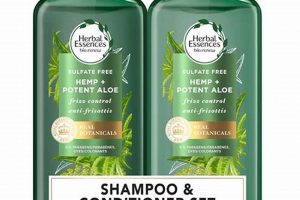
The absence of sulfates, such as Sodium Lauryl Sulfate (SLS) and Sodium Laureth Sulfate (SLES), in hair cleansing products indicates a formulation designed to be gentler on the hair and scalp. These sulfates are detergents known for their foaming properties and effectiveness in removing dirt and oil. However, they can also strip the hair of its natural oils, leading to dryness, irritation, and color fading, particularly in color-treated hair. Therefore, a shampoo formulated without these ingredients aims to provide a cleansing experience that is less harsh.
Formulations omitting sulfates can offer several advantages. They are often preferred by individuals with sensitive skin, eczema, or psoriasis, as they minimize the risk of irritation. Furthermore, those with color-treated hair often find that sulfate-free options help to prolong the vibrancy and longevity of their hair color. Historically, the demand for milder cleansing agents has grown in response to increased awareness of the potential negative effects of harsh chemicals on both hair health and environmental sustainability.
The subsequent discussion will explore the specific composition of Herbal Essences shampoos and detail which, if any, of their product lines are formulated without sulfates, allowing consumers to make informed purchasing decisions based on their individual hair care needs and preferences.
Guidance on Sulfate-Free Herbal Essences Shampoos
The following points provide practical advice regarding the selection and usage of Herbal Essences shampoos, focusing specifically on the availability and benefits of sulfate-free options within their product range. Careful consideration of these factors will assist in optimizing hair care routines.
Tip 1: Verify Product Labeling: Always scrutinize the product label. The absence of sulfates, such as Sodium Lauryl Sulfate (SLS) and Sodium Laureth Sulfate (SLES), will typically be prominently displayed on the front of the bottle or within the ingredient list. Confirm the absence of these compounds before purchase.
Tip 2: Consult the Herbal Essences Website: The official Herbal Essences website offers comprehensive information on their product formulations. Utilize the website’s search function to specifically filter for sulfate-free shampoos, ensuring the information is current and accurate.
Tip 3: Understand Hair Type Compatibility: Sulfate-free shampoos are often beneficial for dry, damaged, or color-treated hair. Evaluate hair type and condition to determine if a sulfate-free formulation aligns with individual hair care requirements. Individuals with oily hair might require more frequent washing with a sulfate-free shampoo to achieve adequate cleansing.
Tip 4: Expect Less Foaming: Sulfate-free shampoos typically produce less lather than their sulfate-containing counterparts. This is normal and does not indicate reduced cleansing efficacy. Focus on thoroughly massaging the shampoo into the scalp to effectively remove dirt and oil.
Tip 5: Adjust Usage Frequency: Individuals transitioning from sulfate-containing shampoos might need to adjust the frequency of washes. Observe how the hair responds and adjust accordingly. Over-washing, even with sulfate-free shampoos, can still lead to dryness.
Tip 6: Consider Complementary Products: Enhance the benefits of sulfate-free shampoo by utilizing complementary sulfate-free conditioners and styling products. This holistic approach to hair care can further minimize potential irritation and maximize hydration.
These guidelines facilitate informed selection and utilization of sulfate-free Herbal Essences shampoos, contributing to improved hair health and reduced potential for scalp irritation. Thorough understanding of product formulations and individual hair needs is paramount.
The subsequent sections will delve into specific product recommendations and address common concerns related to sulfate-free hair care.
1. Label Verification

Label verification constitutes a critical step in ascertaining whether a given Herbal Essences shampoo formulation is, in fact, sulfate-free. The presence or absence of sulfates, such as Sodium Lauryl Sulfate (SLS) or Sodium Laureth Sulfate (SLES), is typically declared within the product’s ingredient list. A diligent review of this list allows consumers to determine with certainty if the product aligns with their preferences for sulfate-free formulations. Failure to verify the label prior to purchase may result in the unintentional selection of a product containing sulfates, potentially leading to undesired effects such as dryness or scalp irritation. For example, a consumer specifically seeking a sulfate-free shampoo for color-treated hair would risk premature color fading by neglecting to confirm the absence of sulfates via label inspection.
The importance of label verification extends beyond simple ingredient identification. Manufacturers may occasionally reformulate their products, resulting in changes to the ingredient composition. Even if a consumer previously purchased a sulfate-free version of a specific Herbal Essences shampoo, assuming that subsequent purchases will automatically be sulfate-free is imprudent. Moreover, marketing claims on the front of the bottle can be misleading. A product might be advertised as “gentle” or “natural” without necessarily being sulfate-free. Consequently, the ingredient list remains the definitive source of information. Retail environments can also contribute to errors. Products may be mislabeled on shelves, or outdated stock might persist, further emphasizing the need for individual verification at the point of purchase.
In summary, accurate label verification is indispensable for consumers seeking sulfate-free Herbal Essences shampoos. The ingredient list serves as the ultimate authority in confirming the absence of sulfates, mitigating the risks associated with misleading marketing claims or product reformulations. This practice empowers consumers to make informed decisions and select products that effectively meet their specific hair care requirements, avoiding potential adverse effects and ensuring satisfaction with their purchase.
2. Ingredient List

The ingredient list on a shampoo product directly dictates whether it can be classified as “sulfate-free.” This list provides comprehensive information on the constituents of the formulation, offering the most reliable indicator of the presence or absence of sulfate-based cleansing agents.
- Sulfate Identification
The ingredient list allows for the definitive identification of sulfates. Common sulfates to watch for include Sodium Lauryl Sulfate (SLS) and Sodium Laureth Sulfate (SLES). The presence of these or related compounds indicates that the shampoo is not sulfate-free. Conversely, their absence suggests that a gentler surfactant system is employed.
- Surfactant Alternatives
When sulfates are absent, the ingredient list typically reveals alternative surfactants. These may include cocamidopropyl betaine, sodium cocoyl isethionate, or lauryl glucoside. These alternatives provide cleansing action while being less harsh on the hair and scalp. The specific combination and concentration of these surfactants affect the shampoo’s overall cleansing power and gentleness.
- Order of Ingredients
Ingredients are generally listed in descending order of concentration. Therefore, the position of sulfates within the list (if present) offers insight into their relative prominence in the formulation. Sulfates listed near the beginning indicate a higher concentration, suggesting a potentially harsher cleansing experience.
- Potential for Misleading Claims
While a product might be marketed as “gentle” or “natural,” the ingredient list is the ultimate arbiter of its composition. Marketing claims are often subjective and can be misleading; the ingredient list offers objective, verifiable information. Reliance on this list prevents misinterpretation and ensures informed purchasing decisions.
In summation, the ingredient list is the definitive resource for determining whether a Herbal Essences shampoo is sulfate-free. By carefully scrutinizing this list, consumers can identify the presence or absence of sulfates, understand the alternative surfactants employed, and make informed choices aligned with their hair care needs and preferences. Neglecting to consult the ingredient list increases the risk of selecting a product that does not meet individual requirements, potentially leading to adverse effects.
3. Specific Product Lines

The assertion of whether an Herbal Essences shampoo formulation is sulfate-free is directly contingent upon the specific product line in question. Herbal Essences offers a diverse portfolio of shampoos, each formulated with distinct ingredient profiles. Consequently, a blanket statement about the entire brand being sulfate-free, or not, is inaccurate. The presence or absence of sulfates varies across their product offerings, necessitating individual assessment based on the particular line under consideration. For example, certain lines within the “Bio:Renew” collection are formulated without sulfates, while others may contain them. The ingredient composition is tailored to meet specific hair care needs, resulting in this variation.
Consider the practical implications of this variability. A consumer seeking a sulfate-free shampoo due to sensitivities or color-treated hair must diligently examine the specific product line of interest. Assuming that all Herbal Essences shampoos are sulfate-free based on prior experience with a different product line could lead to adverse consequences, such as scalp irritation or premature color fading. Conversely, consumers who prefer sulfate-containing shampoos for a deeper cleanse would need to identify the appropriate lines within the brand that align with their preferences. Marketing materials may highlight specific features or benefits, but the definitive determination rests upon verifying the ingredient list for the specific product line in question.
In summary, the connection between specific product lines and the sulfate-free status of Herbal Essences shampoos is critical. The diverse formulations across the brand’s portfolio mandate careful individual evaluation. Consumers must prioritize label verification for each product line to ensure alignment with their hair care requirements, avoiding potential issues arising from inaccurate assumptions. Understanding this nuanced relationship facilitates informed purchasing decisions and optimal hair health outcomes.
4. Formula Variations
The presence or absence of sulfates in Herbal Essences shampoos is intrinsically linked to formula variations within the brand’s product range. Different formulations cater to diverse hair types, conditions, and consumer preferences, leading to considerable variations in ingredient composition, including the presence or absence of sulfates.
- Targeted Hair Needs
Formulas are often adjusted to meet the specific needs of various hair types. For example, shampoos designed for oily hair may incorporate sulfates for their strong cleansing action, while formulations intended for dry or color-treated hair may omit sulfates to minimize moisture stripping and color fading. This targeted approach necessitates a diverse array of ingredient profiles, directly impacting the sulfate content of each formula.
- Ingredient Substitutions
When sulfates are removed from a formula, alternative cleansing agents are introduced to maintain efficacy. The selection of these substitutes significantly alters the shampoo’s characteristics. Examples include the use of cocamidopropyl betaine or sodium cocoyl isethionate, which offer milder cleansing properties. The efficacy and sensory experience of the shampoo are thus affected by these substitutions, impacting lather, rinse-ability, and overall hair feel.
- Regional Formulations
Ingredient regulations and consumer preferences can vary across different geographic regions, leading to regional variations in Herbal Essences shampoo formulations. A product marketed under the same name may contain sulfates in one country but be sulfate-free in another. This regional divergence necessitates careful label examination, irrespective of brand familiarity, to ensure compliance with individual requirements and preferences.
- Reformulation Processes
Manufacturers frequently reformulate their products to address evolving consumer preferences, comply with regulatory changes, or improve product performance. This can involve the removal of sulfates in response to growing demand for milder cleansing agents. Understanding that formulations are subject to change necessitates continuous verification of the ingredient list, even for previously purchased products, to confirm the ongoing absence or presence of sulfates.
The interplay between formula variations and the presence or absence of sulfates in Herbal Essences shampoos underscores the importance of informed consumer decision-making. Variability driven by targeted hair needs, ingredient substitutions, regional regulations, and reformulation processes necessitates meticulous label examination to ensure the selected product aligns with individual requirements and preferences. This approach mitigates the risk of adverse reactions and optimizes hair care outcomes.
5. Website Information

The official Herbal Essences website serves as a primary source for determining the sulfate status of its shampoo products. Manufacturers’ websites are typically the most reliable and up-to-date repositories of product information, including detailed ingredient lists and specific claims about the absence of sulfates. This information directly addresses the query of whether a particular Herbal Essences shampoo is formulated without sulfates. For instance, the website may clearly state that a specific product line, such as a variant within the Bio:Renew collection, is “sulfate-free,” providing visual cues like badges or icons alongside the product description to reinforce this characteristic. In the absence of explicit labeling on the physical product, the website provides an accessible alternative means of verification.
The website’s significance extends beyond simple confirmation. It often features comprehensive details about each ingredient, including its function and source. This transparency aids consumers in making informed decisions aligned with their values and sensitivities. For example, if a consumer is not only seeking a sulfate-free shampoo but also concerned about other specific ingredients, the website’s detailed ingredient lists provide the necessary information for thorough evaluation. Furthermore, the website may include frequently asked questions (FAQs) that directly address concerns about sulfates and their impact on hair health, providing additional context and guidance for consumers seeking sulfate-free options. Customer reviews can also offer anecdotal evidence regarding the performance and suitability of specific shampoos for various hair types and sensitivities.
In conclusion, the Herbal Essences website is an indispensable tool for ascertaining the sulfate status of its shampoo products. The website serves as a central hub for product specifications, ingredient details, and consumer support, allowing individuals to confirm whether a particular shampoo is formulated without sulfates. By leveraging the resources available on the official website, consumers can make well-informed purchasing decisions and select products that effectively meet their hair care needs and preferences, contributing to positive outcomes and minimizing the risk of adverse reactions. This emphasis on accurate information is vital for maintaining consumer trust and ensuring satisfaction with Herbal Essences products.
6. Manufacturing Changes

Manufacturing changes constitute a significant variable in determining whether a specific Herbal Essences shampoo is sulfate-free. Reformulations driven by evolving consumer preferences, regulatory adjustments, or cost optimization strategies can directly impact the inclusion or exclusion of sulfates in a product’s composition. A previously sulfate-containing shampoo may be reformulated to remove sulfates in response to market demand for gentler cleansing options. Conversely, a product marketed as sulfate-free could be altered to include sulfates if alternative surfactants prove less effective or more expensive. The key point is that a shampoo’s sulfate status is not static and is subject to change based on manufacturing decisions.
The implications of these manufacturing changes are considerable for consumers. Individuals with sensitivities to sulfates or those seeking to preserve color-treated hair rely on accurate product information. A shampoo that was once deemed suitable may become unsuitable following a reformulation. For instance, if Herbal Essences switches to a new supplier of surfactants, this could necessitate adjustments to the formula, potentially affecting the presence or absence of sulfates. Consumers must therefore diligently check product labels, even for previously trusted products, to ensure continued alignment with their needs. Furthermore, retailers may carry both older and newer versions of a product simultaneously, creating further potential for consumer confusion.
Understanding the potential for manufacturing changes is essential for making informed purchasing decisions. Consumers cannot assume that a products past formulation is indicative of its current composition. Consistent label verification and monitoring of manufacturer announcements regarding product reformulations are necessary steps. The connection between manufacturing changes and a shampoo’s sulfate-free status underscores the dynamic nature of product formulations and the need for vigilant consumer awareness. This awareness is crucial for avoiding unintended exposure to sulfates and maintaining consistent hair care routines.
7. Evolving Formulations
The composition of Herbal Essences shampoos is not static; formulations evolve over time due to shifts in consumer preferences, scientific advancements, regulatory changes, and sourcing of raw materials. This dynamic nature directly impacts the presence or absence of sulfates, thus affecting whether a specific product can be accurately described as “sulfate-free.”
- Consumer Demand Shifts
Increasing consumer awareness of the potential adverse effects of sulfates on hair and scalp health drives manufacturers to offer sulfate-free alternatives. If a significant portion of Herbal Essences’ target demographic expresses a preference for sulfate-free options, the brand may reformulate existing products or introduce new sulfate-free lines to cater to this demand. For example, an original formula containing sulfates may be re-engineered with milder surfactants to appeal to consumers seeking gentler cleansing.
- Scientific Advancements in Surfactants
Ongoing research and development in the field of cosmetic chemistry lead to the discovery of new and improved surfactant alternatives. These advancements provide manufacturers with additional options for formulating sulfate-free shampoos that deliver comparable cleansing performance without the harshness associated with sulfates. If Herbal Essences identifies a novel surfactant that is both effective and gentle, it may choose to incorporate it into its formulations, potentially leading to the discontinuation of sulfate-containing options or the creation of entirely new sulfate-free products.
- Regulatory Landscape Modifications
Governmental regulations regarding the use of specific ingredients in cosmetic products can also necessitate formulation changes. If a regulatory body restricts or bans the use of certain sulfates due to safety concerns, Herbal Essences would be obligated to reformulate its shampoos to comply with these regulations, regardless of consumer preferences. For instance, a specific sulfate commonly used in their shampoos might be subject to stricter usage limits, prompting a shift to alternative cleansing agents.
- Raw Material Sourcing and Availability
The availability and cost of raw materials, including both sulfates and their alternatives, can influence formulation decisions. If the price of sulfates increases significantly or if there are supply chain disruptions, Herbal Essences may opt to replace sulfates with more readily available and cost-effective alternatives, even if these alternatives were previously deemed less desirable. Conversely, if a new source of high-quality, sustainably sourced sulfates becomes available, the brand might choose to reintroduce sulfates into certain formulations.
The evolving nature of Herbal Essences shampoo formulations, driven by the multifaceted factors outlined above, highlights the importance of remaining vigilant and consistently verifying product labels. Consumer demand, scientific progress, regulatory changes, and raw material considerations collectively contribute to a dynamic landscape where the sulfate-free status of a specific product is subject to change. Therefore, relying on past assumptions about a shampoo’s composition is insufficient, emphasizing the need for ongoing awareness and informed purchasing decisions.
Frequently Asked Questions
The following addresses common inquiries regarding the presence of sulfates in Herbal Essences shampoos. This information aims to provide clarity and facilitate informed consumer choices.
Question 1: Is every Herbal Essences shampoo formulation devoid of sulfates?
No, not every Herbal Essences shampoo is formulated without sulfates. The presence or absence of these compounds depends on the specific product line and formula. Consumers must verify the ingredient list of each individual product to determine its sulfate status.
Question 2: What sulfates are commonly found in Herbal Essences shampoos that are not sulfate-free?
The sulfates most frequently encountered in non-sulfate-free Herbal Essences shampoos are Sodium Lauryl Sulfate (SLS) and Sodium Laureth Sulfate (SLES). These are detergents known for their cleansing and foaming properties.
Question 3: How can a consumer accurately determine if a specific Herbal Essences shampoo is sulfate-free?
The definitive method for determining the sulfate status of a Herbal Essences shampoo involves careful examination of the product’s ingredient list. The absence of sulfates such as SLS and SLES confirms that the formulation is sulfate-free.
Question 4: Does the “Bio:Renew” designation automatically indicate a sulfate-free formulation in Herbal Essences shampoos?
The “Bio:Renew” designation does not guarantee a sulfate-free formulation. While some products within the Bio:Renew line may be formulated without sulfates, others may contain them. Ingredient list verification remains essential.
Question 5: If a product is labeled as “gentle” or “natural,” does that guarantee it is also sulfate-free?
No. The terms “gentle” and “natural” are marketing terms and do not necessarily indicate the absence of sulfates. Consumers should not rely solely on these terms; ingredient list verification is crucial.
Question 6: Where can the most current and accurate information regarding Herbal Essences shampoo formulations be found?
The most current and accurate information regarding Herbal Essences shampoo formulations, including ingredient lists and sulfate status, can be found on the official Herbal Essences website. This resource is updated to reflect any formulation changes.
The preceding answers offer clarification regarding the sulfate content in Herbal Essences shampoos. Consistent verification of product labels is essential for informed decision-making.
The subsequent section will explore alternative hair care options and provide further guidance for selecting suitable products.
Determining the Sulfate Status of Herbal Essences Shampoo
This exploration has underscored the complexities involved in ascertaining whether Herbal Essences shampoo formulations omit sulfates. Direct examination of the ingredient list on each individual product remains the definitive method. Factors such as specific product lines, formula variations, manufacturing changes, and evolving formulations contribute to the dynamic nature of shampoo composition. Reliance on marketing claims or past assumptions is insufficient for accurate determination.
Given the potential impact of sulfates on hair and scalp health, continued vigilance in product selection is warranted. Consumers should prioritize ingredient list verification to align product choices with their individual needs and preferences. This commitment to informed decision-making fosters optimal hair care outcomes and minimizes the risk of adverse reactions.