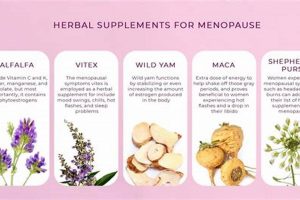
Substances derived from plants that are purported to influence the body’s progesterone levels are the focus of increasing interest. These products, often marketed as natural alternatives to hormone replacement therapy, encompass a range of plant extracts, including those from herbs and roots traditionally associated with hormonal balance. An example is the use of certain yam species, which contain diosgenin, a compound that can be converted into progesterone in a laboratory setting.
The perceived advantage of using plant-derived options stems from the belief that they offer a gentler, more holistic approach to addressing hormonal imbalances. Proponents suggest that these substances can alleviate symptoms associated with menopause, premenstrual syndrome (PMS), and infertility. Historically, traditional medicine systems have utilized various plants for their purported hormone-regulating properties, contributing to the current interest in these natural remedies.
The following sections will delve into the scientific evidence supporting the efficacy of these plant-based approaches, examine the safety considerations associated with their use, and discuss the regulatory landscape governing their availability and marketing.
Guidance on Plant-Based Progesterone Support
The following provides information related to utilizing plant-derived substances marketed for their potential influence on progesterone levels. It is crucial to approach these options with informed caution and a comprehensive understanding.
Tip 1: Research Extensively. Before initiating any regimen, thoroughly investigate the scientific evidence supporting the purported effects of the specific plant extract. Peer-reviewed studies, rather than anecdotal evidence, should be the primary basis for evaluation.
Tip 2: Understand Bioavailability. Consider that the body’s ability to absorb and utilize plant-derived compounds can vary significantly. Formulations and delivery methods can impact bioavailability and, consequently, effectiveness.
Tip 3: Be Aware of Potential Interactions. Plant extracts can interact with pharmaceutical medications. A comprehensive review of all current medications and supplements with a qualified healthcare professional is essential to avoid adverse reactions.
Tip 4: Prioritize Quality Assurance. Choose products from reputable manufacturers that adhere to stringent quality control standards. Third-party testing for purity and potency can provide additional assurance of product integrity.
Tip 5: Monitor Hormone Levels. Regular monitoring of progesterone levels, under the guidance of a healthcare provider, is crucial to assess the impact of plant-based interventions and adjust the regimen as needed.
Tip 6: Recognize Limitations. Plant-derived substances may not be appropriate for all individuals or conditions. In cases of significant hormonal imbalances or medical conditions, pharmaceutical interventions may be necessary.
Tip 7: Consider Lifestyle Factors. The impact of plant-based support may be enhanced by addressing underlying lifestyle factors such as diet, exercise, and stress management.
Adherence to these guidelines can help individuals make informed decisions regarding the utilization of plant-based products promoted for progesterone support, maximizing potential benefits while mitigating risks.
The final section will provide a summary of the aforementioned key points and offer further perspectives on the role of plant-derived substances in supporting hormonal health.
1. Source Identification

The precise botanical origin of plant-derived substances marketed for their impact on progesterone levels is paramount. Variations in species, cultivation practices, and geographical location can significantly influence the chemical composition and, consequently, the potential effects of these products.
- Species Specificity
The chemical profile, including the presence and concentration of compounds such as diosgenin in various yam species, can differ considerably. Identifying the exact species used in a supplement is therefore crucial for predicting its potential hormonal activity. For instance, Dioscorea villosa is often marketed, but other species of Dioscorea may have different chemical compositions and effects.
- Geographic Origin and Cultivation
Environmental factors, such as soil composition, climate, and altitude, affect the concentration of active constituents in plants. Plants grown in different regions or under varying cultivation practices may exhibit different levels of key compounds. Wild-harvested plants may have different chemical profiles than cultivated ones, due to differences in soil nutrients and climate.
- Extraction Method and Processing
The method used to extract and process the plant material can significantly alter the final product’s composition. Different solvents and processing techniques can selectively extract or degrade certain compounds, leading to variations in the supplement’s hormonal activity. Herbal extracts may be standardized to a specific concentration of the active compound, ensuring consistency. However, this standardization can vary between manufacturers.
- Authentication and Adulteration
Ensuring the authenticity of the plant material is essential to prevent adulteration with other species or synthetic compounds. Sophisticated analytical techniques, such as DNA barcoding and chromatography, may be necessary to verify the identity and purity of the raw materials. Adulteration of herbal supplements is a known issue, and can have serious health consequences.
Therefore, comprehensive source identification is not merely a matter of academic interest but a critical factor impacting the efficacy and safety of plant-derived substances promoted for progesterone support. Transparency regarding the species, origin, and processing methods employed in the production of these supplements is essential for informed consumer choices and responsible use.
2. Chemical Composition

The effectiveness and safety profile of substances marketed as progesterone support hinges directly on their chemical makeup. These plant-derived supplements contain a complex mixture of compounds, not all of which have been fully characterized. The presence and concentration of specific constituents dictate whether a supplement can exert any influence on progesterone levels or related hormonal pathways. For instance, wild yam ( Dioscorea villosa) is often promoted as a source of progesterone; however, it contains diosgenin, a steroidal sapogenin that the human body cannot directly convert into progesterone. The conversion requires laboratory synthesis. Thus, while wild yam extract contains a progesterone precursor, it does not directly increase progesterone levels in humans.
Understanding the chemical composition also allows for assessment of potential risks. Certain plant extracts may contain compounds that interfere with hormone receptors, enzyme activity, or other physiological processes. For example, some herbs contain phytoestrogens, which can bind to estrogen receptors and potentially influence hormonal balance in ways that may not be desirable, particularly for individuals with estrogen-sensitive conditions. Moreover, standardization of herbal supplements based on specific chemical markers is crucial for ensuring consistent potency and minimizing batch-to-batch variability. Lack of standardization can lead to unpredictable effects and potential adverse reactions.
In conclusion, the chemical composition of progesterone herbal supplements is a critical determinant of their potential efficacy and safety. A thorough understanding of these chemical profiles, including the identification of active constituents and potential contaminants, is essential for informed decision-making and responsible use. Reliance on anecdotal evidence or unsubstantiated claims without considering the underlying chemical reality can lead to ineffective or even harmful outcomes.
3. Progesterone Modulation and Herbal Supplements
The concept of “progesterone modulation” refers to the ability of a substance to influence the activity, production, or metabolism of progesterone within the body. In the context of “progesterone herbal supplements,” it is posited that certain plant-derived compounds possess this modulatory capability, thereby offering a natural means of addressing hormonal imbalances. The following explores critical aspects of this modulation in relation to these supplements.
- Receptor Interaction
Some herbal constituents are theorized to interact with progesterone receptors, either directly or indirectly. Direct interaction would involve the compound binding to the receptor, mimicking or blocking progesterone’s effects. Indirect interaction could occur through influencing the receptor’s expression or sensitivity. However, definitive evidence of direct binding for most herbal constituents remains limited.
- Enzyme Influence
Herbal supplements may affect enzymes involved in progesterone synthesis or breakdown. For example, certain compounds could enhance the activity of enzymes that produce progesterone or inhibit those that metabolize it. However, this influence could also affect other steroid hormones, resulting in unintended hormonal shifts.
- Hormone Precursors
Many herbal supplements contain compounds that serve as precursors to progesterone. Diosgenin, found in wild yam, is a frequently cited example. While diosgenin can be converted to progesterone in a laboratory, the human body lacks the necessary enzymes for this conversion to occur efficiently. Therefore, the direct impact of diosgenin on progesterone levels in humans is questionable.
- Indirect Pathways
Herbal supplements might modulate progesterone levels indirectly by affecting other hormonal axes, such as the hypothalamic-pituitary-ovarian (HPO) axis. By influencing the production or regulation of hormones like LH or FSH, these supplements could indirectly impact progesterone production. However, the complexity of the HPO axis makes predicting these indirect effects challenging.
It is essential to acknowledge that the mechanisms by which “progesterone herbal supplements” might modulate progesterone levels are often poorly understood and lack robust scientific validation. Many of the claims made regarding these supplements are based on traditional use or in vitro studies, which may not accurately reflect their effects in vivo. Rigorous clinical trials are needed to determine the true efficacy and safety of these substances for progesterone modulation.
4. Bioavailability Variability

The extent to which a substance is absorbed and becomes available in the bloodstream to exert its intended effect, known as bioavailability, presents a significant challenge in the context of plant-derived progesterone support. Several factors contribute to this variability, influencing the effectiveness of these supplements.
- Formulation and Dosage Form
The method in which a “progesterone herbal supplement” is formulated greatly impacts its bioavailability. Capsules, tablets, liquid extracts, and topical creams exhibit differing absorption rates. For example, a poorly formulated tablet may dissolve slowly, limiting the amount of active compound released for absorption in the gastrointestinal tract. Standardized extracts, which contain a known concentration of the active ingredient, may offer more consistent bioavailability compared to non-standardized preparations.
- Individual Physiological Factors
Absorption rates vary significantly among individuals due to differences in gastrointestinal physiology, including stomach acidity, enzyme activity, and gut motility. Age, sex, and the presence of gastrointestinal disorders can also influence bioavailability. For instance, individuals with impaired digestive function may absorb fewer active compounds from a “progesterone herbal supplement” compared to healthy individuals.
- Food Interactions
The presence of food in the stomach can either enhance or inhibit the absorption of certain compounds found in “progesterone herbal supplements”. Some plant-derived constituents may bind to dietary components, reducing their absorption. Conversely, other compounds may be better absorbed when taken with fats or specific nutrients. Taking supplements on an empty stomach or with a particular meal can thus affect the amount of the active compound that reaches systemic circulation.
- Metabolic Processes
Once absorbed, compounds from “progesterone herbal supplements” are subject to metabolic processes in the liver and other tissues, which can reduce their bioavailability. First-pass metabolism, which occurs in the liver before the compound reaches the bloodstream, can significantly decrease the amount of the active compound available to exert its effects. Some plant-derived compounds may be rapidly metabolized, resulting in low systemic bioavailability despite adequate absorption.
Understanding the nuances of bioavailability variability is crucial for optimizing the use of “progesterone herbal supplements”. Without careful consideration of formulation, individual physiology, food interactions, and metabolic processes, the effectiveness of these supplements can be unpredictable. This variability underscores the importance of consulting with a qualified healthcare professional to determine the appropriate dosage and administration methods for individual needs.
5. Clinical Validations and progesterone herbal supplements

The assessment of efficacy and safety for “progesterone herbal supplements” mandates rigorous clinical validations. These validations serve as the cornerstone for substantiating claims regarding their potential hormonal effects. Without such validations, the use of these supplements remains speculative, potentially exposing individuals to ineffective treatments or unforeseen adverse reactions. Clinical validations involve structured research methodologies, including randomized controlled trials, which compare the effects of the supplement against a placebo or a conventional treatment. These trials measure relevant outcomes, such as changes in progesterone levels, symptom alleviation (e.g., reduced hot flashes in menopausal women), or improvements in fertility parameters. Real-life examples illustrate the practical significance: a study evaluating a specific herbal blend for PMS symptoms found a statistically significant reduction in irritability and bloating compared to placebo, providing evidence of its potential therapeutic value. Such evidence is critical for healthcare professionals to make informed recommendations and for consumers to make responsible choices.
The absence of clinical validations can lead to misleading marketing practices, where claims are based solely on anecdotal evidence or traditional use, without scientific support. This creates a scenario where consumers may spend resources on products that lack proven benefits, while potentially delaying or forgoing more effective, evidence-based treatments. Moreover, clinical validations are crucial for identifying potential risks and contraindications associated with “progesterone herbal supplements.” For instance, some herbal compounds may interact with pharmaceutical medications, leading to adverse effects. Clinical trials can help to identify these interactions and guide safe usage guidelines. The Women’s Health Initiative study, although focused on hormone replacement therapy, underscores the importance of large-scale clinical trials in understanding both the benefits and risks of hormone-related interventions. Similar rigor is necessary for evaluating “progesterone herbal supplements.”
In conclusion, clinical validations constitute a fundamental aspect of responsible development and utilization of “progesterone herbal supplements.” They provide the scientific evidence necessary to support claims of efficacy, identify potential risks, and guide informed decision-making. The continued investment in and adherence to rigorous clinical research methodologies are essential for ensuring that these supplements are used safely and effectively. The development of standardized protocols for clinical validations, specifically tailored to the unique characteristics of herbal supplements, represents a crucial step forward in promoting their responsible integration into healthcare practices.
Frequently Asked Questions
This section addresses common inquiries regarding plant-derived substances marketed for their purported impact on progesterone levels. The information presented aims to provide clarity and promote informed decision-making.
Question 1: Are progesterone herbal supplements a direct replacement for prescription progesterone?
Progesterone herbal supplements generally contain precursors, not progesterone itself. The human body cannot readily convert these precursors into progesterone. Prescription progesterone delivers bioidentical or synthetic progesterone directly to the bloodstream. Thus, these supplements are not a direct replacement.
Question 2: What are the primary risks associated with using progesterone herbal supplements?
Risks include potential interactions with prescription medications, variability in product potency due to lack of standardization, and the possibility of unproven efficacy leading to delayed or inadequate treatment for underlying conditions.
Question 3: How can one determine the quality and purity of a progesterone herbal supplement?
Seek products from manufacturers that employ third-party testing for purity and potency. Look for certifications from recognized organizations that verify adherence to quality standards. Review the product label for detailed information about the ingredients and manufacturing processes.
Question 4: Can progesterone herbal supplements effectively treat hormonal imbalances?
The efficacy of herbal supplements in treating hormonal imbalances varies significantly and depends on the specific plant extract, the individual’s physiology, and the nature of the imbalance. Clinical evidence supporting the effectiveness of many such supplements is limited.
Question 5: Are progesterone herbal supplements safe for long-term use?
The long-term safety of many progesterone herbal supplements has not been thoroughly established. Prolonged use should be undertaken only under the guidance of a qualified healthcare professional who can monitor for potential adverse effects.
Question 6: Do progesterone herbal supplements have any known interactions with other medications?
Yes, interactions are possible. Plant-derived compounds can interfere with the absorption, metabolism, or excretion of various medications. A comprehensive review of all medications and supplements with a healthcare professional is essential to avoid potential adverse interactions.
The information provided herein is for informational purposes only and does not constitute medical advice. Consulting with a qualified healthcare provider is essential before initiating any new treatment regimen, including the use of progesterone herbal supplements.
The concluding section will summarize the key findings and reiterate the importance of seeking professional guidance when considering plant-derived substances for hormonal support.
Conclusion
This exploration into progesterone herbal supplements reveals a landscape characterized by both promise and uncertainty. While traditional medicine systems have long employed plant-derived substances for hormonal regulation, the scientific evidence supporting the efficacy of many such remedies remains limited. Variability in chemical composition, bioavailability, and the lack of rigorous clinical validations underscore the need for caution.
The information outlined herein highlights the complexities associated with using these plant-derived options. Individuals considering progesterone herbal supplements must prioritize comprehensive research, source verification, and consultation with qualified healthcare professionals. A responsible approach acknowledges both the potential benefits and the inherent risks, ensuring that decisions are informed by sound scientific principles and personalized medical guidance.