The proposition that every herbal infusion lacks caffeine is a common assumption, but it requires careful examination. Herbal teas, more accurately described as tisanes, are beverages made from infusing herbs, spices, flowers, or other plant material in hot water. A true tea originates from the Camellia sinensis plant, which naturally contains caffeine. For example, a drink made solely from chamomile flowers would generally be considered caffeine-free, whereas a beverage containing black tea leaves would possess caffeine.
Understanding the composition of these beverages is vital for those seeking to avoid stimulants. Choosing caffeine-free alternatives can benefit individuals sensitive to stimulants, those with sleep disturbances, or those seeking a relaxing beverage. Historically, herbal infusions have been valued for their potential medicinal properties and have served as alternatives to caffeinated beverages in various cultures for centuries. Identifying accurately the components ensures that the beverage consumed aligns with desired physiological effects.
Therefore, to ascertain whether a given beverage is free from caffeine, it is essential to investigate the specific ingredients. The following sections will further explore the factors determining the presence or absence of this stimulant in different herbal infusions, highlighting common misconceptions and providing clarity on the composition of various blends.
Determining the presence or absence of caffeine in herbal infusions requires careful attention to ingredients and sourcing. The following tips provide guidance on ensuring a caffeine-free choice.
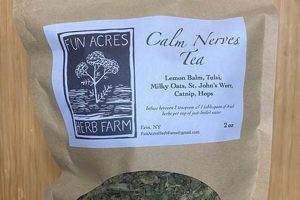
Tip 1: Read Ingredient Labels Meticulously: Scrutinize the list of ingredients. If Camellia sinensis (tea), black tea, green tea, white tea, or yerba mate are listed, the beverage contains caffeine.
Tip 2: Seek Certification: Look for “caffeine-free” certifications from reputable organizations. These certifications often involve rigorous testing to confirm the absence of caffeine.
Tip 3: Understand “Herbal Tea” vs. “Tea Blends”: Be aware that products marketed as “tea blends” may contain both herbal components and true tea leaves, leading to caffeine content.
Tip 4: Research Specific Herbs: Some less common herbal ingredients may have natural stimulant properties, although not caffeine. Research individual herbs if unsure of their effects.
Tip 5: Inquire About Processing Methods: Decaffeination processes may be used on tea leaves added to herbal blends, but residual caffeine might remain. Ask manufacturers about their processes.
Tip 6: Opt for Single-Ingredient Tisanes: Choosing infusions made from a single herb (e.g., chamomile, peppermint) simplifies the process of verifying caffeine absence.
Tip 7: Be Cautious of Guarana and Related Additives: Some herbal beverages include guarana or other natural sources of caffeine. Inspect labels carefully to prevent accidental consumption of stimulants.
By diligently following these guidelines, individuals can confidently select herbal infusions that align with their preferences and health requirements.
With a comprehensive understanding of these considerations, it is now appropriate to conclude the discussion of caffeine content in herbal beverages.
1. Ingredients.

The composition of an herbal infusion is the primary determinant of whether it contains caffeine. Careful scrutiny of the ingredients list is essential to ascertain the presence or absence of stimulants.
- Presence of Camellia sinensis
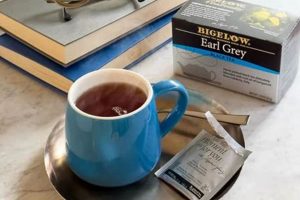
The Camellia sinensis plant, which includes black, green, white, and oolong teas, naturally contains caffeine. If any of these tea varieties are listed among the ingredients, the infusion will not be caffeine-free. For example, a blend marketed as “lemon ginger tea” may contain black tea leaves, thus introducing caffeine despite the presence of herbal ingredients.
- Herbal Components
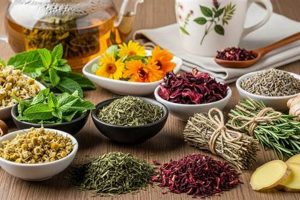
True herbal teas, or tisanes, are derived from plants other than Camellia sinensis. Common examples include chamomile, peppermint, rooibos, and hibiscus. When an infusion consists solely of these types of ingredients, it is generally considered caffeine-free. However, verification via ingredient lists remains crucial.
- Hidden Caffeine Sources
Certain additives, such as guarana, a natural stimulant, can introduce caffeine to herbal blends. Product labels must be diligently reviewed to identify these less obvious caffeine sources. Even if the main ingredients are herbal, these additions negate the absence of caffeine.
- “Natural Flavors” Ambiguity
The term “natural flavors” can be ambiguous, and while unlikely, it could theoretically mask the presence of a caffeine-containing ingredient. In such cases, contacting the manufacturer for clarification is advisable. However, this is a rare occurrence in reputable brands.
The direct relationship between ingredients and caffeine content underscores the importance of careful evaluation. While many herbal infusions are inherently caffeine-free due to their composition, the inclusion of Camellia sinensis or other stimulants transforms their properties. Therefore, understanding the origin and nature of each ingredient is indispensable in determining if a given beverage aligns with the notion that it is devoid of caffeine.
2. Source.

The origin of the plant material used in herbal infusions significantly impacts the likelihood of caffeine being present. While true herbal teas, or tisanes, are inherently caffeine-free, contamination or misidentification during sourcing can introduce unexpected stimulants. The geographic location, cultivation practices, and handling procedures all play critical roles in determining the final composition of the beverage.
- Geographic Origin and Adulteration
The geographic region where herbs are cultivated can influence the risk of contamination with caffeine-containing plants. For example, herbs grown in proximity to tea plantations may be inadvertently mixed during harvesting or processing. This inadvertent adulteration, although rare, could introduce traces of caffeine into an otherwise caffeine-free herbal infusion. Strict adherence to sourcing protocols is essential to mitigate this risk.
- Cultivation Practices and Cross-Contamination
Cultivation practices, such as intercropping or shared processing equipment, can lead to cross-contamination between caffeine-containing and caffeine-free plants. If herbal plants are grown alongside tea plants, or if the same machinery is used to process both types of plants without thorough cleaning, caffeine residue may transfer to the herbal material. Organic cultivation and segregated processing facilities help minimize this possibility.
- Supplier Certification and Quality Control
The reliability of the supplier and the stringency of their quality control measures are crucial determinants of caffeine content. Reputable suppliers implement rigorous testing procedures to ensure the absence of caffeine in their herbal products. Certification from recognized organizations provides an added layer of assurance, indicating that the supplier adheres to established standards for purity and safety. Selection of suppliers with a proven track record is critical for consumers seeking caffeine-free herbal infusions.
- Wildcrafting and Plant Identification
If herbs are wildcrafted, accurate plant identification becomes paramount. Mistaking a caffeine-containing plant for a similar-looking herbal species could lead to the unintended consumption of caffeine. Expert knowledge and careful verification are essential to prevent such errors. This is especially pertinent for lesser-known or regionally specific herbs where visual identification may be challenging.
Therefore, the source of the herbal components represents a crucial control point in ensuring that an infusion is truly caffeine-free. While most herbal infusions are inherently caffeine-free, vulnerabilities in sourcing practices can undermine this expectation. By prioritizing reputable suppliers, adhering to rigorous quality control measures, and maintaining vigilance in plant identification, the risk of unintended caffeine exposure can be significantly reduced.
3. Processing.

Processing methods applied to herbal infusions play a critical role in determining the final presence or absence of caffeine, irrespective of the inherent caffeine-free nature of many herbal ingredients. Handling procedures at various stages can introduce or remove caffeine, thus impacting the validity of the assertion that all such beverages are devoid of the stimulant.
- Decaffeination Processes
Some herbal infusions may contain tea leaves ( Camellia sinensis) that have undergone decaffeination. While these processes aim to remove most of the caffeine, residual amounts may remain. The extent of caffeine removal varies depending on the method employed (e.g., solvent-based, carbon dioxide extraction). Consequently, beverages labeled “decaffeinated herbal tea” are not necessarily entirely caffeine-free, and individuals with high sensitivity to caffeine should exercise caution.
- Cross-Contamination during Manufacturing
Facilities that process both caffeinated teas and herbal infusions risk cross-contamination. Shared equipment, such as cutting machines, drying racks, and packaging lines, can transfer caffeine particles from tea leaves to herbal materials. Rigorous cleaning protocols and segregated processing lines are essential to minimize this risk. The absence of such measures can lead to unintended caffeine exposure even in infusions composed solely of herbal ingredients.
- Addition of Caffeine-Containing Additives Post-Processing
Certain additives introduced during the final stages of processing can re-introduce caffeine into otherwise caffeine-free herbal infusions. For example, the addition of guarana extract, a natural source of caffeine, to enhance energy-boosting properties would negate the caffeine-free status of the product. Scrutinizing the full ingredient list is crucial to identify such post-processing additions.
- Impact of Drying and Storage
The method of drying herbs and the conditions under which they are stored can indirectly affect caffeine levels. While these factors do not introduce caffeine, improper drying or storage can degrade the quality and alter the chemical composition of the herbs, potentially affecting the perceived strength or flavor of the infusion, which consumers might misinterpret as a change in caffeine content. However, this is more a matter of sensory perception than actual caffeine levels.
These aspects of processing demonstrate that even with inherently caffeine-free herbal ingredients, manufacturing procedures can influence the ultimate presence or absence of this stimulant. Awareness of potential contamination risks, the presence of decaffeinated teas, and post-processing additions is vital for consumers seeking assurances that “is all herbal tea caffeine free.”
4. True Teas

The differentiation between “true teas” and herbal infusions is fundamental when evaluating the assertion that all herbal tea is caffeine-free. True teas, derived exclusively from the Camellia sinensis plant, inherently contain caffeine. Understanding this distinction is paramount in dispelling misconceptions and ensuring informed beverage choices.
- Source and Botanical Origin
True teas, encompassing black, green, white, oolong, and pu-erh varieties, originate solely from the Camellia sinensis plant. This single botanical source dictates the presence of caffeine as a natural constituent. In contrast, herbal infusions, or tisanes, are derived from diverse sources such as flowers (chamomile), leaves (peppermint), roots (ginger), and fruits (rosehip), none of which naturally contain caffeine. Thus, the very origin of true teas precludes them from being categorized as caffeine-free.
- Processing and Caffeine Levels
The processing methods applied to Camellia sinensis leaves significantly influence the final caffeine content of true teas. Black teas, undergoing full oxidation, tend to have higher caffeine levels than green teas, which are minimally oxidized. White teas, harvested from young buds, generally have lower caffeine concentrations. These variations, however, do not alter the fundamental presence of caffeine within all true tea varieties. Understanding the processing impact on caffeine levels allows for informed selection within the true tea category, but does not negate the central point that they all contain caffeine.
- Mislabeling and Consumer Confusion
The term “herbal tea” is sometimes misapplied to blends containing both herbal components and Camellia sinensis leaves. This mislabeling can lead to consumer confusion and inaccurate assumptions regarding caffeine content. Products marketed as “green tea blends,” for example, may contain herbal ingredients alongside green tea leaves, thus introducing caffeine. Vigilant examination of ingredient lists is essential to avoid unintended caffeine consumption due to mislabeling.
- Decaffeination and Residual Caffeine
Decaffeination processes are applied to some varieties of Camellia sinensis to reduce caffeine content. However, even decaffeinated true teas retain trace amounts of caffeine, typically around 2-5% of the original level. These residual levels may be significant for individuals highly sensitive to caffeine. Therefore, while decaffeination reduces caffeine, it does not eliminate it entirely, and such beverages cannot be considered caffeine-free in the same sense as pure herbal infusions.
In summary, the critical distinction between true teas and herbal infusions lies in their botanical origin. As Camellia sinensis inherently contains caffeine, any beverage derived solely from this plant cannot be considered caffeine-free. While processing and decaffeination may modulate caffeine levels, the fundamental principle remains: true teas are a source of caffeine, whereas pure herbal infusions are not. Its essential to check ingredients to avoid consuming caffeine.
5. Misconceptions.

Misunderstandings surrounding “herbal tea” and its caffeine content are prevalent, significantly impacting consumer expectations. These misconceptions stem from a lack of clear differentiation between true teas and herbal infusions, inaccurate labeling practices, and incomplete understanding of ingredient sources. Addressing these misconceptions is crucial to provide accurate information regarding the presence or absence of caffeine in different beverage types.
- Equating All “Teas” as Caffeinated
A common misconception assumes that any beverage labeled “tea” inherently contains caffeine. This stems from the widespread understanding of black, green, and white teas, all derived from Camellia sinensis, as caffeinated beverages. This assumption overlooks the fact that true herbal teas, or tisanes, are derived from different plant sources and, in their pure form, are naturally caffeine-free. For example, a person avoiding caffeine might mistakenly avoid a chamomile tea, incorrectly assuming it contains the stimulant.
- Ignoring Ingredient Lists and Relying on Broad Category Labels
Many consumers fail to scrutinize ingredient lists, relying instead on the general category of “herbal tea” to indicate caffeine absence. This oversight can be problematic as some products marketed as “herbal tea” may contain blends of Camellia sinensis and herbal ingredients. A “raspberry tea,” for example, might contain black tea leaves for added flavor or color, thus introducing caffeine despite the prominent display of the herbal component. Reliance on broad labels without careful ingredient examination perpetuates the misconception that all “herbal teas” are caffeine-free.
- Assuming Decaffeinated Teas are Entirely Caffeine-Free
The term “decaffeinated” often leads consumers to believe that a tea is entirely free of caffeine. However, decaffeination processes, while significantly reducing caffeine content, do not eliminate it completely. Decaffeinated black or green teas still contain trace amounts of caffeine, which may be relevant for individuals highly sensitive to stimulants. This misconception can result in unintended caffeine consumption among those actively seeking to avoid it.
- Overlooking Hidden Caffeine Sources in Blends
Certain herbal blends may contain hidden sources of caffeine that are not immediately apparent to the average consumer. Ingredients like guarana, a natural stimulant, can be added to “herbal teas” to provide an energy boost. Without careful examination of the ingredient list, consumers may unknowingly ingest caffeine. This highlights the necessity of being vigilant and questioning assumptions based solely on the “herbal tea” label.
Addressing these misconceptions requires increased consumer education regarding the distinction between true teas and herbal infusions, emphasizing the importance of reading ingredient lists, and clarifying the limitations of decaffeination processes. Accurate labeling practices and transparent ingredient disclosure are essential to empower consumers to make informed choices and avoid unintended caffeine consumption. Through a combination of education and clear communication, the prevailing misconceptions surrounding the caffeine content of “herbal tea” can be effectively dispelled.
6. Labeling.
Accurate and transparent labeling serves as a critical interface between producers and consumers, directly influencing the ability to determine if every herbal infusion is devoid of caffeine. The clarity and comprehensiveness of information presented on packaging significantly impacts informed purchasing decisions.
- Clear Identification of Ingredients
Comprehensive ingredient lists are paramount. The presence of Camellia sinensis (tea), including black, green, white, or oolong varieties, should be explicitly stated. Ambiguous terms like “natural flavorings” should be avoided in favor of precise ingredient identification. For example, if a product labeled “herbal blend” contains green tea, the label must clearly indicate “green tea” as an ingredient to prevent misleading consumers seeking caffeine-free options.
- Explicit Caffeine Declarations
Products marketed as “caffeine-free” must meet defined standards for caffeine content, typically below a specified threshold. Certification from reputable organizations, such as the USDA or independent testing labs, can provide assurance of caffeine absence. Labels should clearly display such certifications or declarations of “caffeine-free” status based on established criteria. Conversely, if the product contains caffeine from any source, it must be explicitly stated.
- Distinguishing “Herbal Tea” from “Tea Blends”
Labels should clearly differentiate between true herbal infusions (tisanes) composed entirely of caffeine-free ingredients and “tea blends” that combine herbal components with Camellia sinensis. The term “herbal tea” should be reserved for products that are exclusively composed of herbs, flowers, fruits, and spices, and devoid of tea leaves. Products containing tea leaves, regardless of proportion, should be labeled as “tea blends” to avoid consumer confusion.
- Detailed Information on Decaffeination Processes
If the product contains decaffeinated tea leaves, the label should specify the decaffeination method used (e.g., CO2 extraction, Swiss Water Process) and the residual caffeine content. While decaffeination significantly reduces caffeine, trace amounts may remain. Consumers should be informed about these residual levels to make informed decisions, particularly if they are highly sensitive to caffeine.
In conclusion, accurate labeling empowers consumers to ascertain whether a specific herbal beverage aligns with the proposition that all such beverages are caffeine-free. Transparent disclosure of ingredients, clear caffeine declarations, precise terminology, and detailed information on decaffeination processes are essential elements of responsible labeling. Without such clarity, consumers may be misled, leading to unintended caffeine consumption and undermining the validity of considering “herbal tea” as universally caffeine-free.
Frequently Asked Questions
The following questions address common concerns and misconceptions regarding the caffeine content of herbal infusions, providing clarity and accurate information to facilitate informed choices.
Question 1: What exactly constitutes an “herbal tea” and how does it differ from other teas?
An “herbal tea,” more precisely termed a tisane, is an infusion made from plants other than Camellia sinensis, the plant from which traditional teas (black, green, white, oolong) are derived. Herbal teas are composed of herbs, spices, flowers, fruits, or other plant materials and, in their pure form, do not contain caffeine. Traditional teas, conversely, inherently contain caffeine due to their Camellia sinensis origin.
Question 2: Can a product labeled “herbal tea” still contain caffeine?
Yes, a product labeled “herbal tea” may contain caffeine if it is a blend of herbal ingredients and Camellia sinensis leaves. Such blends are often marketed as “herbal teas,” leading to consumer confusion. The presence of tea leaves introduces caffeine. Therefore, careful scrutiny of the ingredient list is essential to determine the presence or absence of Camellia sinensis and, consequently, caffeine.
Question 3: Are there any herbal ingredients that naturally contain caffeine?
Most herbs used in traditional herbal infusions do not naturally contain caffeine. However, certain ingredients, such as guarana, are sometimes added to herbal blends for their stimulating effects. Guarana is a natural source of caffeine, and its inclusion negates the caffeine-free status of the product. Therefore, a comprehensive review of the ingredient list is necessary to identify any such additives.
Question 4: Does the term “decaffeinated” guarantee a completely caffeine-free product?
No, the term “decaffeinated” does not guarantee a completely caffeine-free product. Decaffeination processes reduce the caffeine content of tea leaves but do not eliminate it entirely. Decaffeinated teas still contain trace amounts of caffeine, which may be relevant for individuals with extreme sensitivity to stimulants. Consequently, a “decaffeinated herbal tea” containing decaffeinated tea leaves is not entirely caffeine-free.
Question 5: How can I ensure that an herbal tea is truly caffeine-free?
The most reliable method for ensuring that an herbal tea is caffeine-free is to carefully examine the ingredient list and confirm the absence of Camellia sinensis (tea), guarana, and other known caffeine sources. Choosing single-ingredient herbal infusions, such as chamomile or peppermint, simplifies verification. Seeking products certified as “caffeine-free” by reputable organizations provides additional assurance.
Question 6: Are there any potential risks associated with consuming herbal teas?
While generally safe, some herbal teas may interact with medications or have contraindications for certain health conditions. Pregnant or breastfeeding individuals should exercise caution and consult with a healthcare professional before consuming certain herbal teas. Additionally, individuals with allergies should carefully review ingredient lists to avoid potential allergic reactions. Moderation and informed selection are crucial for safe consumption.
These FAQs provide a comprehensive overview of considerations regarding caffeine content in herbal infusions. Prioritizing ingredient awareness and informed purchasing decisions are paramount.
The following section provides final thoughts and concluding remarks.
Conclusion
The exploration into whether is all herbal tea caffeine free reveals a complex reality. While true herbal infusions, or tisanes, derived from plants other than Camellia sinensis, are inherently caffeine-free, factors such as mislabeling, cross-contamination, and the inclusion of Camellia sinensis in blended products can introduce caffeine unexpectedly. The assumption of universal caffeine absence in herbal teas is therefore demonstrably inaccurate.
Informed consumption necessitates diligent evaluation of ingredient lists, scrutiny of labeling practices, and awareness of potential sources of caffeine contamination. The onus rests on both producers and consumers to ensure transparency and accuracy in product information. Vigilance and informed choices are essential to uphold the integrity of the caffeine-free designation and to promote responsible beverage consumption. Further research and standardization in labeling practices may be needed to alleviate consumer confusion and reinforce confidence in the stated caffeine content of herbal infusions.