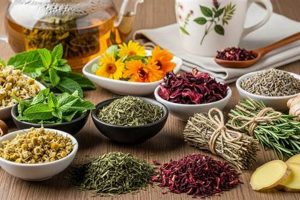
The query centers on whether infusions made from herbs, flowers, roots, and other plant materials, distinct from true teas (Camellia sinensis), inherently contain a stimulating compound. A common example highlighting this question is whether a chamomile, peppermint, or rooibos-based beverage naturally possesses stimulant properties.
Understanding the composition of different beverage types is essential for consumers seeking to manage their stimulant intake. The absence of naturally occurring stimulants is often a key factor for individuals sensitive to these compounds or those who prefer to avoid them for health or lifestyle reasons. Historically, many cultures have valued these infusions for their calming or medicinal attributes, specifically because they lack the properties associated with conventional teas and coffee.
The subsequent discussion will elaborate on the origin of stimulant presence in beverages, the distinction between herbal infusions and true teas, and provide a detailed overview of ingredients to consider when evaluating the stimulant content of different beverages marketed as “tea.”
The following points provide guidance on understanding and managing stimulant consumption when selecting herbal beverages.
Tip 1: Understand the Source. Distinguish between true teas (black, green, white, oolong) derived from Camellia sinensis and herbal infusions. True teas inherently contain a stimulant, while most herbal infusions do not.
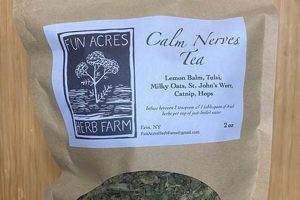
Tip 2: Scrutinize Ingredient Lists. Examine product labels carefully. If Camellia sinensis or its derivatives (e.g., green tea extract) are listed, the product likely contains stimulants, even if marketed as an “herbal tea.”
Tip 3: Beware of Blends. “Herbal tea” blends can sometimes include true tea leaves. Confirm the absence of Camellia sinensis to ensure a stimulant-free beverage.
Tip 4: Research Specific Herbs. While most herbs are naturally stimulant-free, some, like Yerba Mate or Guarana, possess naturally occurring stimulants. Confirm the properties of unfamiliar ingredients.
Tip 5: Verify Certification. Look for certifications from reputable organizations that verify the stimulant content of the beverage. These certifications can provide an additional layer of assurance.
Tip 6: Consult Expert Resources. If uncertain about a particular product or ingredient, consult resources such as the USDA Food Composition Database or publications from herbal medicine practitioners.
Adhering to these guidelines facilitates informed decisions about beverage consumption, ensuring alignment with individual preferences and health considerations.
The subsequent conclusion will summarize the information presented and offer final considerations regarding the consumption of herbal infusions.
1. Source Identification

Source identification represents the foundational step in determining whether an herbal infusion inherently contains a stimulant. The presence of Camellia sinensis, the plant from which black, green, white, and oolong teas are derived, directly correlates with the presence of stimulants. If a beverage marketed as an “herbal tea” lists Camellia sinensis on its ingredient label, the product contains stimulants regardless of other herbal components. This cause-and-effect relationship underscores the importance of scrutinizing product information. A failure to accurately identify the source plant leads to a misinformed consumption decision.
Consider the instance of a commercially available “relaxing herbal blend” that includes green tea extract. While marketed for relaxation, the inclusion of green tea extract introduces stimulants. Conversely, a single-ingredient chamomile infusion, derived solely from chamomile flowers, is inherently devoid of stimulants. This distinction highlights the practical significance of source identification: it empowers consumers to differentiate between truly stimulant-free options and those that deceptively incorporate stimulant-containing ingredients. Understanding the origin is critical for those managing stimulant intake for medical or personal reasons.
In summary, accurate source identification is paramount when assessing the stimulant content of herbal infusions. Failing to recognize Camellia sinensis or its derivatives as stimulant sources undermines the ability to make informed choices. The challenge lies in consumer awareness and diligence in reviewing product labels. Correct source identification forms the basis for understanding and controlling stimulant consumption within the realm of herbal beverages, linking directly back to the central question of whether an “herbal tea” naturally contains stimulants.
2. Ingredient Verification

Ingredient verification constitutes a critical process in determining whether a beverage labeled as “herbal tea” possesses stimulant properties. The presence or absence of stimulants directly relates to the specific ingredients included in the blend. Absent careful inspection of the ingredient list, consumers risk unknowingly ingesting stimulants, even when intending to avoid them. This process extends beyond simply noting the advertised herbs; it necessitates scrutinizing for hidden additions or derivatives of Camellia sinensis, the source of stimulants in true teas.
The practical application of ingredient verification involves a systematic examination of the product label. Terms like “green tea extract,” “black tea powder,” or even vague descriptors such as “tea flavoring” suggest the presence of Camellia sinensis components. Consider a scenario where a product advertises itself as “naturally relaxing” but lists “tea extract” among its ingredients; careful verification reveals the inclusion of stimulants, directly contradicting the intended purpose. This verification step becomes particularly crucial in blended products, where individual herbal components may be overshadowed by stimulant-containing additives. In the absence of meticulous ingredient verification, the distinction between a stimulant-free herbal infusion and a disguised tea blend remains imperceptible to the consumer.
In summary, ingredient verification stands as an essential safeguard against unintentional stimulant consumption. It highlights the importance of consumer awareness and proactive engagement with product information. While marketing claims can be misleading, a thorough review of the ingredient list provides a reliable method for determining the presence or absence of stimulants. The challenge lies in promoting widespread consumer awareness of this verification process, ensuring informed decisions regarding the purchase and consumption of beverages labeled as “herbal tea.”
3. Blend Composition

The blend composition of a product directly influences whether it contains stimulants. A seemingly simple “herbal tea” can, in reality, be a complex mixture, potentially incorporating stimulant-containing ingredients alongside traditional herbs.
- Presence of Camellia sinensis
The most direct factor is the inclusion of leaves, buds, or extracts from Camellia sinensis (tea plant). Even a small quantity of black, green, white, or oolong tea will introduce stimulants. Example: A blend marketed for “relaxation” containing a small amount of green tea extract will possess stimulant properties despite its primary herbal ingredients.
- Addition of Naturally Stimulating Herbs
Certain herbs, while not Camellia sinensis, naturally contain stimulants. Yerba Mate, Guarana, and Yaupon Holly are examples. These herbs contribute stimulants independently of any true tea content. Example: A blend of peppermint and guarana will provide a stimulant effect, even if it contains no tea leaves.
- Ratio of Stimulant to Non-Stimulant Ingredients
The relative proportions of stimulant-containing and stimulant-free ingredients affect the overall stimulant impact. A blend that is mostly herbal, with a small amount of tea, will have a lower stimulant content than a blend that is predominantly tea. Example: A blend containing 90% chamomile and 10% green tea will have a milder stimulant effect compared to a 50/50 blend.
- Processing and Extraction Methods
The way ingredients are processed can influence the amount of stimulants extracted into the final product. Concentrated extracts, for instance, may contain a higher stimulant concentration than whole leaf preparations. Example: A blend using a green tea extract powder will likely have a stronger stimulant effect than a blend using whole green tea leaves.
In summary, the blend composition of an “herbal tea” directly determines the potential presence and level of stimulants. Understanding which ingredients inherently contain stimulants, their relative proportions, and the processing methods employed is crucial for consumers seeking to make informed choices about their stimulant intake. Deceptive marketing or incomplete labeling practices can obscure the true composition, necessitating diligent scrutiny of ingredient lists.
4. Processing Methods

The processing methods employed in the creation of “herbal tea” can indirectly influence its stimulant content. While the presence of stimulants primarily depends on the inclusion of Camellia sinensis or naturally stimulating herbs, processing techniques can affect the extraction and concentration of these compounds. The method of harvesting, drying, and preparation ultimately determines the stimulant levels in the final product.
Consider two scenarios involving green tea, a stimulant-containing ingredient sometimes found in “herbal tea” blends. In the first, whole green tea leaves are gently dried and coarsely ground before inclusion in a blend. In the second, a concentrated green tea extract is produced through a complex extraction process, yielding a highly potent powder. The resultant beverage prepared with the extract will exhibit a significantly higher stimulant concentration compared to the beverage prepared with the whole leaves. Furthermore, the method of steeping and brewing also affects stimulant extraction. Longer steeping times and higher water temperatures generally lead to increased stimulant release from the plant material. These examples illustrate that processing methods do not create stimulants but can significantly amplify or diminish their presence in the final product.
In conclusion, while processing methods are not the primary determinant of stimulant presence, they play a crucial role in modulating its concentration within “herbal tea.” Understanding the interplay between ingredient selection and processing techniques allows consumers to make more informed choices regarding stimulant intake. Recognizing the potential impact of extraction and concentration on stimulant levels empowers individuals to select products and preparation methods that align with their preferences and health considerations.
5. Natural Stimulants

The presence of naturally occurring stimulants within certain herbs bears directly on the question of whether an “herbal tea” inherently contains stimulating compounds. While many herbal infusions are valued for their stimulant-free properties, a subset of herbs contains naturally occurring substances that exert a stimulating effect. Therefore, the specific herbal ingredients used in a given blend dictate its stimulant profile.
- Yerba Mate
Yerba Mate, derived from the Ilex paraguariensis plant, is widely consumed in South America as a stimulating beverage. It contains stimulants similar to those found in Camellia sinensis, including stimulants, and is often used as a substitute for coffee or tea. An “herbal tea” blend incorporating Yerba Mate will possess stimulant properties, regardless of other ingredients.
- Guarana
Guarana, derived from the Paullinia cupana plant, is native to the Amazon basin and contains a high concentration of stimulants. Guarana is frequently added to energy drinks and supplements for its stimulating effects. The inclusion of guarana in an “herbal tea” will introduce stimulants, potentially exceeding levels found in traditional teas.
- Yaupon Holly
Yaupon Holly ( Ilex vomitoria) is native to North America and is the only stimulant-containing plant indigenous to the continent. It was traditionally used by Native American populations for its stimulating and ceremonial properties. Similar to Yerba Mate, Yaupon Holly-based “herbal teas” will contain stimulating compounds.
- Kola Nut
Kola Nut, derived from the Cola genus of trees native to Africa, contains stimulants and is traditionally used in various cultural practices and beverages. It is also a component in some soft drinks. The presence of kola nut in an “herbal tea” will contribute to its stimulant profile.
These examples demonstrate that while the term “herbal tea” often implies the absence of stimulants, the inclusion of naturally stimulating herbs necessitates careful scrutiny of ingredient lists. Consumers seeking to avoid stimulants should be aware of these ingredients and their potential effects. The presence of Yerba Mate, Guarana, Yaupon Holly, or Kola Nut in a blend indicates the presence of natural stimulants, regardless of the inclusion or exclusion of Camellia sinensis. This distinction is crucial for informed decision-making regarding beverage consumption.
Frequently Asked Questions
The following questions address common concerns and misconceptions regarding the presence of stimulants in beverages marketed as “herbal tea.”
Question 1: Is all “herbal tea” inherently free of stimulants?
No. While many herbal infusions are naturally stimulant-free, the presence of Camellia sinensis (tea leaves) or naturally stimulating herbs (e.g., Yerba Mate, Guarana) will introduce stimulants. Ingredient verification is crucial.
Question 2: How can one determine if an “herbal tea” contains stimulants?
Careful examination of the ingredient list is paramount. Look for Camellia sinensis (black, green, white, or oolong tea) or derivatives, as well as specific herbs known to contain stimulants (e.g., Yerba Mate, Guarana, Yaupon Holly).
Question 3: Does the term “herbal tea” guarantee a stimulant-free beverage?
No. The term “herbal tea” is not a regulated designation. Products labeled as such may still contain stimulant-containing ingredients. Consumer diligence is required.
Question 4: Can processing methods affect the stimulant content of an “herbal tea?”
Yes, indirectly. While processing does not create stimulants, it can affect their concentration. Extracts tend to have higher stimulant levels than whole leaves. Steeping time and water temperature also influence stimulant extraction.
Question 5: Are naturally occurring stimulants in herbs the same as those in Camellia sinensis?
While the effect is similar, the chemical composition may differ. Both Camellia sinensis and herbs like Yerba Mate contain stimulant compounds, but the specific blend of these compounds can vary. Individuals sensitive to stimulants should carefully research any unfamiliar herbal ingredient.
Question 6: Where can reliable information about the stimulant content of specific herbs be found?
Consult reputable sources such as the USDA Food Composition Database, publications from herbal medicine practitioners, and scientific studies. Verify information from multiple sources to ensure accuracy.
In summary, determining the presence of stimulants requires thorough research. Reliance on marketing claims alone is insufficient. Verifying ingredients and understanding processing methods allows consumers to make informed choices.
The following section will provide a summary of key considerations.
Concluding Considerations
The inquiry of whether herbal tea possesses stimulants necessitates a nuanced understanding of botanical sources and processing methods. While the term “herbal tea” often evokes an image of stimulant-free beverages, such an assumption is not always accurate. The inclusion of Camellia sinensis (true tea) or specific herbs inherently containing stimulants, such as Yerba Mate and Guarana, directly contradicts the notion of universal stimulant absence. Furthermore, processing techniques employed during manufacturing can modulate the concentration of these stimulating compounds. Therefore, simplistic categorization proves insufficient when evaluating the stimulant profile of these beverages.
The responsibility rests upon the consumer to exercise diligence in verifying ingredient composition and sourcing practices. A proactive approach, grounded in informed awareness, enables individuals to make choices aligned with their personal preferences and health requirements. As the market for herbal infusions continues to expand, fostering consumer literacy regarding stimulant content remains paramount. Only through meticulous scrutiny can consumers ensure that their beverage choices accurately reflect their intended stimulant intake, thereby mitigating potential adverse effects and promoting overall well-being.