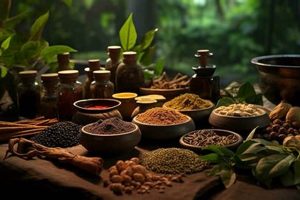
High-quality botanical therapies represent a sector focused on providing refined and potent natural remedies. These specialized preparations often involve rigorous sourcing, advanced extraction methods, and stringent quality control to ensure optimal efficacy and safety. As an illustration, a carefully cultivated and processed ginseng root extract, standardized for its ginsenoside content and free from contaminants, could be considered a superior botanical solution.
The significance of these therapies stems from a growing consumer demand for natural alternatives to conventional medicine, coupled with a desire for products that are both effective and safe. Historically, traditional medicine systems have relied on botanical remedies for centuries, and modern science is increasingly validating the therapeutic potential of many herbal compounds. The benefits can range from supporting overall wellness and addressing specific health concerns to potentially mitigating side effects associated with synthetic drugs.
The subsequent sections will delve into the specific aspects of quality assurance, explore the diverse applications across various health conditions, and examine the scientific evidence supporting the use of these specialized botanical solutions.
Guidance on High-Quality Botanical Therapies
The following insights offer practical guidance for those seeking effective and safe botanical solutions. Careful consideration of these points will enhance the selection process and contribute to positive health outcomes.
Tip 1: Source Verification: Investigate the origins of the botanicals used in the preparation. Reputable suppliers will openly disclose information regarding cultivation practices, geographical origin, and harvesting methods.
Tip 2: Standardization of Active Compounds: Prioritize formulations that standardize the concentration of key bioactive constituents. This ensures consistent potency and predictable therapeutic effects. For example, look for milk thistle extracts standardized to a specific percentage of silymarin.
Tip 3: Third-Party Testing: Seek products that undergo independent laboratory testing for purity, potency, and the absence of contaminants such as heavy metals, pesticides, and microbial pathogens. Certificates of Analysis (COAs) should be readily available.
Tip 4: Extraction Methods: Understand the extraction processes employed. Certain methods, such as CO2 extraction or hydroethanolic extraction, may preserve a wider range of beneficial compounds compared to harsh chemical solvents.
Tip 5: Formulation and Bioavailability: Consider the formulation and its impact on bioavailability. Some herbal compounds are better absorbed when combined with specific delivery systems or co-factors. Examples may include liposomal encapsulation or the inclusion of piperine to enhance absorption.
Tip 6: Consult with a Qualified Healthcare Professional: Before initiating any new herbal regimen, seek guidance from a physician, naturopathic doctor, or other qualified healthcare provider. They can assess individual health needs, potential interactions with existing medications, and appropriate dosages.
Tip 7: Research Scientific Evidence: Review the available scientific literature regarding the specific botanicals and their purported health benefits. Focus on studies published in peer-reviewed journals to ensure credibility.
By carefully applying these recommendations, individuals can enhance the likelihood of selecting effective and safe botanical solutions tailored to their specific needs. This informed approach is crucial for maximizing the benefits and minimizing potential risks.
The subsequent sections will delve into specific applications and provide a deeper understanding of the scientific basis underpinning the efficacy of these specialized therapies.
1. Efficacy

Efficacy, in the context of high-quality botanical therapies, refers to the demonstrated capacity of a treatment to produce a desired or intended effect under ideal or controlled conditions. This constitutes a cornerstone of any credible therapeutic intervention, natural or synthetic. The connection between efficacy and specialized botanical solutions is intrinsically linked to the scientific rigor applied in validating their purported benefits. The cause-and-effect relationship hinges on isolating and understanding the specific bioactive compounds responsible for therapeutic action, followed by controlled clinical trials demonstrating positive outcomes. Without demonstrable efficacy, a botanical preparation, regardless of its sourcing or processing, cannot be legitimately considered a viable treatment.
The importance of efficacy stems from ethical and practical considerations. From an ethical standpoint, healthcare professionals and consumers have a right to expect that treatments prescribed or purchased have a reasonable likelihood of providing benefit. From a practical perspective, ineffective treatments not only waste resources but may also delay appropriate care, potentially leading to adverse health consequences. Real-world examples illustrating this include the use of St. John’s Wort for mild to moderate depression, where studies have shown statistically significant improvements in mood compared to placebo, or the use of curcumin for its anti-inflammatory properties in managing osteoarthritis, where clinical trials have indicated pain reduction and improved joint function.
The practical significance of understanding efficacy extends to enabling informed decision-making. By prioritizing high-quality botanical therapies that have undergone rigorous efficacy testing, consumers and healthcare providers can make evidence-based choices. While traditional use and anecdotal evidence may offer valuable insights, they should not substitute for scientific validation. Challenges remain in standardizing efficacy testing for botanical therapies due to the inherent complexity of plant-based formulations and the potential for synergistic interactions between different compounds. However, ongoing research and advancements in analytical techniques are steadily addressing these challenges, further solidifying the role of efficacy as a central determinant of value in specialized botanical solutions.
2. Safety

Safety, as an attribute of high-quality botanical therapies, signifies the assurance that the treatment does not pose unacceptable risks of harm to the user under specified conditions of use. This is not simply the absence of immediately apparent adverse effects, but rather a comprehensive assessment of potential hazards, including short-term and long-term consequences, interactions with other substances, and contraindications for specific populations. The connection between safety and specialized botanical solutions hinges on stringent quality control measures throughout the production process, encompassing sourcing, manufacturing, and post-market surveillance. Failure to prioritize safety can result in adverse reactions, compromised efficacy, and eroded consumer trust. For instance, the detection of aristolochic acids in certain herbal products, leading to kidney damage and cancer, underscores the potentially devastating consequences of inadequate safety protocols.
The importance of safety in this context stems from the inherent complexity of botanical formulations. Unlike single-molecule pharmaceuticals, herbal products contain a multitude of chemical constituents, some of which may possess toxic or allergenic properties. Furthermore, variations in growing conditions, harvesting practices, and processing methods can significantly influence the chemical composition and safety profile of the final product. Examples of safe botanical therapies include chamomile, widely used for its calming effects, and ginger, commonly employed to alleviate nausea. However, even these relatively benign herbs can pose risks in certain individuals or when taken in excessive doses. Rigorous safety testing, including identification and quantification of potentially harmful compounds, is therefore indispensable for ensuring product integrity and minimizing risks.
The practical significance of understanding safety extends to empowering consumers and healthcare professionals to make informed choices. By selecting high-quality botanical therapies that have undergone thorough safety assessments, individuals can reduce the likelihood of adverse events and optimize therapeutic outcomes. Challenges remain in harmonizing safety standards across different regulatory jurisdictions and in developing reliable methods for detecting all potential contaminants. However, advancements in analytical techniques and increased collaboration among researchers, manufacturers, and regulatory agencies are progressively enhancing the safety profile of specialized botanical solutions. The ongoing pursuit of safety is essential for realizing the full potential of herbal medicine as a valuable component of integrative healthcare.
3. Sourcing
Sourcing, concerning premium herbal treatments, denotes the origin and procurement process of the botanical ingredients, directly influencing the treatment’s quality and therapeutic potential. The connection between sourcing and the final product is one of direct causation: inferior or compromised sourcing invariably leads to a diminished-quality treatment, irrespective of subsequent processing. Conversely, meticulous and ethical sourcing practices are foundational to producing superior herbal preparations. A key factor is identifying and securing botanicals from regions known for optimal growing conditions and sustainable harvesting practices. For example, sourcing turmeric from farms that employ organic cultivation methods and ensure high curcuminoid content is paramount for maximizing the anti-inflammatory benefits.
The importance of proper sourcing stems from several factors. It guarantees the authenticity and purity of the botanical material, reducing the risk of adulteration with inferior or even harmful substitutes. It ensures that the plants have been grown and harvested in a manner that preserves their natural potency. Furthermore, ethical sourcing practices support biodiversity and the livelihoods of local communities involved in cultivation and harvesting. Instances of misidentified or contaminated herbal ingredients in commercial products underscore the critical need for stringent sourcing protocols. A specific case involves ginseng products found to contain undeclared stimulants, posing potential health risks to consumers.
Understanding the significance of sourcing is practically significant because it empowers consumers and healthcare providers to make informed decisions. By favoring premium herbal treatments with transparent sourcing practices, they can mitigate the risks associated with substandard products and optimize therapeutic outcomes. While challenges remain in establishing global standards for botanical sourcing and traceability, advancements in analytical techniques, such as DNA barcoding, are facilitating the identification and authentication of herbal ingredients. Transparency regarding sourcing practices is an essential indicator of a manufacturer’s commitment to quality and efficacy, ultimately contributing to the credibility and value of premium herbal treatments.
4. Standardization

Standardization, in the context of premium herbal treatments, signifies the process of ensuring batch-to-batch consistency in the concentration of specific, identified bioactive compounds within a herbal preparation. This procedure is not merely a quality control measure, but a fundamental determinant of therapeutic predictability and efficacy. The absence of standardization undermines the reliability of herbal treatments, transforming them into unpredictable mixtures with potentially variable effects. Conversely, rigorous standardization allows for a more precise understanding and application of the treatment’s potential benefits. A compelling example involves milk thistle extracts, which are often standardized to a specific percentage of silymarin, the primary active compound responsible for its hepatoprotective properties. Without standardization, the silymarin content could vary significantly, rendering the treatment’s effects inconsistent.
The importance of standardization stems from the inherent variability of plant-based materials. Factors such as growing conditions, harvesting techniques, and processing methods can dramatically influence the concentration of bioactive constituents within a plant. Without standardization, two batches of the same herbal product could exhibit vastly different potencies, leading to unpredictable therapeutic outcomes. Furthermore, standardization facilitates scientific research and clinical trials by providing a consistent and well-defined product for evaluation. The standardization process typically involves analytical techniques, such as high-performance liquid chromatography (HPLC) or mass spectrometry (MS), to quantify the levels of specific marker compounds. By establishing a defined range for these compounds, manufacturers can ensure that each batch meets pre-determined quality criteria. This level of control is especially crucial when dealing with herbs containing potent or potentially toxic constituents.
Understanding the practical significance of standardization empowers both healthcare practitioners and consumers to make informed choices. By selecting premium herbal treatments that are rigorously standardized, they can increase the likelihood of achieving consistent and predictable therapeutic results. The challenge lies in the fact that not all herbal manufacturers adhere to the same stringent standardization protocols. Therefore, it is essential to seek out products from reputable companies that provide detailed information about their standardization processes and analytical testing methods. Transparency and accountability are key indicators of a manufacturer’s commitment to quality and efficacy. Ultimately, standardization is not merely a technical detail, but a critical factor in transforming traditional herbal remedies into reliable and evidence-based therapeutic interventions.
5. Bioavailability

Bioavailability, in the context of premium herbal treatments, refers to the extent and rate at which the active components of a herbal substance are absorbed into the systemic circulation, subsequently becoming available at the site of action. A direct causal relationship exists between bioavailability and therapeutic efficacy; even the most potent botanical extract is rendered ineffective if its key constituents cannot be adequately absorbed and distributed within the body. Factors influencing bioavailability include the chemical properties of the active compounds, the formulation of the herbal product, and individual physiological characteristics. For example, curcumin, a bioactive compound in turmeric, exhibits poor bioavailability due to its low solubility and rapid metabolism. Premium herbal treatments address this limitation through specialized formulations, such as liposomal encapsulation or the addition of piperine, which enhances curcumin absorption.
The importance of bioavailability as a component of premium herbal treatments stems from the need to optimize therapeutic outcomes. Traditional herbal preparations often involve crude extracts with varying levels of active compounds and limited bioavailability. Modern advancements in formulation technology enable the creation of products that significantly enhance the absorption and utilization of these compounds. Examples of strategies to improve bioavailability include micronization, which reduces particle size to increase surface area for absorption; complexation with phospholipids, which enhances lipophilicity; and the use of permeation enhancers, which facilitate transport across cell membranes. The selection of appropriate extraction methods also plays a crucial role, as certain techniques may preserve a wider range of bioactive compounds and enhance their bioavailability compared to traditional methods.
Understanding the practical significance of bioavailability empowers healthcare practitioners and consumers to make informed decisions regarding herbal therapies. While the inherent complexity of botanical matrices poses challenges in accurately measuring and predicting bioavailability, advances in pharmacokinetic studies and in vitro models are providing valuable insights. By prioritizing premium herbal treatments that have undergone rigorous bioavailability testing and are formulated to optimize absorption, individuals can increase the likelihood of achieving consistent and predictable therapeutic benefits. Transparency regarding formulation strategies and bioavailability data is an essential indicator of a manufacturer’s commitment to quality and efficacy. Furthermore, consulting with a qualified healthcare professional is crucial to assess individual factors that may influence bioavailability and to tailor treatment regimens accordingly.
Frequently Asked Questions About Premium Herbal Treatments
This section addresses common inquiries regarding the selection, application, and expected outcomes of high-quality botanical therapies. The information provided is intended to offer clarity and promote informed decision-making.
Question 1: What differentiates premium herbal treatments from standard herbal products?
Premium formulations typically involve superior sourcing of raw materials, rigorous quality control measures, standardization of active compounds, and advanced extraction or formulation techniques designed to enhance bioavailability and efficacy. Standard products may lack these rigorous processes, potentially resulting in variable potency and inconsistent therapeutic outcomes.
Question 2: How does one ascertain the authenticity and purity of premium herbal treatments?
Authenticity and purity are often verified through third-party testing, which assesses the product for contaminants such as heavy metals, pesticides, and microbial pathogens. Certificates of Analysis (COAs) from independent laboratories provide documented evidence of these testing results. Transparency regarding sourcing and manufacturing processes is also indicative of a reputable supplier.
Question 3: Are there specific health conditions for which premium herbal treatments are particularly well-suited?
The appropriateness of herbal therapies is contingent upon individual health needs and the specific properties of the botanicals involved. Certain treatments may be beneficial for supporting overall wellness, while others are targeted at specific conditions. Consulting with a qualified healthcare professional is crucial to determine the most suitable therapeutic approach.
Question 4: What are the potential risks or side effects associated with premium herbal treatments?
Like any therapeutic intervention, herbal treatments can pose risks, including allergic reactions, interactions with medications, and adverse effects if taken in excessive doses. Selecting products from reputable sources and adhering to recommended dosages are essential for minimizing these risks. A healthcare professional can assess individual risk factors and potential interactions.
Question 5: How does standardization enhance the efficacy of premium herbal treatments?
Standardization ensures consistent concentrations of key bioactive compounds in each batch of a herbal product. This consistency promotes predictable therapeutic effects and facilitates accurate dosing. Formulations lacking standardization may exhibit variable potency, leading to inconsistent outcomes.
Question 6: What is the significance of bioavailability in determining the effectiveness of premium herbal treatments?
Bioavailability refers to the extent to which the active components of a herbal substance are absorbed into the bloodstream and become available at the site of action. Even potent botanicals are ineffective if they cannot be adequately absorbed. Premium formulations often employ strategies to enhance bioavailability, maximizing therapeutic potential.
The information provided in this FAQ section underscores the importance of informed decision-making when considering high-quality botanical therapies. Prioritizing product quality, safety, and efficacy is crucial for achieving optimal health outcomes.
The subsequent section will explore the regulatory landscape surrounding herbal products and provide guidance on navigating the market effectively.
Conclusion
The preceding analysis has elucidated the critical factors defining premium herbal treatments. Sourcing, standardization, safety, efficacy, and bioavailability represent essential benchmarks for evaluating the quality and therapeutic potential of botanical formulations. The commitment to these principles distinguishes superior products from standard offerings, impacting the predictability and reliability of treatment outcomes.
The ongoing advancement of analytical techniques and formulation strategies continues to refine the landscape of herbal medicine. As scientific understanding deepens, the judicious application of premium herbal treatments, guided by evidence-based practices and informed decision-making, holds considerable promise for integrative healthcare. The responsibility lies with both manufacturers and consumers to uphold the highest standards of quality and safety in the pursuit of optimal health and well-being.