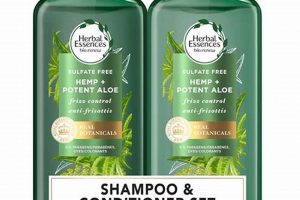
A cleansing product formulated for hair care, this type integrates botanical extracts and concentrated plant oils known for their therapeutic properties. It aims to cleanse the hair and scalp while imparting beneficial effects derived from natural sources, distinguishing it from conventional products that may rely on synthetic ingredients.
These preparations are often sought for their potential to nourish the scalp, strengthen hair follicles, and enhance the overall health and appearance of hair. Historically, the use of plant-derived substances in hair care has been prevalent across various cultures, with formulations passed down through generations for their perceived efficacy and gentle nature. Modern iterations often build upon this traditional knowledge, incorporating scientific advancements to refine extraction methods and optimize formulations.
Further discussion will delve into the specific ingredients commonly found in these products, examining their documented properties and potential benefits. The subsequent sections will also explore considerations for selecting suitable preparations, potential drawbacks, and comparisons to other hair care options available on the market.
Tips for Selecting and Using Botanical Hair Cleansers
The following advice assists individuals in making informed decisions when purchasing and utilizing hair cleansing products formulated with plant-derived essences and extracts. Proper selection and application are paramount for maximizing potential benefits and minimizing adverse reactions.
Tip 1: Scrutinize Ingredient Lists: Prioritize products that explicitly list botanical ingredients and essential oils by their scientific names (e.g., Lavandula angustifolia for lavender). Transparency in labeling indicates a higher likelihood of authentic botanical components.
Tip 2: Understand Hair Type Compatibility: Different botanical extracts offer varying benefits. Oily hair may benefit from citrus or tea tree oil, while dry hair may require moisturizing agents like shea butter or argan oil. Select accordingly.
Tip 3: Conduct a Patch Test: Before applying to the entire scalp, perform a patch test on a small area of skin (e.g., behind the ear) to check for allergic reactions or sensitivities. Wait 24-48 hours to observe for any adverse effects.
Tip 4: Follow Application Instructions Precisely: Adhere to the manufacturer’s recommended usage guidelines regarding quantity, application method, and contact time. Overuse may lead to scalp irritation or dryness.
Tip 5: Avoid Harsh Chemicals Post-Wash: To preserve the integrity of the botanical benefits, minimize the use of styling products containing sulfates, parabens, or silicones. These chemicals can negate the effects of the cleanser.
Tip 6: Store Products Appropriately: Keep the cleanser in a cool, dark place away from direct sunlight and extreme temperatures. This prevents degradation of the botanical components and preserves their efficacy.
Tip 7: Be Aware of Potential Interactions: If using prescription topical medications on the scalp, consult with a dermatologist or healthcare professional to ensure compatibility with the product’s ingredients.
These guidelines are intended to enhance the user experience and optimize the benefits associated with botanical hair cleansers. Diligence in product selection and application is crucial for achieving desired results.
The following sections will address common concerns regarding efficacy and sustainability of these products.
1. Botanical Sources

The efficacy and characteristics of preparations designed for hair cleansing that integrate plant-derived components are directly contingent upon the botanical sources utilized. The specific plants, their cultivation methods, and the extraction processes employed significantly influence the chemical composition and, consequently, the therapeutic potential of the final product. For instance, the sourcing of lavender oil from organically grown Lavandula angustifolia through steam distillation is likely to yield a product with a higher concentration of beneficial esters, such as linalyl acetate, compared to lavender oil derived from conventionally farmed plants using solvent extraction. This difference can affect the product’s ability to impart calming and anti-inflammatory effects on the scalp.
Consider the selection of Aloe barbadensis as a botanical source in a hair-cleansing formulation. The gel extracted from the aloe vera plant, particularly when sourced from mature plants grown in arid climates, is known for its polysaccharides and amino acids, which contribute to its moisturizing and soothing properties. This is directly relevant in applications where the aim is to alleviate scalp irritation or dryness. Contrastingly, if the aloe vera is sourced from plants grown in waterlogged conditions or processed with harsh chemicals, the resulting extract might lack the desired bioactive compounds, thereby diminishing its intended beneficial effects on the hair and scalp. Similarly, shampoos claiming to contain extracts from Argania spinosa (Argan oil) are highly prized, but the quality and method of extracting the oil (cold-pressed versus solvent-extracted) greatly impacts the oil’s fatty acid and antioxidant content and the product’s ultimate hydrating and protective characteristics.
In summary, a thorough understanding of botanical sources is crucial for evaluating the potential benefits of plant-based hair cleansers. The source and processing methods directly impact the quality and concentration of bioactive compounds. By prioritizing products that detail their botanical sourcing practices and extraction techniques, consumers can make more informed choices aligned with their hair care needs. The ultimate success of these products in delivering the desired benefits hinges on the quality of the botanical input.
2. Oil Concentration

The concentration of oils within a preparation intended for cleansing hair that contains botanical essences is a critical determinant of its overall effect and suitability for specific hair types. Excessive oil concentration can result in a heavy, greasy feel, particularly detrimental for individuals with fine or oily hair. Conversely, insufficient oil concentration may lead to inadequate moisturizing properties, rendering the product ineffective for dry, damaged, or coarse hair. The precise balance is thus paramount. As an example, a preparation designed for dry, curly hair may contain a relatively high concentration of oils such as Argan or Shea, known for their emollient properties. The purpose here is to deliver intense hydration and facilitate detangling. In contrast, a preparation targeted at oily scalps may utilize lighter, non-comedogenic oils like Jojoba or Grapeseed, present in lower concentrations, to cleanse without exacerbating oil production.
The efficacy of botanical preparations to deliver their intended effectshydration, strengthening, smoothing, etc.is fundamentally linked to this concentration. Formulations that incorporate essential oils, such as Rosemary or Peppermint, often necessitate careful control over the oil concentration. Too much of these potent oils can lead to scalp irritation or sensitivity, negating their potential benefits for hair growth or scalp stimulation. Real-world applications of this principle are evident in formulations that clearly distinguish between “daily use” and “intensive treatment” variants. Daily-use cleansers will generally exhibit lower oil concentrations to avoid buildup, while intensive treatments will feature higher concentrations to provide a deeper conditioning effect, intended for less frequent use.
In summary, the concentration of oils represents a critical design parameter in botanical hair cleansing formulations. It dictates the product’s suitability for different hair types, its effectiveness in delivering specific benefits, and its potential for causing adverse reactions. Understanding the role of oil concentration empowers consumers to select products that align with their individual needs and hair characteristics. Manufacturers also have a responsibility to clearly communicate both the types and concentrations of oils used within their preparations, thereby enabling informed decision-making and mitigating the risk of unintended consequences.
3. Scalp Nourishment
The sustained health of hair follicles depends significantly upon the provision of adequate nutrients to the scalp. Preparations incorporating plant-derived essences and extracts can play a role in this process, offering potential benefits beyond mere cleansing. The connection between these products and scalp nourishment involves several key facets.
- Delivery of Essential Nutrients
Botanical extracts often contain vitamins, minerals, and amino acids that are vital for hair follicle function. For example, extracts from nettle ( Urtica dioica) are rich in iron and silica, both purported to strengthen hair and stimulate growth. Similarly, rosemary ( Rosmarinus officinalis) is believed to improve circulation to the scalp, enhancing nutrient delivery to the follicles. These components, when present in a hair-cleansing preparation, can contribute to the nutritional support of the scalp. However, the degree to which these nutrients are absorbed and utilized remains a subject of ongoing research.
- Anti-Inflammatory Properties
Inflammation of the scalp can impede hair growth and lead to conditions such as dandruff. Certain botanical extracts, such as chamomile ( Matricaria chamomilla) and calendula ( Calendula officinalis), possess anti-inflammatory properties that may help soothe the scalp and reduce irritation. By mitigating inflammation, these extracts can create a more favorable environment for hair growth. Furthermore, a healthy scalp microbiome is also crucial for scalp health. Herbal extracts with antimicrobial and anti-inflammatory properties can help balance the scalp’s natural flora.
- Antioxidant Protection
The scalp is exposed to environmental stressors, including UV radiation and pollution, which can generate free radicals that damage hair follicles. Many botanical extracts are rich in antioxidants that neutralize these free radicals, protecting the scalp from oxidative stress. Examples include green tea ( Camellia sinensis) and grape seed extract ( Vitis vinifera). The inclusion of such antioxidants in a hair-cleansing product may help maintain scalp health and prevent premature aging of the hair follicles.
- Moisture Balance Regulation
Maintaining proper hydration levels in the scalp is essential for preventing dryness and irritation. Certain plant-derived oils, such as argan oil and jojoba oil, have emollient properties that help moisturize the scalp and prevent water loss. These oils can also help regulate sebum production, ensuring that the scalp is neither too dry nor too oily. Properly balanced moisture levels support the overall health and function of the hair follicles.
The extent to which preparations that combine plant-derived essences and extracts effectively nourish the scalp depends on various factors, including the concentration of active ingredients, the formulation’s delivery system, and individual scalp conditions. While these products may offer potential benefits, it is important to consider them as part of a comprehensive hair care routine that includes a balanced diet and appropriate lifestyle choices. Further research is needed to fully elucidate the mechanisms and efficacy of botanical extracts in promoting scalp health and hair growth.
4. Cleansing Efficacy
The ability of a hair cleansing product to effectively remove sebum, debris, and environmental pollutants from the scalp and hair shaft is a primary determinant of its overall value. For preparations incorporating plant-derived essences and extracts, this cleansing efficacy must be achieved without compromising the integrity of the natural oils and beneficial compounds present in the hair and scalp. The following points explore the key considerations in evaluating cleansing efficacy in the context of these specific hair care products.
- Surfactant Selection and Concentration
The choice of surfactants, the primary cleansing agents, significantly impacts the efficacy and gentleness of a shampoo. Preparations integrating botanical elements often utilize milder surfactants derived from plant sources, such as coco-glucoside or decyl-glucoside, which are less likely to strip the hair of its natural oils compared to harsher sulfates like sodium lauryl sulfate (SLS). The concentration of these surfactants must be carefully balanced to ensure adequate cleansing without causing excessive dryness or irritation. For instance, a product intended for daily use on dry hair may feature a lower concentration of a mild surfactant, while a clarifying formula designed for occasional use may incorporate a higher concentration or a blend of surfactants.
- pH Balance
Maintaining an appropriate pH level is crucial for preserving the health of the hair and scalp. The ideal pH for hair cleansing products is slightly acidic, typically between 4.5 and 5.5, which helps to close the hair cuticle, promoting smoothness and shine. Preparations integrating botanical essences often incorporate ingredients that naturally contribute to this pH balance, such as citric acid or lactic acid derived from plant sources. Conversely, a product with a pH that is too alkaline can cause the hair cuticle to open, leading to dryness, frizz, and increased susceptibility to damage.
- Removal of Residue and Buildup
Effective cleansing involves the removal of product residue, mineral deposits from hard water, and environmental pollutants that can accumulate on the hair and scalp over time. Plant-derived cleansing agents may exhibit varying degrees of efficacy in removing these types of buildup. Some botanical extracts, such as apple cider vinegar, are known for their clarifying properties and ability to dissolve mineral deposits. However, overly frequent or aggressive use of such clarifying agents can disrupt the scalp’s natural balance and lead to dryness. The product’s formulation should thus strike a balance between effective cleansing and the preservation of scalp health.
- Impact on Scalp Microbiome
The scalp hosts a complex ecosystem of microorganisms, collectively known as the microbiome, which plays a crucial role in maintaining scalp health. Harsh cleansing agents can disrupt this delicate balance, leading to conditions such as dandruff or seborrheic dermatitis. Preparations that combines herbal essences and extracts may incorporate ingredients that support a healthy scalp microbiome, such as prebiotics or probiotics derived from plant sources. The product’s formulation should thus prioritize gentle cleansing that does not compromise the integrity of the scalp’s natural defenses.
In conclusion, evaluating cleansing efficacy in preparations designed for hair cleansing utilizing plant-derived components requires a nuanced understanding of surfactant selection, pH balance, residue removal, and impact on the scalp microbiome. A product that effectively cleanses while preserving the health and integrity of the hair and scalp represents a superior choice for individuals seeking botanical-based hair care solutions. Understanding these facets empowers consumers to make informed decisions that align with their individual needs and preferences.
5. Ingredient Synergy

The concept of ingredient synergy is paramount in the formulation of hair cleansing products featuring plant-derived extracts and oils. It acknowledges that the collective effect of multiple components can exceed the sum of their individual contributions. Within these preparations, the selection and proportioning of each botanical element must be carefully considered to optimize its interaction with other ingredients. A substandard selection process can result in diminished efficacy or, in extreme cases, antagonistic effects, negating the intended benefits. This is not merely a theoretical concern; the practical implications are significant for the user experience and the overall effectiveness of the product.
Consider a formulation incorporating both tea tree oil and lavender oil. Tea tree oil possesses known antimicrobial properties, useful for addressing scalp conditions like dandruff. Lavender oil, in contrast, is valued for its calming and anti-inflammatory effects. When combined appropriately, these two oils can synergistically address both the cause (microbial imbalance) and the symptoms (inflammation and irritation) of certain scalp conditions. However, an excessive concentration of tea tree oil may irritate the scalp, potentially negating the soothing benefits of lavender oil. The key is a carefully balanced ratio, typically determined through rigorous testing and formulation expertise. Likewise, the interaction between botanical extracts and carrier oils is critical. For instance, the delivery of fat-soluble vitamins present in certain extracts may be enhanced by their inclusion in a carrier oil like jojoba, which closely resembles the scalp’s natural sebum. This synergistic relationship facilitates better absorption and utilization of the vitamins, contributing to improved scalp health.
In summation, ingredient synergy is a fundamental principle in the development of efficacious hair cleansing solutions featuring plant-derived ingredients. The interplay between different botanical elements and other formulation components dictates the product’s performance and its ability to deliver the intended benefits. While the concept may seem straightforward, achieving optimal synergy requires considerable expertise in botanical chemistry, formulation science, and a deep understanding of the target consumer’s needs. Challenges remain in fully elucidating the complex interactions between various ingredients, but ongoing research and development efforts are continually improving the ability to harness the power of ingredient synergy for enhanced hair and scalp health.
6. Hair Strengthening

The use of hair cleansing preparations containing botanical essences and extracts is frequently associated with the objective of fortifying the hair shaft, mitigating breakage, and promoting overall hair health. The potential for these preparations to contribute to hair strengthening stems from the inherent properties of certain plant-derived compounds. These include amino acids, vitamins, and minerals known to play a role in keratin production, the protein that constitutes the primary structural component of hair. For example, formulations incorporating extracts from horsetail ( Equisetum arvense) are often marketed for their purported ability to strengthen hair due to their high silica content, a mineral believed to enhance collagen production, which, in turn, may improve hair elasticity. Similarly, preparations containing biotin, a B-vitamin found in various plant sources, are often sought for their potential to reduce hair breakage and promote growth. The actual efficacy, however, is subject to variables like concentration, formulation, and individual physiological factors.
The inclusion of essential oils is another avenue through which these preparations are thought to contribute to hair strengthening. Oils such as rosemary, lavender, and cedarwood are often touted for their potential to stimulate blood circulation in the scalp, thereby increasing nutrient delivery to the hair follicles. Improved circulation is believed to enhance the synthesis of keratin and other proteins essential for hair structure. In practice, the effectiveness of these oils may vary depending on the mode of application, the duration of use, and the individual’s scalp condition. Furthermore, the presence of antioxidants in many botanical extracts can protect hair follicles from damage caused by free radicals, environmental pollutants, and UV radiation. Damage to hair follicles can weaken the hair shaft and increase its susceptibility to breakage. Antioxidants such as those found in green tea extract ( Camellia sinensis) may thus contribute to hair strengthening by preserving follicle health.
It is crucial to note that the relationship between hair cleansing preparations that include botanical essences and hair strengthening is complex and multifaceted. While some plant-derived compounds possess properties that may contribute to hair health and resilience, the actual extent of these effects can vary considerably. Factors such as the concentration of active ingredients, the presence of other formulation components, and individual physiological differences all play a role. Rigorous scientific studies are needed to fully elucidate the mechanisms and efficacy of these preparations in promoting hair strengthening. A comprehensive approach to hair care, including a balanced diet, proper hydration, and avoidance of harsh chemical treatments, is also essential for achieving optimal hair health.
7. Potential Irritants

The presence of potential irritants within preparations designed for cleansing hair that integrate plant-derived essences constitutes a significant consideration. Despite the perception of natural ingredients as inherently gentle, certain botanical compounds can induce adverse reactions in susceptible individuals. A detailed understanding of these potential irritants is crucial for informed product selection and usage.
- Essential Oil Sensitization
Essential oils, concentrated aromatic compounds extracted from plants, are common components. While many offer therapeutic benefits, some possess inherent irritant or allergenic properties. For example, cinnamon bark oil, even at low concentrations, can cause contact dermatitis in sensitive individuals. Similarly, citrus oils, such as lemon or orange, may induce photosensitivity, increasing the risk of sunburn when exposed to ultraviolet radiation after application. Proper dilution and patch testing are essential to mitigate these risks. Furthermore, the quality and purity of the essential oil play a role; adulterated or poorly processed oils are more likely to contain impurities that can exacerbate irritation.
- Botanical Extract Allergens
Botanical extracts, derived from various plant parts, may contain allergenic proteins or compounds. Chamomile, for instance, a common ingredient, belongs to the Asteraceae family, which includes ragweed, a known allergen. Individuals with ragweed allergies may experience cross-reactivity to chamomile extract, leading to scalp irritation or allergic contact dermatitis. Similarly, certain preservatives used to stabilize botanical extracts, such as formaldehyde-releasing agents, can be potent irritants and sensitizers. Transparent labeling and awareness of potential cross-reactivity are essential for individuals with known plant allergies.
- Surfactant Interactions
The cleansing action relies on surfactants, which can interact with botanical ingredients, potentially altering their irritancy. For instance, a harsh sulfate surfactant may strip the scalp of its natural oils, increasing the likelihood of irritation from even mild botanical extracts. Conversely, a gentle surfactant may not effectively remove oily residues, leading to buildup and scalp inflammation. The selection of appropriate surfactants and their compatibility with other botanical components is crucial for minimizing irritation.
- pH Imbalance Effects
The pH of a hair cleansing product can influence the irritancy of botanical ingredients. An excessively alkaline pH can disrupt the scalp’s natural acid mantle, increasing its susceptibility to irritation and infection. Conversely, an excessively acidic pH may cause stinging or burning sensations. The ideal pH range for hair cleansing products is slightly acidic, typically between 4.5 and 5.5, which helps to maintain the integrity of the scalp barrier. Formulations should be carefully pH-balanced to minimize potential irritation.
In conclusion, while preparations designed for cleansing hair incorporating plant-derived ingredients are often perceived as gentle alternatives to conventional products, awareness of potential irritants is paramount. Careful consideration of essential oil concentrations, botanical extract allergens, surfactant interactions, and pH balance is essential for minimizing the risk of adverse reactions and promoting scalp health. A patch test before widespread use is recommended, especially for individuals with sensitive skin or known allergies. This approach facilitates informed product selection and optimizes the benefits of botanical hair care.
Frequently Asked Questions
The following addresses common queries and misconceptions regarding hair cleansing products formulated with plant-derived extracts and oils. It aims to provide clarity on aspects of their composition, function, and application.
Question 1: Are all preparations marketed as “herbal essential shampoo” truly natural?
No. The term lacks strict regulatory oversight. Products labeled as such may contain synthetic ingredients alongside herbal essences. Scrutiny of the ingredient list is paramount to ascertain the composition.
Question 2: Can it effectively cleanse oily hair and scalp?
Efficacy on oily hair varies based on formulation. Certain botanical extracts, such as tea tree or citrus oils, possess degreasing properties. However, excessive reliance on these may lead to dryness. A balanced formulation is crucial.
Question 3: What are the primary benefits compared to conventional shampoos?
Potential benefits include reduced exposure to harsh chemicals like sulfates and parabens, and the potential delivery of nutrients to the scalp. These may contribute to improved hair and scalp health, though results vary.
Question 4: Is there scientific evidence supporting the efficacy of these products?
Scientific evidence varies depending on the specific botanical ingredients. Some plant extracts have demonstrated benefits in laboratory or clinical studies. However, rigorous, large-scale trials are often lacking.
Question 5: Are these preparations suitable for all hair types?
Suitability depends on the specific formulation and individual hair characteristics. Dry or damaged hair may benefit from moisturizing oils, while fine or oily hair may require lighter, clarifying extracts. Careful consideration of ingredient profiles is essential.
Question 6: How should an individual select the right product?
Selection should be guided by hair type, scalp condition, and ingredient sensitivities. Reading ingredient lists, conducting patch tests, and seeking professional advice are recommended strategies.
The preceding information offers a concise overview of common inquiries. Individual results may vary, and further research is recommended for informed decision-making.
The following sections will delve into comparative analyses with alternative hair care solutions.
Herbal Essential Shampoo
This exploration has elucidated the multifaceted nature of hair cleansing products formulated with botanical essences. The analysis has addressed critical aspects, including ingredient sourcing, oil concentration, scalp nourishment, cleansing efficacy, potential irritants, and ingredient synergy. The value of such preparations hinges upon a nuanced understanding of these parameters and their impact on hair and scalp health.
Moving forward, continued research and rigorous testing are essential for validating the purported benefits and mitigating potential risks associated with herbal essential shampoo. Transparency in labeling, coupled with informed consumer choices, will be crucial for realizing the potential of these botanical formulations within the broader landscape of hair care solutions.