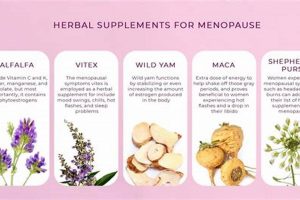
Botanical preparations marketed to alleviate the sensation of intense warmth often associated with menopause, termed hot flashes, are the subject of increasing interest. These products, derived from plants, are available in various forms, including capsules, tablets, teas, and tinctures, and are promoted as natural alternatives to conventional hormone therapies. They represent a segment of complementary and alternative medicine that many individuals explore when seeking relief from vasomotor symptoms.
The appeal of using plant-derived remedies for managing discomfort stems from perceptions of greater safety and fewer side effects compared to prescription medications. Historically, various cultures have utilized plants for medicinal purposes, including the mitigation of menopausal symptoms. Modern research seeks to validate or refute these traditional uses, examining the efficacy and safety profiles of specific botanicals through rigorous scientific studies.
The subsequent sections of this document will delve into specific examples of botanicals that are commonly employed in attempts to manage the aforementioned symptom. It will further discuss the evidence supporting their use, potential risks and interactions, and considerations for healthcare professionals advising patients on options for symptom management.
Guidance on Botanical Preparations for Vasomotor Symptoms
Considerations for those exploring plant-derived options for managing the sensation of intense warmth.
Tip 1: Research Specific Botanicals: Before initiating use, thoroughly investigate the available evidence regarding the efficacy and safety of specific plant-derived remedies. Examine clinical trials and reputable scientific publications.
Tip 2: Consult a Healthcare Professional: Engage in a dialogue with a physician or qualified healthcare provider prior to incorporating any botanical into a regimen. This is crucial for assessing potential interactions with existing medications or health conditions.
Tip 3: Source Products from Reputable Manufacturers: Select products that have undergone third-party testing for purity and potency. This helps ensure the product contains the stated ingredients at the labeled concentrations and is free from contaminants.
Tip 4: Start with a Low Dose: Initiate use with a conservative dosage, gradually increasing as needed and tolerated, while closely monitoring for any adverse effects.
Tip 5: Maintain Realistic Expectations: Understand that the effects of plant-derived remedies may vary among individuals and may not provide immediate or complete relief from symptoms.
Tip 6: Monitor for Side Effects: Pay close attention to any changes in health or well-being after beginning use. Discontinue use and consult a healthcare professional if any adverse reactions occur.
Tip 7: Be Aware of Potential Interactions: Many plant-derived remedies can interact with prescription or over-the-counter medications. Consult with a pharmacist or healthcare provider to assess potential risks.
Adherence to these guidelines may help minimize risks and optimize the potential benefits when exploring plant-derived approaches to managing the aforementioned symptom.
The following sections will provide a concise summary of key information and guidance for further exploration.
1. Botanical Identification

Accurate botanical identification forms the cornerstone of safe and effective use of plant-derived remedies for vasomotor symptom management. Without precise identification, the risk of adulteration, misidentification, and subsequent adverse effects significantly increases.
- Genus and Species Specificity
The therapeutic properties of a plant are intrinsically linked to its genus and species. For example, Cimicifuga racemosa (black cohosh) is traditionally used for menopausal symptom relief, but other Cimicifuga species may not possess the same efficacy or safety profile. Proper identification ensures the correct plant is utilized.
- Chemotypic Variation
Even within the same species, variations in chemical composition (chemotypes) can exist due to environmental factors, geographic location, and genetic differences. These variations can influence the potency and effectiveness of plant-derived products. Accurate identification allows for the characterization and standardization of specific chemotypes.
- Adulteration and Substitution
The market for plant-derived products is susceptible to adulteration, where cheaper or more readily available plants are substituted for the intended botanical. Microscopic analysis, DNA barcoding, and chemical fingerprinting are techniques employed to detect adulteration and ensure product authenticity. Improper identification can lead to ingestion of ineffective or harmful substances.
- Cultivation and Harvesting Practices
The manner in which a plant is cultivated and harvested can influence its chemical composition and therapeutic value. Sustainable and ethical sourcing practices are essential to ensure consistent quality and minimize environmental impact. Proper identification allows for the verification of sourcing practices and adherence to quality control standards.
In conclusion, robust botanical identification is critical for ensuring the safety, efficacy, and consistency of plant-derived remedies. Integrating multiple analytical techniques and establishing rigorous quality control measures are essential to mitigate the risks associated with misidentification and adulteration, ultimately promoting responsible use of plant-based therapies.
2. Clinical Efficacy Data

The assessment of clinical efficacy data is paramount in determining the suitability of any therapeutic intervention, including plant-derived remedies aimed at alleviating vasomotor symptoms. Rigorous scientific investigation, encompassing well-designed clinical trials, provides the evidence necessary to evaluate the true benefit, or lack thereof, of a given botanical intervention.
- Placebo-Controlled Trials
Placebo-controlled trials represent a cornerstone of clinical efficacy assessment. By comparing the effects of a plant-derived remedy against an inactive placebo, researchers can discern whether the observed benefits are genuinely attributable to the intervention or merely a result of the placebo effect. The absence of statistically significant differences between the botanical and placebo groups casts doubt on the true efficacy of the intervention.
- Standardized Outcome Measures
The use of validated and standardized outcome measures is essential for quantifying the impact of plant-derived remedies on vasomotor symptoms. These measures may include frequency and severity of hot flashes, validated questionnaires assessing quality of life, and physiological markers such as skin conductance. Standardized outcome measures enable researchers to compare results across different studies and populations, increasing the reliability of conclusions.
- Meta-Analysis and Systematic Reviews
Meta-analyses and systematic reviews synthesize the findings from multiple clinical trials, providing a comprehensive overview of the available evidence. These analyses can identify trends and patterns that may not be apparent from individual studies, and can help resolve conflicting results. Clinicians and patients should prioritize findings from well-conducted meta-analyses and systematic reviews when making decisions about the use of plant-derived remedies.
- Long-Term Safety and Efficacy
While short-term clinical trials may demonstrate some degree of efficacy for plant-derived remedies, it is equally crucial to assess their long-term safety and effectiveness. Extended follow-up periods are necessary to identify potential delayed adverse effects and to determine whether the initial benefits persist over time. The absence of long-term data limits the ability to make informed decisions about the risks and benefits of prolonged use.
The evaluation of clinical efficacy data, therefore, should not solely rely on anecdotal reports or marketing claims. A critical assessment of the scientific evidence, encompassing placebo-controlled trials, standardized outcome measures, meta-analyses, and long-term safety data, is indispensable for determining the suitability of plant-derived remedies in the management of vasomotor symptoms.
3. Safety Profile Evaluation
The assessment of the safety profiles of plant-derived remedies intended to mitigate vasomotor symptoms is an indispensable element of responsible healthcare. A comprehensive evaluation considers potential adverse events, drug interactions, contraindications, and population-specific vulnerabilities.
- Adverse Event Monitoring
Systematic monitoring of adverse events associated with plant-derived remedies is critical for identifying potential risks. This includes tracking the incidence and severity of adverse reactions reported in clinical trials and post-market surveillance. For instance, while some plant-derived remedies are generally well-tolerated, others have been associated with gastrointestinal distress, allergic reactions, or, in rare cases, more serious hepatic or hematological complications. Comprehensive reporting and analysis are essential for informing safety guidelines and patient education.
- Drug-Herb Interactions
Potential interactions between plant-derived remedies and conventional pharmaceutical agents warrant careful consideration. Many plants contain bioactive compounds that can affect drug metabolism, absorption, or excretion. For example, St. John’s Wort, while sometimes used for mood regulation, is a potent inducer of cytochrome P450 enzymes and can reduce the efficacy of numerous medications, including oral contraceptives and immunosuppressants. Clinicians must assess potential interactions before recommending or prescribing plant-derived therapies.
- Contraindications and Precautions
Specific contraindications and precautions must be identified for each plant-derived remedy. For example, certain plants may be contraindicated in individuals with hormone-sensitive cancers, liver disease, or a history of bleeding disorders. Furthermore, pregnant or breastfeeding women often require additional precautions due to potential risks to the fetus or infant. Detailed patient histories and comprehensive reviews of medical literature are necessary to identify and mitigate potential risks.
- Quality Control and Standardization
The safety profile of plant-derived remedies is directly influenced by the quality control and standardization processes employed during manufacturing. Variations in plant species, growing conditions, harvesting methods, and extraction techniques can lead to inconsistencies in product composition and potency. Robust quality control measures, including botanical authentication, chemical fingerprinting, and standardization of bioactive compounds, are essential for ensuring product consistency and minimizing the risk of adverse events.
The meticulous assessment of these facets is crucial to inform healthcare practitioners and consumers about the safety parameters surrounding the use of plant-derived remedies. Integrating this information into clinical practice enables more responsible and personalized approaches to mitigating vasomotor symptoms, emphasizing patient well-being as the primary objective.
4. Dosage Standardization

Dosage standardization is a critical, yet often challenging, aspect of utilizing botanical supplements for the management of vasomotor symptoms. The inherent variability in plant composition necessitates rigorous standardization processes to ensure consistent and predictable therapeutic effects.
- Variability in Plant Composition
The concentration of active constituents in medicinal plants can fluctuate significantly due to factors such as growing conditions, geographic location, harvesting time, and processing methods. For example, two samples of black cohosh Cimicifuga racemosa may contain drastically different amounts of triterpene glycosides, the compounds believed to contribute to its effects on vasomotor symptoms. Without standardization, patients may receive unpredictable doses, leading to inconsistent or absent therapeutic benefits, or conversely, increased risk of adverse events.
- Standardized Extracts and Marker Compounds
Dosage standardization often relies on the use of standardized extracts, which are processed to contain a specified percentage of one or more marker compounds. Marker compounds are chemical constituents that are consistently present in the plant and can be used as indicators of overall quality and potency. For instance, a standardized extract of soy isoflavones might be formulated to contain a defined percentage of genistein and daidzein. By quantifying these markers, manufacturers can ensure that each dose contains a consistent amount of potentially active substances.
- Bioavailability Considerations
Even when a product is standardized to contain a consistent amount of marker compounds, the bioavailability of those compounds can vary significantly. Bioavailability refers to the extent to which a substance is absorbed into the bloodstream and made available to exert its therapeutic effects. Factors such as formulation, particle size, and the presence of other compounds can influence bioavailability. For example, some isoflavones are more readily absorbed when consumed with dietary fats. Dosage standardization, therefore, must consider bioavailability to ensure that the intended therapeutic dose is actually delivered to the body.
- Clinical Trial Dosages and Extrapolation
Dosage recommendations for botanical supplements are ideally based on the dosages used in clinical trials that have demonstrated efficacy. However, extrapolating these dosages to individual patients can be challenging due to variations in body weight, metabolism, and individual sensitivity. Furthermore, many clinical trials use highly specific formulations and extracts that may not be readily available to consumers. Responsible dosage standardization involves carefully considering the dosages used in clinical trials, accounting for individual variability, and providing clear and concise dosing instructions to patients.
In summary, dosage standardization is a complex but essential aspect of utilizing botanical supplements. Variability in plant composition, the use of standardized extracts and marker compounds, bioavailability considerations, and extrapolation of clinical trial dosages all contribute to the challenges of ensuring consistent therapeutic effects. Further research and regulatory oversight are needed to improve dosage standardization practices and enhance the safety and efficacy of botanical supplements for the relief of vasomotor symptoms.
5. Regulatory Oversight
The availability and marketing of plant-derived remedies intended for vasomotor symptom management are significantly influenced by the existing regulatory framework. Variations in regulations across different jurisdictions can lead to inconsistencies in product quality, safety, and labeling, affecting consumer access to reliable information.
- Classification as Supplements vs. Drugs
A primary determinant of regulatory oversight lies in the classification of these products as either dietary supplements or drugs. In many regions, including the United States, plant-derived remedies are often categorized as dietary supplements, subjecting them to less stringent regulations than pharmaceutical drugs. This distinction impacts pre-market approval requirements, manufacturing standards, and the types of claims that can be made regarding efficacy.
- Good Manufacturing Practices (GMP)
Adherence to Good Manufacturing Practices (GMP) is essential for ensuring the quality and consistency of plant-derived products. GMP guidelines outline requirements for facility design, equipment maintenance, personnel training, and quality control procedures. Regulatory bodies, such as the Food and Drug Administration (FDA) in the United States, conduct inspections to verify compliance with GMP standards. Failure to adhere to GMP can result in product recalls, fines, or other enforcement actions.
- Labeling Requirements and Claims
Regulatory agencies establish labeling requirements for plant-derived products, including ingredient lists, dosage instructions, and cautionary statements. The types of claims that can be made regarding the efficacy of these products are also subject to regulation. In many jurisdictions, manufacturers are prohibited from making unsubstantiated claims about the ability of plant-derived remedies to treat, cure, or prevent diseases. Labeling must be truthful and not misleading.
- Post-Market Surveillance and Adverse Event Reporting
Post-market surveillance systems are established to monitor the safety and effectiveness of plant-derived products after they have been released into the market. Healthcare professionals and consumers are encouraged to report adverse events associated with the use of these products to regulatory agencies. This information is used to identify potential safety signals and to take appropriate action, such as issuing safety alerts or initiating product recalls.
These regulatory facets shape the landscape for individuals seeking botanical interventions for vasomotor symptom relief. Navigating this landscape requires a discerning approach, emphasizing transparency, reliable sourcing, and a critical assessment of available information. By understanding the nuances of regulatory oversight, consumers can make more informed decisions about the use of plant-derived therapies.
Frequently Asked Questions Regarding Botanical Interventions for Vasomotor Symptoms
The following section addresses common inquiries concerning the use of plant-derived remedies in the management of vasomotor symptoms, providing concise and evidence-based responses.
Question 1: Are plant-derived remedies for vasomotor symptoms definitively proven effective?
The evidence supporting the efficacy of various botanicals in managing vasomotor symptoms is mixed. Some studies suggest potential benefits for specific plants, such as black cohosh and soy isoflavones; however, methodological limitations and conflicting results necessitate cautious interpretation. Rigorous clinical trials are ongoing to further evaluate the efficacy of these interventions.
Question 2: What are the potential risks associated with utilizing plant-derived options for symptom management?
Potential risks encompass adverse events, drug interactions, and variations in product quality. Certain botanicals may interact with prescription medications or exacerbate pre-existing medical conditions. Furthermore, the lack of stringent regulation can lead to inconsistencies in product composition and potency. Consultation with a healthcare professional is essential to assess individual risk factors.
Question 3: How does one ascertain the quality and purity of a plant-derived product?
Selecting products from reputable manufacturers that employ third-party testing for purity and potency is advisable. Independent certification programs verify that products meet specific quality standards and are free from contaminants. Reviewing product labels and researching manufacturer credentials can aid in informed decision-making.
Question 4: Can plant-derived remedies be used in conjunction with hormone therapy?
The concomitant use of plant-derived remedies and hormone therapy requires careful consideration due to potential interactions. Both interventions can exert hormonal effects, and combining them may increase the risk of adverse events or alter the efficacy of either treatment. Consultation with a healthcare provider is essential to determine the safety and appropriateness of such combinations.
Question 5: How long does it typically take to experience noticeable benefits from plant-derived options?
The time to onset of noticeable benefits can vary significantly among individuals and depends on the specific botanical utilized. Some individuals may experience improvements within a few weeks, while others may require several months of consistent use. Realistic expectations and ongoing monitoring are crucial.
Question 6: Are there any specific botanical remedies that should be avoided due to safety concerns?
Certain botanicals, such as dong quai, have been associated with potential safety concerns, including increased risk of bleeding or drug interactions. Individuals with specific medical conditions or those taking certain medications should exercise caution and consult with a healthcare provider before utilizing any plant-derived remedy.
The information provided in this section is intended for educational purposes and should not be interpreted as medical advice. Individual circumstances and health conditions warrant personalized guidance from a qualified healthcare professional.
The subsequent section will summarize key considerations and resources for further exploration.
Herbal Supplements for Hot Flashes
The exploration of herbal supplements for hot flashes reveals a landscape marked by both potential benefits and inherent complexities. Botanical identification, clinical efficacy data, safety profile evaluation, dosage standardization, and regulatory oversight are critical facets demanding careful consideration. The evidence supporting the effectiveness of these supplements is often mixed, necessitating cautious interpretation and a reliance on robust scientific data.
The ultimate decision regarding the use of plant-derived remedies rests with the individual, informed by thorough research and consultation with a qualified healthcare professional. Further investigation and stricter regulatory standards are essential to ensure the safety, consistency, and reliability of these products, fostering a more informed approach to vasomotor symptom management and promoting responsible consumer practices.