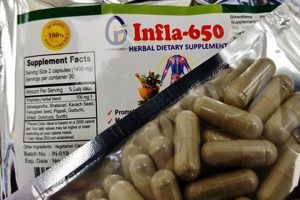
Substances derived from plants that aim to mitigate inflammation and are available in concentrated forms are the subject of this analysis. These items are often consumed to address discomfort and promote wellness, representing a natural approach to managing inflammatory responses within the body. Turmeric capsules and ginger extracts exemplify products within this category.
The significance of these plant-based formulations lies in their potential to offer relief from chronic and acute inflammatory conditions. Historically, traditional medicine systems have long recognized the anti-inflammatory attributes of various plants. Contemporary research seeks to validate and understand the mechanisms by which these natural compounds exert their effects, potentially offering alternatives or complements to conventional treatments.
The following sections will delve into specific examples of these plant-derived options, examining their purported mechanisms of action, potential benefits as supported by scientific inquiry, and considerations regarding their safe and effective use. Further discussion will address the regulatory landscape and factors to consider when selecting such a product.
Guidance on Plant-Based Formulations for Inflammation Management
The following represents essential considerations for those seeking plant-derived options to address inflammatory processes. Informed choices are critical for safety and efficacy.
Tip 1: Prioritize Ingredient Transparency: Scrutinize product labels for comprehensive ingredient lists, including specific plant species and standardization details. Lack of transparency should raise concerns.
Tip 2: Research Bioavailability: Understand how well the active compounds are absorbed by the body. Some plant constituents require specific formulations or co-administration with other substances (e.g., piperine with curcumin) to enhance absorption.
Tip 3: Consult a Healthcare Professional: Seek guidance from a qualified healthcare provider before incorporating these substances into any health regimen, particularly when existing medical conditions or medications are present.
Tip 4: Verify Third-Party Testing: Opt for products that have undergone independent third-party testing for purity, potency, and the absence of contaminants, such as heavy metals or pesticides.
Tip 5: Start with Low Dosages: Initiate use with low doses to assess individual tolerance and minimize the potential for adverse effects. Gradually increase dosage only if needed and as directed by a healthcare professional.
Tip 6: Be Aware of Potential Interactions: Recognize that these substances can interact with pharmaceutical medications or other supplements. Disclose all products being consumed to a healthcare provider.
Tip 7: Consider the Source and Cultivation Practices: Opt for reputable brands that utilize sustainable and ethical sourcing practices. Organic certification may indicate adherence to stricter cultivation standards.
Adhering to these guidelines can aid in making informed decisions about incorporating these plant-derived alternatives to promote overall wellness and manage inflammation.
The subsequent sections will provide a detailed conclusion, summarizing the core concepts discussed and offering insights for continued exploration.
1. Plant Species

The efficacy and safety of items marketed as “herbal anti inflammatory supplements” are intrinsically linked to the specific plant species from which they are derived. Each plant possesses a unique phytochemical profile, dictating the presence and concentration of active compounds responsible for anti-inflammatory effects. This connection is causal: the selection of a specific plant species directly determines the therapeutic potential and the risk of adverse reactions associated with the resulting formulation. For example, while both ginger (Zingiber officinale) and willow bark (Salix alba) are employed for their purported anti-inflammatory properties, they act through distinct mechanisms and possess differing side effect profiles, contingent upon their unique chemical compositions.
The accuracy of plant species identification is therefore paramount. Adulteration or misidentification can result in supplements containing incorrect, ineffective, or even harmful substances. Real-world examples include instances where herbal products labeled as containing a specific medicinal herb were found to contain entirely different species, some of which posed significant health risks. Furthermore, even within the same plant species, variations in growing conditions, harvesting practices, and processing methods can influence the concentration of active compounds, leading to inconsistent product quality and efficacy. The plant part used (e.g., root, leaf, flower) also significantly contributes to the composition of the final product.
In summation, the connection between plant species and the quality and effectiveness of “herbal anti inflammatory supplements” is undeniable. Understanding this relationship necessitates rigorous attention to species identification, sourcing practices, and processing methods. Ensuring the correct plant species is used, and that it is cultivated and processed appropriately, is a prerequisite for developing safe and effective plant-derived anti-inflammatory products. Failure to address this fundamental aspect undermines the potential therapeutic benefits and introduces unnecessary risks for consumers.
2. Active Compounds

The therapeutic efficacy of plant-derived formulations intended to mitigate inflammation hinges on the presence and concentration of specific bioactive molecules, commonly referred to as active compounds. These substances interact with biological systems at a molecular level to modulate inflammatory pathways, influencing the body’s response to injury, infection, or autoimmune processes.
- Identification and Extraction
The initial step involves identifying the specific molecules within a plant responsible for the desired anti-inflammatory effect. This often entails sophisticated analytical techniques, such as chromatography and mass spectrometry. Once identified, these compounds must be extracted and concentrated from the plant material, a process that can significantly impact their stability and bioavailability. For example, curcuminoids, the active components in turmeric, are poorly absorbed in their native form, necessitating specific extraction and formulation techniques to enhance their bioavailability.
- Mechanisms of Action
Active compounds exert their effects through diverse mechanisms, including inhibiting inflammatory enzymes (e.g., cyclooxygenase, lipoxygenase), suppressing the production of pro-inflammatory cytokines (e.g., TNF-, IL-1), and activating antioxidant pathways. For instance, resveratrol, found in grapes and other plants, activates SIRT1, a protein that regulates cellular stress responses and reduces inflammation. Understanding these mechanisms is crucial for predicting potential interactions with other medications and tailoring the use of plant-derived options to specific inflammatory conditions.
- Standardization and Potency
Ensuring consistent potency is a significant challenge in the realm of “herbal anti inflammatory supplements”. Standardization refers to the process of ensuring that each batch of a product contains a consistent and defined amount of the active compound(s). This is typically achieved through careful monitoring and quality control during the manufacturing process. Without standardization, the therapeutic effect of a given product can vary widely, making it difficult to determine appropriate dosages and achieve reliable results. For example, a ginger extract standardized to a specific percentage of gingerols ensures a consistent level of the active anti-inflammatory compounds.
- Synergistic Effects
The overall anti-inflammatory effect of a plant-derived product may not be solely attributable to a single active compound. In many cases, multiple compounds within the plant work synergistically to enhance the therapeutic effect. This phenomenon, known as synergy, highlights the importance of considering the entire phytochemical profile of a plant rather than focusing solely on isolated constituents. For example, the combination of different types of flavonoids in green tea may provide a more potent anti-inflammatory effect than any single flavonoid alone.
In conclusion, the presence, concentration, and bioavailability of active compounds are paramount determinants of the efficacy of plant-derived options aimed at reducing inflammation. Accurate identification, efficient extraction, consistent standardization, and an understanding of potential synergistic effects are essential for developing and utilizing these products effectively and safely. Products lacking clear information about their active compounds or standardization processes warrant careful scrutiny, as their therapeutic potential is inherently uncertain.
3. Inflammation Targets

The efficacy of plant-derived formulations in addressing inflammatory conditions is fundamentally linked to their capacity to interact with specific molecular and cellular targets within the inflammatory cascade. These targets, representing diverse components of the immune system and cellular signaling pathways, dictate the extent to which a given botanical extract can modulate the inflammatory response. The mechanism of action for these substances involves influencing the activity of enzymes, receptors, or signaling molecules central to the initiation and propagation of inflammation.
For example, many plant-derived compounds exert anti-inflammatory effects by inhibiting the activity of cyclooxygenase (COX) enzymes, thereby reducing the production of prostaglandins, lipid compounds responsible for pain and inflammation. Certain extracts also interfere with the nuclear factor kappa B (NF-B) pathway, a critical regulator of pro-inflammatory gene expression. The effectiveness of these interactions is dependent upon the chemical structure of the active compounds within the supplement and their ability to bind to and modulate the activity of their respective targets. A practical example is the use of curcumin, derived from turmeric, which has been shown to target multiple points in the inflammatory pathway, including NF-B and various cytokines. The understanding and verification of these targeted actions are vital for predicting the therapeutic potential and optimizing the application of such supplements.
In summation, the connection between plant-derived options and specific inflammation targets is central to their functionality. The ability of these formulations to selectively modulate key components of the inflammatory cascade determines their potential for therapeutic intervention. A comprehensive understanding of these interactions, validated through rigorous scientific investigation, is crucial for the rational application of plant-derived supplements in the management of inflammatory conditions. The selection of such supplements should be guided by knowledge of their demonstrated effects on well-defined inflammation targets, to maximize efficacy and minimize potential adverse effects.
4. Dosage Efficacy

The relationship between dosage and efficacy is a critical determinant of the therapeutic value of plant-derived formulations intended to address inflammation. Optimal dosage is not a static value but rather a range dependent on factors such as individual physiology, the specific botanical extract, the standardization of active compounds, and the severity of the inflammatory condition. Sub-optimal dosages may yield minimal or no therapeutic benefit, while excessive dosages can increase the risk of adverse effects.
- Individual Variability
Physiological differences, encompassing factors such as age, body weight, metabolic rate, and genetic polymorphisms, significantly influence how individuals respond to a given dosage. For instance, hepatic enzyme activity can affect the metabolism and clearance of active compounds, altering their bioavailability and duration of action. Therefore, dosage recommendations based solely on population averages may not be suitable for all individuals. Consideration must be given to patient-specific factors to optimize dosage and minimize the risk of adverse reactions. An example of this is the varying recommended dosages of Boswellia extracts based on body weight and severity of joint pain.
- Standardization of Active Compounds
The consistent presence of bioactive compounds is crucial for predictable therapeutic outcomes. Without standardization, the concentration of active constituents can vary widely between batches, leading to inconsistent effects. Effective dosages should be defined based on the amount of the standardized active compound, rather than the total weight of the botanical extract. For instance, dosages of ginger extracts are often specified based on the gingerol content, the primary active compound responsible for anti-inflammatory activity. Products lacking clear standardization metrics pose a challenge in determining appropriate and efficacious dosages.
- Bioavailability and Formulation
The extent to which active compounds are absorbed and utilized by the body impacts the required dosage. Certain botanical constituents exhibit poor bioavailability due to factors such as low water solubility or rapid metabolism. Formulations designed to enhance bioavailability, such as liposomal encapsulation or co-administration with absorption enhancers (e.g., piperine with curcumin), may enable lower dosages to achieve similar therapeutic effects. The dosage must be adjusted accordingly to account for variations in bioavailability resulting from different formulations. The impact of bioavailability is evident in the wide range of recommended dosages for curcumin supplements, with some formulations requiring substantially lower doses due to enhanced absorption.
- Severity of Inflammation
The intensity of the inflammatory response influences the dosage required to achieve a therapeutic effect. Acute inflammatory conditions may necessitate higher initial doses to rapidly suppress inflammation, followed by a maintenance dose to sustain the effect. Chronic inflammatory conditions, on the other hand, may respond better to lower, sustained dosages over a longer period. The dosage regimen should be tailored to the specific nature and severity of the inflammatory condition being treated. For example, individuals experiencing acute flare-ups of osteoarthritis may require higher initial dosages of botanical extracts such as turmeric or Boswellia compared to those managing chronic, low-grade inflammation.
In conclusion, the effective dosage of these botanical substances is a multifaceted consideration, influenced by individual physiology, standardization of active compounds, bioavailability, and the severity of the inflammatory condition. Dosage recommendations lacking consideration of these factors are of limited value and may compromise both efficacy and safety. A thorough understanding of these interdependencies is crucial for maximizing the therapeutic potential while minimizing the risk of adverse events. Future research should focus on establishing evidence-based dosage guidelines tailored to specific populations and inflammatory conditions, accounting for the complexities of these botanical extracts.
5. Safety Profile

The safety profile of plant-derived anti-inflammatory formulations is a critical determinant of their suitability for therapeutic use. The cause-and-effect relationship between a given substance’s chemical composition and its potential for adverse effects dictates whether its benefits outweigh the risks. An inadequate safety profile undermines the perceived advantages of a “natural” origin, rendering the formulation unsuitable for widespread application. Real-life examples abound, demonstrating that inherent toxicity, contamination, or interactions with conventional medications can negate any purported anti-inflammatory properties. Pyrrolizidine alkaloids, present in some botanical species, are hepatotoxic, illustrating that even naturally occurring compounds can pose significant health risks. Thus, a thorough assessment of the safety profile is not merely a desirable adjunct but a fundamental prerequisite for responsible use.
Detailed investigation into the safety profile necessitates consideration of factors beyond inherent toxicity. Potential allergenic reactions, interactions with prescription and over-the-counter medications, and the presence of contaminants such as heavy metals or pesticides are all relevant. The manufacturing process itself can influence the final safety profile; substandard extraction or processing methods can introduce impurities or alter the concentration of active compounds, thereby affecting the risk-benefit ratio. Clinical trials, preclinical studies, and post-market surveillance play a crucial role in identifying and characterizing potential adverse effects. For instance, St. John’s Wort, while possessing antidepressant properties, is known to interact with numerous medications, impacting their efficacy and potentially leading to adverse outcomes. These interactions highlight the complexity of safety considerations and the need for comprehensive evaluation.
In summary, the safety profile is an inextricable component of any plant-derived anti-inflammatory formulation. Establishing and maintaining a favorable safety profile requires meticulous attention to sourcing, manufacturing, quality control, and evidence-based risk assessment. The absence of rigorous safety evaluation compromises the potential benefits and raises ethical concerns regarding the responsible use of these substances. Ongoing vigilance and transparency are crucial to ensure that the perceived benefits of plant-derived alternatives are not overshadowed by preventable risks.
6. Product Quality

Product quality, in the context of plant-derived formulations intended to mitigate inflammation, encompasses a multifaceted assessment of the attributes that collectively determine a product’s fitness for its intended purpose. This assessment extends beyond simply identifying the presence of active ingredients; it encompasses purity, potency, consistency, and stability, each contributing to the overall safety and efficacy of the end product. Failure to maintain rigorous quality control measures at any stage of production can compromise the therapeutic value and introduce potential risks for consumers.
- Sourcing and Authentication
The origin and identification of the plant material represent the foundation of product quality. Accurate botanical identification, often achieved through macroscopic and microscopic analysis or DNA barcoding, is essential to ensure the correct species is used. Geographic origin, cultivation practices (organic vs. conventional), and harvesting methods can significantly influence the phytochemical profile and the presence of contaminants. For instance, wild-harvested plants may be exposed to environmental toxins, while improperly cultivated plants may lack the desired concentration of active compounds. Adulteration with undeclared species is a recurring concern, underscoring the need for robust authentication procedures.
- Extraction and Processing Methods
The choice of extraction solvent (e.g., water, ethanol, supercritical CO2) and processing techniques directly impacts the yield, purity, and stability of the extracted compounds. Inappropriate methods can degrade active constituents, introduce undesirable residues, or alter the chemical profile of the extract. Solvent residues, heavy metals, and microbial contaminants are potential concerns that require stringent monitoring. For example, high-temperature extraction methods can degrade heat-sensitive compounds, while inadequate filtration can leave behind particulate matter that compromises product purity. The selection of appropriate extraction and processing methods is therefore critical for preserving the integrity and safety of the final product.
- Standardization and Potency Testing
Standardization ensures batch-to-batch consistency by quantifying the levels of key active compounds. Potency testing verifies that the product contains the declared amount of these compounds within acceptable limits. Analytical techniques such as high-performance liquid chromatography (HPLC) and mass spectrometry (MS) are commonly used for this purpose. Products lacking standardization may exhibit inconsistent therapeutic effects, making it difficult for consumers and healthcare professionals to determine appropriate dosages. For example, a ginger extract labeled as containing 5% gingerols should consistently meet that specification across different production batches.
- Stability and Packaging
Stability testing assesses how the product’s quality changes over time under defined storage conditions. Factors such as temperature, humidity, and light exposure can degrade active compounds, reducing potency and potentially forming undesirable degradation products. Packaging plays a crucial role in protecting the product from environmental factors. Appropriate packaging materials should be impermeable to moisture and oxygen and should not interact with the product’s contents. Expiration dates should be based on rigorous stability data to ensure that the product retains its quality throughout its shelf life. For instance, light-sensitive compounds like curcumin may require packaging in opaque containers to prevent degradation.
In summary, product quality is a non-negotiable aspect of plant-derived formulations targeting inflammation. From sourcing and authentication to extraction, standardization, and stability, each stage of production must adhere to rigorous quality control standards to ensure the safety, efficacy, and consistency of the final product. Consumers and healthcare professionals should prioritize products from reputable manufacturers who demonstrate a commitment to quality through comprehensive testing, transparent labeling, and adherence to good manufacturing practices (GMP). The selection of high-quality products is essential for maximizing the potential benefits and minimizing the risks associated with plant-derived anti-inflammatory supplements.
7. Research Validation

The scientific substantiation of claims associated with plant-derived formulations intended to modulate inflammation is essential for responsible use. Research validation provides the necessary evidence to differentiate between traditional anecdotes and demonstrable therapeutic effects. The absence of rigorous scientific evaluation compromises the ability to assess the true benefits and potential risks associated with these substances.
- Clinical Trials
Randomized, controlled clinical trials are the gold standard for evaluating the efficacy and safety of “herbal anti inflammatory supplements” in human subjects. These trials compare the effects of the botanical extract to a placebo or standard treatment, providing objective data on its therapeutic potential. Well-designed clinical trials account for factors such as dosage, duration of treatment, and patient demographics to minimize bias and ensure the reliability of the findings. For example, clinical trials investigating the efficacy of turmeric extracts for osteoarthritis have provided evidence supporting its ability to reduce pain and improve joint function. The design and execution of clinical trials must adhere to established ethical and methodological standards to ensure the validity of the results.
- Preclinical Studies
Preclinical studies, including in vitro and in vivo experiments, provide valuable insights into the mechanisms of action of plant-derived compounds and their potential toxicity. In vitro studies examine the effects of these substances on isolated cells or tissues, while in vivo studies assess their effects in animal models. Preclinical research can identify potential therapeutic targets and inform the design of clinical trials. For instance, preclinical studies have demonstrated that certain botanical extracts can inhibit the production of pro-inflammatory cytokines and reduce oxidative stress, providing a rationale for their use in inflammatory conditions. Preclinical data are essential for justifying further clinical investigation and for identifying potential safety concerns.
- Systematic Reviews and Meta-Analyses
Systematic reviews and meta-analyses synthesize the findings from multiple studies to provide a comprehensive overview of the evidence for or against the use of a particular “herbal anti inflammatory supplement”. Systematic reviews use rigorous methods to identify, evaluate, and summarize relevant studies, while meta-analyses statistically combine the results from multiple studies to generate a pooled estimate of the treatment effect. These analyses can help to resolve conflicting findings from individual studies and provide a more precise estimate of the overall benefit or harm. For example, a meta-analysis of clinical trials investigating the efficacy of ginger for pain relief may provide a more definitive conclusion than any single trial alone. Systematic reviews and meta-analyses represent a valuable resource for healthcare professionals and consumers seeking evidence-based information on botanical extracts.
- Quality Control and Standardization Research
Research focused on the quality control and standardization of “herbal anti inflammatory supplements” is essential to ensure product consistency and reliability. This research aims to develop and validate analytical methods for quantifying the levels of active compounds in botanical extracts and for detecting potential contaminants. Standardization efforts seek to establish consistent manufacturing processes that yield products with defined concentrations of key constituents. Research in this area is crucial for ensuring that clinical trials and preclinical studies are conducted using well-characterized materials, and for providing consumers with confidence in the quality and consistency of the products they are purchasing. For example, research on the standardization of curcumin extracts has led to the development of methods for quantifying curcuminoid content and for identifying adulteration with synthetic dyes.
The presence or absence of robust research validation significantly impacts the credibility and responsible use of plant-derived formulations. Without adequate scientific evidence, claims regarding the efficacy and safety of these items remain speculative. Prioritizing products with substantial research support empowers consumers and healthcare professionals to make informed decisions, maximizing the potential benefits while minimizing the risks. Continuous investment in research is essential to further elucidate the therapeutic potential and safety profile of plant-derived options.
Frequently Asked Questions
The following addresses common inquiries regarding plant-derived formulations intended for the management of inflammation. It is imperative to consult with a qualified healthcare professional before initiating any new treatment regimen.
Question 1: Are these substances safe for long-term use?
The safety of long-term use varies considerably among different plant-derived anti-inflammatory formulations. Some substances may be well-tolerated over extended periods, while others may pose risks with prolonged use. Thorough research into the specific formulation and individual patient factors is crucial. Consultation with a healthcare provider is advised to assess the suitability of long-term use, considering potential adverse effects and interactions with other medications.
Question 2: How do these compare to conventional anti-inflammatory medications?
Plant-derived formulations and conventional anti-inflammatory medications often operate through different mechanisms and exhibit varying degrees of efficacy and side effect profiles. Conventional medications, such as NSAIDs, provide rapid symptom relief but may carry risks like gastrointestinal issues. Plant-derived options may offer a more gradual, holistic approach but may not be as potent in acute situations. The choice between the two depends on the individual’s condition, severity of symptoms, and tolerance for potential adverse effects.
Question 3: Can these substances interact with prescription medications?
The potential for interactions between plant-derived anti-inflammatory formulations and prescription medications is a significant concern. Certain botanical extracts can affect the metabolism or absorption of pharmaceuticals, potentially altering their efficacy or increasing the risk of side effects. It is essential to disclose all supplements being taken to a healthcare provider to assess potential interactions and adjust treatment plans accordingly.
Question 4: How can product quality and purity be assured?
Ensuring product quality and purity requires careful evaluation of manufacturing practices and third-party testing. Reputable manufacturers adhere to Good Manufacturing Practices (GMP) and provide Certificates of Analysis (COAs) that verify the identity, potency, and purity of their products. Look for products that have undergone independent testing for contaminants such as heavy metals, pesticides, and microbial pathogens. Transparency and traceability are key indicators of a reliable product.
Question 5: What is the appropriate dosage for these formulations?
The appropriate dosage varies depending on the specific plant-derived formulation, the individual’s condition, and other factors. Dosage recommendations provided by manufacturers or healthcare professionals should be followed carefully. Starting with a low dose and gradually increasing it as needed may help to minimize the risk of adverse effects. It is essential to consider the standardization of active compounds when determining appropriate dosages.
Question 6: Are these supplements effective for all types of inflammatory conditions?
The effectiveness varies across different inflammatory conditions. While some plant-derived formulations may demonstrate efficacy for certain conditions, such as osteoarthritis or rheumatoid arthritis, their effectiveness for other types of inflammation may be limited. Research into the specific substance and the specific inflammatory condition is crucial for determining its potential benefit. These substances should not be considered a universal solution for all inflammatory issues.
Key takeaway: Navigating the landscape requires diligence and informed decision-making. Prioritizing well-researched formulations, consulting with healthcare professionals, and maintaining open communication about all supplements being taken are crucial steps toward responsible use.
The following section will provide a conclusion summarizing the discussed points, offering insights for further consideration.
Concluding Remarks on Plant-Derived Anti-Inflammatory Formulations
This exploration has elucidated critical facets surrounding plant-derived formulations intended to mitigate inflammation. Rigorous sourcing, meticulous manufacturing, and comprehensive research validation form the cornerstones of responsible utilization. Specific plant species, active compounds, dosage efficacy, and safety profiles demand thorough scrutiny to ensure both therapeutic benefit and minimal risk. Product quality and verifiable inflammation targets further dictate the suitability of these options for targeted applications. The complexity inherent in these substances necessitates informed decision-making, underscoring the importance of evidence-based approaches.
The sustained pursuit of scientific understanding remains paramount. As research continues to unravel the intricacies of plant-derived compounds and their interaction with the human body, a more nuanced perspective will emerge. The responsible integration of these items into healthcare practices requires a commitment to ongoing investigation, transparent communication, and a steadfast focus on patient well-being. The convergence of traditional knowledge and rigorous scientific inquiry holds the potential to unlock more effective and safer strategies for managing inflammation, but only through diligent investigation and cautious application.