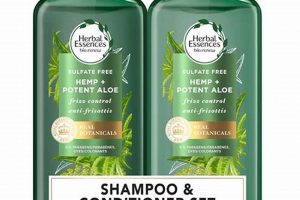
Products marketed as derived from botanical sources and intended for cleansing hair constitute a specific category within the broader hair care market. These formulations often incorporate extracts, oils, and powders from plants, purported to offer gentler and more natural alternatives to conventional surfactant-based cleansers. For instance, preparations containing aloe vera or chamomile are frequently advertised for their soothing and conditioning properties.
The appeal of these preparations lies in the perceived benefits of plant-based ingredients. Consumers often seek formulations free from synthetic additives, believing them to be less harsh on the scalp and hair, promoting improved manageability and overall hair health. Historically, the utilization of botanicals for cosmetic purposes dates back centuries, reflecting a long-standing association between nature and personal care. The resurgence of interest in natural products highlights a growing awareness of ingredient sources and their potential impact.
The following sections will delve into the formulation specifics of these botanical-based cleansers, examining the efficacy of common herbal additives, potential regulatory considerations, and the scientific evidence supporting their purported advantages. Furthermore, a comparative analysis will be provided to differentiate these products from conventional hair cleansing agents and explore future trends within this evolving market segment.
Application and Selection Guidance
This section provides concise directives for optimizing the use and selection of botanical hair cleansers, ensuring informed consumer choices and effective product application.
Tip 1: Conduct a Patch Test: Prior to widespread application, test a small amount on a discreet area of skin. This assesses potential allergic reactions or sensitivities to the botanical ingredients present.
Tip 2: Understand Hair Type Compatibility: Different formulations cater to specific hair types (e.g., oily, dry, fine, thick). Select a product explicitly designed for the user’s particular hair characteristics to maximize effectiveness.
Tip 3: Adhere to Usage Instructions: Follow the manufacturer’s recommended application and rinsing procedures. Deviations may result in suboptimal cleansing or adverse effects.
Tip 4: Monitor Scalp and Hair Condition: Observe changes in scalp health, hair texture, and overall appearance. Adjust product usage frequency or discontinue use if irritation or adverse reactions occur.
Tip 5: Review Ingredient Lists Carefully: Scrutinize the listed components to identify potentially irritating or allergenic substances. Be aware of ingredient sourcing and certifications for enhanced transparency.
Tip 6: Consider Water Hardness: Hard water can affect the lathering and rinsing capabilities of these cleansers. A clarifying rinse with diluted apple cider vinegar may help remove mineral buildup.
Tip 7: Rotate Products Strategically: Periodically alternate between different botanical formulations to avoid ingredient buildup and maintain optimal scalp balance.
These guidelines aim to promote the informed and effective utilization of botanical hair cleansers, facilitating enhanced hair health and minimizing potential adverse reactions.
The subsequent section will address potential limitations and contraindications associated with these products, providing a balanced perspective on their application and suitability.
1. Botanical Extracts

The defining characteristic of hair cleansing products marketed as botanical or herbal is the inclusion of extracts derived from plants. These extracts, obtained through various methods such as solvent extraction, steam distillation, or maceration, contribute active compounds believed to impart specific benefits to the hair and scalp. The selection of particular botanical extracts dictates, to a considerable extent, the overall properties and effectiveness of the finished cleanser. For example, the inclusion of Rosmarinus officinalis (rosemary) extract is often intended to stimulate scalp circulation, while Lavandula angustifolia (lavender) extract is incorporated for its purported calming and antiseptic qualities. The concentration and quality of these extracts are critical determinants of the product’s efficacy.
The practical significance of understanding the role of botanical extracts lies in the consumer’s ability to make informed purchasing decisions. Rather than relying solely on marketing claims, a discerning consumer can evaluate the ingredient list to assess the presence and relative concentration of beneficial extracts. For instance, a product listing water as the primary ingredient followed by a low concentration of a desired botanical extract may offer limited therapeutic value. Conversely, a formulation that strategically combines multiple extracts known for complementary properties may provide a more comprehensive approach to hair and scalp health. Furthermore, understanding extraction methods can inform choices regarding product purity and potential allergenicity. Solvent-extracted materials, while potentially more concentrated, may carry trace residues, whereas water- or CO2-extracted materials are often considered purer.
Ultimately, the connection between botanical extracts and these particular hair cleansers is causal: the presence and quality of these extracts determine the product’s classification and, theoretically, its therapeutic effectiveness. Challenges remain in standardizing extraction processes and accurately quantifying the active compounds within these extracts. Additionally, regulatory oversight regarding claims made about the benefits of specific botanical ingredients varies significantly across jurisdictions, necessitating careful evaluation of both product formulations and manufacturer claims. Further research is required to fully elucidate the mechanisms of action and optimal concentrations of various botanical extracts in the context of hair and scalp care.
2. Scalp Nourishment
Maintaining a healthy scalp is paramount for optimal hair growth and overall hair condition. Botanical hair cleansers, by virtue of their formulations, are often marketed as providing nourishment to the scalp, distinct from merely cleansing the hair shaft. This nourishment is hypothesized to derive from specific botanical extracts and their purported effects on scalp health.
- Improved Circulation
Certain botanical extracts, such as rosemary and peppermint, are traditionally associated with enhanced blood circulation when applied topically. Increased circulation may deliver more nutrients and oxygen to hair follicles, potentially stimulating growth and improving hair strength. However, scientific evidence supporting this claim remains limited, and the effects may vary based on individual physiology and extract concentration.
- Inflammation Reduction
Inflammation of the scalp can contribute to various issues, including dandruff, itching, and hair loss. Extracts such as chamomile and calendula possess anti-inflammatory properties. Their inclusion in formulations aims to mitigate scalp irritation and promote a healthier scalp environment. Controlled studies are necessary to substantiate the efficacy of these extracts in managing specific inflammatory conditions of the scalp.
- Moisture Retention
A dry scalp can lead to flaking, itching, and overall discomfort. Botanical extracts, including aloe vera and shea butter, are known for their moisturizing properties. These ingredients can aid in retaining moisture within the scalp’s epidermal layers, preventing dryness and promoting a balanced scalp environment. The occlusive or humectant properties of these extracts determine their effectiveness in different climatic conditions and for various scalp types.
- Antimicrobial Action
The scalp microbiome plays a crucial role in maintaining scalp health. Imbalances in the microbiome can lead to conditions like seborrheic dermatitis. Certain botanical extracts, such as tea tree oil, exhibit antimicrobial properties that may help control the growth of specific microorganisms on the scalp. However, overuse of antimicrobial agents can disrupt the microbiome balance, necessitating careful consideration in product formulation and usage.
The multifaceted approach of botanical hair cleansers to scalp nourishment underscores their potential benefits beyond basic cleansing. However, it is imperative to recognize that scientific substantiation for many of these claims remains limited. The efficacy of individual ingredients and formulations varies, and consumer expectations should be tempered by the available evidence. Future research should focus on rigorous clinical trials to assess the true impact of specific botanical extracts on scalp health and hair growth.
3. Reduced Irritants
The premise of many preparations marketed as botanical or “herbal” hair cleansers centers on the reduction of potential irritants commonly found in conventional formulations. Conventional shampoos often contain sulfates (such as sodium lauryl sulfate and sodium laureth sulfate), synthetic fragrances, parabens, and artificial colors, all of which have been identified as potential sources of skin and scalp irritation. Consequently, a primary selling point for herbal alternatives is their purported gentler composition, achieved through the exclusion or reduction of these substances. Formulations with a reduced irritant profile may be particularly beneficial for individuals with sensitive skin, eczema, or other scalp conditions exacerbated by harsh chemicals. For example, a person with contact dermatitis triggered by synthetic fragrances might find relief using a fragrance-free botanical cleanser. The substitution of synthetic surfactants with milder, plant-derived alternatives like coco-glucoside or decyl glucoside is a key strategy employed to lower the irritant potential of these products.
The effectiveness of “herbal” shampoos in reducing irritation, however, depends critically on the specific formulation and the individual’s sensitivity. While a product may be labeled as “natural” or “herbal,” this designation does not guarantee the absence of all potential irritants. Some botanical extracts themselves can cause allergic reactions in susceptible individuals. For instance, certain essential oils, while imparting a pleasant scent and other purported benefits, can be potent allergens. Furthermore, the preservation of these formulations, particularly those with a high water content, often requires the use of preservatives, which, even if natural, can still trigger adverse reactions in some individuals. The practical implication of this is that consumers must carefully scrutinize ingredient lists and conduct patch tests before widespread use, even with products marketed as gentle or non-irritating.
In summary, the connection between “herbal shampoos” and “reduced irritants” is a core marketing proposition, but the realization of this benefit is contingent on several factors. The complete absence of potentially irritating substances cannot be assumed solely based on product labeling. Individual sensitivities, the specific formulation, and the sourcing of ingredients all play crucial roles in determining the actual irritant potential. A focus on transparent ingredient lists, verifiable certifications, and a thorough understanding of individual sensitivities is essential for consumers seeking genuinely gentler hair cleansing options. Further research is needed to rigorously compare the irritant profiles of different botanical and conventional formulations and to identify truly hypoallergenic options.
4. Environmental Impact

The production and consumption of hair care products, including those marketed as botanical or “herbal,” carry environmental consequences that warrant careful consideration. The sourcing of raw materials, manufacturing processes, packaging, and disposal methods all contribute to the overall ecological footprint. Products labeled as botanical may present both advantages and disadvantages in terms of their impact on the environment.
- Sustainable Sourcing of Ingredients
The extraction of botanical ingredients can have a significant impact on ecosystems. Unsustainable harvesting practices can lead to habitat destruction, depletion of plant populations, and disruption of biodiversity. Conversely, products that prioritize sustainably sourced ingredients, often certified by organizations like the Forest Stewardship Council (FSC) or the Union for Ethical BioTrade (UEBT), contribute to the conservation of natural resources and the protection of ecosystems. Examples include using organically grown herbs from certified farms or sourcing ingredients through fair trade agreements that support local communities.
- Biodegradability and Water Pollution
Conventional shampoos often contain synthetic chemicals that are slow to degrade and can pollute waterways, harming aquatic life. Botanical formulations may utilize plant-derived surfactants and other ingredients that are more readily biodegradable, reducing their environmental persistence. However, the biodegradability of a product depends on the specific compounds used and the conditions of disposal. It is crucial to verify biodegradability claims with third-party certifications to ensure accuracy. Products with readily biodegradable components minimize the introduction of harmful substances into aquatic ecosystems.
- Packaging and Waste Reduction
The packaging of hair care products contributes significantly to plastic waste. Botanical products increasingly utilize eco-friendly packaging options, such as recycled plastic, bio-plastics derived from renewable resources, or recyclable glass or aluminum. Some brands also offer refill programs or concentrated formulations to reduce packaging waste. The adoption of sustainable packaging practices minimizes the environmental impact associated with the disposal of these products. Choosing products with minimal packaging or those using recycled or recyclable materials can substantially decrease the waste footprint.
- Energy Consumption and Carbon Footprint
The manufacturing process for any hair care product involves energy consumption, contributing to greenhouse gas emissions. Botanical formulations may have a lower carbon footprint if they utilize renewable energy sources in their production and minimize transportation distances for raw materials. Life cycle assessments (LCAs) can provide a comprehensive analysis of the environmental impacts associated with a product’s entire life cycle, from raw material extraction to disposal. Choosing products from companies committed to reducing their carbon footprint supports environmentally responsible manufacturing practices.
In conclusion, while botanical hair cleansers are often perceived as being more environmentally friendly, a thorough assessment of their environmental impact requires consideration of various factors, including ingredient sourcing, biodegradability, packaging, and energy consumption. Consumers can make informed choices by seeking products with sustainable certifications, transparent ingredient lists, and a demonstrated commitment to environmental responsibility. The overall impact is contingent on a holistic approach to sustainability, encompassing all stages of the product’s life cycle.
5. Specific Formulations

The efficacy of “herbal shampoos” is inextricably linked to their specific formulations. The mere presence of botanical extracts does not guarantee effectiveness; rather, the concentration, combination, and processing of these extracts, along with other ingredients, determine the ultimate performance of the product. For instance, a shampoo intended for dry hair might incorporate higher concentrations of emollient oils, such as argan or coconut oil, in conjunction with humectant extracts like aloe vera to enhance moisture retention. Conversely, a shampoo designed for oily hair could feature astringent herbal extracts like witch hazel or tea tree oil to control sebum production, while minimizing the inclusion of heavy oils. The ratio of cleansing agents to conditioning agents is also critical, as an imbalance can lead to either inadequate cleansing or excessive build-up.
The order in which ingredients are listed on a product label provides a general indication of their concentration, with ingredients listed first being present in the highest amounts. However, this information alone is insufficient for a comprehensive understanding of the formulation’s effects. The method of extraction used for the herbal extracts can also significantly impact their potency and stability. Solvent-extracted compounds, while potentially more concentrated, may contain trace residues, whereas CO2-extracted or water-extracted compounds are often considered purer, though perhaps less potent. Furthermore, the pH of the formulation plays a crucial role in maintaining scalp health and hair integrity. A pH that is too alkaline can cause the hair cuticle to open, leading to damage and frizz, while a pH that is too acidic can irritate the scalp. A well-formulated “herbal shampoo” will carefully balance these factors to optimize performance and minimize potential side effects.
In summary, the specific formulation of “herbal shampoos” is paramount to their effectiveness and suitability for different hair types and scalp conditions. Consumers should not assume that all “herbal shampoos” are created equal; careful attention to ingredient lists, extraction methods, and pH levels is essential for making informed purchasing decisions. Challenges remain in standardizing the composition and labeling of these products, but a greater understanding of formulation principles can empower consumers to select products that genuinely meet their needs and deliver the promised benefits.
6. Traditional Use
The utilization of botanical preparations for hair cleansing and care is deeply rooted in traditional practices across diverse cultures. The knowledge and application of herbs for cosmetic and medicinal purposes have been passed down through generations, representing a significant aspect of ethnomedicine. These traditional practices inform the modern understanding and formulation of what are now marketed as herbal shampoos.
- Ayurvedic Practices
In Ayurveda, the ancient Indian system of medicine, specific herbs are prescribed for maintaining hair health. Ingredients such as shikakai, reetha, and amla are traditionally used to cleanse the hair and scalp, promoting hair growth and preventing hair loss. These herbs, often ground into powders and mixed with water, serve as natural surfactants and conditioners. Their application reflects a holistic approach to hair care, considering the individual’s constitution and imbalances.
- Traditional Chinese Medicine (TCM)
TCM emphasizes the balance of Qi and blood flow to maintain health, including that of the hair. Herbs like ginseng, He Shou Wu (Polygonum multiflorum), and ginger are traditionally used in hair care formulations to nourish the scalp, stimulate hair growth, and prevent premature graying. These ingredients are often incorporated into decoctions or herbal rinses, reflecting a focus on internal and external harmony.
- Indigenous Herbal Knowledge
Various indigenous cultures around the world possess unique knowledge of local plants and their applications for hair care. For example, certain Native American tribes traditionally use yucca root as a natural shampoo due to its saponin content, while others utilize specific plant extracts to add shine and strength to the hair. These practices highlight the importance of locally sourced ingredients and sustainable harvesting methods.
- Mediterranean Herbalism
In Mediterranean cultures, herbs like olive oil, rosemary, and lavender have long been used for hair care. Olive oil serves as a natural conditioner, while rosemary is believed to stimulate hair growth and improve scalp circulation. Lavender is valued for its calming properties and pleasant scent. These herbs are often infused into oils or used in rinses, reflecting a focus on natural ingredients and simple, effective formulations.
The enduring legacy of traditional herbal knowledge continues to influence the formulation and marketing of contemporary herbal shampoos. While modern science seeks to validate the efficacy of these traditional ingredients, their historical use provides a rich foundation for understanding their potential benefits and applications in hair care. The increasing consumer demand for natural and sustainable products underscores the relevance of these time-honored practices in the context of modern cosmetic science.
Frequently Asked Questions
This section addresses common inquiries and misconceptions concerning the nature, usage, and efficacy of hair cleansing products marketed as “herbal shampoos.” The responses provided are intended to offer clarity and promote informed decision-making.
Question 1: Are all products labeled “herbal shampoo” genuinely composed of primarily natural ingredients?
No. The term “herbal shampoo” is not consistently regulated, and some products may contain a significant proportion of synthetic chemicals alongside limited quantities of herbal extracts. Scrutinizing the ingredient list is essential to determine the actual composition.
Question 2: Do “herbal shampoos” guarantee hypoallergenic properties?
No. While these products often aim to reduce synthetic irritants, certain botanical extracts can trigger allergic reactions in susceptible individuals. Patch testing before widespread use is advisable.
Question 3: Is the effectiveness of “herbal shampoos” scientifically proven?
The efficacy varies. While some botanical ingredients have demonstrated beneficial properties in vitro or in limited clinical studies, comprehensive, large-scale clinical trials are often lacking. Individual results may vary.
Question 4: Can “herbal shampoos” address severe scalp conditions such as seborrheic dermatitis?
These products may provide adjunctive relief, but they are generally not a substitute for prescription medications or treatments prescribed by a dermatologist for diagnosed scalp conditions.
Question 5: Are “herbal shampoos” inherently more environmentally friendly than conventional shampoos?
Not necessarily. Factors such as sustainable sourcing of ingredients, biodegradability, packaging, and manufacturing processes all contribute to the environmental impact. Products with eco-certifications offer greater assurance of environmental responsibility.
Question 6: How should one choose an “herbal shampoo” appropriate for a specific hair type?
Carefully examine the product label for indications of suitability for particular hair types (e.g., oily, dry, fine, thick). Products formulated for dry hair typically contain more moisturizing ingredients, while those for oily hair often include astringent herbs.
In summary, while “herbal shampoos” can offer potential benefits, consumers should approach them with informed awareness, carefully evaluating ingredient lists, considering individual sensitivities, and recognizing the limitations of unsubstantiated claims.
The subsequent section will explore potential risks and contraindications associated with the use of these products, providing a balanced perspective on their application and suitability.
Conclusion
The preceding analysis has sought to provide a comprehensive understanding of hair cleansing preparations marketed as “herbal shampoos.” The exploration has encompassed formulation specifics, potential benefits associated with botanical extracts, reduced irritant profiles, environmental considerations, variations in product formulations, and the historical context of traditional herbal applications. The information presented serves to clarify the nuances and complexities surrounding these products, moving beyond simplistic marketing claims.
Given the variability in product composition, the limited scientific substantiation for certain claims, and the potential for adverse reactions, consumers are urged to exercise diligence in product selection and usage. A critical evaluation of ingredient lists, consideration of individual sensitivities, and an awareness of environmental impacts are essential for making informed decisions. Future research and standardized labeling practices are necessary to enhance transparency and facilitate a more discerning approach to hair care choices. The pursuit of optimal hair health necessitates a balanced perspective, integrating both traditional knowledge and scientific evidence.