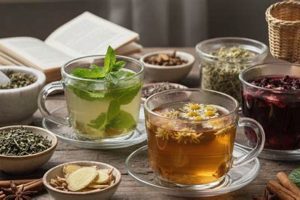
The specific heat level of water utilized when steeping herbal infusions significantly influences the extraction of beneficial compounds and flavor profiles. Too high a temperature can result in bitter or burnt tastes, while an insufficient temperature may lead to a weak and less flavorful beverage. For example, delicate floral infusions, such as chamomile, benefit from lower temperatures to preserve their subtle nuances.
Optimal water temperature ensures the effective release of essential oils, antioxidants, and other therapeutic properties from the dried herbs. Utilizing the correct temperature enhances the overall sensory experience and maximizes the potential health benefits associated with consuming the herbal tea. Throughout history, traditional herbal medicine practices have emphasized the importance of precise preparation methods, including temperature control, to ensure the potency and efficacy of herbal remedies.
Understanding the nuances of heat application allows for the creation of the most flavorful and therapeutically beneficial herbal tea. The following sections will delve into specific recommendations for various herbal types, providing a practical guide for achieving optimal results.
Brewing Recommendations for Herbal Infusions
Achieving the desired flavor and maximizing the therapeutic potential of herbal teas requires attention to detail. The following guidelines offer a practical approach to optimizing the brewing process.
Tip 1: Adhere to precise temperature recommendations. Delicate herbs, such as chamomile or lavender, should be steeped using water around 170-180F (77-82C). This prevents scalding and preserves delicate volatile oils.
Tip 2: For robust herbs like ginger or turmeric, water closer to boiling point, around 200-212F (93-100C), facilitates greater extraction of their potent compounds.
Tip 3: Employ a reliable thermometer. Relying on visual cues alone can be inaccurate. A digital thermometer ensures precise control over the water’s heat level.
Tip 4: Consider the herbal form. Loose-leaf herbs generally require slightly higher temperatures than tea bags, as they offer a larger surface area for water interaction.
Tip 5: Preheat the brewing vessel. Warming the teapot or mug prevents heat loss during steeping and maintains a consistent infusion temperature.
Tip 6: Adjust steeping time accordingly. Higher temperatures often require shorter steeping times to prevent bitterness. Conversely, lower temperatures may necessitate longer steeping times for adequate flavor extraction.
Tip 7: Observe the color of the infusion. As the tea steeps, the water will change color. Monitoring this transition can provide insight into the strength of the brew and prevent over-extraction.
Implementing these techniques allows for a consistent and optimized brewing experience, ultimately enhancing the enjoyment and benefits derived from herbal teas.
By consistently applying these methods, a refined brewing process can be achieved. The upcoming summary will consolidate key points for review.
1. Extraction Efficiency

Extraction efficiency, in the context of herbal infusions, refers to the degree to which desirable compounds are drawn from the dried plant material into the water. This process is intrinsically linked to the water’s heat level, directly impacting the concentration of beneficial substances in the final beverage.
- Solvent Power of Water
Water’s ability to dissolve and carry compounds increases with higher temperatures. Consequently, hotter water can extract a broader range of constituents from the herb. However, this heightened solvent power is not always beneficial, as it can also extract undesirable compounds like tannins, leading to bitterness. A judicious selection of water’s heat level balances the extraction of desired compounds with the avoidance of unwanted flavors.
- Cell Wall Permeability
Plant cell walls act as barriers, limiting the release of intracellular components. Elevated water temperatures can increase the permeability of these cell walls, facilitating the diffusion of desired compounds into the surrounding liquid. The magnitude of this effect varies depending on the herb; some plants possess more robust cell structures, requiring higher temperatures for effective extraction.
- Compound Volatility
The volatilization rate of certain compounds accelerates with increasing water temperature. Some aromatic and therapeutic components are inherently volatile, meaning they readily evaporate. Excessive heat can result in the loss of these compounds during steeping, diminishing the flavor and potential health benefits of the herbal tea. A lower temperature may be necessary to retain these volatile elements.
- Steeping Time Correlation
Heat level and steeping time are interrelated variables. A higher water temperature typically necessitates a shorter steeping time to prevent over-extraction and bitterness. Conversely, a lower temperature may require a longer steeping time to achieve adequate extraction. Finding the optimal balance between these two factors is crucial for maximizing extraction efficiency without compromising the tea’s flavor profile.
These considerations underscore the importance of precise temperature control in herbal tea preparation. While higher temperatures generally promote greater extraction, the potential for negative consequences, such as bitterness or loss of volatile compounds, necessitates a nuanced approach tailored to the specific herb being infused. Achieving optimal extraction efficiency requires a careful consideration of the interplay between temperature, steeping time, and the inherent characteristics of the herbal material.
2. Volatile oil preservation
Volatile oils, responsible for the characteristic aromas and a significant portion of the therapeutic properties of many herbs, are particularly sensitive to temperature. Elevated water temperatures during brewing can lead to the rapid evaporation and subsequent loss of these oils, diminishing both the flavor and potential health benefits of the herbal tea. The connection between temperature and volatile oil retention is direct: as temperature increases, the vapor pressure of these oils rises, accelerating their escape from the liquid infusion. A practical example is chamomile, where its calming properties are largely attributed to its volatile oil content. Brewing chamomile tea with excessively hot water can significantly reduce its effectiveness as a relaxant.
The preservation of volatile oils is not merely about retaining pleasant aromas; it directly influences the pharmacological activity of the herbal tea. Many volatile oils exhibit antimicrobial, anti-inflammatory, or antioxidant properties. Their loss during brewing compromises the therapeutic potential of the infusion. Consider peppermint tea, commonly used for digestive relief. The menthol and other volatile compounds in peppermint exert antispasmodic effects, easing stomach discomfort. Improper brewing techniques can diminish these beneficial effects. Furthermore, different volatile oils have varying boiling points; therefore, tailoring the heat level to the specific herb’s composition is crucial for optimal extraction and preservation.
In summary, effective volatile oil preservation is an integral component of proper herbal tea preparation. Adhering to recommended brewing temperatures, typically lower for herbs rich in volatile oils, is essential for maximizing both the sensory and therapeutic qualities of the infusion. The challenge lies in understanding the specific volatile oil profile of each herb and adjusting the brewing parameters accordingly. Awareness of this relationship contributes to a more informed and effective approach to herbal tea consumption, ensuring that the intended benefits are fully realized.
3. Bitterness control

Bitterness in herbal infusions often arises from the extraction of tannins and other phenolic compounds. The water’s heat level directly influences the solubility of these components; elevated temperatures facilitate their release into the tea. Consequently, a high temperature can result in an excessively bitter beverage, detracting from the intended flavor profile and potentially masking other beneficial compounds. Bitterness control, therefore, becomes a critical consideration in the selection of the water’s heat level during the steeping process. For example, green tea, while not strictly an herbal tea, exemplifies this principle; its delicate flavor is easily overwhelmed by bitterness if brewed with water exceeding approximately 175F (80C). This demonstrates that controlling temperature is essential to prevent the extraction of unwanted bitter substances.
Strategies for bitterness control include employing lower temperatures and shorter steeping times. Reducing the heat level diminishes the solubility of tannins, limiting their presence in the infusion. Similarly, a shorter steeping duration minimizes the opportunity for these compounds to be extracted. A practical application involves herbs high in tannins, such as certain barks or roots; starting with cooler water and carefully monitoring the steeping process can significantly mitigate bitterness. Another approach involves pre-rinsing the herb with cold water before brewing. This process helps to remove some of the surface tannins, further reducing the potential for a bitter taste. These methods offer practical means to refine the flavor and overall quality of herbal infusions.
In summary, bitterness control is intrinsically linked to water temperature. Strategic temperature selection and steeping time adjustments are key to preventing excessive tannin extraction. Mastery of these elements leads to more palatable and enjoyable herbal tea experiences. The challenge lies in discerning the appropriate heat level for each specific herb, requiring careful observation and experimentation. Proper temperature control not only enhances the sensory experience but also optimizes the bioavailability of other, more desirable compounds within the herbal infusion.
4. Compound solubility

The effectiveness of extracting beneficial components from herbs during tea preparation hinges significantly on the solubility of these compounds. Water temperature, in turn, plays a critical role in determining the degree to which these compounds dissolve and become bioavailable in the resulting infusion.
- Polarity and Solubility
Many of the desirable compounds in herbs, such as flavonoids and phenolic acids, exhibit varying degrees of polarity. Water, a polar solvent, is more effective at dissolving polar compounds. However, the solubility of these compounds is further enhanced with increased temperature. Elevated water temperatures provide more energy for the solvent to overcome the intermolecular forces holding the solute (herbal compounds) together, thereby promoting dissolution. For instance, the extraction of quercetin from herbs is more efficient at higher water temperatures due to its increased solubility.
- Temperature-Dependent Solubility Curves
The solubility of many compounds in water follows a temperature-dependent curve, where solubility increases with temperature until a saturation point is reached. Beyond this saturation point, further increasing temperature will not result in more of the compound dissolving. Understanding these solubility curves is essential for optimizing the brewing process. Certain compounds may exhibit a sharp increase in solubility within a specific temperature range, while others may show a more gradual increase. Applying excessive heat beyond the point of optimal solubility can lead to degradation of delicate compounds without any added benefit in extraction.
- Extraction of Non-Polar Compounds
While water primarily dissolves polar compounds, it can also extract non-polar compounds, such as certain essential oils, albeit to a lesser extent. Higher temperatures can slightly improve the extraction of these non-polar compounds. The solubility of non-polar compounds in water is generally low but can increase with temperature until it reaches the cloud point where the solution becomes unstable and the non-polar compounds start to separate out. Herbs containing significant amounts of essential oils, like peppermint, benefit from carefully controlled temperatures to balance the extraction of these oils with the prevention of their volatilization and loss.
- Influence of Other Solutes
The solubility of one compound can be influenced by the presence of other solutes in the solution. In herbal tea, multiple compounds are being extracted simultaneously, and their interactions can affect the overall solubility dynamics. For example, the presence of certain acids can increase the solubility of flavonoids, while the presence of tannins can inhibit the extraction of other compounds. Higher temperatures can amplify these interactions, leading to complex and sometimes unpredictable effects on the final composition of the tea.
The complex interplay between temperature and compound solubility highlights the need for a nuanced approach to herbal tea brewing. Choosing the appropriate water temperature requires considering the specific compounds of interest in the herb and understanding their respective solubility characteristics. By carefully controlling the temperature, one can maximize the extraction of beneficial compounds while minimizing the extraction of undesirable components, leading to a more flavorful and therapeutically effective herbal infusion.
5. Herb type

The botanical characteristics of a given herb directly influence the optimal water temperature required for brewing. Different plant tissues possess varying cellular structures and concentrations of volatile oils, tannins, and other soluble compounds. Consequently, a standardized water temperature across all herb types results in inconsistent and often suboptimal outcomes. Delicate floral herbs, such as lavender and chamomile, necessitate lower temperatures (approximately 170-180F or 77-82C) to prevent the degradation of their volatile oils, which contribute significantly to their aroma and therapeutic properties. Conversely, more robust herbs, including roots and barks like ginger and cinnamon, benefit from higher temperatures (around 200-212F or 93-100C) to facilitate the extraction of their more resilient compounds. The physical structure of the herb, whether it is a dried leaf, root, or flower, also influences the rate of extraction and, thus, the ideal brewing temperature.
Consider the practical implications of this principle. Brewing delicate green tea with boiling water often leads to a bitter taste due to the over-extraction of tannins. This highlights the importance of understanding the chemical composition and physical structure of the plant material. Similarly, the effective extraction of beneficial compounds from tough roots like dandelion requires a higher water temperature and a longer steeping time compared to the preparation of a tea from readily soluble leaves such as mint. Furthermore, the form in which the herb is presentedwhole, cut, or powderedalso affects the rate of extraction. Powdered herbs, with their increased surface area, extract more quickly and may require a slightly lower temperature or shorter steeping time to prevent over-extraction. The origin and cultivation methods of the herb can also influence its chemical composition and, consequently, the ideal brewing conditions.
In summary, recognizing the intrinsic connection between herb type and water temperature is fundamental to achieving a balanced and beneficial herbal tea. A nuanced approach, tailored to the specific properties of each herb, ensures the optimal extraction of desired compounds while minimizing the risk of bitterness or the loss of volatile oils. The challenges in this area lie in the vast diversity of herbs and the lack of standardized brewing guidelines for many less common varieties. Ultimately, a combination of empirical observation and scientific understanding is essential for unlocking the full potential of each herb through careful temperature control during the brewing process.
6. Steeping time

Steeping time, or the duration for which herbal material remains immersed in hot water, is inextricably linked to the heat level of that water in influencing the final characteristics of an herbal infusion. The duration of the steeping process significantly affects the extraction of soluble compounds, influencing the tea’s flavor, aroma, and therapeutic properties. This relationship necessitates careful consideration to optimize the brewing process.
- Extraction Equilibrium
Steeping time determines how close the infusion gets to reaching equilibrium, where the concentration of soluble compounds in the water stabilizes. Higher temperatures accelerate the rate at which this equilibrium is reached. A short steeping time at a high water’s heat level may yield a similar extraction profile to a longer steeping time at a lower water’s heat level. However, the specific compounds extracted and their ratios can vary significantly. For example, prolonged steeping, especially at higher temperatures, can lead to the over-extraction of tannins, resulting in a bitter and astringent tea. Shorter steeping times are often preferred for delicate herbs to prevent this over-extraction.
- Impact on Volatile Oils
The duration of steeping interacts with water’s heat level to determine the extent of volatile oil retention. Extended steeping, particularly at elevated temperatures, increases the loss of these aromatic compounds. Consequently, herbs prized for their volatile oils, such as peppermint or lavender, generally benefit from shorter steeping times to preserve their characteristic aromas and therapeutic benefits. If lower water’s heat level is used, prolonged steeping may extract the desired compounds but with little to no volatile oils.
- Influence on Compound Solubility
Steeping time directly affects the total amount of compounds that can be dissolved in the water, especially when considering varying heat levels. As the contact time between the herb and hot water increases, more compounds will dissolve until saturation is reached for a given temperature. A longer steeping time allows for the extraction of less soluble compounds, which might not be adequately extracted during a shorter steep. However, it can also lead to the extraction of undesirable compounds if the water’s heat level is not controlled, such as excessive tannins. The steeping time needs to be balance with optimum water’s heat level to achieve best result.
- Balancing Strength and Flavor
The combination of steeping time and water’s heat level needs to strike the correct balance between strength and flavor of the final product. Steeping for too short of period might yield weak flavor and fewer therapeutic benefits because of not enough compound has been dissolve. Conversely, too long of steeping, especially at high water’s heat level, can lead to unpleasant taste due to the over-extraction of certain components. Achieving an optimal steeping time requires understanding the specific herb’s chemical composition and tailoring the steeping process accordingly. In all case, choosing right amount of water’s heat level will affect the steeping time to gain more benefit.
In summary, steeping time and water’s heat level are two linked variables that need to be considered when making herbal tea. By adjusting these two parameters thoughtfully, the user can control the taste, fragrance, and curative effects of their herbal tea. Experimenting to find the best combination for each herb is essential to fully experiencing the health advantages and sensory pleasures that herbal teas have to offer. With careful practice, optimal steeping time and the right water’s heat level can maximize tea’s beneficial and aesthetic qualities.
7. Water quality

The quality of water employed in herbal tea preparation directly influences the extraction process and overall taste profile, necessitating a consideration of water characteristics in conjunction with the chosen water’s heat level. Impurities, mineral content, and pH levels can alter the solubility of herbal compounds and affect the final infusion. For example, hard water, containing high concentrations of calcium and magnesium, can impede the extraction of certain flavonoids, potentially diminishing the therapeutic benefits and creating a cloudy appearance. The use of heavily chlorinated water may impart an undesirable taste, masking the subtle flavors of the herbs, regardless of the precision in controlling the water’s heat level. Thus, the purity and composition of the water serve as foundational elements, impacting how herbal components respond to specific temperatures.
Specific water characteristics require attention to optimize brewing. A neutral to slightly acidic pH is generally preferred, as it promotes the dissolution of a wider range of herbal constituents. Filtered water, free from chlorine and other disinfectants, allows the natural flavors of the herbs to emerge uninhibited. Spring water, with its inherent mineral balance, can enhance the taste of certain herbal teas, but its mineral content should be assessed to avoid potential interactions with specific herbal compounds. The temperature sensitivity of herbs is exacerbated by poor water quality; while an appropriate water’s heat level might be selected, the presence of contaminants can still lead to a suboptimal outcome. The use of distilled water, while pure, can result in a flat-tasting tea due to the absence of minerals that contribute to flavor complexity.
In conclusion, the quality of water acts as an essential, often overlooked, component in herbal tea preparation. Its interaction with water’s heat level determines the efficacy of extraction and the overall sensory experience. While precise temperature control is paramount, neglecting water quality can undermine even the most meticulous brewing efforts. Addressing this aspect involves selecting water that is both pure and appropriately mineralized, ensuring that the inherent flavors and beneficial compounds of the herbs are fully expressed. Further research is warranted to investigate the specific interactions between various water qualities, water’s heat level, and the extraction profiles of diverse herbal teas, providing more comprehensive guidance for optimal brewing practices.
Frequently Asked Questions
This section addresses common queries regarding the influence of water’s heat level on herbal tea preparation, providing factual information to optimize brewing practices.
Question 1: Does boiling water damage all herbal teas?
Not all herbal teas are equally susceptible to damage from boiling water. Delicate floral infusions benefit from lower temperatures to preserve volatile oils. More robust herbs, such as roots and barks, generally tolerate and often require higher temperatures for effective extraction.
Question 2: How does water’s heat level affect the therapeutic properties of herbal tea?
The water’s heat level directly impacts the extraction of therapeutically active compounds. Insufficient heat may result in incomplete extraction, while excessive heat can degrade sensitive compounds, reducing the tea’s efficacy.
Question 3: Is there a universal ideal brewing temperature for all herbal teas?
No single universal water’s heat level exists. The optimal temperature varies based on the specific herb’s composition, physical structure, and desired flavor profile. Tailoring the water’s heat level to the herb type is essential for achieving optimal results.
Question 4: What is the effect of using distilled water versus tap water on herbal tea brewing temperature?
Distilled water, devoid of minerals, may result in a flat-tasting tea. Tap water, containing varying mineral content and potential impurities, can alter the flavor and extraction process. Filtered water is generally recommended for a balance of purity and taste.
Question 5: How important is preheating the teapot or mug before brewing?
Preheating the brewing vessel helps maintain a consistent infusion temperature, preventing rapid cooling during steeping. This practice is particularly important when using lower water’s heat levels for delicate herbs.
Question 6: Can steeping time compensate for insufficient water’s heat level?
While extending steeping time can increase extraction at lower temperatures, it may not fully compensate for the benefits of using the optimal water’s heat level. Furthermore, prolonged steeping can lead to undesirable flavors, even at lower temperatures.
In summary, understanding the nuances of water’s heat level, steeping time, and water quality is crucial for preparing herbal tea that is both flavorful and therapeutically beneficial. Experimentation and observation are encouraged to refine brewing techniques for specific herb types.
The following section will provide a conclusion summarizing the key concepts discussed throughout this article.
Herbal Tea Brewing Temperature
The preceding discussion has illuminated the multifaceted influence of water’s heat level on herbal tea preparation. Precise control over this parameter emerges as a crucial factor, impacting extraction efficiency, volatile oil preservation, bitterness control, and compound solubility. The ideal water’s heat level is not a fixed value but rather a variable contingent upon herb type, water quality, and desired sensory and therapeutic outcomes.
Mastery of water’s heat level control represents a fundamental element in the pursuit of optimal herbal tea experiences. Continued exploration and refinement of brewing techniques, guided by scientific understanding and empirical observation, will further enhance the appreciation and utilization of herbal infusions. The benefits of informed brewing practices extend beyond mere taste, influencing the overall health and well-being of the consumer. Therefore, the diligent application of these principles is strongly encouraged.