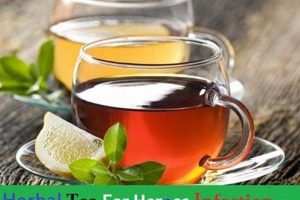
The Spanish translation for beverages crafted from infusions or decoctions of herbs, spices, or other plant material is multifaceted. It encompasses several terms, including “t de hierbas,” “infusin de hierbas,” and “tisana.” These terms refer to drinks made without Camellia sinensis leaves, distinguishing them from traditional tea. For example, a chamomile beverage is known as “t de manzanilla” or “infusin de manzanilla” in Spanish.
These herbal preparations are valued in Spanish-speaking cultures for their potential health benefits and soothing qualities. Historically, such beverages have been employed in traditional medicine for various ailments and as a relaxing ritual. Certain types are perceived to aid digestion, promote sleep, or provide relief from minor discomforts. The consumption of these beverages often forms a part of daily routines and cultural practices.
Understanding the terminology and cultural context is essential for navigating the world of plant-based beverages in Spanish-speaking regions. The following sections will delve into specific varieties, preparation methods, and associated cultural significance, providing a more detailed examination of these infused drinks.
Consejos Sobre Infusiones Herbales
The following are guidelines for the proper selection, preparation, and consumption of herbal infusions, maximizing their potential benefits and minimizing risks.
Tip 1: Select High-Quality Ingredients: Prioritize organically grown or wild-harvested herbs from reputable sources. This minimizes exposure to pesticides and ensures the potency of the plant material. Examine the herbs for freshness and avoid those with discoloration or off-putting odors.
Tip 2: Use Appropriate Water Temperature: Boiling water can damage delicate herbs and alter their flavor profile. Generally, water heated to around 200-212F (93-100C) is suitable for robust herbs like roots and barks. More delicate leaves and flowers benefit from slightly cooler water, around 170-185F (77-85C).
Tip 3: Steep for the Correct Duration: Over-steeping can result in a bitter or astringent taste. A typical steeping time ranges from 5 to 15 minutes, depending on the herb and desired strength. Refer to specific guidelines for each herb for optimal results.
Tip 4: Consider Potential Interactions: Some herbs can interact with medications or pre-existing health conditions. Consult a healthcare professional or qualified herbalist, especially if pregnant, breastfeeding, or taking prescription drugs.
Tip 5: Practice Moderation: Excessive consumption of any herbal infusion can lead to adverse effects. Adhere to recommended serving sizes and frequency. Rotate different herbs to avoid overexposure to specific compounds.
Tip 6: Store Herbs Properly: Keep dried herbs in airtight containers away from direct sunlight, heat, and moisture. Proper storage preserves their potency and prevents spoilage.
Tip 7: Filter the Infusion: Use a fine-mesh strainer or tea filter to remove plant particles after steeping. This enhances the drinking experience and prevents irritation from small debris.
By adhering to these guidelines, individuals can safely and effectively incorporate herbal infusions into their wellness routines, enjoying their potential health benefits and flavorful experiences.
The subsequent sections will explore the diverse types of “t de hierbas” available and their specific applications, further enhancing one’s understanding of these traditional beverages.
1. Terminology variation

The linguistic landscape surrounding infusions made from herbs and other plant materials, specifically their designation in Spanish, presents notable variation. Understanding this diversity is crucial for clear communication and accurate interpretation across different Spanish-speaking regions. The terms used are not always interchangeable, reflecting regional preferences and subtle differences in preparation or intended use.
- Regional Lexical Preferences
Different Spanish-speaking countries and regions exhibit preferences for specific terms. While “t de hierbas” (tea of herbs) is generally understood, “infusin” (infusion) and “tisana” (tisane) may be more common in certain locales. For instance, in some parts of South America, “mate de…” followed by the specific herb (e.g., “mate de coca”) is prevalent, though technically not always an infusion, while in Spain, “infusin” might be favored. This regional variation influences the language used in commerce, recipes, and everyday conversation.
- Semantic Nuances
The terms “t de hierbas,” “infusin,” and “tisana” carry subtle semantic nuances. “T de hierbas” might be broadly used, but the term “infusin” often emphasizes the method of extraction steeping herbs in hot water. “Tisana,” historically, might refer to medicinal preparations, though this distinction is less rigid in modern usage. The specific context and speaker’s intention often dictate the most appropriate term.
- Influence of Foreign Languages
The Spanish language has been influenced by other languages, including English, which can further complicate terminology. The direct translation of “herbal tea” as “t herbal” is sometimes used, particularly in areas with close cultural or economic ties to English-speaking countries. However, this term is less common in more traditional settings or among speakers prioritizing linguistic purism.
- Commercial Terminology
Marketing and labeling practices contribute to terminology variation. Commercial products might use specific terms to appeal to certain demographics or to align with perceived health benefits. For example, a product marketed for relaxation might be labeled “infusin relajante” (relaxing infusion), while one targeting digestive issues could be called “tisana digestiva” (digestive tisane). These choices are strategic and can differ from the language used in informal settings.
In conclusion, the diverse terminology associated with infusions derived from herbs in Spanish reflects a complex interplay of regional preferences, semantic nuances, foreign language influence, and commercial considerations. Recognizing this variation is crucial for effective communication and a deeper understanding of the cultural significance surrounding these beverages.
2. Ingredient Sourcing

The origin and acquisition of ingredients are fundamentally linked to the quality, authenticity, and cultural significance of infusions prepared from herbs and other plant materials in Spanish-speaking regions. Ingredient sourcing directly influences the final product’s flavor profile, therapeutic properties, and overall value.
- Local Flora and Traditional Knowledge
Many Spanish-speaking countries possess diverse ecosystems that yield a wide array of native plants traditionally used in infusions. The sourcing of these ingredients often relies on local knowledge passed down through generations. Harvesting practices are intertwined with cultural customs and beliefs, emphasizing sustainable methods and respect for the environment. Examples include the use of coca leaves in Andean regions or yerba mate in South America. The reliance on local flora provides unique regional flavors and contributes to the preservation of traditional practices.
- Cultivation Practices and Agricultural Standards
The cultivation methods employed in growing herbs destined for infusions significantly impact their quality and safety. Organic farming practices, which minimize or eliminate the use of synthetic pesticides and fertilizers, are increasingly valued. Sustainable agriculture aims to protect biodiversity, conserve water resources, and maintain soil health. Compliance with relevant agricultural standards, such as Good Agricultural Practices (GAP), ensures the traceability and safety of the ingredients. Sourcing from farms that adhere to these standards guarantees a more consistent and reliable product.
- Ethical and Fair Trade Considerations
The sourcing of herbal ingredients raises ethical considerations related to fair labor practices and equitable compensation for farmers and harvesters. Fair trade initiatives aim to ensure that producers receive a fair price for their goods, promoting economic stability and improving living conditions in rural communities. Transparency in the supply chain allows consumers to make informed choices and support businesses that prioritize ethical sourcing. Examples include fair trade certification for chamomile or rooibos, ensuring that the benefits of trade are shared equitably.
- Import Regulations and Quality Control
For regions where specific herbs are not locally available, import regulations and quality control measures play a crucial role. Imported ingredients must comply with stringent safety standards to prevent contamination and ensure that they meet quality specifications. Regulatory agencies oversee the import process, conducting inspections and testing to verify compliance. Proper documentation, including certificates of origin and analysis, is essential for traceability and accountability. Sourcing from reputable suppliers with a proven track record of quality control is paramount for ensuring the safety and efficacy of herbal infusions.
The confluence of local traditions, cultivation practices, ethical considerations, and import regulations shapes the landscape of ingredient sourcing for infusions derived from herbs and other plant materials in Spanish-speaking regions. A comprehensive understanding of these factors is essential for producing and consuming high-quality, authentic, and ethically sourced beverages.
3. Preparation methods

The preparation methods employed directly determine the final characteristics of t de hierbas (herbal tea in Spanish). The manner in which the plant material is processed influences the extraction of active compounds, flavor profile, and overall quality of the beverage. Improper preparation can result in a weak, flavorless drink or, conversely, an overly bitter and potentially harmful concoction. The selection of the appropriate method is thus a critical component in realizing the intended benefits and sensory experience of the final product. For instance, utilizing boiling water for delicate floral infusions like chamomile can degrade volatile oils, diminishing the calming aroma and reducing the concentration of desired compounds.
Infusion, decoction, and maceration represent distinct approaches. Infusion, or steeping, is generally suited for delicate leaves and flowers, involving pouring hot water over the plant material and allowing it to steep for a specified duration. Decoction, on the other hand, is applied to tougher materials like roots, bark, or seeds, requiring simmering the plant matter in water for an extended period to extract their constituents. Maceration, a cold extraction method, involves soaking the plant material in cool or room-temperature water for several hours, preserving heat-sensitive compounds. These methods affect not only the taste but also the therapeutic properties, as different compounds are extracted at varying temperatures and durations. For example, preparing a t de raz de jengibre (ginger root tea) via decoction ensures optimal extraction of gingerol, the compound responsible for its pungent flavor and anti-inflammatory effects. A simple infusion might not yield the same concentration.
Ultimately, a nuanced understanding of preparation methods is essential for maximizing the potential of t de hierbas in Spanish-speaking cultures. Adhering to traditional techniques and considering the specific properties of each herb ensures that the resulting beverage is both palatable and effective. Challenges arise from a lack of standardized information and the regional variations in preparation practices, highlighting the need for clear and accessible resources that promote informed consumption and preserve the cultural heritage associated with these herbal infusions.
4. Cultural Significance

Herbal infusions in Spanish-speaking cultures transcend mere beverages; they are integral components of traditional medicine, social customs, and culinary practices. Their significance stems from historical uses, perceived health benefits, and the symbolic roles they play in daily life and communal rituals.
- Medicinal Applications
Historically, specific herbal preparations have been employed to address a wide range of ailments. Chamomile (manzanilla) is commonly used to soothe digestive discomfort, while linden (tilo) is often consumed to promote relaxation and sleep. These practices are rooted in traditional knowledge systems and continue to influence contemporary healthcare approaches. The belief in the therapeutic properties of these infusions contributes to their enduring popularity and cultural relevance. For instance, the use of coca tea in Andean communities extends beyond its stimulant effects, representing a sacred element in rituals and a treatment for altitude sickness.
- Social Rituals and Hospitality
The offering and sharing of herbal infusions serve as expressions of hospitality and social bonding. In many Spanish-speaking households, preparing and serving these beverages is a customary gesture of welcome and friendship. The communal consumption of mate in South America exemplifies this tradition, where the sharing of the gourd and bombilla (straw) fosters camaraderie and strengthens social ties. Similarly, offering a cup of t de manzanilla to a guest is a common practice intended to convey warmth and care. These shared moments create a sense of community and reinforce cultural values.
- Culinary Integration
Beyond their medicinal and social roles, herbal infusions are frequently incorporated into culinary practices. They can be used as ingredients in desserts, sauces, or marinades, adding subtle flavors and aromatic notes to dishes. For instance, the use of rosemary or thyme infusions in Mediterranean cuisine imparts distinctive herbal undertones to various preparations. Additionally, certain infusions, such as hibiscus (jamaica) tea, are consumed as refreshing beverages, particularly in warmer climates. This integration into the culinary landscape further solidifies the cultural significance of these plant-based drinks.
- Symbolic Meanings and Folklore
Certain herbal infusions carry symbolic meanings or are associated with folklore and superstitions. In some cultures, specific herbs are believed to possess protective qualities or to bring good luck. For example, rosemary is often associated with remembrance and fidelity, while basil is seen as a symbol of love and prosperity. The consumption or use of these herbs in infusions may be linked to rituals or beliefs aimed at invoking positive outcomes or warding off negative influences. These symbolic associations add layers of cultural depth and meaning to the consumption of herbal infusions.
The intertwining of medicinal applications, social rituals, culinary integration, and symbolic meanings underscores the profound cultural significance of herbal infusions in Spanish-speaking societies. These beverages are not merely drinks; they are embodiments of tradition, expressions of hospitality, and conduits of cultural identity.
5. Perceived benefits

The perceived benefits associated with t de hierbas (herbal tea in Spanish) are a central driver of its consumption and cultural integration across Spanish-speaking regions. These perceptions, whether based on empirical evidence, traditional knowledge, or anecdotal experience, directly influence consumer choices, preparation methods, and the role of these beverages in daily life. The belief that specific herbal infusions offer tangible health advantages constitutes a significant factor in their enduring popularity. For example, the widespread belief in the calming properties of manzanilla (chamomile) often leads to its use as a natural remedy for anxiety and insomnia. This perceived benefit, reinforced by generations of traditional use, drives its consistent demand and availability.
The importance of these perceived benefits extends beyond individual consumption patterns. They also shape the commercial landscape, influencing marketing strategies and product development. Manufacturers often highlight the alleged health-promoting properties of their products, appealing to consumers seeking natural alternatives to conventional medicine. The specific claims made, whether related to digestion, immunity, or relaxation, directly impact the perceived value and marketability of the beverage. However, it is crucial to note that the validity of these claims varies, and many remain subject to scientific scrutiny. The regulatory frameworks governing health claims on food and beverage products in Spanish-speaking countries play a role in managing these perceptions and ensuring consumer protection.
Understanding the interplay between perceived benefits and t de hierbas is essential for informed decision-making and responsible consumption. While many herbal infusions offer potential health advantages, it is crucial to approach claims with a critical mindset and consult healthcare professionals when necessary. The challenge lies in bridging the gap between traditional knowledge and scientific evidence, fostering a balanced perspective that acknowledges both the cultural significance and the potential limitations of these beverages. Furthermore, promoting transparency in ingredient sourcing and preparation methods enhances consumer trust and ensures the sustainable use of herbal resources, thereby safeguarding the long-term viability of this cultural tradition.
Frequently Asked Questions
This section addresses common inquiries and clarifies misconceptions related to the Spanish terminology, preparation, and cultural significance of herbal infusions.
Question 1: Is “t de hierbas” simply a direct translation of “herbal tea,” or does it encompass a broader category?
The term “t de hierbas” is generally considered a direct translation, but the concept often extends to include any infusion made from plant material excluding Camellia sinensis. Therefore, beverages prepared from flowers, roots, or spices also fall under this category.
Question 2: What is the distinction between “infusin” and “tisana” in the context of Spanish herbal beverages?
While often used interchangeably, “infusin” generally refers to the process of steeping herbs in hot water, while “tisana” historically denoted a medicinal preparation. However, the distinction is subtle, and usage varies regionally.
Question 3: Are herbal infusions in Spanish-speaking countries regulated for safety and quality?
Regulations vary by country, but many have established standards for food and beverage safety, including herbal products. These regulations often address issues such as pesticide residues, heavy metal contamination, and labeling requirements.
Question 4: How does the water temperature affect the preparation of different “t de hierbas?”
Water temperature is crucial. Boiling water is generally suitable for robust ingredients like roots and barks, while delicate leaves and flowers benefit from slightly cooler water to preserve their volatile oils and prevent bitterness.
Question 5: Are there any potential health risks associated with consuming certain “t de hierbas” regularly?
Some herbs can interact with medications or exacerbate pre-existing health conditions. Moderation is essential, and consultation with a healthcare professional is advisable, particularly for individuals with chronic illnesses, pregnant women, or those taking prescription drugs.
Question 6: Does the cultural significance of “t de hierbas” vary across different Spanish-speaking countries?
Yes, the cultural significance varies significantly. Certain herbs are deeply embedded in regional traditions and folklore, with specific preparations and consumption rituals reflecting local customs and beliefs.
The information presented here aims to provide a foundational understanding of frequently asked questions related to herbal infusions in the Spanish language and cultural context. Further research and consultation with experts are encouraged for more specific concerns.
The subsequent section will delve into practical tips for cultivating and preserving herbs used in these beverages, offering guidance for those interested in sourcing their ingredients sustainably.
Conclusin
This exploration of “herbal tea in Spanish” has underscored the multifaceted nature of this topic, revealing a complex interplay of linguistic variation, ingredient sourcing practices, preparation methodologies, cultural significance, and perceived health benefits. The diverse terminology, ranging from “t de hierbas” to “infusin,” reflects regional preferences and subtle semantic distinctions. Ethical considerations in ingredient sourcing, including fair trade and sustainable agriculture, highlight the importance of responsible consumption. The preparation methods, from simple infusions to more complex decoctions, directly impact the final product’s quality and therapeutic potential. Ultimately, these beverages are more than mere drinks, acting as conduits of cultural heritage and societal practices.
The continued appreciation and responsible consumption of “herbal tea in Spanish” require a commitment to understanding its nuances, respecting traditional knowledge, and promoting sustainable practices. Further research and critical analysis are essential to validate the perceived benefits and ensure the safety and efficacy of these preparations. The enduring legacy of “herbal tea in Spanish” hinges on a balanced approach, harmonizing cultural preservation with scientific advancement for the benefit of present and future generations.The exploration in Spanish is a continuous improvement, in short.