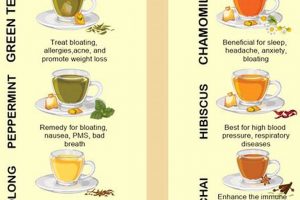
Beverages crafted from herbs, roots, and other plant materials can mimic the flavor profile of roasted coffee beans. These infusions offer a caffeine-free alternative for individuals seeking a similar taste experience without the stimulating effects associated with traditional coffee. Roasted chicory root, dandelion root, and certain herbal blends are frequently used to achieve this coffee-like flavor. For instance, a blend of roasted chicory, dandelion, and carob can create a dark, rich brew reminiscent of coffee.
The appeal of such beverages lies in their potential health benefits and the absence of caffeine. These herbal infusions can provide antioxidants, support digestive health, and offer a grounding, comforting ritual. Historically, these alternatives have been utilized in periods of coffee scarcity or by individuals sensitive to caffeine’s effects. They offer a way to enjoy a warm, flavorful drink with potential wellness advantages.
Understanding the ingredients that contribute to the coffee-like flavor is crucial. The roasting process significantly impacts the final taste, as does the combination of different plant materials. Further discussion will explore specific ingredients, brewing methods, and flavor profiles associated with these caffeine-free alternatives.
Brewing Guidelines for Coffee-Alternative Herbal Infusions
Optimizing the flavor extraction of coffee-alternative herbal infusions requires careful attention to brewing parameters. Consistent results depend on proper ingredient preparation, water temperature, and steeping time.
Tip 1: Ingredient Roasting: Roast roots, such as chicory or dandelion, to a dark brown color before brewing. The roasting process develops the characteristic bitter and earthy notes resembling coffee.
Tip 2: Grind Consistency: Utilize a coarse grind for the roasted roots. A finer grind can lead to over-extraction and a bitter, unpleasant taste. Adjust grind size based on the specific herb used.
Tip 3: Water Temperature Control: Heat water to just below boiling (approximately 200-212F or 93-100C). Boiling water can scorch delicate herbs and alter the flavor profile. Employ a thermometer for accuracy.
Tip 4: Steeping Time Adjustment: Steep the herbal blend for an extended period, typically 5-7 minutes. Longer steeping times extract more flavor and color, enhancing the coffee-like experience. Experiment with different steeping durations to achieve desired strength.
Tip 5: Filtration Method Selection: Use a French press or a fine-mesh strainer to filter the infusion. These methods effectively remove sediment while preserving the oils that contribute to the beverage’s richness.
Tip 6: Blend Customization: Experiment with different herbal combinations to tailor the flavor profile. Adding spices like cinnamon or cardamom can introduce warmth and complexity to the infusion. Small adjustments can significantly impact the final taste.
Tip 7: Water Quality Consideration: Employ filtered water to avoid impurities that can negatively impact the flavor of the infusion. Minerals and chlorine present in tap water can alter the taste and aroma.
Adhering to these brewing guidelines ensures optimal flavor extraction and a consistently enjoyable coffee-alternative herbal infusion. Precise control over roasting, grinding, water temperature, and steeping time is paramount.
The subsequent sections will delve into specific herbal combinations and their corresponding flavor profiles, providing further insight into the diverse world of coffee-alternative herbal beverages.
1. Roasted Chicory Root

Roasted chicory root stands as a cornerstone ingredient in the formulation of herbal infusions designed to emulate the taste and aroma of coffee. Its unique properties, developed through the roasting process, contribute significantly to the desired sensory characteristics.
- Flavor Profile Development
The roasting process transforms chicory root’s natural sugars and compounds, creating melanoidins that contribute to a deep, roasted flavor and dark color. This process is similar to the Maillard reaction in coffee beans, leading to similar sensory attributes. Without roasting, chicory lacks the characteristic bitterness and depth required for coffee-like infusions.
- Body and Texture Enhancement
Chicory root introduces body and a slightly viscous texture to the herbal infusion, mimicking the mouthfeel of coffee. This textural component is crucial for satisfying consumer expectations. The inulin content in chicory, a type of soluble fiber, contributes to this effect.
- Bitterness Modulation
Roasted chicory offers a distinct bitterness, a key component of the coffee experience. This bitterness is balanced by other ingredients in the blend, such as dandelion root or carob, to achieve a palatable and complex flavor profile. The level of bitterness can be controlled by adjusting the roasting time and temperature.
- Aroma Contribution
The volatile compounds produced during the roasting of chicory contribute to the overall aroma of the beverage, providing roasted and earthy notes reminiscent of coffee. These aromatic compounds enhance the perceived authenticity of the coffee alternative.
The strategic use of roasted chicory root, with careful control over roasting parameters, is essential for achieving a convincing coffee-like experience in herbal infusions. Its impact on flavor, texture, bitterness, and aroma collectively defines its importance in this specialized beverage category. The addition of other roots and spices will further enhance or change the drink characteristics.
2. Dandelion Root's Bitterness
Dandelion root’s inherent bitterness is a critical, albeit often understated, element in replicating the taste profile of coffee within herbal infusions. This characteristic contributes a depth and complexity essential for a convincing coffee alternative, playing a crucial role in mirroring the sensory experience.
- Enhancing Perceived Strength
The bitter compounds present in dandelion root, primarily sesquiterpene lactones, contribute to the perception of a strong, robust beverage. This characteristic mimics the impact of caffeine in traditional coffee, providing a sensory cue that suggests a stimulating effect, even in its absence. Roasting the root further intensifies this bitterness, mimicking the roasting process of coffee beans.
- Balancing Sweetness and Earthiness
Dandelion root’s bitterness acts as a counterpoint to the natural sweetness found in other ingredients, such as carob or licorice root, often incorporated into coffee-alternative blends. This balance prevents the infusion from becoming cloying or overly sweet, contributing to a more nuanced and complex flavor profile. The earthy notes inherent in dandelion root further complement the overall flavor, creating a grounding sensory experience.
- Digestive Benefits and Tradition
Beyond its flavor contribution, dandelion root has a long history in traditional medicine for its digestive properties. This adds another layer of appeal, as consumers seeking a coffee alternative may also be drawn to the potential health benefits associated with dandelion. This aligns with a broader trend towards functional beverages that offer both flavor and wellness attributes.
- Roasting Level Influence
The level of roasting applied to dandelion root directly impacts the intensity of its bitterness. Lightly roasted root imparts a subtle, grassy bitterness, while darker roasts yield a more pronounced and intense flavor. By carefully controlling the roasting process, manufacturers can fine-tune the bitterness level to achieve the desired flavor profile in the final blend, creating a product that closely resembles the various roast levels available in traditional coffee.
In summary, the purposeful integration of dandelion root’s bitterness is fundamental in constructing a credible coffee-alternative herbal tea. Its ability to mimic perceived strength, balance sweetness, offer potential health benefits, and adapt to varying roast levels makes it a crucial ingredient in the pursuit of a caffeine-free, coffee-like experience. Consideration should also be made to other similar root components to help achieve similar drink characteristics.
3. Carob's Sweet Undertones

The inclusion of carob in herbal blends intended to mimic the flavor of coffee introduces a subtly sweet dimension that mitigates the inherent bitterness of ingredients like roasted chicory and dandelion root. This element is not merely an additive, but rather an integral component in achieving a palatable and nuanced flavor profile comparable to coffee. The absence of carob, or a similar sweetening agent, often results in an excessively bitter or harsh beverage, deviating significantly from the desired taste.
Carob offers a naturally occurring sweetness derived from its sugars, circumventing the need for artificial sweeteners or excessive amounts of other sweeteners like honey or maple syrup. This is particularly important for consumers seeking healthier alternatives to coffee, as it avoids the potential drawbacks associated with refined sugars. Moreover, carob possesses a distinct malty flavor, which complements the roasted and earthy notes of chicory and dandelion, contributing to a more complex and satisfying taste. Numerous commercially available coffee-alternative herbal teas utilize carob as a key ingredient to enhance palatability and flavor complexity. Roasting the carob, even lightly, can also impact and alter the sweet undertones found.
In conclusion, the strategic application of carob’s sweet undertones is vital in formulating successful coffee-alternative herbal teas. Its natural sweetness, coupled with its malty flavor, balances the bitterness of other ingredients and contributes to a more rounded and coffee-like taste. Recognizing the specific role of carob facilitates the development of more appealing and health-conscious coffee substitutes, allowing consumers to enjoy a similar sensory experience without the stimulatory effects of caffeine or the drawbacks of artificial additives.
4. Roasting Degree Variation

The degree to which the individual components of a coffee-alternative herbal infusion are roasted significantly impacts the final flavor profile of the beverage. Precise control over roasting parameters allows for the manipulation of sweetness, bitterness, and overall intensity, ultimately determining the success of the blend in mimicking the desired characteristics of coffee. Different roasting levels will impact the sugar development, aroma and oils extraction of the tea.
- Light Roasts: Subtlety and Nuance
Lightly roasted herbal ingredients retain more of their inherent sweetness and exhibit a brighter, less bitter flavor profile. In the context of coffee alternatives, this approach can be used to highlight specific flavor notes, such as floral or fruity undertones present in the herbs. For example, a lightly roasted dandelion root may contribute a mild earthiness without overwhelming the blend with bitterness. This results in a lighter-bodied beverage, similar to a light roast coffee. The aroma of the tea also benefits from this as the oils are not burnt away to nothing and instead add to the complexity and notes.
- Medium Roasts: Balanced Complexity
Medium roasting levels strike a balance between sweetness and bitterness, developing more complex flavors while retaining some of the original character of the herbs. This approach is often employed to create a more rounded and approachable flavor profile. A medium-roasted chicory root, for instance, will contribute a moderate level of bitterness and roastiness, providing a foundation for the coffee-like character of the blend without being overly aggressive. Balance of flavors can also be reached with this middle ground of roasting degree.
- Dark Roasts: Intensity and Bitterness
Darkly roasted herbal ingredients exhibit a pronounced bitterness and smoky flavor, often masking the original nuances of the herbs. In coffee alternatives, this technique is used to emulate the bold, intense flavors of dark-roasted coffee beans. A darkly roasted dandelion root or chicory root, for example, will contribute a strong, bitter flavor that is crucial for replicating the characteristics of a dark roast coffee. The sugars are mostly carbonized at this stage and will provide that dark bold flavor.
- Uneven Roasting: Layered Flavors
Some recipes call for an uneven or fractional roasting procedure of each component separately. This can allow for even more granular control of the final result as well as keep the final outcome less predictable, adding to the uniqueness of the beverage. Additionally, this may allow some characteristics of a flavor to be preserved while enhancing another desired trait.
Ultimately, the selection of roasting degrees for each component of a coffee-alternative herbal tea is a critical decision that dictates the final flavor profile. By carefully controlling the roasting process, manufacturers can create blends that closely mimic the desired characteristics of various coffee roasts, catering to a wide range of consumer preferences. These preferences continue to evolve in the market and with better information, even home brewers can achieve more robust flavors with these variations.
5. Brewing Time Impact

Brewing time exerts a significant influence on the flavor and strength of coffee-alternative herbal teas. Extended steeping durations generally result in a more intense flavor extraction, increasing the bitterness and body of the beverage. Conversely, shorter steeping times produce a lighter, more delicate infusion. The optimal brewing time depends on the specific herbal blend and the desired flavor profile. For example, a blend containing roasted chicory root and dandelion root may require a longer steeping time (5-7 minutes) to fully extract the roasted flavors and achieve a coffee-like bitterness. Insufficient steeping can result in a weak and watery infusion, lacking the depth and complexity expected from a coffee alternative. Conversely, over-steeping can lead to an excessively bitter and astringent beverage, detracting from the overall drinking experience. In practical applications, this knowledge allows brewers to tailor the strength and flavor intensity to individual preferences. Adjustments to brewing time offer a straightforward method for fine-tuning the sensory experience of coffee-alternative herbal teas.
The impact of brewing time also extends to the extraction of specific compounds from the herbal ingredients. Longer steeping times facilitate the release of a wider range of compounds, including tannins and other polyphenols, which contribute to the overall bitterness and astringency. However, these compounds also possess antioxidant properties, potentially enhancing the health benefits of the beverage. Shorter steeping times may selectively extract more volatile aromatic compounds, resulting in a brighter and more fragrant infusion, albeit with a less pronounced body and bitterness. This selective extraction process necessitates careful consideration of the desired balance between flavor intensity and potential health benefits. Experimentation with different brewing times allows for the optimization of both sensory and nutritional qualities.
In summary, the control of brewing time is paramount in the preparation of coffee-alternative herbal teas. It directly affects the strength, flavor intensity, and extraction of specific compounds. Understanding this relationship allows brewers to customize the beverage to individual preferences and optimize the balance between taste and potential health benefits. The challenges lie in identifying the optimal brewing time for specific herbal blends and balancing the extraction of desirable and undesirable compounds. Further research into the specific compounds extracted at different brewing times could provide valuable insights for maximizing the quality and health benefits of these caffeine-free alternatives.
6. Blend Customization Options

The ability to customize herbal tea blends is a critical factor in achieving a coffee-like flavor profile. The specific combination of herbs, roots, and spices directly influences the final taste, aroma, and body of the beverage, allowing for nuanced adjustments that can more closely mimic the complexities of coffee. Without the flexibility of blend customization, producing a convincing coffee alternative would be significantly constrained. For instance, one might adjust the proportion of roasted chicory root to dandelion root to control the bitterness, or add carob to introduce sweetness. These adjustments demonstrate the direct cause-and-effect relationship between ingredient ratios and flavor outcomes. The absence of this customization capability restricts the ability to fine-tune the taste, limiting the potential for creating a truly satisfying coffee substitute. The importance of blend customization lies in its ability to address individual preferences and emulate specific coffee characteristics.
Practical applications of blend customization are evident in the variety of commercially available coffee-alternative herbal teas. Many manufacturers offer blends tailored to specific taste preferences, such as a “dark roast” blend with a higher proportion of roasted chicory for a bolder, more bitter flavor, or a “mocha” blend incorporating cacao nibs or powder for added depth and sweetness. This diversity underscores the market demand for personalized flavor experiences. Moreover, the knowledge of individual ingredient contributions allows consumers to create their own customized blends, tailoring the beverage to their specific dietary needs or taste preferences. The availability of single-ingredient options, such as roasted dandelion root or carob powder, empowers individuals to experiment with different ratios and flavor combinations, further highlighting the practical significance of understanding blend customization options. This may also result in a lower cost per cup as the customer can focus on purchasing raw components. The availability of resources and guides further enhances this ability, even if it is more complex than just picking something off the shelf.
In summary, blend customization options are an indispensable component in the creation of herbal teas that effectively mimic the taste of coffee. The ability to manipulate ingredient ratios and incorporate diverse flavorings allows for precise control over the final beverage’s characteristics. While challenges remain in accurately replicating the full complexity of coffee, understanding and leveraging blend customization options is essential for producing satisfying and personalized coffee alternatives, furthering the development of caffeine-free beverage options.
7. Caffeine-Free Advantage
The caffeine-free nature of herbal teas that emulate the taste of coffee represents a primary advantage for a specific consumer demographic. This characteristic eliminates the stimulant effects associated with traditional coffee, making it suitable for individuals sensitive to caffeine, those with medical conditions contraindicating caffeine consumption, or those seeking to reduce their overall caffeine intake. The absence of caffeine mitigates potential side effects such as anxiety, insomnia, and digestive upset, offering a gentler alternative. This advantage directly addresses health concerns and lifestyle preferences, expanding the appeal of coffee-alternative beverages. A real-life example is the increased consumption of herbal coffee alternatives during evening hours, when individuals seek a warm, comforting beverage without the risk of sleep disruption. The practical significance of this understanding lies in its ability to cater to a broader market and offer a more inclusive beverage option.
Furthermore, the caffeine-free advantage opens opportunities for incorporating these herbal infusions into health-focused dietary regimens. Individuals adhering to specific diets or managing conditions such as heart palpitations, anxiety disorders, or pregnancy often require strict limitations on caffeine intake. Herbal coffee alternatives provide a means to enjoy a familiar taste and ritual without compromising their health or dietary restrictions. Examples include pregnant women seeking a coffee-like beverage during pregnancy or individuals managing anxiety who previously relied on coffee for energy. The practical application of this knowledge involves the development of targeted marketing strategies highlighting the health benefits and caffeine-free nature of these beverages, emphasizing their suitability for specific consumer groups.
In conclusion, the caffeine-free nature of herbal teas mimicking coffee flavor is a defining characteristic that provides significant advantages, catering to health concerns, dietary restrictions, and lifestyle preferences. While challenges exist in replicating the full sensory experience of coffee without caffeine, the health benefits and broader appeal of these alternatives represent a substantial market opportunity. This understanding underscores the importance of clearly communicating the caffeine-free advantage to consumers, emphasizing its role in promoting health and well-being.
Frequently Asked Questions
This section addresses common inquiries regarding herbal teas formulated to emulate the flavor profile of coffee, providing concise and informative answers to address potential misunderstandings.
Question 1: Does “herbal tea that tastes like coffee” contain caffeine?
Generally, no. The primary advantage of such beverages is their caffeine-free nature. Traditional herbal teas, by definition, are derived from plant materials other than Camellia sinensis (the tea plant), which is the source of caffeine in black, green, and white teas. However, it is crucial to verify the ingredient list to ensure the absence of any added caffeine or coffee extracts.
Question 2: What ingredients contribute to the coffee-like flavor?
Common ingredients include roasted chicory root, dandelion root, and carob. Roasting these ingredients develops flavors and textures similar to coffee, while additional components such as cinnamon or cacao may enhance or alter the drink’s final flavor profile.
Question 3: Is “herbal tea that tastes like coffee” as strong as regular coffee?
Strength is subjective and related to the ingredient to water ratio and steeping duration. While the flavor can be similar, the absence of caffeine means it will not provide the same stimulant effects as coffee.
Question 4: Are there health benefits associated with drinking it?
Potential health benefits depend on the ingredients used. For example, dandelion root has been traditionally used to support liver health, while chicory root can be a source of prebiotics. Consult with a healthcare professional for specific health advice. Do not use the beverage for self-treating symptoms, conditions or disease.
Question 5: How does the roasting process affect the flavor?
Roasting is crucial for developing the desired flavors. The Maillard reaction occurs during roasting, producing complex compounds that contribute to the roasted, earthy, and slightly bitter notes characteristic of coffee. The roasting level dictates the intensity of these flavors.
Question 6: Can “herbal tea that tastes like coffee” be brewed like regular coffee?
While some methods are transferable, optimal brewing often differs. A French press or fine-mesh strainer are typically recommended to filter herbal infusions. Extended steeping times (5-7 minutes) are often needed to extract optimal flavor. Adjustments may be necessary based on the specific blend and desired strength.
In summary, herbal teas formulated to taste like coffee offer a caffeine-free alternative with potential health benefits, but flavor is mostly dependent on ingredients, ratios, roasting degree and brewing process.
The next section will discuss common misconceptions regarding these herbal alternatives, further clarifying their unique characteristics.
Herbal Tea That Tastes Like Coffee
This exploration has illuminated the multifaceted nature of herbal tea formulated to emulate the flavor profile of coffee. Key aspects include the selection and roasting of specific ingredients like chicory and dandelion root, the balancing role of carob’s sweetness, and the manipulation of brewing parameters to achieve desired flavor intensity. The caffeine-free attribute presents a distinct advantage, catering to health-conscious consumers. However, limitations exist in perfectly replicating the full sensory experience of traditional coffee.
Continued innovation in ingredient sourcing and processing techniques holds the potential to further refine these coffee alternatives. Understanding the nuances of flavor chemistry and consumer preferences remains crucial for ongoing development. Further research into the synergistic effects of various herbal combinations is warranted, ensuring the continued evolution and refinement of this specialized beverage category, increasing both market value and health benefits to the target consumers.