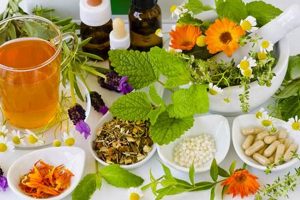
Herbal teas, or tisanes, are infusions made from herbs, spices, flowers, or other plant material in hot water. Unlike traditional teas derived from the Camellia sinensis plant, herbal teas offer a diverse range of flavors and potential therapeutic properties, making them popular beverages for both enjoyment and wellness purposes. For example, chamomile tea is often consumed for its calming effects, while ginger tea is frequently used to alleviate nausea.
The value of understanding the potential effects of various herbal teas lies in the ability to make informed choices about beverages that support specific health goals or address particular needs. Historically, many cultures have utilized herbal teas as traditional remedies for various ailments. The ongoing interest in these beverages reflects a growing awareness of natural approaches to health and well-being and the potential benefits that plant-based compounds can provide.
The following sections will explore the potential benefits associated with several common herbal teas, detailing the specific plant components and the traditional or researched uses associated with each. This exploration aims to provide a clearer understanding of how different herbal teas might contribute to overall health and well-being.
Guidance on Herbal Tea Selection for Wellness
This section provides factual guidance on selecting herbal teas based on their traditional uses and potential benefits. Informed choices can contribute to a proactive approach to health and well-being.
Tip 1: Prioritize Specific Needs. Identify the desired outcome, such as relaxation, improved digestion, or immune support. Match the herbal tea to the specific need based on available information.
Tip 2: Research Traditional Uses. Investigate the historical and cultural applications of different herbal teas. Understanding traditional uses can provide insights into potential benefits, though scientific validation may vary.
Tip 3: Examine Ingredient Lists. Scrutinize the ingredient list to ensure that the tea contains the intended herbs and does not include unwanted additives or potential allergens.
Tip 4: Consider Potential Interactions. Individuals taking medications or with pre-existing health conditions should consult a healthcare professional before regularly consuming herbal teas, as interactions may occur.
Tip 5: Be Mindful of Dosage. Adhere to recommended brewing instructions and avoid excessive consumption of any single herbal tea. Moderation is crucial for maximizing benefits and minimizing potential side effects.
Tip 6: Opt for Reputable Brands. Choose herbal teas from established and reputable brands that adhere to quality control standards and provide transparent sourcing information.
Tip 7: Observe the Body’s Response. Pay attention to how the body responds after consuming a particular herbal tea. Discontinue use if any adverse reactions are experienced.
In summary, careful consideration of individual needs, ingredient composition, potential interactions, and responsible consumption practices are vital when selecting herbal teas for wellness purposes. Thoughtful choices can contribute to a more informed and potentially beneficial experience.
The article will conclude with a compilation of popular herbal teas and the benefits associated with each.
1. Targeted Health Support

The concept of “Targeted Health Support” is fundamentally intertwined with understanding the specific benefits attributed to different herbal teas. This connection stems from the diverse phytochemical composition of various herbs, where each plant possesses unique compounds that may exert distinct physiological effects. Consequently, selecting a specific herbal tea based on its established properties allows individuals to address particular health concerns or support specific bodily functions. For example, if the desired outcome is to alleviate mild anxiety, a tea containing chamomile or lavender, known for their potential calming effects, would be a targeted choice.
The importance of “Targeted Health Support” in the context of herbal teas lies in its potential to optimize the benefits derived from their consumption. Rather than indiscriminately consuming herbal teas, a targeted approach allows for a more strategic integration into a wellness regimen. The effectiveness of this approach is contingent upon accessing accurate information regarding the purported benefits of each herb and understanding the potential mechanisms of action. For instance, ginger tea, traditionally used to ease nausea, contains compounds that may modulate gastric motility. Similarly, peppermint tea’s purported ability to alleviate indigestion is linked to its potential to relax gastrointestinal muscles.
In conclusion, the correlation between “Targeted Health Support” and the understanding of “what herbal teas are good for what” underscores the value of informed decision-making. While anecdotal evidence and traditional uses may provide initial guidance, it is imperative to acknowledge that scientific validation for some claims may be limited. Furthermore, individual responses to herbal teas can vary. Therefore, while “Targeted Health Support” offers a valuable framework for utilizing herbal teas, it should be integrated with a comprehensive approach to health, ideally guided by a healthcare professional, especially when addressing underlying medical conditions.
2. Ingredient-Specific Actions

The effectiveness of any herbal tea in achieving a desired outcome directly stems from the specific actions of its constituent ingredients. This concept is fundamental to understanding “what herbal teas are good for what.” Each herb contains a unique profile of bioactive compounds, such as flavonoids, terpenes, and alkaloids, which interact with physiological systems within the body. The presence and concentration of these compounds dictate the potential therapeutic effects of the tea. For example, the anti-inflammatory properties of turmeric tea are attributed to curcumin, a potent antioxidant compound found within the turmeric root. Without curcumin, the tea would not possess the same anti-inflammatory potential.
Understanding the ingredient-specific actions allows for a more discerning approach to herbal tea selection. Instead of relying solely on generalized claims, one can examine the scientific literature pertaining to the specific herbs in the tea. This knowledge facilitates the differentiation between teas with potentially overlapping benefits. For instance, both chamomile and valerian root are known for their relaxing properties; however, their mechanisms of action differ. Chamomile interacts with GABA receptors in the brain, promoting relaxation, whereas valerian root may inhibit the breakdown of GABA. This distinction suggests that individuals may respond differently to each herb, depending on their individual neurochemistry. Applying “Ingredient-Specific Actions” to “what herbal teas are good for what”, an example would be the use of dandelion root tea for gentle detoxification. The root acts as a mild diuretic, assisting in the flushing of excess water and toxins. This example demonstrates how a clear understanding of the properties of each ingredient can improve a person’s wellness program.
In conclusion, the link between ingredient-specific actions and the overall therapeutic potential of herbal teas is undeniable. By acknowledging the role of bioactive compounds, individuals can move beyond generalizations and make more informed decisions about their beverage choices. However, it is crucial to acknowledge the limitations of current research, which may not fully elucidate the complex interactions between herbal compounds and human physiology. Future studies are needed to provide a more comprehensive understanding of the “Ingredient-Specific Actions” and allow for greater application for herbal remedies.
3. Traditional Applications

Traditional applications of herbal teas provide a rich historical context for understanding their potential uses and benefits. For centuries, diverse cultures have utilized various plant-based infusions to address a wide range of health concerns, establishing a foundation of empirical knowledge that continues to influence modern perspectives on herbal remedies.
- Cultural Specificity and Regional Variations
Traditional herbal tea applications often exhibit significant cultural specificity and regional variations. The specific herbs used, methods of preparation, and intended uses can differ markedly across different geographic locations and cultural traditions. For instance, the use of yerba mate in South America as a stimulant and social beverage contrasts sharply with the use of chamomile in Europe as a calming sleep aid. Understanding these regional variations is essential for appreciating the full scope of traditional herbal tea applications and avoiding generalizations based on limited cultural perspectives.
- Empirical Evidence and Observational Learning
Traditional applications are largely based on empirical evidence and observational learning, accumulated over generations of use. The perceived efficacy of a particular herbal tea is often rooted in repeated observations of its effects on specific symptoms or conditions. For example, the use of ginger tea to alleviate nausea has been documented in numerous traditional medical systems, supported by centuries of anecdotal evidence. While empirical evidence does not meet the standards of modern scientific rigor, it provides valuable insights into the potential benefits of herbal teas and guides further research.
- Integration with Holistic Healing Systems
Traditional herbal tea applications are frequently integrated within broader holistic healing systems, such as traditional Chinese medicine (TCM) and Ayurveda. In these systems, the selection of specific herbal teas is often based on individual constitutional assessments and the principles of balancing energies or humors. For example, in TCM, different teas may be prescribed to address imbalances in Yin and Yang, reflecting a more nuanced approach to herbal therapy that considers the individual’s overall health status. This integration highlights the importance of considering the broader context in which herbal teas are traditionally used.
- Ritualistic and Symbolic Significance
In some cultures, the preparation and consumption of herbal teas are imbued with ritualistic and symbolic significance. These rituals may involve specific methods of preparation, ceremonial settings, and symbolic gestures, reflecting a deeper connection between the tea and the individual’s spiritual or emotional well-being. For instance, the Japanese tea ceremony emphasizes mindfulness, respect, and harmony, elevating the act of tea consumption beyond mere hydration to a contemplative and social experience. Recognizing the ritualistic and symbolic dimensions of herbal tea use provides a more complete understanding of its role in traditional cultures.
In conclusion, traditional applications of herbal teas provide valuable insights into their potential uses and benefits, shaped by cultural specificity, empirical evidence, integration with holistic healing systems, and ritualistic significance. These traditional practices offer a foundation for modern research and continue to inform the selection and utilization of herbal teas for promoting health and well-being. Understanding the history allows consumers to have better consideration for safety and to approach usage with greater respect.
4. Potential Interactions
The phrase “Potential Interactions” is an indispensable facet when contemplating “what herbal teas are good for what.” The intended benefits of an herbal tea can be compromised, or even reversed, should the tea’s constituents interact negatively with pharmaceuticals, other herbal supplements, or pre-existing medical conditions. This interplay creates a cause-and-effect relationship where the introduction of an herbal tea, intended for wellness, inadvertently produces adverse effects due to unforeseen interactions. Therefore, a thorough understanding of “Potential Interactions” is not merely a cautionary note, but an essential component of determining the suitability and safety profile of any herbal tea.
Several real-life examples underscore the practical significance of this understanding. For instance, St. John’s Wort, often consumed as a tea for mood enhancement, can interfere with the efficacy of certain antidepressants and oral contraceptives, potentially leading to treatment failure or unintended pregnancies. Similarly, green tea, while valued for its antioxidant properties, contains vitamin K, which can counteract the effects of anticoagulant medications like warfarin. The consumption of grapefruit juice is often warned against due to its affect certain medications and how it may affect medication properties. These illustrate how seemingly benign herbal teas can pose risks when combined with other substances or in individuals with specific health conditions. The practical application lies in meticulously researching the potential interactions of each herb, consulting with healthcare professionals, and diligently monitoring for any adverse effects upon initiating consumption.
In summary, acknowledging and understanding “Potential Interactions” is not merely a supplementary consideration but a fundamental element in evaluating “what herbal teas are good for what.” The potential for interactions to negate intended benefits or induce harm necessitates a cautious, informed approach to herbal tea consumption. The challenges lie in the complexity of herbal constituents and the limited research on many herbal interactions. Nevertheless, prioritizing awareness, seeking professional guidance, and practicing vigilant self-monitoring are crucial steps in mitigating risks and maximizing the safe and effective use of herbal teas.
5. Dosage Considerations
The determination of “what herbal teas are good for what” is intrinsically linked to “Dosage Considerations.” The efficacy and safety of an herbal tea are not solely determined by its inherent properties, but also by the quantity consumed. A dosage that is too low may fail to elicit the desired therapeutic effect, rendering the tea ineffective. Conversely, an excessive dosage can lead to adverse effects, ranging from mild discomfort to more serious complications. Therefore, optimal dosage is a critical factor in realizing the intended benefits of any herbal tea.
Numerous examples illustrate the importance of “Dosage Considerations.” Chamomile tea, often consumed for its calming properties, typically requires a specific concentration of chamomile flowers per cup of water to achieve the desired effect. If the tea is too weak, it may not induce relaxation. Conversely, excessive consumption of licorice root tea can lead to elevated blood pressure and electrolyte imbalances in susceptible individuals. Similarly, while senna tea is used as a laxative, overuse can result in dehydration and dependence. These examples highlight the need to adhere to recommended dosage guidelines, which are often based on traditional use, preliminary research, and expert opinion. Factors influencing dosage include individual body weight, age, health status, and the specific herb in question. The practical application of this understanding involves carefully reading product labels, consulting with qualified healthcare professionals, and starting with lower doses to assess individual tolerance. It involves using precise measurements and following preparation instructions closely.
In summary, the connection between “Dosage Considerations” and “what herbal teas are good for what” is pivotal. Safe and effective use requires a careful balance. Challenges arise from variability in herbal preparations, individual responses, and limited scientific data on optimal dosages for many herbs. Nonetheless, awareness of dosage parameters, combined with informed decision-making and professional guidance, is paramount to maximizing the benefits and minimizing the risks associated with herbal tea consumption. It contributes to the understanding of “what herbal teas are good for what”.
Frequently Asked Questions
The following section addresses common inquiries regarding the selection and use of herbal teas, providing concise information to facilitate informed decision-making.
Question 1: Are all herbal teas safe for consumption?
While many herbal teas are generally regarded as safe, individual sensitivities and potential interactions with medications necessitate caution. Certain herbs may be contraindicated for individuals with specific health conditions. Consulting a healthcare professional is advisable prior to initiating regular consumption.
Question 2: Can herbal teas replace conventional medical treatments?
Herbal teas are not intended to replace conventional medical treatments. They may serve as complementary therapies to support overall wellness, but should not be used as a substitute for prescribed medications or medical advice. Individuals with medical conditions should consult a healthcare provider.
Question 3: How should herbal teas be stored to maintain freshness and potency?
Herbal teas should be stored in airtight containers, away from direct sunlight, heat, and moisture. Proper storage helps preserve the volatile oils and bioactive compounds that contribute to the tea’s flavor and therapeutic properties.
Question 4: Are there specific herbal teas that should be avoided during pregnancy or breastfeeding?
Certain herbal teas, such as those containing senna, cascara, or pennyroyal, are contraindicated during pregnancy and breastfeeding due to their potential to stimulate uterine contractions or pass into breast milk. Pregnant or breastfeeding individuals should consult with a healthcare provider prior to consuming herbal teas.
Question 5: How can the quality of herbal tea be assessed?
Quality can be assessed by examining the appearance, aroma, and flavor of the tea. High-quality herbal teas typically exhibit vibrant colors, distinct aromas, and characteristic flavors. Purchasing from reputable suppliers that adhere to quality control standards is recommended.
Question 6: Can herbal teas cause allergic reactions?
Yes, allergic reactions to herbal teas are possible, particularly in individuals with known allergies to specific plants or herbs. Symptoms may include skin rash, itching, swelling, or difficulty breathing. Discontinue use immediately and seek medical attention if an allergic reaction occurs.
In summary, while herbal teas offer potential benefits, responsible consumption requires careful consideration of safety, quality, and individual health status. Professional guidance is recommended for those with medical conditions or concerns regarding potential interactions.
The concluding section will summarize the key points of the document, offering a concise overview of herbal tea selection and utilization.
Conclusion
This exploration of what herbal teas are good for what has underscored the complex relationship between specific herbal properties and potential health benefits. A comprehensive understanding of ingredient-specific actions, traditional applications, potential interactions, and appropriate dosage considerations is paramount for responsible and effective utilization. This document has highlighted the importance of aligning individual needs with the properties of different herbal teas, emphasizing the necessity for informed decision-making and professional guidance, particularly for individuals with pre-existing medical conditions or those taking medications.
The information presented serves as a foundation for further investigation and responsible integration of herbal teas into a comprehensive wellness strategy. Continued research and individual diligence are essential to maximize the potential benefits while mitigating potential risks. As awareness of herbal applications grows, individuals can make informed choices to support their health goals with cautious optimism and thoughtful self-assessment.