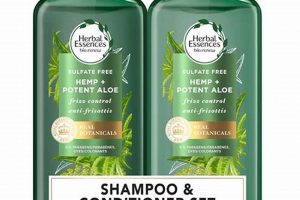
A hair cleansing product formulated with concentrated plant extracts is designed to provide benefits beyond basic hygiene. These solutions often incorporate botanical ingredients recognized for their therapeutic properties, addressing various scalp and hair conditions. For instance, a product containing tea tree oil might target dandruff, while one with lavender extract may aim to soothe an irritated scalp.
The significance of these botanical-infused cleansers lies in their potential to nourish and revitalize hair naturally. Historically, herbal remedies have been employed for hair care across diverse cultures, reflecting a long-standing recognition of plants’ positive impact. Modern formulations capitalize on this tradition, offering an alternative to conventional shampoos that may contain harsh chemicals. The purported advantages range from strengthening hair follicles to promoting shine and manageability.
The following sections will delve into the specific plant-derived components frequently found in such products, exploring their individual properties and the scientific basis for their use. Furthermore, a comparative analysis will be presented, evaluating the effectiveness of these specialized cleansers against standard commercial options, considering both their benefits and potential limitations.
Enhancing Hair Care Practices with Plant-Based Cleansers
The following recommendations offer practical guidance for individuals considering the incorporation of plant-derived hair cleansers into their routines. Adherence to these suggestions may optimize the benefits and minimize potential adverse reactions.
Tip 1: Ingredient Research: Prior to initial use, meticulously examine the ingredient list. Identify specific plant extracts and research their known properties and potential allergens. This proactive approach allows for informed selection based on individual sensitivities and desired outcomes.
Tip 2: Scalp Assessment: Evaluate the current condition of the scalp. Individuals with pre-existing dermatological conditions should consult with a dermatologist before introducing new products to avoid exacerbating existing issues.
Tip 3: Patch Testing: Conduct a patch test prior to full application. Apply a small amount of the product to a discrete area of skin, such as the inner arm, and observe for 24-48 hours. The absence of irritation indicates a lower likelihood of adverse reaction.
Tip 4: Dilution Considerations: Certain concentrated formulations may benefit from dilution, particularly for individuals with sensitive scalps. Diluting the product with water can reduce the concentration of active ingredients, minimizing potential irritation.
Tip 5: Application Technique: Apply the product primarily to the scalp, focusing on gentle massage to stimulate blood flow. Avoid excessive rubbing or pulling, which can damage hair follicles. Allow the product to remain on the scalp for the recommended duration, typically specified on the product label.
Tip 6: Thorough Rinsing: Ensure complete removal of the product during rinsing. Residual product can lead to scalp buildup and potential irritation. Utilize lukewarm water to facilitate thorough rinsing.
Tip 7: Monitoring Results: Observe the condition of the hair and scalp following each use. Document any changes, both positive and negative, to assess the product’s efficacy and identify potential adverse reactions.
These guidelines emphasize the importance of informed decision-making and careful implementation when integrating plant-based hair cleansers into a personal care regimen. By following these recommendations, users can enhance the likelihood of achieving desired results and minimizing potential risks.
Subsequent sections will address potential interactions with other hair care products and strategies for maintaining long-term hair health.
1. Formulation Quality

Formulation quality is a critical determinant of the efficacy and safety profile of a botanical hair cleanser. It encompasses not only the selection of individual ingredients but also their precise proportions, processing methods, and overall compatibility within the product matrix. A poorly formulated product, even with high-quality ingredients, can lead to suboptimal results or adverse reactions.
- Ingredient Synergy
Effective formulations prioritize the synergistic interactions between botanical extracts. Certain combinations can amplify the desired effects, while others may antagonize or even neutralize them. For example, combining rosemary oil (known for stimulating hair growth) with peppermint oil (which enhances circulation) can create a more potent growth-promoting effect than either ingredient used alone. Conversely, combining an acidic ingredient with one that requires a neutral pH could compromise the stability and efficacy of the product.
- Extraction and Processing Methods
The method used to extract botanical compounds significantly impacts their purity and potency. Solvent extraction, CO2 extraction, and steam distillation are common techniques, each yielding different concentrations and profiles of active constituents. Harsh extraction processes can degrade delicate compounds, reducing their therapeutic value. For example, overheating essential oils during extraction can destroy their beneficial properties, rendering them less effective in the final shampoo.
- Preservation Systems
Botanical extracts are inherently susceptible to microbial degradation, necessitating the incorporation of effective preservation systems. Natural preservatives, such as certain essential oils or plant-derived acids, are often preferred over synthetic options. However, these natural preservatives must be carefully selected and used in appropriate concentrations to prevent spoilage and maintain product integrity. Inadequate preservation can lead to bacterial or fungal growth, posing a risk of scalp infections.
- pH Balance
Maintaining an appropriate pH is crucial for scalp health and hair integrity. The scalp has a naturally acidic pH (around 5.5), which helps protect against microbial growth and maintain the integrity of the hair cuticle. A shampoo with a pH that is too alkaline can disrupt this balance, leading to dryness, irritation, and damage to the hair shaft. Formulations must be carefully adjusted to ensure a pH compatible with the scalp’s natural environment.
These interconnected facets of formulation quality highlight the complexities involved in creating an effective botanical hair cleanser. Manufacturers must carefully consider each aspect to ensure that the final product delivers the intended benefits without compromising safety or stability. The presence of even one poorly managed element can negate the benefits of otherwise high-quality ingredients, underscoring the importance of a holistic and scientifically informed approach to formulation development.
2. Scalp Compatibility

Scalp compatibility represents a crucial determinant of user experience and therapeutic outcomes when utilizing botanical hair cleansers. The scalp, as a complex ecosystem, exhibits varying degrees of sensitivity and reactivity. Therefore, a product’s formulation must be carefully calibrated to align with the physiological characteristics of the scalp to mitigate adverse reactions and maximize potential benefits.
- pH Balance Adherence
Maintaining a slightly acidic pH, typically within the range of 4.5 to 5.5, is paramount for scalp health. Disruption of this natural pH balance can compromise the integrity of the stratum corneum, the outermost layer of the epidermis, leading to increased permeability and susceptibility to irritants. Botanical cleansers with a pH significantly deviating from this range may induce dryness, itching, and inflammation. Products formulated with pH-adjusting agents, such as citric acid or lactic acid, can help maintain optimal compatibility.
- Irritant Exclusion
Certain botanical extracts, while possessing therapeutic properties, may also contain inherent irritants. For instance, some essential oils, even in diluted forms, can provoke allergic contact dermatitis in sensitive individuals. Manufacturers must exercise caution in ingredient selection and concentration to minimize the risk of irritation. Rigorous patch testing and adherence to established safety guidelines are essential in ensuring scalp compatibility.
- Emollient Integration
The inclusion of emollient and humectant ingredients is critical for maintaining scalp hydration and preventing dryness. Botanical oils, such as jojoba oil and argan oil, possess excellent emollient properties, forming a protective barrier on the scalp surface and reducing transepidermal water loss. Humectants, such as glycerin and aloe vera, attract moisture from the surrounding environment, further enhancing hydration. A well-balanced formulation incorporating both emollients and humectants can improve scalp comfort and reduce the likelihood of irritation.
- Surfactant Selection
Surfactants, or surface-active agents, are responsible for the cleansing action of shampoos. However, certain surfactants, particularly sulfates, can be harsh and stripping, potentially disrupting the scalp’s natural lipid barrier. Botanical cleansers often utilize milder, plant-derived surfactants, such as coco glucoside and decyl glucoside, which exhibit gentler cleansing properties and reduce the risk of irritation. Careful surfactant selection is essential in ensuring scalp compatibility and maintaining optimal barrier function.
The intersection of these facets underscores the importance of a holistic approach to formulation development. A botanical hair cleanser that adheres to a physiological pH, excludes known irritants, integrates emollient and humectant ingredients, and utilizes gentle surfactants is more likely to exhibit superior scalp compatibility, resulting in enhanced user satisfaction and improved therapeutic outcomes. The careful consideration of these factors distinguishes high-quality products from those that may compromise scalp health.
3. Ingredient Sourcing

The origin of components profoundly influences the quality and ethical standing of hair cleansing solutions. Transparent and responsible procurement of plant-derived elements ensures both product effectiveness and environmental sustainability, factors increasingly valued by informed consumers.
- Geographical Origin and Bioactivity
The geographical location where a botanical ingredient is cultivated directly impacts its chemical composition and, consequently, its bioactivity. Environmental factors such as soil composition, climate, and altitude influence the production of secondary metabolites within plants. For example, lavender grown in specific regions of France is known to possess higher concentrations of linalool and linalyl acetate, compounds responsible for its calming and anti-inflammatory properties. Therefore, identifying the precise geographical origin allows for a more accurate assessment of the potential therapeutic benefits of a cleansing product.
- Cultivation Practices and Sustainability
Sustainable cultivation practices are crucial for minimizing environmental impact and ensuring the long-term availability of botanical resources. Organic farming, wildcrafting with adherence to conservation principles, and fair-trade agreements are examples of responsible sourcing methods. Conventional agricultural practices, involving the use of pesticides and herbicides, can contaminate botanical extracts and pose risks to both human health and ecosystems. Transparency regarding cultivation methods enables consumers to make informed choices that align with their environmental values.
- Extraction Methods and Purity
The methods employed to extract active compounds from plant materials influence the purity and concentration of the final extract. Solvent extraction, supercritical fluid extraction, and steam distillation are common techniques, each with varying degrees of efficiency and environmental impact. Harsh extraction processes can degrade delicate compounds and introduce undesirable contaminants. Manufacturers committed to ingredient integrity prioritize extraction methods that preserve the natural profile of the plant extract and minimize the use of harmful solvents. Certificate of Analysis (CoA) of ingredient will ensure purity of ingredient.
- Traceability and Authentication
Establishing a robust traceability system is essential for verifying the authenticity and quality of botanical ingredients. Traceability involves tracking the ingredient from its point of origin to its incorporation into the final product. This process allows for the identification of potential adulteration or misidentification, ensuring that the consumer receives a genuine and uncompromised product. DNA barcoding and other analytical techniques are increasingly employed to authenticate botanical ingredients and prevent fraudulent practices.
These considerations underscore the complexities associated with ingredient procurement. Manufacturers must prioritize responsible and transparent sourcing practices to ensure the quality, efficacy, and ethical integrity of their botanical hair cleansing products. A commitment to traceability, sustainable cultivation, and gentle extraction methods is essential for delivering genuine benefits to consumers while minimizing environmental impact.
4. Sustainability
Sustainability, in the context of hair cleansing products, extends beyond mere environmental consciousness. It encompasses the responsible sourcing, production, and packaging of botanical shampoos, ensuring minimal ecological impact and ethical considerations throughout the product lifecycle. This multifaceted approach safeguards natural resources and promotes long-term environmental health.
- Ethical Sourcing of Botanicals
Sustainable practices necessitate the ethical harvesting of plant-derived ingredients. Over-harvesting can deplete wild populations and disrupt ecosystems. Companies committed to sustainability prioritize sourcing from certified organic farms or engage in wildcrafting practices that adhere to strict conservation guidelines. Fair-trade agreements with local communities also contribute to sustainable sourcing by ensuring equitable compensation and support for sustainable agricultural practices. An example includes sourcing argan oil from cooperatives in Morocco that support women’s empowerment and sustainable harvesting methods.
- Eco-Friendly Manufacturing Processes
The manufacturing process significantly impacts the overall sustainability of a botanical shampoo. Traditional manufacturing methods often involve high energy consumption and the generation of significant waste. Sustainable manufacturing practices prioritize reducing energy usage, minimizing water consumption, and implementing waste reduction strategies such as recycling and composting. Employing “green chemistry” principles, which focus on developing chemical processes that minimize the use and generation of hazardous substances, is another critical aspect of eco-friendly manufacturing.
- Biodegradable and Recyclable Packaging
Packaging contributes substantially to the environmental footprint of a product. Conventional plastic packaging can persist in the environment for centuries, contributing to pollution and harming wildlife. Sustainable packaging options include biodegradable materials, such as plant-based plastics, and recyclable materials, such as glass or aluminum. Minimizing packaging volume and utilizing recycled content further reduces environmental impact. An example is using a concentrated shampoo formula that requires less packaging and shipping volume.
- Reduced Water Usage and Wastewater Treatment
Water is a critical resource, and its responsible use is paramount in sustainable shampoo production. Formulations that require less water during manufacturing and use are preferable. Furthermore, effective wastewater treatment is essential to prevent the release of harmful chemicals into the environment. Companies committed to sustainability invest in advanced wastewater treatment technologies to remove pollutants and ensure that discharged water meets stringent environmental standards.
The integration of these sustainable practices into the production of botanical hair cleansers represents a commitment to environmental stewardship and responsible consumerism. By prioritizing ethical sourcing, eco-friendly manufacturing, biodegradable packaging, and reduced water usage, manufacturers can minimize their ecological footprint and contribute to a more sustainable future.
5. Therapeutic Benefits

The inclusion of therapeutic benefits within the composition of plant-based hair cleansers distinguishes them from conventional counterparts, offering targeted solutions for diverse scalp and hair conditions. This is predicated on the understanding that certain botanical extracts possess inherent pharmacological properties that can address specific dermatological issues. For instance, shampoos containing Aloe vera are often employed to soothe irritated scalps due to the plant’s anti-inflammatory and wound-healing capabilities. Similarly, formulations incorporating tea tree oil are frequently used to combat Malassezia yeast overgrowth, a primary cause of dandruff, owing to its antifungal attributes. These direct cause-and-effect relationships underscore the importance of carefully selecting botanical ingredients based on their documented therapeutic actions.
The practical significance of understanding these benefits extends to the consumer’s ability to make informed decisions about product selection. Rather than relying solely on marketing claims, consumers can evaluate ingredient lists and research the scientific evidence supporting the purported therapeutic effects. For example, an individual experiencing hair loss might seek out a shampoo containing rosemary extract, which has been shown in some studies to stimulate hair follicle activity. Similarly, someone with an oily scalp could benefit from a product containing nettle extract, known for its sebum-regulating properties. This informed approach empowers consumers to tailor their hair care regimens to their specific needs, maximizing the potential for positive outcomes. Furthermore, clinical trials have shown the effectiveness of saw palmetto in shampoos in reducing hair loss with mild side effects.
In summary, the integration of therapeutic benefits into botanical hair cleansers is a critical aspect of their value proposition. By leveraging the inherent pharmacological properties of plant extracts, these products offer targeted solutions for a range of scalp and hair conditions. Understanding the specific actions of individual ingredients enables consumers to make informed decisions, optimize their hair care routines, and potentially achieve measurable improvements in scalp and hair health. However, it is essential to acknowledge that the effectiveness of these products can vary depending on the formulation, the individual’s condition, and other factors. Continued research is needed to further elucidate the therapeutic potential of various botanical extracts and to develop standardized formulations that deliver consistent and reliable results.
6. Irritant Absence
The concept of “Irritant Absence” is fundamentally intertwined with the purpose and value proposition of an “essential herbal shampoo.” The intended benefit of using a product formulated with botanical ingredients is often to provide a gentler, more natural alternative to conventional shampoos, many of which contain synthetic chemicals known to cause scalp irritation, allergic reactions, and other adverse effects. Therefore, the exclusion of such irritants becomes a core requirement for a product to genuinely qualify as an “essential herbal shampoo” and to fulfill its intended role as a mild and therapeutic hair cleansing solution. The presence of even seemingly benign ingredients, if they trigger an adverse reaction, negates the potential benefits derived from other herbal components.
Consider, for example, a shampoo marketed as an “essential herbal shampoo” that incorporates lavender and chamomile extracts for their calming properties. However, if that same shampoo also contains sodium lauryl sulfate (SLS), a common surfactant known to be a potent irritant, the potential benefits of the herbal extracts are overshadowed by the likelihood of scalp irritation. Individuals with sensitive skin or pre-existing conditions such as eczema are particularly vulnerable to the adverse effects of irritants like SLS, fragrance allergens, and certain preservatives. Therefore, a shampoo genuinely designed as an “essential herbal shampoo” must prioritize the selection of ingredients with low irritancy profiles, opting for milder surfactants, fragrance-free formulations, or hypoallergenic preservatives. In practice, manufacturers often perform rigorous patch testing and conduct safety assessments to ensure that their products meet stringent criteria for “Irritant Absence.” Products which are free from parabens, sulfates, and silicone are prefered.
Concluding, the “Irritant Absence” is not merely a desirable attribute but an essential characteristic that defines the integrity and effectiveness of an “essential herbal shampoo.” The inclusion of potentially irritating ingredients undermines the very purpose of utilizing botanical extracts for gentler hair care. Prioritizing low-irritancy formulations, conducting thorough safety testing, and transparently disclosing all ingredients are crucial steps in ensuring that these products truly deliver on their promise of a mild and beneficial cleansing experience.
7. Efficacy

Efficacy, in the context of botanical hair cleansers, refers to the product’s demonstrated ability to produce a desired or intended result. This encompasses a range of potential outcomes, including improved scalp health, enhanced hair strength, increased shine, reduced dandruff, and promotion of hair growth. The efficacy of a given product is directly linked to its formulation, ingredient quality, and the specific needs of the user. Therefore, a product marketed as an “essential herbal shampoo” must not only contain beneficial botanical extracts but also demonstrate quantifiable improvements in hair and scalp condition. The absence of such demonstrable results undermines the product’s value and credibility, regardless of its purported natural composition. For example, a shampoo claiming to strengthen hair with horsetail extract should, ideally, exhibit a measurable reduction in hair breakage or an increase in hair tensile strength during controlled testing.
Evaluating efficacy necessitates a multi-faceted approach, incorporating both subjective user feedback and objective scientific data. While user testimonials can provide valuable insights into product satisfaction and perceived benefits, they should be corroborated by clinical studies or laboratory analyses. For instance, a shampoo marketed for dandruff control should demonstrate a significant reduction in scalp flaking and pruritus, as assessed by a dermatologist or through standardized scaling scores. Similarly, products designed to stimulate hair growth should ideally show an increase in hair density or growth rate, measured through techniques such as trichoscopy or hair counts. Practical application also extends to ingredient concentrations; insufficient levels of active compounds can render the product ineffective, even if those compounds possess proven therapeutic properties. A real-world example would be a chamomile shampoo that fails to soothe an irritated scalp due to insufficient chamomile extract or counteracting ingredients.
In summary, efficacy is a non-negotiable attribute of any “essential herbal shampoo” seeking to provide tangible benefits to the user. Demonstrable improvements in scalp and hair health, supported by both subjective feedback and objective data, are essential for establishing product credibility and justifying its market position. Challenges remain in standardizing testing methodologies and accounting for individual variations in response to botanical extracts. However, a commitment to rigorous evaluation and transparent communication of results is crucial for ensuring that these products truly deliver on their promises and contribute to improved hair care outcomes.
Frequently Asked Questions
The subsequent queries address common concerns and misconceptions regarding plant-derived hair cleansing products, providing clear and concise information to aid informed decision-making.
Question 1: Are botanical hair cleansers suitable for all hair types?
Suitability varies depending on the specific formulation and individual sensitivities. Certain botanical extracts may be more appropriate for oily hair, while others are better suited for dry or damaged hair. Individuals should carefully review ingredient lists and select products formulated for their specific hair type and scalp condition. Patch testing is advisable prior to full application.
Question 2: Can botanical hair cleansers effectively treat severe scalp conditions?
While some botanical ingredients possess therapeutic properties, their efficacy in treating severe scalp conditions may be limited. Individuals with conditions such as psoriasis, eczema, or severe dandruff should consult a dermatologist for appropriate medical treatment. Plant-derived cleansers may be used as a complementary therapy, but should not replace prescribed medications.
Question 3: Do botanical hair cleansers contain sulfates and parabens?
The presence of sulfates and parabens varies depending on the specific product formulation. Many manufacturers of botanical cleansers intentionally exclude these ingredients due to concerns about potential irritation and health risks. However, it is essential to carefully review the ingredient list to confirm the absence of these compounds.
Question 4: Are botanical hair cleansers less effective than conventional shampoos?
Efficacy depends on the specific formulation and the individual’s needs. Some botanical cleansers may be less effective at removing heavy buildup or styling products compared to conventional shampoos containing strong detergents. However, well-formulated botanical cleansers can provide effective cleansing while minimizing potential irritation and promoting scalp health.
Question 5: How can one identify genuine botanical hair cleansers from those that are merely “greenwashed”?
Carefully scrutinize the ingredient list. Look for a high concentration of recognizable botanical extracts, ideally listed early in the ingredient declaration. Be wary of products that prominently feature marketing terms like “natural” or “organic” but contain only trace amounts of plant-derived ingredients or include potentially harmful synthetic chemicals. Certifications from reputable organizations can also provide assurance of product authenticity.
Question 6: Are botanical hair cleansers safe for color-treated hair?
Safety for color-treated hair depends on the formulation’s pH and the presence of harsh detergents. Cleansers with a pH close to the hair’s natural pH (around 4.5 to 5.5) and free from sulfates are generally considered safer for color-treated hair. However, it is advisable to perform a strand test before full application to assess potential color stripping or fading.
In summation, informed decision-making necessitates careful scrutiny of product ingredients and a clear understanding of individual needs. While botanical hair cleansers offer potential benefits, they are not universally superior to conventional options and require careful selection to ensure optimal results.
The subsequent sections will provide further insights into the long-term benefits and limitations of integrating plant-based hair cleansers into a comprehensive hair care routine.
Essential Herbal Shampoo
This exploration has underscored that essential herbal shampoo signifies more than a simple cleansing agent. It represents a deliberate choice to incorporate botanical benefits into hair care, predicated on a foundation of careful formulation, ethical sourcing, and demonstrable efficacy. The inherent value of such a product lies in its potential to address specific scalp and hair concerns while minimizing exposure to harsh synthetic chemicals. However, the market landscape necessitates discerning evaluation to differentiate authentic formulations from those merely leveraging the “natural” trend without genuine substance.
Ultimately, the selection of an essential herbal shampoo should be guided by a commitment to informed decision-making. Consumers are encouraged to critically assess ingredient lists, prioritize products with transparent sourcing practices, and seek objective evidence supporting efficacy claims. This diligent approach ensures that the chosen cleanser not only aligns with individual needs but also contributes to a more sustainable and responsible approach to personal care. The future of hair care likely involves continued innovation in botanical formulations, demanding both manufacturers and consumers maintain a commitment to quality and transparency.