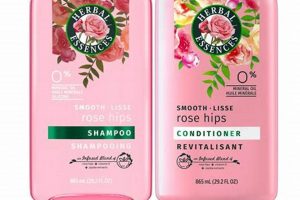
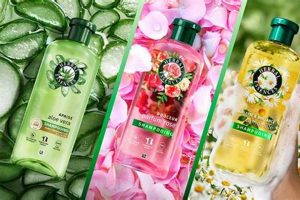
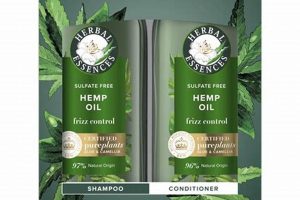
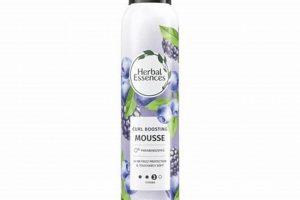
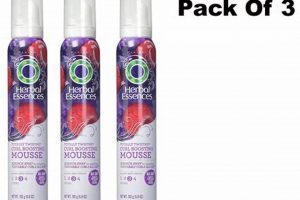
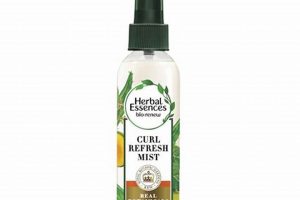
A hair styling product, often dispensed as an aerosol, provides hold and control for various hairstyles. Infused with botanical extracts, it offers a method of securing a desired look while incorporating natural fragrances and potentially beneficial plant-derived ingredients. These formulations typically aim to reduce the reliance on purely synthetic components.
The inclusion of plant-based essences can offer a sensory experience, contributing to a pleasant scent and a perceived sense of naturalness. The potential benefits lie in leveraging properties of the specific botanicals incorporated, such as moisturizing or conditioning effects. Historically, the demand for hair styling solutions has evolved, with modern formulations incorporating consumer interest in plant-based alternatives.
The following sections will delve into the specific formulations, application techniques, and comparative analyses of products within this category. The environmental impact of aerosol-based dispensing mechanisms will also be examined, alongside emerging trends in sustainable packaging and ingredient sourcing.
Application and Usage Guidance
The subsequent guidelines are designed to optimize the effectiveness of the subject product and minimize potential adverse effects.
Tip 1: Selection Based on Hair Type: Different formulations cater to varying hair textures. Fine hair generally benefits from a lighter hold to avoid weighing it down, whereas thicker hair may require a stronger hold for effective control. Choose a formulation specifically designed for the individual’s hair type.
Tip 2: Pre-Application Preparation: Prior to application, ensure the hair is clean and dry. Product performance is often compromised on oily or damp hair. A thorough wash and drying process provides an optimal base for styling.
Tip 3: Controlled Application Distance: Maintain a distance of approximately 10-12 inches between the nozzle and the hair. This prevents product buildup in concentrated areas and ensures an even distribution. Consistent distance application is crucial for a natural-looking hold.
Tip 4: Layered Application Technique: Apply in short, controlled bursts rather than a continuous stream. This allows for building the desired level of hold gradually and avoids stiffness or stickiness. Multiple thin layers are preferable to a single heavy application.
Tip 5: Targeted Application: Focus application on areas requiring the most control, such as the hairline or specific sections of the style. Avoid excessive application to the entire head, particularly near the scalp, to prevent buildup and potential scalp irritation.
Tip 6: Environmental Considerations: Use in a well-ventilated area. While modern formulations often minimize volatile organic compounds, adequate ventilation helps prevent inhalation of aerosols and minimizes potential health risks.
Tip 7: Evening Removal: Prior to sleep, thoroughly remove the product by brushing and washing the hair. Leaving product in overnight can lead to buildup, dryness, and potential damage. A consistent removal routine is essential for hair health.
These guidelines facilitate the effective use of the product, maximizing its benefits while minimizing potential drawbacks. Adherence to these techniques promotes desired styling outcomes and sustained hair health.
The following sections will address potential issues, alternatives, and long-term effects associated with sustained product usage.
1. Botanical Ingredient Variety

Botanical ingredient variety is a defining characteristic and a significant determinant of the functionality and consumer appeal of products designed for hair styling. The inclusion of diverse plant-derived extracts within these formulations directly impacts the product’s performance in terms of hold, texture, scent, and potential benefits for hair health. The selection of these botanicals is not arbitrary; each ingredient is often chosen for its specific properties and its synergistic effect with other components in the formulation. For example, a product might incorporate lavender extract for its calming fragrance, coupled with chamomile for its potential anti-inflammatory properties, and rosemary for its purported ability to stimulate hair growth.
The practical significance of understanding botanical ingredient variety lies in the ability to tailor product selection to individual hair types and concerns. Consumers seeking to address specific issues, such as dryness or scalp irritation, can actively seek out products containing ingredients known for their beneficial effects. This knowledge also empowers consumers to make informed choices regarding potential allergens or ingredients they may wish to avoid. Moreover, the cosmetic industry relies on innovation within botanical ingredient variety to differentiate product lines and cater to evolving consumer demands for natural and sustainable options. The trend towards “clean beauty” emphasizes transparency in ingredient sourcing and formulation, further highlighting the importance of understanding the specific botanicals present in any given product.
In summary, the variety of botanical ingredients represents a critical factor in determining the overall efficacy and desirability of these hair styling products. The careful selection and combination of plant-derived extracts allows for the creation of formulations that address a wide range of hair styling needs and consumer preferences. Challenges remain in ensuring the quality and consistency of botanical ingredients, as well as in verifying the claims made regarding their specific benefits. This highlights the ongoing need for rigorous testing and clear labeling to provide consumers with accurate information and facilitate informed decision-making. This exploration is closely linked to the broader goal of understanding the impact of natural ingredients on the cosmetic industry and their contribution to sustainable and responsible product development.
2. Hold Strength Spectrum

The “Hold Strength Spectrum” is a critical feature dictating the performance and suitability of any hair styling product. Within the context of herbal essence formulations, understanding this spectrum allows for targeted product selection to achieve specific aesthetic goals while considering hair type and desired style longevity.
- Light Hold Formulations
Light hold products, often characterized by flexible polymers and lower concentrations of holding agents, provide a gentle control. These are suited for creating soft, natural-looking styles that require movement and minimal rigidity. An example is maintaining loose waves or taming flyaways without creating a stiff appearance. Their implication in herbal essence formulations is often associated with enhanced shine and manageability, due to the inclusion of hydrating botanical extracts which may compromise stronger hold capabilities.
- Medium Hold Formulations
Medium hold provides a balance between control and flexibility, suitable for styles requiring moderate definition. These formulations generally incorporate synthetic polymers alongside the botanical essence, achieving a compromise between hold and natural feel. This level is apt for structured hairstyles with some give. It is vital to consider external factors when choosing how the herbal ingredients interact with the holding agent when selecting a medium hold formula.
- Firm Hold Formulations
Firm hold products employ high concentrations of polymers, generating a strong, lasting hold for structured hairstyles. These are often chosen for elaborate updos or styles designed to withstand adverse conditions, such as wind or humidity. While providing significant styling control, these formulations may sometimes reduce hair flexibility and movement. Incorporating herbal ingredients may cause the style to lose its hold due to their hydrating properties.
- Variable Hold Technology
Some formulations incorporate variable hold technology, where the strength of the hold can be adjusted based on application technique or environmental conditions. These products often rely on specialized polymers or delivery systems that respond to humidity or heat, allowing for adaptable styling. The inclusion of botanical extracts in such systems requires careful balancing to ensure that the natural ingredients do not interfere with the responsiveness of the holding mechanism. This is critical for maintaining the intended variable performance. The variable hold technology is only active when the user interacts with the application technique.
The correlation between hold strength and herbal essence infusion lies in the interplay between synthetic polymers and natural extracts. The concentration and type of botanical ingredients can influence the overall hold, potentially requiring adjustments to the polymer composition to achieve the desired result. Formulators must carefully balance these elements to deliver products that offer effective styling capabilities while retaining the beneficial properties and sensory appeal associated with plant-derived ingredients.
3. Aerosol vs. Non-Aerosol

The selection between aerosol and non-aerosol dispensing methods constitutes a fundamental design choice that significantly impacts the user experience, environmental considerations, and the formulation of hair styling products infused with botanical extracts. This decision influences factors ranging from the product’s spray pattern and application precision to its overall environmental footprint and the stability of its botanical ingredients.
- Spray Pattern and Distribution
Aerosol systems deliver a fine, dispersed mist over a broad area, facilitating even distribution and quick drying. This can be advantageous for achieving a lightweight hold and preventing localized product buildup. Non-aerosol pumps, conversely, tend to produce a coarser spray, requiring more precise application to avoid uneven coverage. The implication for herbal essences lies in maintaining a uniform distribution of botanical extracts, ensuring consistent fragrance and performance across the hair.
- Environmental Impact and Regulations
Aerosol propellants, historically linked to ozone depletion and greenhouse gas emissions, have faced increasing regulatory scrutiny. Modern formulations utilize compressed gases like hydrocarbons, which possess a lower environmental impact but remain subject to volatile organic compound (VOC) regulations. Non-aerosol systems, relying on mechanical pumps, eliminate the need for propellants, mitigating these environmental concerns. This distinction aligns with the growing consumer preference for sustainable products and affects the marketability of herbal essence formulations.
- Formulation Stability and Ingredient Compatibility
Aerosol formulations require compatibility between the propellant, solvents, and active ingredients, including botanical extracts. The pressurized environment and propellant composition can affect the stability of certain botanicals, potentially leading to degradation or altered fragrance profiles. Non-aerosol systems offer greater flexibility in formulation, as they do not necessitate compatibility with propellants, allowing for a wider range of botanical ingredients to be incorporated without compromising stability.
- User Control and Application Precision
Aerosol systems provide less direct control over the amount of product dispensed, relying on consistent pressure to deliver a uniform spray. This can lead to over-application or uneven coverage, particularly for users unfamiliar with the product. Non-aerosol pumps offer greater control, allowing users to meter the amount of product dispensed and target specific areas with precision. This feature enhances the user experience and contributes to more efficient product usage, especially for intricate hairstyles or targeted applications of herbal essences.
The multifaceted comparison between aerosol and non-aerosol dispensing methods reveals the complex interplay between performance, environmental impact, and formulation considerations within the realm of hair styling products. While aerosol systems offer convenience and a fine spray pattern, non-aerosol systems address growing environmental concerns and provide enhanced formulation flexibility. The choice between these methods is crucial for shaping the overall product profile and aligning with evolving consumer preferences in the market for herbal essence-infused formulations.
4. Fragrance Profile Complexity

The sophistication of the fragrance profile is a critical differentiator in hair styling products incorporating botanical extracts. The olfactory experience significantly influences consumer perception and contributes to the overall appeal and perceived value of the product. This complexity arises from the careful selection, blending, and preservation of volatile aromatic compounds derived from various plant sources.
- Top Note Volatility and Impression
Top notes are the initial scents perceived immediately upon application. These volatile compounds are typically light, fresh, and fleeting, providing the first impression of the product. Examples include citrus, mint, or light floral notes. In hairspray formulations, these notes create an immediate sense of freshness and cleanliness. The selection of top notes must complement the base and middle notes, setting the stage for the unfolding fragrance experience while avoiding overwhelming the user or clashing with other scents.
- Middle Note Harmony and Character
Middle notes, also known as heart notes, emerge after the top notes dissipate and form the core of the fragrance. These scents are typically more robust and enduring than top notes, contributing to the fragrance’s overall character and longevity. Examples include floral bouquets (rose, jasmine, lavender) or spicy notes (cinnamon, clove). In the context of herbal essence hairsprays, middle notes often highlight specific botanical extracts, such as chamomile, rosemary, or tea tree, reinforcing the product’s natural and herbal identity. The successful integration of middle notes relies on their ability to harmonize with both the top and base notes, creating a cohesive and balanced fragrance profile.
- Base Note Depth and Persistence
Base notes are the foundation of the fragrance, providing depth, warmth, and lasting impression. These compounds are the least volatile and can linger on the hair for hours, influencing the user’s perception of the product’s overall quality and sophistication. Examples include woody notes (sandalwood, cedarwood), musky notes, or vanilla. In herbal essence formulations, base notes can anchor the lighter, more volatile botanical extracts, lending a sense of richness and complexity to the fragrance. The skillful blending of base notes ensures that the fragrance remains appealing and balanced over time, avoiding any sharp or overpowering scents.
- Fragrance Layering and Synergy
Achieving fragrance profile complexity involves the artful layering of top, middle, and base notes to create a harmonious and multifaceted olfactory experience. The individual components must work synergistically, enhancing and complementing each other to produce a fragrance that is greater than the sum of its parts. This requires careful consideration of the concentration and interaction of each ingredient. In the context of hairspray infused with botanical extracts, the fragrance profile must not only be aesthetically pleasing but also reinforce the brand’s identity and communicate the benefits of the botanical ingredients. A well-layered fragrance can evoke emotions, enhance the user’s sensory experience, and ultimately contribute to the product’s market success.
The nuanced construction of fragrance profiles in herbal essence hairsprays is a testament to the cosmetic industry’s pursuit of sensory refinement. By understanding the interplay of volatile compounds and employing advanced formulation techniques, manufacturers can create products that not only style hair effectively but also deliver a captivating and lasting olfactory experience, further enhancing consumer satisfaction and brand loyalty. The intricacy of the fragrance profile directly impacts the product’s perceived value and its ability to stand out in a competitive market.
5. Environmental Impact Reduction

The imperative to minimize the environmental footprint of consumer products has placed significant emphasis on the reformulation and repackaging of hair styling solutions. Products marketed as “hairspray herbal essences” are increasingly scrutinized for their environmental impact, driving innovation across various facets of their lifecycle. A primary concern revolves around the use of aerosol propellants. Traditional formulations relied on chlorofluorocarbons (CFCs), known contributors to ozone depletion. Their phase-out has led to the adoption of alternative propellants, such as hydrocarbons (butane, propane), which possess a lower ozone depletion potential but still contribute to greenhouse gas emissions and volatile organic compound (VOC) levels. These VOCs contribute to smog formation and pose respiratory health risks. Consequently, manufacturers are exploring compressed gases like carbon dioxide and nitrogen as more sustainable alternatives, or shifting towards non-aerosol delivery systems to eliminate propellants entirely.
Another significant area of focus is the sourcing and processing of botanical ingredients. The cultivation of plants for herbal essences can contribute to deforestation, habitat destruction, and the overuse of pesticides and fertilizers, impacting biodiversity and water quality. Sustainable sourcing practices, such as utilizing organically grown ingredients or supporting Fair Trade initiatives, are gaining traction as means to mitigate these impacts. Furthermore, the manufacturing processes involved in extracting and refining botanical essences often consume substantial amounts of energy and water, generating wastewater and solid waste. Implementing closed-loop systems, optimizing extraction techniques, and utilizing renewable energy sources are essential strategies for reducing the environmental burden associated with ingredient production. Packaging also plays a crucial role. Traditional hairspray containers are often made from non-recyclable plastics or aluminum, contributing to landfill waste and resource depletion. The use of recycled plastics, bio-based polymers, or refillable packaging options presents viable alternatives for minimizing packaging waste and promoting a circular economy.
In conclusion, the pursuit of environmental impact reduction in “hairspray herbal essences” necessitates a holistic approach encompassing propellant selection, ingredient sourcing, manufacturing processes, and packaging design. While progress has been made in replacing harmful substances and adopting more sustainable practices, challenges remain in achieving true environmental neutrality. Transparency in ingredient sourcing, rigorous lifecycle assessments, and collaborative efforts between manufacturers, consumers, and regulatory bodies are crucial for driving further innovation and ensuring the long-term sustainability of these products. Ultimately, the success of these efforts depends on a collective commitment to minimizing the environmental consequences of hair styling and promoting a more responsible and environmentally conscious beauty industry.
Frequently Asked Questions
The following section addresses common inquiries regarding hair styling products infused with botanical extracts, providing factual information to clarify typical user concerns.
Question 1: Is hairspray containing herbal essences truly “natural?”
The term “natural” is not strictly regulated in cosmetics. Formulations labeled as such typically incorporate plant-derived ingredients, but often include synthetic components for hold and preservation. A full review of the ingredient list is advised to assess the proportion of plant-based versus synthetic compounds.
Question 2: Does the addition of herbal extracts affect the product’s hold strength?
The presence of botanical extracts can influence hold. Hydrating or emollient plant-derived ingredients may reduce the rigidity provided by synthetic polymers. Formulations are often adjusted to balance the benefits of the extracts with the desired level of hold. The product should be tested for expected performance.
Question 3: Can herbal essences in hairspray cause allergic reactions?
Plant-derived ingredients can be allergenic. Individuals with known sensitivities to specific botanicals should carefully examine the ingredient list prior to use. A patch test on a small area of skin is recommended to assess potential allergic responses before widespread application.
Question 4: Are aerosol or non-aerosol versions environmentally preferable?
Traditional aerosol propellants have been linked to environmental damage. Modern formulations use alternative propellants with reduced impact, but non-aerosol pumps generally offer a more sustainable option by eliminating propellants entirely. Consideration of the product’s full lifecycle is advised when assessing environmental impact.
Question 5: Will hairspray with herbal essences damage hair with prolonged use?
Excessive or improper use of any hair styling product can potentially lead to damage. Build-up from incomplete removal, harsh chemicals, and high alcohol content are the culprit for these damages. Regular washing and conditioning of the hair and a gentle removal process is essential to minimize the risk of damage. Limiting prolonged usage also has benefits.
Question 6: How should hairspray containing herbal essences be properly stored?
Hairspray should be stored in a cool, dry place away from direct sunlight and heat sources. Extreme temperatures can alter the product’s consistency and potentially compromise its effectiveness. Aerosol cans should be handled with care to prevent accidental puncture or explosion.
This FAQ section offers a concise overview of key concerns related to these hair styling products. Informed consumers can make deliberate purchasing decisions to achieve optimal styling outcomes and minimize potential risks.
The subsequent sections will delve into best practices for ingredient analysis and a deeper examination of emerging trends in this product category.
Conclusion
This exploration has elucidated the multifaceted nature of hairspray herbal essences, examining formulation intricacies, application techniques, environmental considerations, and consumer perceptions. The interplay between botanical extracts and synthetic polymers, the selection of aerosol versus non-aerosol dispensing methods, and the construction of sophisticated fragrance profiles have all been dissected. Furthermore, the importance of sustainable sourcing, responsible manufacturing, and informed consumer choices has been underscored.
The continued evolution of hair styling products will undoubtedly be shaped by ongoing research, technological advancements, and evolving consumer expectations. Manufacturers must prioritize transparency, sustainability, and efficacy to meet the demands of an increasingly discerning market. The enduring pursuit of innovation in hairspray herbal essences promises to deliver both enhanced styling capabilities and a reduced environmental footprint.