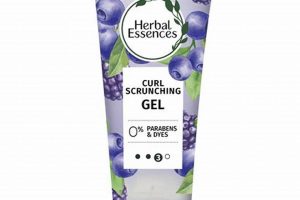
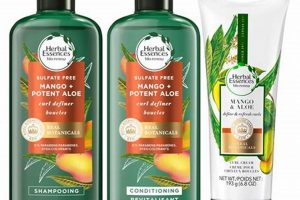
A hair styling product, it is designed to enhance and define natural curls and waves. It is typically a viscous substance applied to wet or damp hair, providing hold and reducing frizz as the hair dries. The formulation often incorporates botanical extracts, aiming to provide benefits beyond simple styling, such as moisturizing or adding shine.
The significance of such a product lies in its ability to offer a balance between hold and flexibility, allowing for styles that are both defined and touchable. Historically, formulations for curly hair focused primarily on strong hold, often resulting in stiff or crunchy textures. Modern variations emphasize manageability and natural movement. The inclusion of plant-derived ingredients may further appeal to consumers seeking products with perceived natural advantages.
The remainder of this article will delve into key aspects relevant to curl-enhancing hair gels, including ingredient analysis, application techniques, and comparison with alternative curl-defining solutions. Further consideration will be given to optimal usage for varying hair types and environmental conditions.
Application and Usage Guidelines
The following recommendations are intended to optimize the performance and aesthetic results of curl-enhancing hair gels.
Tip 1: Hair Preparation. Ensure hair is clean and thoroughly conditioned prior to application. Residual product buildup can impede the gel’s ability to evenly coat the hair shaft, potentially leading to uneven curl definition.
Tip 2: Application Amount. Begin with a small amount, approximately a dime-sized quantity, and gradually increase as needed. Over-application may result in product buildup and a stiff, unnatural feel.
Tip 3: Distribution Technique. Distribute the gel evenly through damp hair, focusing on the mid-lengths to ends, where curl definition is most desired. Avoid applying directly to the scalp, as this can lead to a greasy appearance.
Tip 4: Scrunching Method. After application, scrunch the hair upwards towards the scalp to encourage curl formation. This technique helps to activate the curl pattern and enhance definition.
Tip 5: Drying Process. Allow the hair to air dry for a more natural, softer finish. Alternatively, use a diffuser attachment on a hairdryer at a low heat setting to minimize frizz and maximize volume.
Tip 6: Refreshing Curls. On subsequent days, reactivate the product by lightly spritzing the hair with water and re-scrunching. This can help to revive curls and extend the style without reapplication.
Tip 7: Product Compatibility. Avoid mixing with incompatible hair products, such as those containing high levels of alcohol, as this can lead to dryness and flaking.
Adherence to these guidelines facilitates enhanced curl definition, reduced frizz, and improved overall hair manageability. Consistent application yields more predictable and desirable styling outcomes.
The subsequent sections of this discourse will address potential variations in product performance related to specific hair characteristics and environmental variables.
1. Curl Definition
The effectiveness of any curl-enhancing product hinges significantly on its capacity to define existing curl patterns. In the context of hair styling, curl definition refers to the degree to which a product accentuates and separates individual curls, minimizing frizz and promoting a cohesive, aesthetically pleasing shape. When considering formulations, the mechanism through which curl definition is achieved is paramount. A gel, for instance, typically provides hold by forming a cast around the hair strand, which, as it dries, helps maintain the curled or waved shape. The specific polymers and resins within the gel dictate the strength and flexibility of this hold.
The practical effect of poor curl definition can manifest in several ways. Hair may appear frizzy, undefined, or lacking in volume. Conversely, excessive hold can result in a stiff, crunchy texture that is undesirable. Examples abound in everyday observations: individuals with naturally curly hair often express frustration with products that promise definition but fail to deliver, leading to styles that lack structure and longevity. Successful curl definition depends on a balance between hold, hydration, and the product’s ability to combat humidity, a common factor that contributes to frizz.
Ultimately, the ability of a given product to enhance definition impacts consumer satisfaction and perceived value. While product formulation and technology play a major part, the application method and individual hair characteristics also dictate the success of curl definition.
2. Frizz Control

Frizz control is a critical attribute of curl-enhancing products, directly impacting their efficacy and consumer satisfaction. Achieving well-defined curls necessitates mitigating frizz, which arises from hair cuticle disruption and moisture imbalance. The following facets explore the intricacies of frizz control in relation to hair styling products designed for curly hair.
- Cuticle Sealing
The primary function of a frizz control agent is to seal the hair cuticle, preventing moisture from penetrating and causing swelling. Damaged cuticles, often a result of chemical treatments or environmental exposure, are particularly prone to frizz. Ingredients such as silicones or natural oils can create a hydrophobic barrier, smoothing the hair’s surface and reducing friction. Failure to effectively seal the cuticle leads to a rough, uneven texture and a lack of definition.
- Humectant Balance
Humectants attract moisture from the surrounding environment, which can be beneficial for hydration but detrimental if humidity levels are high. An ideal formulation for frizz control incorporates humectants in conjunction with emollients or occlusives that lock in moisture and prevent over-absorption. Imbalance leads to swelling, disrupting the alignment of the hair shaft and creating a frizzy appearance.
- Polymer Technology
Styling products frequently employ polymers to create a flexible hold and maintain curl definition. Certain polymers exhibit anti-humidity properties, forming a protective layer that repels moisture and minimizes frizz. The selection of appropriate polymers is crucial for achieving long-lasting frizz control without compromising the hair’s natural movement. Inadequate polymer selection results in style degradation under humid conditions.
- Environmental Considerations
The effectiveness of frizz control is inherently tied to environmental factors, particularly humidity and temperature. A product that performs well in a dry climate may prove less effective in a humid environment. The presence of pollutants and hard water minerals can also contribute to frizz by altering the hair’s pH balance and damaging the cuticle. Therefore, product selection should consider the prevailing environmental conditions to optimize performance.
Effective frizz control is a multifaceted attribute requiring a careful balance of ingredients and consideration of environmental variables. The success of a curl-enhancing product relies not only on its ability to define curls but also on its capacity to maintain that definition by mitigating frizz, ultimately impacting the overall aesthetic result and consumer perception.
3. Botanical Extracts

The inclusion of botanical extracts in hair styling products, such as curl gels, represents a confluence of consumer demand for perceived natural ingredients and potential functional benefits. In the specific context of a product designed for curl enhancement, these extracts may serve several purposes. Certain plant-derived substances possess inherent moisturizing properties, addressing the inherent dryness often associated with curly hair. For example, aloe vera extract, commonly found in hair care formulations, is known for its humectant and emollient properties, aiding in moisture retention and imparting a smoother texture. Similarly, extracts from plants like chamomile or lavender may be included for their purported soothing or anti-inflammatory effects on the scalp, indirectly contributing to healthier hair growth.
The significance of botanical extracts extends beyond simple hydration or scalp health. Some extracts contain compounds that can directly influence hair’s structure or manageability. Hydrolyzed proteins derived from plants, for instance, can penetrate the hair shaft, strengthening it from within and reducing breakage. Extracts rich in antioxidants may also protect hair from environmental damage caused by free radicals, preserving its color and integrity. Real-world examples include products claiming enhanced shine or reduced frizz attributable to specific botanical extracts. However, it’s essential to acknowledge that the concentration and form of these extracts within the final product significantly impact their actual efficacy. A minimal concentration may yield negligible benefits, while an improperly processed extract may even introduce unwanted side effects.
Ultimately, the incorporation of botanical extracts into a curl gel signifies a strategic marketing decision aligned with contemporary consumer preferences. While some extracts offer tangible benefits related to hydration, hair strength, or scalp health, their practical significance is often intertwined with consumer perception and branding strategies. Challenges remain in ensuring both the concentration and quality of extracts are sufficient to deliver the claimed benefits, thereby avoiding misleading marketing practices. The future of botanical extract usage in hair care hinges on rigorous scientific validation and transparent labeling practices.
4. Flexible Hold
Flexible hold is a crucial characteristic of curl-enhancing hair products, including gels, as it directly influences the final aesthetic and tactile experience. The connection between the effectiveness of the product and the degree of flexibility it provides is a complex one. A hair gel designed for curls aims to maintain the defined shape of the curl pattern without rendering the hair stiff, crunchy, or prone to breakage. A strong, inflexible hold, while initially providing significant definition, often results in an unnatural appearance and an uncomfortable feel. Conversely, insufficient hold fails to maintain the curl structure, leading to frizz and a loss of definition throughout the day. The ideal “flexible hold” achieves a balance between these two extremes.
The importance of flexible hold stems from its impact on the hair’s natural movement and manageability. When hair can move freely, it appears healthier and more voluminous. Individuals using gels that deliver flexible hold often report increased satisfaction due to the hair’s natural bounce and the reduced likelihood of flaking or product buildup. For instance, imagine two scenarios: one where a user applies a gel that creates a stiff cast, leading to a helmet-like effect, and another where a user applies a gel that defines curls while allowing them to move and sway naturally. The latter scenario exemplifies the benefits of flexible hold. Furthermore, products with flexible hold are often easier to re-style or refresh throughout the day, extending the lifespan of the hairstyle.
In summary, flexible hold is not merely a desirable attribute but a fundamental requirement for a successful curl-enhancing product. It directly impacts the hair’s appearance, feel, and overall health. Achieving this balance requires careful formulation, utilizing polymers and other ingredients that provide sufficient definition without sacrificing natural movement. The ongoing pursuit of increasingly flexible and effective hold solutions is a driving force in the evolution of curl care technology.
5. Hair Hydration
Hair hydration represents a foundational element in maintaining the health, appearance, and manageability of curly hair, directly impacting the performance and efficacy of curl-enhancing products. The relationship between a curl gel and hair hydration is multifaceted, influencing curl definition, frizz control, and overall hair vitality.
- Humectant Incorporation
Formulations may incorporate humectants to attract moisture from the environment. Glycerin, honey, and aloe vera are examples. These substances draw water into the hair shaft, combating dryness. However, effectiveness varies based on ambient humidity. Excessive humectant concentrations in high-humidity environments can exacerbate frizz, while insufficient concentrations in dry climates may offer inadequate hydration, underscoring the need for balanced formulation.
- Emollient Properties
Emollients, such as oils and butters, serve to smooth the hair cuticle, imparting a softer texture and reducing friction. Proper emolliency enhances shine and manageability. Insufficient emollient content can result in a dry, rough texture, while excessive amounts may lead to buildup and a greasy appearance. The choice and concentration of emollients are critical for achieving optimal hydration without compromising curl definition.
- Occlusive Agents
Occlusives create a barrier on the hair surface, preventing moisture loss. Ingredients like silicones or certain plant-derived waxes function in this capacity. This barrier traps moisture within the hair shaft, prolonging hydration. However, occlusives can potentially hinder the penetration of moisturizing ingredients over time, necessitating periodic clarifying treatments to remove buildup. Their inclusion must be carefully balanced with the need for sustained hydration.
- pH Balance Considerations
Maintaining an optimal pH balance is crucial for hair health and hydration. Products with an excessively alkaline pH can disrupt the hair cuticle, leading to moisture loss and increased frizz. A slightly acidic pH, typically between 4.5 and 5.5, promotes cuticle closure and moisture retention. The pH of a product formulation directly affects its ability to maintain hair hydration and overall health.
The effectiveness depends on its ability to address hydration needs without compromising curl definition or causing product buildup. A nuanced understanding of the interplay between humectants, emollients, occlusives, and pH balance is essential for optimizing hydration and achieving desirable styling outcomes.
6. Scent Profile

The scent profile of a hair styling product, particularly a curl gel, constitutes a significant element of the overall consumer experience. It influences product selection, perceived value, and user satisfaction. For a product, the scent profile is carefully crafted to align with brand identity, target demographic, and intended product function.
- Initial Impression and Brand Association
The initial scent impression experienced upon opening the product container directly shapes consumer perception. A pleasant, well-balanced fragrance can reinforce brand identity and generate a positive association with the product’s intended benefits, such as naturalness, freshness, or sophistication. For instance, a curl gel marketed as “herbal” may feature top notes of citrus or green tea to evoke a sense of botanical origin. Conversely, an artificial or overpowering scent can detract from the overall appeal and damage brand credibility.
- Fragrance Longevity and Hair’s Scent After-Effect
The persistence of the fragrance on the hair following application is a crucial aspect of the scent profile. An ideal fragrance lingers subtly throughout the day, providing a pleasant but not overwhelming aroma. Excessive fragrance longevity can become bothersome, while insufficient longevity renders the scent imperceptible. The specific fragrance compounds and their interaction with hair’s natural oils dictate the scent’s duration and intensity.
- Scent Layering and Product Harmony
Many consumers use multiple hair care products within a single styling routine. The scent profile should harmonize with other products, such as shampoos, conditioners, and styling aids, to avoid clashing fragrances. A discordant scent layering can create an unpleasant olfactory experience, deterring repeated use. Manufacturers often design complementary scent profiles across their product lines to ensure a cohesive experience.
- Sensory Marketing and Consumer Preferences
The scent profile plays a vital role in sensory marketing strategies, influencing consumer purchasing decisions through emotional and subconscious associations. Specific scents can evoke memories, emotions, or associations with nature or luxury. Understanding consumer preferences and aligning the scent profile with desired sensory experiences can enhance product appeal and drive sales. Market research and trend analysis inform the selection of fragrance notes that resonate with target consumers.
In conclusion, the scent profile of a product extends beyond a mere olfactory sensation. It contributes to brand identity, influences consumer perception, and enhances the overall user experience. A carefully crafted scent profile aligned with product function and target demographic is essential for maximizing product appeal and driving market success.
Frequently Asked Questions
The following section addresses common inquiries regarding the use, application, and performance characteristics of curl-enhancing hair gels. This information is intended to provide clarity and facilitate informed consumer decisions.
Question 1: Is the use of curl gels on fine hair advisable?
Curl gels can be employed on fine hair, but moderation is essential. Over-application may weigh down the hair, diminishing volume and definition. Lighter formulations, often labeled as “light hold,” are preferable. The user should begin with a minimal amount, gradually increasing until the desired level of definition is achieved.
Question 2: How does environmental humidity affect the performance of curl gels?
High humidity levels can compromise the efficacy of certain curl gels, leading to increased frizz and reduced hold. Formulations containing high concentrations of humectants may exacerbate this effect. Selecting products specifically designed for humid climates, often containing humidity-resistant polymers, is recommended.
Question 3: Can curl gels cause product buildup on the scalp and hair?
Yes, curl gels, particularly those containing silicones or heavy oils, can contribute to product buildup over time. Regular clarifying treatments, employing a clarifying shampoo, are advised to remove accumulated residue and restore hair’s natural balance. Frequency of clarifying treatments depends on product usage and individual hair characteristics.
Question 4: Are curl gels suitable for heat styling?
The suitability of curl gels for heat styling varies depending on the specific formulation. Some gels contain heat protectants, while others may become sticky or cause damage when exposed to high temperatures. Consulting the product label for heat styling recommendations is crucial.
Question 5: How does the protein content of a curl gel impact its performance?
Curl gels containing protein can strengthen and fortify hair, improving its elasticity and reducing breakage. However, excessive protein can lead to stiffness and dryness, particularly in hair that is already protein-rich. Balancing protein content with moisturizing ingredients is essential for optimal results.
Question 6: Is it necessary to use a leave-in conditioner in conjunction with a curl gel?
The necessity of a leave-in conditioner depends on individual hair needs. If hair is prone to dryness or frizz, a leave-in conditioner can provide additional hydration and smoothness. However, for some hair types, a curl gel alone may suffice. Experimentation is recommended to determine the optimal combination for specific hair characteristics.
In summation, curl gel usage requires consideration of hair type, environmental factors, and product formulation. Careful application and regular maintenance are key to achieving desired results and maintaining hair health.
The subsequent section will provide a comparative analysis of curl gels and alternative curl-defining products.
In Conclusion
This article has provided a comprehensive overview of curl-enhancing hair gels, exploring their application, usage guidelines, and constituent elements such as curl definition, frizz control, botanical extracts, flexible hold, hair hydration, and scent profile. The discussion underscored the importance of product selection based on individual hair characteristics, environmental factors, and desired styling outcomes. Considerations were given to common consumer inquiries, addressing concerns related to product buildup, heat styling, and the role of protein content in product formulations. The exploration of these various facets has offered a multifaceted perspective on the role and effectiveness of curl-enhancing gels.
Ultimately, the successful utilization of any curl-defining product, including “herbal essences curl gel” variants, hinges on a nuanced understanding of its properties and careful integration into a personalized hair care regimen. Consumers are encouraged to leverage this knowledge to make informed decisions, optimizing product performance and promoting sustained hair health. Further research and development in this area will likely yield even more sophisticated solutions tailored to the diverse needs of individuals with curly hair.