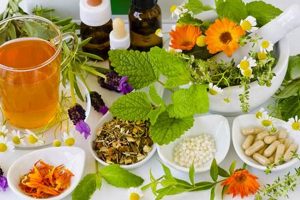
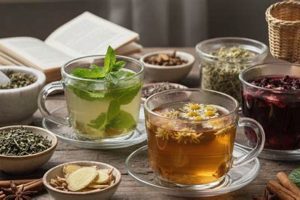
The product results from infusing honey with various herbs. This process allows the honey to absorb flavors, aromas, and potentially beneficial compounds from the chosen botanical ingredients. Examples include honey infused with lavender, rosemary, or elderflower, each imparting a unique character to the final product.
Such infused honeys are valued for both their culinary applications and perceived health benefits. Historically, the combination of honey and herbs has been used in traditional medicine for soothing ailments and promoting well-being. The specific advantages depend on the herbs employed, ranging from relaxation and improved sleep to immune system support.
The following sections will delve into the specific processes involved in creating these products, the selection of suitable herbs, and the potential benefits associated with consuming them. Considerations for quality control and sourcing of ingredients are also crucial aspects that will be addressed.
Guidance on Incorporating Herbal Infusions in Honey
This section offers practical guidance for those interested in understanding or producing honey with herbal infusions.
Tip 1: Herb Selection is Crucial: Choose herbs appropriate for the intended purpose. Consider both flavor profiles and potential health benefits. Lavender, chamomile, and mint are common choices for their calming properties.
Tip 2: Proper Infusion Technique: Gently heat the honey to improve infusion. Avoid high temperatures, as they can degrade honey’s enzymes and nutritional value. A gentle warming process is recommended.
Tip 3: Use High-Quality Honey: Opt for raw, unfiltered honey from a reputable source. Its natural enzymes and pollen contribute to the final product’s characteristics.
Tip 4: Monitor Infusion Time: The duration of infusion affects the intensity of flavor. Start with shorter periods, such as a few days, and adjust according to taste preference. Consistent monitoring is recommended.
Tip 5: Strain Thoroughly: After infusion, strain the product to remove any herb particles. This ensures a smooth texture and prevents unwanted changes in flavor over time. Use a fine-mesh strainer or cheesecloth.
Tip 6: Consider Herb Drying: Dried herbs generally provide a more concentrated flavor than fresh herbs and also reduce water content which can affect the honey’s shelf life. Ensure herbs are thoroughly dried before infusion.
Tip 7: Storage Matters: Store the final product in an airtight container, away from direct sunlight and heat. Proper storage helps to preserve its quality and flavor for an extended period.
By carefully selecting herbs, employing proper infusion techniques, and adhering to quality control measures, a superior product with desirable characteristics can be achieved.
The following sections will explore the commercial aspects and applications of honey with herbal infusions in greater detail.
1. Herb Selection

Herb selection is paramount in the production of honey infusions, dictating the flavor profile, aromatic qualities, and potential therapeutic attributes of the final product. The chosen botanical ingredient fundamentally shapes the infused honey’s character and utility.
- Flavor Profile and Aromatic Influence
The selection of specific herbs directly determines the sensory characteristics of the infused honey. Lavender imparts a floral and slightly sweet note, while rosemary contributes a savory and resinous flavor. Mint offers a cooling sensation, and chamomile provides a gentle, apple-like sweetness. These flavors influence how the honey is perceived and utilized in culinary applications.
- Potential Therapeutic Properties
Certain herbs are chosen for their established or perceived health benefits. For instance, thyme is often selected for its purported antimicrobial and expectorant properties, making the resulting honey a traditional remedy for coughs. Elderflower is associated with immune support, and lemon balm is linked to calming effects. These considerations guide selection based on desired health outcomes.
- Compatibility with Honey
Not all herbs are equally compatible with honey. The intensity of the herb’s flavor, its moisture content, and its potential to interact with honey’s natural sugars are crucial factors. Some herbs may impart bitterness or cause crystallization if not properly processed. Therefore, careful consideration of herbal characteristics is essential for a balanced and palatable infusion.
- Source and Quality of Herbs
The quality and source of the selected herbs are critical. Organic, sustainably sourced herbs ensure minimal exposure to pesticides and contaminants. Freshness and proper drying techniques also influence the herb’s potency and flavor. Sourcing from reputable suppliers guarantees a consistent and reliable ingredient base for high-quality infused honey.
The careful selection of herbs, considering their flavor, potential health benefits, compatibility with honey, and source quality, is integral to creating a premium infused honey product. This foundational step determines the ultimate characteristics and applications of the final product, highlighting the importance of informed and discerning herbal choices.
2. Infusion Process

The infusion process represents a critical stage in the creation of honey infused with herbal elements, directly influencing the final product’s quality, potency, and characteristics. It facilitates the transfer of desirable compounds from the herb to the honey, thereby shaping the resulting flavor and potential therapeutic attributes.
- Extraction of Bioactive Compounds
The infusion process is responsible for extracting bioactive compounds from the herbs, such as essential oils, flavonoids, and phenolic acids. The effectiveness of this extraction depends on several factors, including the solvent properties of honey, temperature, and duration. For example, a prolonged, low-heat infusion may be employed to maximize the transfer of heat-sensitive compounds, while a shorter, higher-temperature infusion could be used for herbs with more robust constituents. Proper extraction ensures the presence of beneficial compounds in the final product.
- Flavor and Aroma Integration
Beyond the extraction of bioactive compounds, the infusion process plays a pivotal role in integrating the herb’s flavor and aroma into the honey. This integration occurs through the diffusion of aromatic molecules from the herb into the honey matrix. The resulting flavor profile can range from subtle to intense, depending on the herb used and the infusion parameters. For instance, a gentle infusion of lavender flowers results in a delicate floral aroma and flavor, whereas a prolonged infusion of rosemary leaves can yield a more pronounced, savory taste. Careful control of the infusion is necessary to achieve the desired sensory characteristics.
- Impact on Honey’s Properties
The infusion process can also alter the physical and chemical properties of honey. The addition of herbs and the application of heat can influence viscosity, moisture content, and enzymatic activity. Excessive heat, in particular, can degrade honey’s natural enzymes and alter its sugar composition. Therefore, it is essential to employ gentle heating methods and carefully monitor the infusion time to preserve the integrity of the honey. The process demands a delicate balance to maintain honey’s inherent qualities while achieving effective herbal infusion.
- Methods and Techniques
Various methods can be employed for the infusion process, each with its own advantages and disadvantages. Cold infusion involves steeping herbs in honey at room temperature over an extended period. This method preserves heat-sensitive compounds but may result in a less efficient extraction. Warm infusion utilizes gentle heat to accelerate the extraction process, while solar infusion harnesses the sun’s energy. The selection of an appropriate method depends on the characteristics of the herb, the desired intensity of infusion, and the need to preserve honey’s natural properties. The choice of technique influences the final product’s quality and therapeutic potential.
The infusion process, therefore, stands as a crucial determinant in crafting honey infused with herbal elements. Its impact extends beyond mere flavor addition, influencing the extraction of bioactive compounds, the integration of aroma, and the preservation of honey’s inherent properties. A thorough understanding of these facets allows for a controlled and optimized process, resulting in a high-quality herbal honey product with desirable characteristics.
3. Honey Quality

The quality of honey serves as a foundational determinant in the characteristics and ultimate value of honey infused with herbal elements. Its inherent properties directly influence the extraction, flavor integration, and stability of the infused product.
- Compositional Integrity
The composition of honey, including its sugar profile (primarily glucose and fructose), water content, and presence of enzymes and pollen, impacts its ability to effectively extract and solubilize herbal compounds. High-quality honey, characterized by a balanced sugar ratio and minimal adulteration, provides an optimal medium for herbal infusion. Conversely, honey with excessive moisture content may promote microbial growth, compromising the stability of the infused product. The presence of specific pollen types can also contribute unique flavor nuances that interact with the herbal infusion.
- Flavor and Aroma Profile
The inherent flavor and aroma of honey play a crucial role in complementing or contrasting the herbal infusion. Monofloral honeys, derived predominantly from a single floral source (e.g., acacia, clover, or manuka), exhibit distinct flavor characteristics that can enhance or harmonize with specific herbs. Mild-flavored honeys allow the herbal notes to take precedence, while stronger-flavored honeys contribute a more complex and layered sensory experience. The selection of honey based on its inherent flavor profile directly influences the overall palatability of the infused product.
- Antimicrobial Properties
Honey possesses inherent antimicrobial properties due to its low water activity, acidity, and presence of hydrogen peroxide and other antimicrobial compounds. These properties contribute to the preservation and stability of herbal infusions by inhibiting the growth of spoilage microorganisms. High-quality honey exhibits greater antimicrobial activity, thereby extending the shelf life of the infused product and reducing the risk of fermentation or degradation. This aspect is particularly important when using fresh herbs, which may introduce additional moisture and microbial load.
- Viscosity and Texture
The viscosity and texture of honey affect the rate and extent of herbal compound diffusion. High-viscosity honey may impede the extraction process, requiring longer infusion times or the application of gentle heat to facilitate compound transfer. The texture of honey, whether smooth or slightly crystallized, can also influence the perceived mouthfeel of the infused product. Selecting honey with appropriate viscosity and texture optimizes the extraction process and ensures a desirable sensory experience.
In summary, the quality of honey acts as a critical foundation for the creation of honey infused with herbal elements. Its composition, flavor profile, antimicrobial properties, and viscosity all contribute to the effectiveness, stability, and palatability of the final product. Careful selection of high-quality honey ensures that the herbal infusion is optimized, resulting in a superior and more valuable product.
4. Bioactive Compounds

The presence of bioactive compounds within infused honey constitutes a critical determinant of its potential therapeutic effects and nutritional value. These compounds, derived from the infused herbs, are responsible for a range of biological activities within the human body. The effectiveness of infused honey is inextricably linked to the successful extraction and preservation of these compounds during the infusion process.
For example, thyme-infused honey may contain thymol and carvacrol, bioactive compounds known for their antimicrobial and expectorant properties. Similarly, lavender-infused honey may exhibit linalool and linalyl acetate, recognized for their calming and anxiolytic effects. The concentration of these bioactive compounds within the final product depends on factors such as the herb’s quality, the infusion method employed, and the storage conditions. Therefore, meticulous attention to these factors is paramount to ensure consistent and reliable concentrations of the desired bioactive components.
In conclusion, bioactive compounds represent an essential attribute of infused honey, shaping its potential health benefits and overall value. Challenges in accurately quantifying and standardizing these compounds necessitate rigorous quality control measures. A comprehensive understanding of the relationship between bioactive compounds and infused honey is crucial for consumers and producers seeking to leverage the therapeutic potential of these products effectively.
5. Traditional uses
The utilization of honey infused with herbs has deep roots in various traditional medicine systems worldwide. These practices often precede modern scientific validation, relying instead on centuries of empirical observation and cultural transmission. The combination is not arbitrary; honey acts as both a preservative and a delivery system, enhancing the bioavailability of the herbal compounds. Furthermore, its demulcent properties soothe irritated tissues, providing symptomatic relief while the herbs exert their specific actions. For example, manuka honey infused with thyme has been a traditional remedy for coughs and sore throats in some cultures, leveraging honey’s antibacterial properties alongside thyme’s expectorant qualities. The underlying principle is the synergistic effect of combining honey’s inherent benefits with the therapeutic properties of select herbs.
Across diverse cultures, specific herb and honey combinations have been tailored to address prevalent health concerns. Elderflower and honey mixtures were traditionally employed to alleviate cold and flu symptoms, with elderflower acting as a diaphoretic to induce sweating and reduce fever. Similarly, lavender-infused honey has a long-standing reputation in European folk medicine as a sleep aid and anxiolytic. These traditions highlight the integration of botanical knowledge with honey’s recognized medicinal properties, demonstrating an understanding of plant pharmacology within the context of holistic health practices. The documentation and preservation of these traditional uses are vital for informing modern research and identifying potential therapeutic applications.
While anecdotal evidence abounds, rigorous scientific investigation is crucial to validate the efficacy and safety of traditionally used herb and honey combinations. Challenges exist in replicating traditional preparations and dosages, as well as accounting for variations in herbal quality and honey composition. However, understanding the historical and cultural context of these traditional uses provides a valuable framework for guiding future research. The investigation of time-honored practices offers the potential to uncover novel therapeutic approaches and harness the synergistic potential of combining honey and herbs for optimal health outcomes. The continuity of these traditions depends on bridging the gap between historical knowledge and contemporary scientific validation.
6. Storage Stability

Storage stability is a critical factor in determining the shelf life, quality, and safety of infused honey. The interaction between honey’s inherent properties and the introduced herbal components significantly influences the product’s longevity and resistance to degradation.
- Water Activity and Microbial Growth
The water activity (Aw) of honey plays a crucial role in its resistance to microbial spoilage. Infusion with herbs, particularly fresh herbs, can increase water activity, creating a more favorable environment for yeast and mold growth. Proper drying of herbs before infusion, or the use of low-moisture herbs, can mitigate this risk, maintaining the product’s stability. For instance, using dehydrated lavender buds versus fresh lavender significantly reduces the potential for increased water activity and subsequent microbial proliferation.
- Enzymatic Activity and Degradation
Honey naturally contains enzymes, such as invertase and diastase, which can continue to act during storage, altering the sugar composition and flavor profile. The presence of certain herbal compounds can either inhibit or enhance these enzymatic activities. High temperatures during processing or storage can accelerate enzymatic degradation, leading to undesirable changes in color, texture, and flavor. Maintaining proper storage temperatures, ideally below 20C, minimizes enzymatic activity and preserves the product’s integrity.
- Oxidation and Antioxidant Properties
Oxidation can lead to the degradation of both honey and herbal compounds, resulting in changes in color, aroma, and potentially reduced therapeutic efficacy. Some herbs possess inherent antioxidant properties that can protect against oxidative damage. The inclusion of antioxidant-rich herbs, such as rosemary or thyme, can contribute to the overall stability of the product by scavenging free radicals and inhibiting oxidation processes. Proper packaging, such as using airtight containers made of dark glass, can further minimize exposure to oxygen and light.
- Crystallization and Phase Separation
Crystallization is a natural process in honey, where glucose precipitates out of solution, forming crystals. The presence of herbal solids can act as nucleation sites, accelerating crystallization. Phase separation, where the liquid and solid components separate, can also occur, affecting the product’s appearance and texture. Careful selection of honey types with lower glucose content, or the addition of small amounts of acids (e.g., lemon juice), can help to inhibit crystallization and phase separation, maintaining a more uniform consistency.
Addressing storage stability is essential for ensuring that honey infused with herbs retains its desired characteristics throughout its intended shelf life. Proper selection of ingredients, careful processing techniques, and appropriate packaging are all critical factors in achieving a stable and high-quality product. The preservation of both honey’s and the infused herb’s qualities depends on effectively managing these elements during storage.
7. Culinary Applications
The incorporation of infused honeys into culinary practices represents a sophisticated means of flavoring and enhancing a diverse range of dishes and beverages. The unique flavor profiles imparted by specific herbs contribute distinct characteristics, transforming ordinary recipes into gourmet experiences.
- Flavor Enhancement in Beverages
Infused honeys serve as natural sweeteners in teas, coffees, and cocktails, providing nuanced flavors beyond simple sweetness. Lavender-infused honey, for instance, imparts a floral aroma to herbal teas, while rosemary-infused honey adds a savory note to alcoholic beverages. The use of infused honeys allows for precise flavor control, enabling chefs and mixologists to craft complex and balanced flavor combinations.
- Glazes and Marinades for Meats and Vegetables
Infused honeys function effectively as glazes for roasted meats and vegetables, creating a caramelized crust with complementary herbal notes. Thyme-infused honey pairs well with poultry, while chili-infused honey adds a spicy-sweet glaze to grilled meats. In marinades, infused honeys tenderize proteins while simultaneously imparting flavor. The honey’s hygroscopic properties help retain moisture during cooking, resulting in succulent and flavorful dishes.
- Dressings for Salads and Cold Dishes
Infused honeys contribute depth and complexity to salad dressings and cold sauces. Lemon balm-infused honey adds a citrusy sweetness to vinaigrettes, complementing fresh greens and vegetables. In cold noodle dishes or marinades for tofu, infused honeys provide a balanced sweet-savory flavor profile, enhancing the overall taste experience. The viscosity of honey also aids in emulsifying dressings, creating a smooth and cohesive texture.
- Dessert Applications
Infused honeys are integral to numerous dessert recipes, ranging from cakes and pastries to ice creams and fruit compotes. Cinnamon-infused honey adds warmth and spice to baked goods, while orange blossom-infused honey enhances the floral notes of custards and creams. As a topping for pancakes, waffles, or yogurt, infused honeys provide a natural and flavorful alternative to processed syrups. The versatility of infused honeys in desserts allows for creative flavor pairings and culinary experimentation.
The versatility of infused honeys in culinary applications stems from their ability to deliver both sweetness and complex herbal flavors. Their integration into various recipes demonstrates their potential to elevate dishes, providing chefs and home cooks with a valuable ingredient for enhancing taste and aroma. The careful selection of herbs and honey varieties further expands the possibilities for culinary innovation.
Frequently Asked Questions About herbal honey
The following section addresses common inquiries and misconceptions regarding herbal honey, providing concise and factual responses.
Question 1: What constitutes herbal honey?
Herbal honey is defined as honey that has been infused with herbs, allowing the honey to absorb the flavors, aromas, and potentially beneficial compounds of the chosen herb(s).
Question 2: How does the infusion process affect the honey’s nutritional content?
The infusion process can alter the honey’s nutritional content depending on the herb used and the method employed. While some herbal compounds may add beneficial properties, excessive heating during infusion can degrade honey’s natural enzymes and nutrients.
Question 3: What herbs are commonly used to infuse honey?
Common herbs include lavender, rosemary, thyme, chamomile, and mint. The choice of herb depends on the desired flavor profile and potential health benefits.
Question 4: Is herbal honey safe for everyone?
While generally safe, individuals with allergies to specific herbs should exercise caution. Infants under one year of age should not consume honey due to the risk of botulism, regardless of herbal infusion.
Question 5: How should herbal honey be stored?
Herbal honey should be stored in an airtight container, away from direct sunlight and heat, to preserve its flavor and prevent degradation.
Question 6: Does herbal honey have a longer shelf life than regular honey?
The shelf life of herbal honey is comparable to that of regular honey, provided it is stored properly. However, the presence of certain herbs may affect the honey’s crystallization rate or flavor over time.
In summary, herbal honey is a unique product that combines the natural sweetness of honey with the aromatic and potentially therapeutic properties of various herbs. Careful consideration of herb selection, infusion methods, and storage practices is essential for producing a high-quality and safe product.
The following sections will provide more detailed information about production methods, quality control, and potential health benefits.
Conclusion
This exploration has detailed the multifaceted nature of herbal honey, encompassing its production, characteristics, applications, and considerations for quality and safety. Key points emphasized include the importance of herb selection, the influence of the infusion process, the role of honey quality, and the impact of storage conditions on the final product. Traditional uses and potential health benefits have also been examined, highlighting the historical and cultural significance of this combination.
Further research and standardization are warranted to fully elucidate the therapeutic potential of herbal honey and ensure consistent product quality. Continued investigation into the optimal infusion techniques, the identification of bioactive compounds, and the validation of traditional uses will contribute to a more comprehensive understanding of this valuable resource. The future of herbal honey lies in bridging the gap between traditional knowledge and modern scientific inquiry, unlocking its full potential for both culinary and medicinal applications.