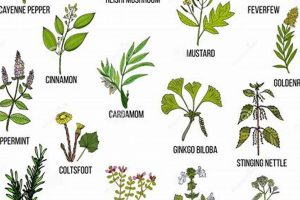
Natural analgesics derived from plants represent an alternative approach to managing discomfort. These remedies often contain bioactive compounds that interact with the body’s systems to alleviate pain perception. Examples include preparations utilizing white willow bark, turmeric, and ginger, each known for their potential analgesic properties.
The appeal of plant-derived pain relief lies in its potential for fewer adverse effects compared to some pharmaceutical options and the long history of traditional use across various cultures. The effectiveness of these agents can vary based on factors such as individual physiology, dosage, and the specific formulation used. Historical records demonstrate the use of certain botanical extracts for pain management dating back centuries, reflecting a deep-rooted reliance on nature for therapeutic intervention.
Subsequent discussion will delve into specific plant-based options recognized for their pain-relieving capabilities, examining their mechanisms of action, supporting research, and potential risks or interactions. This exploration aims to provide a well-rounded understanding of the role these botanicals can play in a comprehensive pain management strategy.
Guidance on Utilizing Plant-Based Analgesics
The following provides practical guidance for those considering integrating plant-derived analgesics into their pain management approach. These tips emphasize responsible usage and informed decision-making.
Tip 1: Seek Professional Guidance: Consulting with a qualified healthcare professional, such as a physician or a licensed herbalist, is paramount before initiating any herbal pain relief regimen. A professional can assess individual needs and potential interactions with existing medications.
Tip 2: Source Reputable Products: Quality control varies significantly in the herbal supplement market. Choose products from reputable manufacturers that adhere to Good Manufacturing Practices (GMP) and provide transparent labeling.
Tip 3: Start with a Low Dosage: When introducing a new herbal remedy, begin with a low dose to assess individual tolerance and potential adverse reactions. Gradually increase the dosage as needed, following recommended guidelines or professional advice.
Tip 4: Be Aware of Potential Interactions: Certain plant-based compounds can interact with prescription medications, over-the-counter drugs, and other supplements. Thoroughly research potential interactions or consult with a healthcare professional to minimize risks.
Tip 5: Monitor for Adverse Effects: Carefully monitor for any adverse effects, such as allergic reactions, gastrointestinal distress, or skin irritations. Discontinue use and seek medical attention if any concerning symptoms arise.
Tip 6: Consider Long-Term Sustainability: Some herbal remedies are derived from plants facing overharvesting or habitat destruction. Prioritize products sourced from sustainable and ethical suppliers to support environmental conservation.
Tip 7: Understand the Limitations: Plant-based analgesics may not be suitable for all types of pain or all individuals. Understand the limitations and set realistic expectations regarding the potential benefits.
By adhering to these guidelines, individuals can approach the use of plant-derived pain relief with caution and responsibility, maximizing the potential benefits while minimizing potential risks.
The subsequent sections will offer additional insights into specific botanical agents and their applications in pain management.
1. Efficacy

Efficacy, in the context of plant-derived pain management, represents the degree to which a given botanical agent demonstrably reduces pain intensity or improves pain-related function. It is a critical determinant in evaluating whether a botanical can be considered among the “best herbal pain killers.” A compound’s efficacy is often measured through controlled clinical trials, where participants report their pain levels before and after administration. For instance, studies on curcumin, a compound found in turmeric, have shown its potential to alleviate pain associated with osteoarthritis, thereby contributing to its consideration as an efficacious option.
The importance of efficacy extends beyond mere pain reduction; it also encompasses improvements in related aspects of well-being, such as sleep quality and functional capacity. An efficacious herbal analgesic should ideally not only decrease pain scores but also enhance the individual’s ability to perform daily activities. The absence of demonstrable efficacy renders a botanical remedy effectively useless, regardless of its safety profile or historical usage. A hypothetical example might be a plant extract widely touted for its anti-inflammatory properties, but lacking robust evidence to support its pain-relieving effects in clinical trials. Such an extract could not be reliably classified within the realm of effective analgesics.
In summary, efficacy is a foundational pillar in determining the value of plant-based pain relievers. Demonstrable pain reduction, coupled with improvements in related functions, are essential criteria. Rigorous scientific investigation is vital for establishing efficacy and differentiating between potentially beneficial options and those lacking credible evidence. The challenge lies in conducting high-quality research to validate traditional uses and identify truly efficacious solutions for pain management.
2. Safety

Safety constitutes a cornerstone in the assessment of plant-derived analgesics. The designation of an herbal remedy as being among the “best herbal pain killers” is inextricably linked to its established safety profile. A potent pain reliever is rendered unsuitable if its use carries unacceptable risks of adverse effects. The evaluation of safety involves assessing the likelihood and severity of potential side effects, drug interactions, and contraindications.
The importance of safety is exemplified by considering the potential for hepatotoxicity associated with certain herbal ingredients. If a botanical agent demonstrably alleviates pain but also poses a significant risk of liver damage, its inclusion among the “best” is questionable. Clinical trials and post-market surveillance play a crucial role in identifying and characterizing adverse effects. Another practical consideration is the potential for herb-drug interactions. For instance, St. John’s Wort, known for its antidepressant properties, can interfere with various medications, including blood thinners and oral contraceptives. This interaction can compromise the efficacy of the conventional medications or increase the risk of adverse events. Thus, an otherwise effective herbal painkiller may be unsuitable for individuals on certain drug regimens due to safety concerns.
In summary, safety is paramount in determining the value of plant-based pain relievers. Even the most potent analgesics are only useful if they present an acceptable level of risk. Comprehensive safety assessments, including pre-clinical studies, clinical trials, and post-market monitoring, are essential for identifying and mitigating potential hazards. The selection of plant-derived analgesics should prioritize options with well-established safety profiles, minimizing the potential for adverse effects and drug interactions. The risk-benefit ratio must always be carefully considered.
3. Quality
In the pursuit of effective plant-based analgesia, quality emerges as a critical determinant. The designation of any botanical as belonging among the “best herbal pain killers” is contingent upon rigorous quality control measures throughout its cultivation, processing, and distribution.
- Botanical Identification
Accurate identification of the plant species is fundamental. Adulteration with related species or entirely different plants can lead to ineffective or even harmful products. Authentication methods, such as macroscopic and microscopic analysis, as well as DNA barcoding, are essential to ensure the correct botanical material is used. For example, authentic Curcuma longa (turmeric) must be distinguished from other Curcuma species to guarantee the expected concentration of curcuminoids, the active compounds responsible for its purported analgesic effects.
- Cultivation Practices
Cultivation methods significantly influence the quality of herbal remedies. Plants grown in contaminated soil may accumulate heavy metals or pesticides, compromising their safety. Organic farming practices, where synthetic pesticides and fertilizers are avoided, are preferred to minimize contamination. The geographical origin and climatic conditions can also affect the concentration of active compounds. Ginseng, for instance, grown in specific regions of Korea, is often considered to have higher levels of ginsenosides, the compounds responsible for its adaptogenic properties.
- Extraction and Processing
The method of extraction and processing impacts the concentration and stability of bioactive constituents. Extraction solvents, such as ethanol or water, should be chosen carefully to maximize the extraction of desired compounds while minimizing the extraction of unwanted substances. Processing techniques, such as drying and storage, should be optimized to prevent degradation of active ingredients. Poorly processed ginger, for example, may lose much of its gingerol content, reducing its anti-inflammatory and analgesic effects.
- Standardization and Testing
Standardization involves ensuring a consistent concentration of specific bioactive compounds in each batch of herbal product. This requires rigorous testing methods, such as high-performance liquid chromatography (HPLC), to quantify the levels of key constituents. Products labeled as “standardized” to a specific percentage of a particular compound offer greater assurance of consistent efficacy. Third-party testing for purity and potency further enhances consumer confidence, verifying that the product is free from contaminants and contains the stated amount of active ingredients.
In conclusion, quality is an indispensable attribute of any herbal pain reliever aspiring to be considered among the best. Botanical identification, cultivation practices, extraction and processing, and standardization and testing collectively contribute to the overall quality and consistency of herbal products. Careful attention to these aspects is essential for ensuring the safety and efficacy of plant-derived analgesics, ultimately benefiting the consumer.
4. Dosage

Dosage is a pivotal determinant when evaluating plant-derived analgesics. The effectiveness and safety profile of an herbal remedy, critical factors in considering it among the “best herbal pain killers,” are intrinsically linked to the administered amount.
- Effective Range
The concept of an effective dosage range is paramount. An insufficient quantity may fail to elicit a therapeutic response, while an excessive amount can increase the risk of adverse effects. Establishing the optimal dosage range typically involves clinical trials to determine the minimum effective dose and the maximum tolerated dose. For instance, while willow bark, containing salicin, a precursor to aspirin, may alleviate mild pain, an inadequate dose will provide no relief, and a dose exceeding recommended levels can cause gastrointestinal distress.
- Individual Variability
Individual physiological characteristics, such as age, weight, metabolism, and underlying health conditions, significantly influence the appropriate dosage. A standardized dosage recommendation may not be suitable for all individuals. For example, elderly individuals or those with impaired liver or kidney function may require lower doses to avoid adverse effects. Genetic factors can also affect how individuals metabolize and respond to herbal compounds, further underscoring the importance of individualized dosage adjustments.
- Formulation Effects
The formulation of an herbal productwhether it is a tincture, capsule, tea, or topical applicationcan impact its absorption and bioavailability, subsequently affecting the optimal dosage. Tinctures, for example, may have a faster onset of action compared to capsules due to the alcohol facilitating absorption. The concentration of active constituents can also vary widely among different formulations, necessitating careful attention to product labels and dosage instructions. A standardized extract of ginger, with a known concentration of gingerols, allows for more precise dosage control compared to using raw ginger root.
- Duration of Use
The appropriate dosage may need to be adjusted based on the duration of use. Some herbal remedies may exhibit cumulative effects over time, requiring a lower maintenance dose after an initial loading period. Conversely, the body may develop tolerance to certain compounds, necessitating a gradual increase in dosage to maintain efficacy. Monitoring for any changes in pain levels or adverse effects is crucial during long-term use, prompting adjustments to the dosage as needed. For instance, long-term use of certain herbal anti-inflammatories may require periodic breaks to prevent tolerance or potential side effects.
In conclusion, dosage represents a critical consideration in the responsible and effective use of plant-derived analgesics. The interplay of effective range, individual variability, formulation effects, and duration of use underscores the need for personalized dosage recommendations and careful monitoring. These factors collectively determine whether a botanical agent can be safely and effectively used, influencing its classification among the “best herbal pain killers.”
5. Interactions

The potential for interactions with other substances constitutes a critical factor in determining the suitability of plant-derived analgesics. Understanding these interactions is essential in assessing whether an herbal remedy can be considered among the “best herbal pain killers,” as adverse interactions can negate the benefits or even pose health risks.
- Herb-Drug Interactions
Certain herbal compounds can interfere with the absorption, metabolism, or excretion of pharmaceutical drugs, leading to altered drug levels in the body. This can result in either a diminished therapeutic effect or an increased risk of adverse side effects. For example, St. John’s Wort, often used for mood disorders, can induce liver enzymes that accelerate the metabolism of many drugs, including certain antidepressants, birth control pills, and blood thinners. This interaction can reduce the efficacy of these medications, potentially leading to serious health consequences. Conversely, some herbs may inhibit drug-metabolizing enzymes, increasing drug levels and the risk of toxicity.
- Herb-Herb Interactions
The concurrent use of multiple herbal remedies can also lead to interactions. Some herbs may have additive effects, increasing the risk of adverse reactions, while others may have opposing effects, diminishing the therapeutic benefit. For instance, combining herbs with sedative properties, such as valerian and chamomile, may excessively depress the central nervous system, leading to drowsiness or impaired coordination. Conversely, combining herbs with opposing effects, such as a stimulating herb and a calming herb, may cancel out the desired therapeutic outcome.
- Herb-Food Interactions
While less commonly recognized, interactions between herbal remedies and foods can also occur. Certain foods can alter the absorption or metabolism of herbal compounds, affecting their bioavailability and efficacy. For example, grapefruit juice is known to inhibit certain liver enzymes, potentially increasing the levels of some herbal constituents in the blood. Conversely, high-fiber foods may reduce the absorption of certain herbs, diminishing their therapeutic effect. Taking herbal remedies on an empty stomach or with specific types of food may be recommended to optimize absorption and minimize interactions.
- Herb-Supplement Interactions
The use of dietary supplements alongside herbal remedies can also lead to interactions. Some supplements may have similar mechanisms of action, increasing the risk of adverse effects, while others may interfere with the absorption or metabolism of herbal compounds. For instance, combining herbal anti-inflammatories with supplements that thin the blood, such as fish oil or vitamin E, may increase the risk of bleeding. Careful consideration of all supplements being taken is crucial to avoid potential interactions.
In summary, the potential for interactions is a critical consideration in the selection of plant-derived analgesics. Thorough evaluation of potential herb-drug, herb-herb, herb-food, and herb-supplement interactions is essential for ensuring the safe and effective use of these remedies. Consultation with a healthcare professional knowledgeable in both herbal medicine and conventional pharmacology is advisable to minimize the risk of adverse interactions and optimize therapeutic outcomes. This proactive approach is paramount in determining which herbal remedies truly qualify as among the “best herbal pain killers.”
6. Source
The provenance of plant-based analgesics significantly influences their quality and, consequently, their classification among the “best herbal pain killers.” The source encompasses several factors, including geographical origin, cultivation practices, and the ethical considerations surrounding harvesting. These elements directly impact the concentration of active compounds, the presence of contaminants, and the sustainability of the remedy, all of which determine its efficacy and safety.
Geographical origin affects the plant’s chemical composition due to variations in soil composition, climate, and environmental factors. For instance, ginseng grown in specific regions of Korea is often considered to possess higher concentrations of ginsenosides, the active compounds responsible for its therapeutic effects, compared to ginseng cultivated elsewhere. Similarly, cultivation practices, such as organic farming, minimize the risk of pesticide contamination, ensuring a safer product. Ethical harvesting, which prioritizes sustainable practices and fair treatment of workers, contributes to the long-term availability of the remedy. Conversely, unsustainable harvesting can lead to depletion of plant populations and compromise the quality of future yields. An example of this is the overharvesting of wild American ginseng, which has led to concerns about its conservation status.
In conclusion, the source of plant-based analgesics is an essential consideration in determining their overall quality and suitability for pain management. Responsible sourcing, encompassing geographical origin, cultivation practices, and ethical harvesting, ensures the availability of potent and safe herbal remedies. This understanding underscores the need for consumers to prioritize products from reputable suppliers who prioritize sustainability and quality control measures, thus fostering the responsible use of these natural resources and promoting effective pain relief.
Frequently Asked Questions About “Best Herbal Pain Killers”
The following addresses common inquiries regarding plant-derived analgesics, offering clarity on their application and limitations.
Question 1: What constitutes a “best herbal pain killer”?
The designation hinges on a confluence of factors: demonstrable efficacy in alleviating pain, a favorable safety profile with minimal adverse effects, consistent quality achieved through standardized production, appropriate dosage guidelines, a lack of significant interactions with other medications, and ethical and sustainable sourcing.
Question 2: Are plant-based analgesics a suitable replacement for conventional pain medication?
Plant-derived options may provide relief for certain types of pain; however, they may not always offer the same level of efficacy as conventional pharmaceuticals. Consulting a healthcare professional is crucial to determine the most appropriate pain management strategy based on individual needs and medical history.
Question 3: How can consumers ensure the quality and purity of herbal pain relief products?
Consumers are advised to select products from reputable manufacturers that adhere to Good Manufacturing Practices (GMP) and provide transparent labeling, including information on ingredient sourcing, standardization, and third-party testing for contaminants.
Question 4: What are the potential risks associated with using plant-based pain relievers?
Risks may include allergic reactions, gastrointestinal distress, interactions with medications, and potential toxicity if taken in excessive doses. Individuals with pre-existing medical conditions should exercise caution and seek professional guidance before using herbal remedies.
Question 5: How long does it typically take for herbal pain killers to produce noticeable effects?
The onset of action can vary depending on the specific herb, dosage, and individual physiology. Some remedies may provide relatively rapid relief, while others may require consistent use over several days or weeks to achieve optimal results.
Question 6: Are there any specific plant-based analgesics that are generally considered safer or more effective than others?
Certain options, such as turmeric (curcumin), ginger, and white willow bark, have been extensively studied and are often considered to be relatively safe and effective for managing mild to moderate pain. However, individual responses can vary, and professional guidance is recommended.
In summary, plant-derived analgesics offer a potentially valuable approach to pain management. However, responsible use necessitates informed decision-making, careful product selection, and professional oversight to ensure safety and efficacy.
The subsequent section will delve into specific examples of plant-based analgesics and their applications in various pain conditions.
Conclusion
This exploration has highlighted the multifaceted nature of plant-derived pain relief. Identifying the “best herbal pain killers” requires careful consideration of efficacy, safety, quality, dosage, potential interactions, and source. Each of these elements contributes to the overall suitability of a botanical agent for managing pain.
The responsible integration of plant-based analgesics into a pain management strategy necessitates informed decision-making and professional guidance. Further research is crucial to fully elucidate the mechanisms of action and optimize the use of these natural remedies. A balanced approach, considering both the potential benefits and the inherent limitations, will ultimately determine their role in alleviating suffering and improving quality of life.